
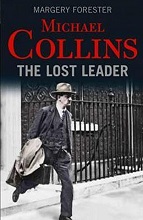
The story of Northern Ireland is long and complicated yet it cannot be told without mention of many key figures who played critical roles in the modern day status of country. Among these figures is the former Chairman of the Provisional Government of the Irish Free State Michael Collins (1890-1922). He played a direct role in the treaty of 1921 that partitioned the country and preserved Ulster Province for British Rule. In less than a year he was assassinated at the age of thirty-one. He lived a short life but within that time had risen to the top rank of the Irish Republican Brotherhood (“IRB”) as the movement for independence from Britain gained momentum. In later years, tensions between Protestants and Catholics would erupt into the Troubles which claimed the lives of more than three thousand people and placed the Irish Republican Army (“IRA”) in the crosshairs of 10 Downing Street. However, the IRA can be seen as a continuation of the struggle in which Collins was involved for a free Irish Republic. This is the story of his life by author Margery Forester
The book was first published in 1971 and later updated in 1991, several years before the Good Friday Agreement in 1998. And although peace was mostly achieved, the Crown still remains in place across Ulster Province with Derry or Londonderry as it sometimes called, being the ground zero for tensions that simmer below the surface. Republicans remain vigilant in the hopes that one day Ireland will be completely free of British rule. Nationalists remain loyal to the Union Jack flag and see British rule as essential. If Michael Collins were alive today, he would undoubtedly push for British removal, a goal he had set for himself before his untimely death. In discussions I have had with others regarding the conflict in Northern Ireland, many people are unaware of who Collins was and why he was important. For those and others in the same position, this is the book that tells his story in a way that all readers will appreciate. I have written about Collins before, in my review of Tim Pat Coogan’s The Twelve Apostles: Michael Collins, the Squad and Ireland’s Fight for Freedom. The book is outstanding in its own right but it is not a biography of Collins, simply his work during the rise of the Irish Free State and his crew of hitmen who carried out deeds in the name of the Republican cause. But there is far more to his story, which we learn very quickly here.
When Michael Collins was born on October 16, 1890, his parents John and Mary Ann could have never imagined that their son would one day lead the resistance to British rule in Ireland. By the time Collins reached adulthood, both parents had died and did not get to see their son’s rise in power nor his tragic demise. He hailed from the town of Woodfield, Sam’s Cross but would make a name for himself in Dublin and London. But before we get to that point, we learn about Collins’ early life in Woodfield as the youngest child in a very large family. The early part of the book does read like a typical biography. Unquestionably, the story picks up pace when Collins joins the Irish Republican Brotherhood in November, 1909. From that point on, all bets are off as the IRB is determined t make its presence felt in across Ireland and in London.
Readers who are well-read in Irish history known the story regarding the 1916 uprising in Dublin and its surrounding areas. Forester does discuss it here but does not go into extensive detail. For those who are interested in the uprising itself, I do recommend Tim Pat Coogan’s 1916: The Easter Rising, which explores the revolt in extensive detail. Here, the author focuses mainly on Collins’ role but makes mention of fallen figures James Connolly (1868-1916), Patrick Henry Pearse (1879-1916) and Tom Clarke (1858-1916). The uprising did not end in the removal of the Crown but it should have been a warning to London of the mayhem that would come in later years as the “Irish question” proved to difficult to answer. The IRB was just getting started and Collins found himself in the middle of the fight for a free Ireland. But the road ahead would be difficult, far more so than even Collins could have thought. The author keeps the suspense at just the right pace as the stakes are raised and the reality of extreme violence becomes hauntingly real.
As the book progresses we learn a lot about Collins’ nature and his reception by those around him. Supportive, abrasive, off-putting and patriotic to the core, he was mixed bag of emotions and you could not always be sure what you would get. However, his commitment to Ireland never waivered. But one event changed the tide of the struggle and placed Collins on the most wanted list. On January 21, 1921, Redmond was shot and killed on his way home from work. He had been assigned to lead the Dublin Metropolitan Police and his murder earned Collins an infamous reputation. As Forester explains:
On the same day, 25 January, a putative offer was made of £10,000 for ‘the body, dead or alive, of Michael Collins’
There would be no turning back and Collins rose to the occasion, ready to take on London in his capacity as an IRB member. The story picks up pace as negotiations are in progress for a treaty between Britain and the Republicans for an Irish Republic that will ward off an inevitable bloody war.
The Republican movement continued to gain momentum but sadly, some would be lost along the way. The death of Terence MacSwiney (1879-1920) is one that would repeated several times over years later and would result in Bobby Sands (1954-1981) becoming an immortal hero in Republican history. However, even with McSwiney’s death, London still seemed not to grasp the severity of the matter and the IRB’s determination. Negotiations became increasingly stressful but on December 6, 1921, a formal treaty was signed and the Irish Free State was born. But for Republicans, the war both internally and against Britain was far from over. It is this part of the book that shows the sharp differences of opinion Collins faced as he helped negotiate a treaty that gave the Republic of Ireland a sense of real power. Things became so tense that Collins even wrote directly to Winston Churchill (1874-1965) to preserve the treaty in place and avert a rebellion by the non-treaty faction of the IRB. Parts of his letters are included here to show the urgency with which Collins voiced his concerns. The later seizure of the Four Courts by anti-treaty IRB members is widely considered the first significant break from the mainline IRB position. Its aftermath and the damaged done internally to the IRB are both sad and regrettable. And even worse, it would manifest itself later in Collins’ final moments.
Arthur Griffith (1871-1922), the founder of (1871-1922) and former president of Dáil Éireann, died on August 12, 1922. As Collins walked in the procession, he had a encounter with a religious figure who gave him this warning as relayed by Forester:
Dr. Fogarty, the Bishop of Killaloe, spoke to Collins as he stood alone, gazing long at the grave of his friend. ‘Michael, you should be prepared—you may be the next.’ Collins turned. ‘I know’, he said simply. When the long, slow ceremony to Glasnevin was over, with its strain on men unused to processional marching, Michael sighed with relief. ‘I hope nobody takes it into his head to die for another twelve months’, he said.
Twelve days later, Collins would meet his fate and with his death, came a wave of grief to the Republican cause. Bu the movement continued and the memory of Collins remains firmly in place even today. He will always be one of the most iconic figures in Irish history as well as controversial. By all accounts he could be a rough person to be around but no one questioned his commitment to the cause. And provided here is a thorough examination of his life, his beliefs and how far he was willing to go to achieve a united Ireland.
“Give us the future, we’ve had enough of your past. Give us back our country, to live in, to grow in, to love” – Michael Collins
ASIN : B00GJQ9WLW
 Discussions of the 1916 uprising in Ireland tend to focus on a select group of figures. The names of Patrick Pearse (1897-1916) and James Connolly (1868-1916) are legend in Irish history and their actions part of the narrative of the Republican fight for a united Ireland. In December, 1921, the British Government and Republican forces reached an agreement that officially partitioned Ireland into Unionist north and Republican south. The southern part was established as the Free Irish State, to be led by Michael Collins (1890-1922)who became Chairman of the Provisional Government of the Irish Free State. Collins is well-known in Irish history for his unwavering support of the Republican cause. However, there was another figure who not only worked closely with Collins, but someone whose own story and actions are typically left out of the official narrative. Pictured to the left General Richard Mulcahy (1886-1971), one of the founding members of the Irish Free State and staunch supporter of Irish independence. When I saw this book for sale, I knew immediately that I had to read it and understand who the intriguing character on the cover of the book really was.
 The looming exit from the European Union by England will undoubtedly be watched by the whole world, which has been kept in suspense by the referendum in 2016 and failure of former British Prime Minster Theresa May to garner enough votes for a formal separation. Current Prime Minister Boris Johnson has declared it will happen and on January 31, 2020, he will be proven right or wrong on the matter. In Northern Ireland, there is fear and uncertainty regarding how the move by England will affect Ulster County, the loyalist stronghold composed of majority that stands firmly behind the Crown. The Irish Republican Army (“IRA”) will be following as well to see how the move will affect its goal for a united Ireland free of British interference. Time will tell how the departure from the European Union will affect both Britain and other nations. Recently, I decided to do some further reading on Northern Ireland and I came across this book by Tim Pat Coogan about an Irish revolutionary I was previously unfamiliar with. His name was Michael Collins (1890-1922) and this is the story of his group of assassins known as the Twelve Apostles and their fight for freedom from Downing Street by famed author Tim Pat Coogan.
 FREETHINKING BIBLIOPHILE
You must be logged in to post a comment.