
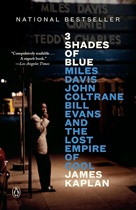
 May 26, 2026, marked the one hundredth anniversary of the birth of the legendary jazz musician Miles Dewey Davis, III (1926-1991). I can still remember when the news broke of his death on September 28, 1991, in Santa Monica, California. It was a shock and I remember my uncle, a jazz enthusiast burying his head in his hands. I was young at the time, but had been exposed to Davis by my father, uncles, and aunts, and knew many of his songs which I hummed in my head. It did not seem real that one of the people who helped transform a genre of music was no longer with us, but the disheartening reality began to set in. Miles Davis was gone and with him went a piece of jazz music history. However, his memory lives on through his music, the internet, and social media. Miles was amazing, but he had helped and he also helped others who had distinguished careers of their own. Among them were John Coltrane (1926-1967) and Bill Evans (1929-1980). These three titans are the subject of this book by James Kaplan which captivated me from the start and refuses to let go long after I have finished it.
I saw this recommendation in my weekly list of reads and decided to look at the summary. And it only took a few sentences for me to realize that this was a book I must read. Kaplan sat down for an interview with Davis and that provides the back story for the book. Davis did write an autobiography with author Quincy Troupe which is an enjoyable read on its own. This book takes a different approach to a typical biography and while the book is initiated through Davis, we also follow the lives of Coltrane and Evans who both play with Miles and go on to play with groups of their own. But before they left Miles, they created music which will always stand the test of time. And while their musical accomplishments take center stage, their personal lives are stories of their own which reveal the dark side of jazz and the unpredictable journeys we take in life.
Prior to reading the book, I was familiar with Davis’s life from his autobiography, and from the autobiography his former wife Cicely Tyson (1924-2021) titled ‘Just as I Am‘ and the 2019 Netflix documentary ‘Miles Davis: The Birth of Cool‘. I was also familiar with John Coltrane’s story, told in the book ‘Coltrane: Chasin the Trane‘ by J.C. Thomas and the focus of the 2016 Netflix documentary ‘Chasing Trane‘. Evans was the musician I lacked knowledge of and I had a feeling that this book would change that and my hunch was correct. So, I picked up my Kindle and began reading Kaplan’s work which has changed the way I view the late artists.
I enjoyed reading about the three musicians, each with a phenomenal gift which they dutifully applied to their craft. However, there are other musicians in the story, and their names should also be remembered. Due to the instability of the industry and personal differences and issues, these musicians seem to jump around in the story, playing with one group in week one and another by week three. In hindsight, they played whenever and wherever they could to earn money and sharpen their skills. They did not work a normal nine to five. But what they did do, was take jazz to another level and the history changing events are beautifully told by Kaplan as hit songs come together in the studio sometimes without much planning such as the classic tune ‘So What‘. They played together, ate together, and learned to reinvent music together, and as a result, they left us with music that can never be duplicated. There are many bright moments in the book but there is also the dark side, and Kaplan pulls no punches regarding the demons each man faced. And these parts of the book are not for the faint of heart.
Readers may find it overwhelming that the musicians discussed in the book were creating some of the best music of their time while also battling the demons which came with substance abuse. Davis’s and Coltrane’s battles with drug abuse are known, but I was not aware of Evans’s struggle with addiction. Reading about their struggles was heartbreaking and I could only shake my head at how commonplace using opioids and other drugs became. And hovering over the book like a dark cloud was the enigmatic and tragic Charlie “Bird” Parker (1920-1955). Parker’s story is insane and his passing at the age of thirty-four is one of the most shocking moments in the book. But as they say in Hollywood, the show must go on and it did, but Parker would not be the only artists to die early. In fact, the amount of people who died at young ages in the book is surreal. To be fair, not all were from substance abuse, but the sad reality is that most of them did not live long. Some did have long lives, and I thoroughly enjoyed reading about the late Sonny Rollins (1930-2026) who lived to the age of ninety-five. In short, there is a lot of heartache in the story which may have fueled their loyalty to their craft of making music.
Anyone who has a close friend or family member battling substance abuse knows how difficult that road is. In the book the same applies and each man would have more than one marriage and multiple children. In the case of Davis, his demons are also manifested in dark physical terms which I find disturbing even as a fan of his music. While it is true that the drugs played a significant role in his behavior, some of his actions remain haunting as well as his living conditions when he was at rock bottom. The description of his apartment during this time left me speechless. Coltrane’s transgressions are also hard to digest, and I could feel a pit in my stomach as the year 1967 approaches because it would be his last. Kaplan revisits Coltrane’s last moments but the book but readers will find a more extensive discussion of his physical decline in Thomas’s book. Evans’s demise is also a tragedy which plays out slowly and it left me reeling. I felt a sense of immense loss as the lives of these legendary musicians ended. Added to Evans’ story is the death of ex-girlfriend Ellaine Schultz, whose co-dependency with him is a classic tale of addiction with a conclusion that is sobering and chilling. And for the Black musicians the issue of race is one which they could not escape, and there is no way Kaplan could tell their stories without that component.
The deaths of Davis, Coltrane and Evans give the book a somber undertone, but overall story is absolute gold and is one of the best views into the jazz world at that time. As I read, I could hear all the tunes come roaring back to life with John Coltrane’s ‘A Love Supreme‘ being one of them. And Davis’s work ‘A Kind of Blue‘ featuring both Coltrane and Evans is a jazz masterpiece. They lived fast, played hard, loved harder and had their faults as we all do. But during their lives, they help create the birth of cool and music which will remain with us for time immemorial. I hated that the book had to end and could have continued reading about the artists for hours. This book is amazing and jazz enthusiasts will love it. But anyone looking for their next great read will find it here.
“I know what I’ve done for music, but don’t call me “a legend”. A legend is an old man with a cane known for what he used to do. I’m still doing it.” – Miles Davis (1926-1991)
“I think that music, being an expression of the human heart, or of the human being itself, does express just what is happening – the whole of human experience at the particular time that it is being expressed“. – John Coltrane (1926-1967)
“When you play music you discover a part of yourself that you never knew existed“. – Bill Evans (1929-1980)
ASIN : B0C76RZWPZ
Publisher : Penguin Press, March 5, 2024


You must be logged in to post a comment.