
 In the early morning hours of April 26, 1986, engineers at the Chernobyl Nuclear Power Plant in Pripyat, Ukraine, began the process of conducting a test of Reactor No. 4. Unwilling to postpone the test another year, engineers pushed forward under questionable circumstances that proved to have deadly consequences. Within minutes, disaster struck as a thunderous roar and cataclysmic explosion were felt and heard throughout the facility. The eruption of the reactor resulted in a complete implosion and the propulsion of a radioactive dust cloud into the atmosphere. Instantly, Soviet officials set in motion an official coverup of the disaster in an attempt to keep the news of the reactor’s meltdown from reaching western news outlets. On the surface, the Politburo maintained the image of business as usual, but behind the scenes it was pandemonium. In the days and weeks that followed, the people of Pripyat looked death in the face as the reality of the nuclear fallout become terrifyingly clear. Within days, cross-winds moving across Europe carried the dust cloud across several countries, setting off alarm bells as radiation dosimeters showed readings that were literally off the charts. Before long, it became clear that a nuclear disaster had occurred and the most likely source was somewhere in the Soviet Union. Soviet authorities pulled out all the stops in denying anything was amiss but the truth began to leak out and forced Moscow to make troubling admissions. These events an those that followed have become known as the Chernobyl disaster and that story is told here again by author Adam Higginbotham who tells what is perhaps, the full story behind the world’s worst nuclear disaster.
More than thirty years have passed since the tragedy at Chernobyl and the names of those who responded to the emergency have faded over time. Some of them are still alive but many others are no longer here, having joined the long list of victims who lost their lives from exposure to radiation in the wake of the meltdown. Their stories are told here, showing the many sides of a tragedy that shocked the world. And by the end of the book, their names will become seared into the reader’s memory as the key figures that are forever tied to the legacy of Chernobyl. The author has done a great service in keeping their memories alive and in the process ensures that they are never forgotten as time passes and the world continues to move forward.
The amount of research that went into this book is staggering and Higginbotham was able to personally interview several individuals including the former director of Chernobyl, Viktor Brukhanov, who has publicly stated that officials covered-up the disaster for twenty years. Brukhanov was not there the night of the test but his position as director resulted in his conviction for negligence and a ten-year prison sentence of which he served five. His conviction was one of several obtained by officials as scapegoats became the focus of Moscow. The reality is that the meltdown was the result of a series of events that Higginbotham explores in detail leading up to that fateful night. And the true story is simply astounding.
Undoubtedly, the disaster itself is the focus of the story but the book is also a step back into the closed-door mindset of the USSR and its iron grip over the Soviet Republics. The policies of Mikhail Gorbachev were put to the test as old-school hardliners battled younger party members who saw the world through a different lens. Communism, the Cold War, deception and gross negligence all play a role in the story and will cause readers to stare in disbelief. Those of us who are old enough to remember the events as they played out will recall the events that transpired as news of the meltdown trickled out of the USSR. But as Higginbotham shows, the information that became known to western nations was only part of the story. And even former International Atomic Energy Agency director Hans Blix, did not know the full extent of the damage. Figures put forward by Moscow were often intentionally skewed in an effort to downplay the severity of the reactor’s destruction. The Politburo was determined to restrict as much information as possible and the fierce battles between party members highlights the system of dysfunction that existed, partly based on the belief in Soviet superiority over its U.S. counterpart.
From start to finish, I found myself glued to the book as the story continued to unfold. And although I vividly remember the story as it broke in 1986, I learned a significant amount of new information in the book. To help the reader, Higginbotham provides detailed explanations regarding radiation exposure which are crucial to understanding the severity of the recovery effort and the physical deterioration of those who directly participated in saving the plant. None of the workers and responders were able to completely recover and struggled in later years with failing health and painfully slow deaths. Thousands of men, women and children were exposed to radiation but the full number is probably far higher than Soviet officials were ever willing to admit. Incredibly, officials resisted calls to evacuate Pripyat, believing such an act would be an admission that the situation was grave. But as the truth became clear, officials were left with no choice and forced to evacuate the city which remains abandoned to this day.
Chernobyl has become the poster child for disasters involving nuclear disasters with its Ferris wheel and main building become bone-chilling landmarks from the city that is uninhabitable. Pripyat has become so embedded in pop culture that it served as the setting for one of the chapters in the hit game Call of Duty: Modern Warfare. Today, there are those who visit Pripyat as explorers curious to see the fallout of a nuclear disaster in person. And while the fourth reactor has been encased since 1986 in a protective shell to contain radiation, the surrounding areas still contains various amounts of contamination. Images and videos from visitors, show the dark and desolate landscape of a once thriving city. The sadness with which residents left Pripyat is captured by the author showing the multiple effects of the fallout, even to those who had not been exposed to lethal dosages of radiation.
Engineers have made significant advancements in safety procedures used to secure nuclear facilities. Nuclear power, when used correctly, is considered a clean technology. It emits no carbon dioxide in the atmosphere but a meltdown as shown here, would have devastating consequences. The average person has little reason to think about nuclear power, but less than forty years ago, the horror of a nuclear meltdown became frighteningly real and forced every nation that uses nuclear power to rethink its course going forward. The danger of another Chernobyl has not left us and a meltdown could once again happen at some point in the future. But I believe that if we remember the story of Chernobyl, re-told beautifully in this excellent compendium by Higginbotham, then we do have a high chance of preventing another Chernobyl before it has a chance to happen.
Towards the end of the book, the author also shows how the effects of Chernobyl played a role in the disintegration of the USSR as the Soviet Republics moved for independence. Ukraine’s struggle is well-known and to this day, Russia has continually tried to exert its influence over its smaller-sized neighbor. Chernobyl revealed a significant crack in the official facade of Soviet invincibility and changed the way the world viewed nuclear power. Those who want to know what really happened on the night of April 25, 1986, and in the months that followed, will find the answers they seek and more here in this well-written and highly informative account of an event that should never be forgotten.
ASIN: B07GNV7PNH
 In December, 1991, the unthinkable happened as the Union of Soviet Socialist Republics (USSR) dissolved into fifteen separate countries. Known informally as the Soviet Union, the USSR seemed at times indestructible to those viewing the union from abroad. But within dissension had been brewing for many years in the wake of the tyrannical reign of Joseph Stalin (1878-1953). His successors embarked on a period of de-Stalinization that thrived under the administration of Nikita Sergeyevich Khrushchev (1894-1971). The Soviet Union remained a superpower and in direct competition with arch-rival the United States. It dissolution shocked the world and left the future of the former Soviet republics in limbo. In the aftermath of the monumental and historic collapse, the individual republics established their own rights to self-governance and in some cases, completely rejected Russian rule. Tensions between many of the nations continues to this day. Currently, Vladimir Vladimirovich Putin serves as the President of Russia, and is as much of a controversial figure as many of his predecessors. His appointment by late President Boris Nikolayevich Yeltsin (1931-2007) gave many Russians hope that a new direction was in store for the beloved country. Today, as we look back at the time that has passed since he was chosen to lead Russia, we can see a tortured nation still suffering from systematic oppression and what is rightly described in this book as totalitarianism.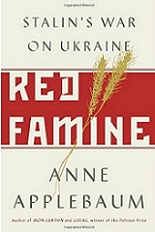
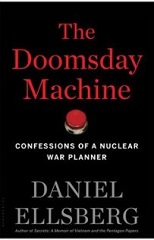 Between August 5 and August 9, 1945, the United States Air Force changed the course of history when the B-29 pilots dropped atomic bombs on the Japanese cities of Hiroshima and Nagasaki. Today, more than seventy years later, the debate regarding whether President Harry Truman (1884-1972) was right to give the final order to drop the bombs rages on. The images taken in Japan following the bombings are still shocking even today and upsetting for many viewers. And for many others, the concern remains that the world could once again see a nuclear weapon used in warfare. It is commonly believed that August, 1945, was the only time atomic weapons had been used in combat. But what actually constitutes “use”? That is a question Daniel Ellsberg addresses in this chilling and eye-opening account his time as a nuclear war planner. Some readers may be familiar with Ellsberg’s name due to his surrender, trial and the dismissal of all charges related to the Pentagon Papers which revealed the mistakes and poor judgment that allowed the United States to go to war against North Vietnam. In fact, Ellsberg’s papers were the target of the crew of burglars that would go on to be discovered at the Watergate Complex. Their arrest and the cover-up by Washington helped lead to the resignation of Richard Nixon. Incredibly, Ellsberg has outlived many of the major figures from that era and what he has accomplished, learned and ultimately disclosed are facts that should concern and be known to every American.
 Today, sixty-four years after his death in, Joseph Stalin (1878-1953) remains one of the most polarizing and studied figures of the 20th century. As the leader of the Soviet Union during the Second World War, he enforced the legendary Red Army as it fought off a German onslaught and helped the Allies put an end to Germany’s Third Reich. Following the war, tensions between the United States and the USSR escalated giving birth to the Cold War. In 1991, the USSR collapsed and today Russia is under the control of Vladimir Putin, undoubtedly one of the world’s most controversial figures. Stalin’s reign may seem to be in Russia’s distant past but it was less than one hundred years ago that Stalin ruled with an iron fist, striking fear into the hearts of not only his enemies but those closest to him. Rumors have surfaced over the years regarding everything including his love life, health, mental state and bungled policies. But who was the real Joseph Stalin? Born Ioseb Jughashvili in Gori, Georgia on December 18, 1878 to Besarion “Beso” Jughashvili (1850-1909) and Ketevan “Keke” Geladze (1858-1937), few could have imagined that the young child would grow up to rule an entire nation. His life in later years became mysterious to those inside and outside of Russia. Misconceptions and falsehoods have spread, causing even more confusion about the truth. Stephen Kotkin has takes on the late leader’s life in a multi-part definitive biography that is simply outstanding.
 FREETHINKING BIBLIOPHILE
You must be logged in to post a comment.