
 January 30, 1933 – Adolf Hitler (1889-1945) becomes Chancellor of Germany and his National Socialist German Workers’ Party becomes the dominant political party in Germany. As Hitler marched through the streets of Germany under the banner of the Third Reich, millions of Germans watched the history unfolding before them with both anticipation and apprehension. Among them was a young Germany boy named Hans-Jürgen Massaquoi (1926-2013), who was born to a Liberian father and German mother. Over the next twelve years, he witnessed the transformation of German society in a bastion of racial ideology founded on Hitler’s unrelenting thirst for world conquest. This is the story of his life growing up black in Nazi Germany.
The story begins in the wake of World War I in which the Treaty of Versailles had forced Germany into a financially grueling situation. On a cold day in January, 1926, Bertha Baetz (1903-1986) and Al-Hajj Massaquoi welcomed the birth of their son Hans. For the Liberian Ambassador to Germany Momolu Massaquoi (1869-1938), his grandson Hans was a welcomed addition to the family but just three years later, life as they knew changed permanently as upheaval in Liberia forced the ambassador to return home. He was followed by his son Al-Hajj but Bertha and Hans remained in Germany, unaware that an ambitious and fanatical Austrian menace was plotting the future of an entire country. In seven years time, the reality of Adolf Hitler became horribly real. Those who were able to leave Germany did and in some cases, left behind nearly everything they had. But others remained such as Hans and Bertha. What they would see as the Nazi Party began its mission of racially purifying Germany is hauntingly captured here by Hans in this book that is sure to leave every reader with even more of an understanding of how ideology can develop into atrocities.
The title of the book gives the reader a clear idea of what to expect. But there is far more to the story than what one might assume. Growing up in Hamburg, love for his country and heritage is instilled in him from a young age by his Tante Möller who shows him the way to become an outstanding German citizen. As a single mother, Bertha is tasked with raising a biracial child in a country where race is becoming the deciding factor for some between life and death. Young Hans is unaware of the concept of race as a child until he begins to hear the term “neger”. School proves to be the battleground and those tasked with his safety and education come from different sides of the fence such as the welcome Fräulein Beyle and Herr Schneider. They stand in stark contrast to the sadistic Herr Grimmelshäuser, Herr Wriede and Herr Dutke. Readers should be aware that these may not be the actual names of the teachers as Massaquoi points out at the beginning that some names were changed but the events are correct.
Outside of the classroom, other important figures in his life enter the story as he passes from young boy, adolescent youth and into adulthood. In each phase, he goes through a transformation as the world changes around him but he is always aware of his status as a “nichtarien”. His mother Bertha proves to be his guardian angel and after one demoralizing day at school which results in Hans wanting to reject his own physiology, mother and son have the following exchange:
“Whether you know it or not, your hair is beautiful,” she tried to assure me. “It’s easy for you to talk,” I told her, pointing to her lustrous, wavy dark brown hair. “You’ve got straight hair like everybody else.” “I would give it to you if I could. I so much wish I could, if that’s what would make you happy,” she said, “but I can’t. So you just have to learn to like the hair you’ve got. One day, when you are older, you’ll understand and agree with me when I say that your hair is beautiful.”
As the book progresses, we witness Hans’ inner turmoil as he struggles to fit in with his classmates while coming to terms of the growing influence of Nazi ideology that had reached the classroom as well. And the restriction placed upon “non-Aryans” all but closed off Hans and other minorities from mainstream Germany society. In spite of the adversity, he continues to develop physically, mentally and emotionally. Love and friendship are two pillars in the story and come in the form of several people that we meet such as Gerda, Gretchen Jahn, the Giordano family, Onkel Karl, Tante Grete, Trudchen and Inge. And as a bonus towards the end of the book, Massaquoi provides un update on all to the fullest extent possible. It is said that people come into our lives for a reason and I believe that is fully on display here.
The war soon becomes the central topic in the book when Hitler accomplishes the infamous Anchluss with neighboring Austria. The Nazi empire began its steamroll across Europe but the first Allied bombing raid on Hamburg caught the attention of German citizens who had believed up until then that the Luftwaffe was invincible. Without re-telling the story of the war, it can be said that as the war dragged on, Germany sank further into dire straits. The author reveals what he saw in Hamburg before and during the deadly bombing raid known as Operation Gomorrah in 1943 which killed over 41,000 Hamburg citizens. After leaving Hamburg with his mother and staying with relatives in Salza, Massaquoi has a glimpse of the camp at Kohnstein known today as Concentration Camp Dora-Mittelbau. And while he never enters the camp, what he describes is more than enough to inform us of what was taking place.
Hitler’s death on April 30, 1945 sealed Germany’s fate once and for all. But surprisingly, the news was met with a range of reactions as will be seen in the book. Post-war Germany found itself in ruins and under Allied occupation. The author soon learns that everything has a price and provides us with interesting anecdotes regarding his interactions with both American and British Troops. Smitty and Warner are two of the prominent figures with the latter becoming a lifelong friend. But Hans is determined to get out of Germany and reestablishes contact with his father Al-Hajj in Monrovia. It is here that his life takes a very big turn that results in him eventually making his way to the land of the free and home of the brave.
Massaquoi’s experiences in Monrovia and Lagos are certainly a mixed bag. But his friendship with his half-brother Morris and determination to become his own man set in chain the series of events that culminated with his arrival in Chicago, Illinois in 1950. But the story is far from over and even Uncle Sam comes calling. His life story is simply unbelievable but also a testament to the human spirit to continue even in the most adverse conditions. And his reunion in America with the most important people in his life bring the book to a fitting close. The horrors of the Third Reich are well-known and there are no shortages of voices from within Nazi Germany that have told the world of what they saw. Adolf Hitler, a man consumed by the idea of racial purity and hatred towards those of the Jewish faith, ignited the spark that set off World War II and nearly caused the completely destruction of Germany. But he could have never guess that there was a young biracial child who would grow up one day and write of a time in world history that he was destined to witness.
ISBN-10: 0060959614
ISBN-13: 978-0060959616
 Learning one’s family history can be an enlightening and liberating experience. However, it can also reveal many truths that some wish to remain hidden. So what happens when you discover that your grandfather, the younger brother of a key architect in the “Final Solution” was not as innocent as you have been led to believe? Well, that is what happened to Katrin Himmler, whose grandfather Ernst Himmler (1905-1945), was the younger brother of Schutzstaffel Reichsführer Heinrich Himmler (1900-1945). Himmler’s father had asked her to search the Federal Archives in Berlin for information on his father Ernst and what she discovered was a trove of information not just on her grandfather, but on her uncles Heinrich and Gebhard Himmler (1898-1982). What started out as simple research request, evolved into the family history contained within the pages of this eye-opening account of the Himmler story.
 The Second World War remains one of the most studied and brutal conflicts in the history of man. The rise and fall of Adolf Hitler and the Third Reich have become a case studies for history buffs and students learning about a war that nearly resulted in the complete destruction of Germany and the continent of Europe. It is true that Hitler had many supporters but he also had large numbers of detractors, some of whom were serving in his own army. The attack of personal liberties and treasured institutions, caused shock and consternation across Germany. The persecution of the Catholic church by the National Socialists is among Hitler’s darkest deeds. Throughout the war, Hitler would ramp up his attacks on the church and his bloodthirsty purge of religion knew no bounds. The horror with which the clergy watched the rise of the Third Reich spurred many to action and they were determined to rid Germany and the world of the man they saw as the very incarnation of evil. Among them was Dietrich Bonhoeffer (1906-1945), the man who became a pastor, martyr, prophet and spy.
 On September 1, 1939, the Second World War began as the German army invaded Poland as part of Adolf Hitler’s quest for world domination. Britain had warned Germany that any military action against Poland would result in England coming to the aid of its ally. Interestingly, Adolf Hitler (1889-1945) did not want to go to war with England, preferring to accomplish the annexation of Poland through diplomatic methods after having successfully partitioned Czechoslovakia in what is infamously referred to as the “appeasement at Munich”. But if Hitler did not want to wage war against Britain, knowing their intention to save Poland, then why did he give approval to the invasion that plunged the world into a major conflict? The answer to that question lies in the story of his Foreign Minister and Nuremberg defendant, Ulrich Friedrich Wilhelm Joachim von Ribbentrop (1893-1946).
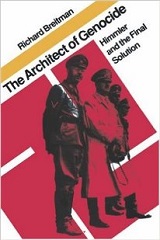 In modern history, the Holocaust ranks among the worst atrocities committed against a group of people by another. The systematic segregation and later extermination of over 6 million Jews throughout Europe brought shame, anger and retribution upon Germany. Today the Holocaust is a distant memory and survivors of the crime are now in their advance years with the number of living survivors declining each year. Recently, Elie Wiesel, the best-selling author of the classic ‘Night’ died at the age of
  The Holocaust remains one of the most regretful moments in the history of mankind. The Final Solution, engineered by Adolf Hitler’s Nazi government, resulted in the deaths of over six millions Jewish men, women and children. The many concentration camps became factories of genocide and symbols of the Third Reich’s relentless efforts to remove all Jewish citizens from Germany and the occupied territories of the Reich. As Hitler made his rise to power, many Jews fled Germany fearing the worst under the rule of the tyrannical dictator from neighboring Austria. Others were forced to seek refuge in Germany and survive in any way possible. But still there were other Jews who found help among non-Jewish Germans and were able to hide themselves right in Berlin, under the eyes and ears of the N.S.D.A.P.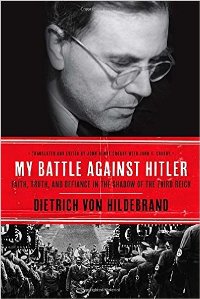


 FREETHINKING BIBLIOPHILE
You must be logged in to post a comment.