Lady Death: The Memoirs of Stalin’s Sniper – Lyudmila Pavlichenko

When I saw this title in my recommendation list, I paused for a moment while focusing intently on the cover. As a history lover, World War II (1939-1945) always fascinates me, but I also realized that the material I tend to read typically comes from the American point of view or from those who survived the horrors of the Third Reich. This book was a change of pace and allowed me to read about the war from the view of a soldier in the Soviet Union‘s Red Army by the name of Lyudmila Mikhailovna Pavlichenko (1916-1974). This is her story of how she joined the war effort and became one of the Soviet Union’s deadliest snipers.

The story begins in her native Ukraine in 1916 during World War I, and her childhood post-war is ordinary. But when she is introduced to a rifle, shooting becomes an addictive hobby. However, her life a sniper is still years away and she explains the changes in her personal life including her first husband Alexei and son Rostislav Alekseevich Pavlichenko (1932-2007). But everything changes for all of them when Nazi Germany invaded the Soviet Union on June 22, 1941 in “Operation Barbarossa“. Lyudmila answers the call and joins the military as a sniper determined to defeat the German menace. At this point in the story, the book changes gears as the ugliness of warfare takes center stage. Readers may find her candid discussions of the kill shots she takes to be shocking but it is crucial to remember that the war had affected and shaped her, and Germany atrocities against Soviet men and women had conditioned them to believe that Nazi deaths were the only options. In between her kill shots, she also suffers battlefield wounds, and one incident nearly claims her life. She revisits each one highlighting the danger snipers faced when out on their missions. Frankly, death was everywhere and I felt chills as she recalls the missions.

In between military missions, briefings and keeping her skills sharp, she also finds love in second husband Alexei Kitsenko. The relationship blossoms despite the chaos around them and their roles as snipers, but a series of events shatter everything between them, and as I read I could feel the grief in her words. The section about Alexei is both shocking and heartbreaking, and it also reinforces the words that war is hell. However, a war was still brewing, and Lyudmila’s job was far from finished. She was determined to leave her mark, and it is apparent from the awards she received and her record that she accomplished that goal. In the Soviet Union she becomes a star and is chosen to lead a delegation to visit the United States. Prior to reading this book, I had heard of Pavlichenko’s name, but her story was not familiar with me, and the section about her trip abroad was a surprise. But this is why I love reading as much as I do because there is always something to learn. And when visited America, it was the United States that something to learn.

Upon arriving in America she meets the first couple, President Franklin D. Roosevelt (1882-1945) and wife Eleanor (1884-1962). I enjoyed this part of the book, and learning about her experiences in Washington was fascinating. In the years before the Cold War, the Soviet delegation receives star treatment in America where they are seen as “ambassadors” of good will approved by Soviet Premier Joseph Stalin (1878-1953) himself. There are humorous moments during the visit and some moments which are bewildering, but it is her friendship with the first lady that stands out. It also continued after the war as readers will learn. Following the visit to America, it was off to England where Prime Minister Winston Churchill (1874-1965) and wife Clementine (1885-1977) were waiting for their Soviet guests. The British visit is equally as interesting, and as I read, I thought of the differences in culture and how we as people find common ground. The west was genuinely curious about these Soviet troops and in particular a female sniper which was unheard of in American and British military circles. Pavlichenko was a rarity, but she was appreciated back home, and when the delegation returns to the Soviet Union, she is summoned by Stalin himself who wants to know all about her trip. However, the meeting results in changes she did not expect but nothing negative.

After her service in the field, Pavlichenko is assigned other functions to assist the war effort until the Nazi defeat on April 30, 1945. We follow her after the war when she returns to civilian life and begins to reclaim the parts of her past the war had prevented her from embracing. And although she survived the war, she did not escape unscathed and carried both mental and physical scars with her. But throughout everything she remains humble and tells her story of a young woman from Kyiv (Kiev) who went on to became one of the deadliest snipers in Russian history. And I enjoyed reading her autobiography. Sadly, on October 10, 1974, Lyudmila Pavlichenko died at the age of fifty-eight following a stroke and is buried in Novodevichy Cemetery in Moscow. Post-Traumatic Stress Disorder, alcohol, and physical wounds combined to take their toll later in her life. Pavlichenko died prematurely but during her life, she served her nation as it fought for its survival in the deadliest war in history.

To become a sniper, it is not only important to be able to shoot accurately. One other thing is important – a cold hatred for the enemy, so emotions are subordinated to calculation. Here the iron will of the soldier plays a role. Snipers did not take their eyes of the enemy by day or night, and information in reconnaissance log-books would often be verified through snipers’ operations. A sniper had to know by heart every bump in the ground, every bush in front of his or her position. ” – Lyudmila Pavlichenko

ASIN ‏ : ‎ B07B7MGZ4B
Publisher ‏ : ‎ Greenhill Books,  January 24, 2020

All Blood Runs Red: The Legendary Life of Eugene Bullard: Boxer, Pilot, Soldier, Spy – Phil Keith with Tom Clavin

People have asked me how I decide on the next book I want to read. Well, the truth is I do not always know and sometimes find hidden gems purely by accident. Such is the case with this book. It was not on my radar at all, but I am deeply grateful that I did discover it. And to be brutally honest, I admit feeling a sense of guilt that I did not know of Eugene Jacques Bullard (1895-1961), whose life story is preserved in this biography by Phil Keith with Tom Clavin which left me grateful and humbled. 

Before continuing, I must point out that there are aspects of Bullard’s life lost to history. However, there is a wealth of information about him in public records, and Bullard both wrote and spoke about his life. You might be wondering how this Black American ended up in France becoming an infantry soldier, pilot, business owner, and celebrity in his own right. The proof is in the pudding as they say, and once I began the book, I found myself glued to it, stealing any spare time to open my Kindle and pick up where I left off. There are sections of the book which are not pleasant to read, and readers sensitive to descriptions of warfare and racial discrimination may want to use discretion. Despite the dark moments in the story, the book is an incredible story of a man who made history in his own way.

Bullard’s story begins in the Deep South, in Georgia where he is born in 1895. It is understood that this time in America was exceedingly difficult for Black people, particularly in rural Georgia. And the difficulties one would expect are in the story, highlighting the sacrifices parents made for their children. As for Eugene, it soon becomes clear that life under Jim Crow is not what he wants, and by the age of sixteen, he is on his way to a life abroad which took him to places he could have never imagined. The unorthodox and surprising chain of events detailed by the authors is a testament to the luck and help from others which shape our lives.

Although he had departed from America, the story is far from over. Arrival in the United Kingdom provides the starting point for his European journey which takes him to France and in the trenches during World War I. The story feels like a depiction out of Hollywood, and as I read about the injuries he sustained and the loss of life, I could not imagine the fear and anxiety which must have gripped him and his fellow soldiers. War is brutal and its savagery is on full display here. However, Bullard had an unusual ability to keep pressing forward, first as a boxer and then as a soldier. And when battlefield wounds and a chance opportunity present a rare opportunity, he takes to the skies in the seat of a cockpit. It is here when the story changes gears as the legend is born.

The book has its twists and turns including his brief love affair with a “lady of the night” and the arrival of American forces in World War I (1914-1918) which brings the nightmare of Jim Crow to France where Bullard and his contemporaries make it clear to the Americans that Europe was not the South. Nonetheless, there were those who tried their best to make his life miserable, and Dr. Edmund Gros (1869-1942) proves to be his arch nemesis. Despite the roadblocks, Bullard continues to earn his fame and builds a life in France. Although the country was not void of racial prejudice, Bullard does well for himself and his club became so popular that he entertained people from all walks of life including authors Ernest Hemingway (1899-1961) and F. Scott Fitzgerald (1896-1940).  He also found love and marriage which produced two daughters and an ill-fated son. The marriage did not last, and it is not clear what happened. We have a general idea based on the book, but Bullard remained silent on some details. Regardless, it is a sad moment in his story and the arrival of World War II (1939-1945) would split the family apart. But there is a happy conclusion to their story which will make you smile. The war brought the reality of the Nazi menace to France’s doorstep, and an underground resistance network develops. Bullard finds a friend and partner in Cleopatre “Kitty” Terrier who becomes a lifelong friend and plays an instrumental role in saving Bullard’s family. Resistance to Nazi Germany’s Third Reich was dangerous and Bullard comes close to meeting his maker in one disturbing incident as explained by the authors. The surreal and uplifting story is a  shining moment in the book.

In July 1940, Bullard returned to the United States and Harlem became his home for the rest of his life. But he was not one to sit still and attempts to revisit the past with a trip to his native Georgia. This part of the book will stir emotions for readers who have spent an extensive amount of time away from home. Today we have email, instant messaging, and social media, but in Bullard’s time, letters and telephone were the methods of communication. Reading his plight reminded me of the conveniences of modern technology and the saying that “there is no place like home”. Bullard returned to New York and found employment at Rockefeller Center operating an elevator while attending official functions in Manhattan related to the French government. And that is the iron of his story. In America his skills and war record were unknown but to the French, he was one of their greatest heroes.But a chance encounter with a studio executive gives Bullard his “fifteen minutes” of fame on national television. Alas, the “Black Swallow of Death” had earned recognition on home soil. 

Time catches up with us all and Bullard was no exception. His physical decline is hard to accept but I also thought of the physical and emotional trauma throughout the story and how each took its toll on him. But throughout the book, Bullard kept pressing forward and beamed with pride at the medals and recognition he earned in Europe. And in time, his own country would honor his life in ways he could not have predicted as a young boy living under Jim Crow. His life story is full of highs, lows, heartbreak, and moments of unimaginable glory. This book has quickly become a favorite of mine and I have already recommended it to a close friend. I now recommended it to anyone interested in an incredible story about world history and Eugene Bullard who proved throughout his life that all blood runs red. 

ASIN ‏ : ‎ B07N7G776W
Publisher ‏ : ‎ Hanover Square Press, January 18, 2023

Overland Railroad: The Green Book and the Roots of Black Travel in America – Candacy A. Taylor

In March of this year, my family and I embarked on a road trip to Maryland for a cousin’s baby shower. On Interstate 95, we made a couple of expected stops for hungry stomachs and full bladders. The rest stops were filled with people from all backgrounds, stopping briefly before continuing to destinations across America. Sadly, there was a time when rest stops looked completely different, and for non-white travelers, the interstate highway system was frightening and dangerous. Jim Crow was alive and strong, and across the nation, change was coming but at a slow pace. However, that did not stop millions of people from driving across America, and to aid black Americans, a useful tool called the “Green Book” provided information which could save one’s life. Author Candacy Taylor looks at the Green Book and how it aided black people brave enough to set out on a classic American road trip. 

I was familiar with the Green Book but admittedly, there was much I did not know. So, I made the purchase and started reading instantly. Before I continue, I should point out that this book may cause you to feel angry and feel a sense of outrage. I say this because today it is unconceivable to think that a person of Indian or Chinese descent cannot use a rest stop on an interstate highway because of how they look. But, several decades ago they would have been forced to suffer indignity and humiliation due to restrictive laws which enforce segregation, and the threat of violence from people determined to maintain a social order they saw as being right for everyone. However, the United States was changing, and the movement for civil rights continued to grow. But until legislation guaranteed equal rights, creative tools were needed to navigate society. 

The Green Book was the creation of Victor Hugo Green (1892-1960), a gentleman I knew little about before reading the book. Taylor focuses on his life which begins in New York City. Green had realized that the automobile was going to change America, and black motorists needed both help and protection on the road. In 1936, the first Green Book was born but that was only the beginning. In fact, the author takes us a long journey which focuses not only on the book for travelers, but America’s past and how discrimination affected its citizens. And what she discusses enhances the importance of the book.

Undoubtedly, there are dark moments in the story, but there are bright spots as well. In fact, both white and black Americans played a role in affecting change, and the importance of Esso (ExxonMobil) gas stations and the foresight of the Chrysler Motor Company should not be overlooked. The Green Book is paramount in the account, and the information it provided was invaluable. Imagine wanting to take a road trip but having no idea whether an area is safe because of your ethnicity or needing a restroom and having to use the woods or drive an extra one hundred miles miles because every sign you see says, “no colored allowed”. It seems surreal today, but it should be a reminder of the freedoms we take for granted.

The automobile changed life for millions of Americans, but it also introduced new challenges and dangers which took time to resolve and answer. However, as the author tells the story of the lifesaving book, there is another element to the picture that should not be overlooked. Black Americans began to purchase automobiles, and it was a step up in class. But it did not go unnoticed and the reaction to upward mobility of blacks is a crucial aspect of the Green Book story and shows that America was not only confronting the issue of race but also the issue of class. Further, World War II had opened a door for blacks which they were determined to walk through. It should be noted that there were black people who did not want integration, but not for reasons one may suspect. 

Today, most of the locations in the Green Book are gone, and the book itself has been long out of publication. Its demise is due to several factors, and one adds a twist of irony to the initial need for it. Although the book is now gone, its role and importance in the lives of black people traveling America’s roads will never be forgotten. And if we continue to move forward, we will never need the Green Book again. But to do that, we must always remember where we came from and how far we have progressed. This book fills in the gaps that may be missing for some. 

ASIN ‏ : ‎ B07QDK1MFD
Publisher ‏ : ‎ Holiday House, January 28, 2020

Area 51: An Uncensored History of America’s Top Secret Military Base – Annie Jacobsen

Of all the military installations, few are as mysterious as Area 51 which is located at Groom Lake in southern Nevada. The secretive military base has been the subject of rumors that the United States Government is holding the remains of an unidentified flying object (“UFO”) and extraterrestrial lifeforms. The theories are entertaining but remain unproven. This raises the question of what is Area 51? Annie Jacobsen, author of the best-selling book ‘Operation Paperclip: The Secret Intelligence Program that Brought Nazi Scientists to America‘, takes us on a deep dive into the history of Area 51 to reveal as much as possible about America’s most controversial and mysterious military base.

Prior to reading this book, I did not have any pre-conceived ideas about Area 51. Of course, I have heard and read of rumors that the United States Government is concealing alien lifeform and protecting dark secrets. The allegations are unfounded, but what we do know is that the area is heavily guarded and trespassing is forbidden. As a primer to the story to be told, Jacobsen discusses the controversial Robert “Bob” Lazar, a noted conspiracy theorist whose claims regarding secretive government operations have earned him an audience of likeminded individuals. To some he is a tin foil loyalist but was he completely off the mark? Well, the truth is complex but not as sensational as we might hope.

Looking back at the book, the crux of the story is the finale of World War II. We go back in time to 1945 when Allied commanders are on the brink of a Nazi defeat and a battered Japanese military. The development of the Manhattan Project was pivotal to the use of Little Boy and Fat Man against Japan in August 1945, and they were no secret to Soviet Premier Joseph Stalin (1878-1953). His counterpart in America, President Harry S. Truman (1884-1972), had been thrust into the role of commander-in-chief following the death of his predecessor Franklin D. Roosevelt (1882-1945), and quickly learned of America’s secret weapon. Stalin’s infiltration of America’s military secrets set the stage for the next four decades and paved the way for the growth of Area 51, where research and development reached new heights.

The success of the atomic bombs Little Boy and Fat Man had convinced even the most pessimistic generals that air combat was equally as important as ground troops. But before the story kicks into high gear with the Cold War, Jacobsen discusses an incident in Roswell, New Mexico in July 1947 that provided the spark to the rumors of a hidden UFO. The incident reappears later in the story with a plausible explanation for its origins and a surprising revelation about the aviation parts discovered. However, some mystery remains as to what really happened in Roswell. Whatever took place was serious enough to warrant the attention of the United States military and America’s intelligence apparatus. Both would play crucial roles in the development of Area 51.

The book is engaging from start to finish, but Area 51’s story takes on a new dimension when Central Intelligence Agency (“CIA”) operative Richard M. Bissell, Jr. (1909-1994) is assigned control over the base, to the objection of Air Force Gen. Curtis E. Lemay (1906-1990), former commander of the Strategic Air Command and legendary veteran of World War II. Their feud would eventually come to a head in April 1961, when a new President John F. Kennedy (1917-1963) agreed to a CIA mission doomed from the start. But while America was focused on Cuba, the Soviets continued their space program and surveillance on adversaries. The cat and mouse game between America and Russia heats up with U-2 spy flights, espionage, and the belief on both sides of a nuclear confrontation. In hindsight we know that nuclear war did not take place, but that did not stop research and development at Area 51. In fact, the bag of tricks only grew as innovative technology emerged to transform America’s military.

The U-2 spy flights, and the capture of Francis Gary Powers (1929-1977) are also discussed, and both are well-known historical events, but I found the section regarding the development of the aircraft interesting. The engineering behind the new stealth aircraft is surreal, but also not without tragedy through trial and error. Powers’ capture and ordeal made headlines around the world, but they did not stop operations at Area 51. Bissell was removed in 1961 following the Bay of Pigs disaster, but that did not stop Area 51. In fact, defense contractors found a new market as Soviet aggression increased, and a war loomed in Southeast Asia. And in the years to come, a modern technology known as a drone aircraft would take to the skies and change warfare forever. The development of the drone is another interesting section in the book, and we turned the corner with its introduction and use.

While I read, I realized that the book was more important than just Area 51. In fact, it is full of historical information, and Jacobsen’s writing style keeps the narrative going at the right pace. I was aware of some events discussed in the book, but I also learned added information about the height of the Cold War, and classified information which had remained hidden for decades. The more I read, the less I was focused on the existence of aliens or spaceships. It was clear that Area 51 was more than a dumping ground for UFOs. It is a core part of America’s defense and a hub of top-secret activity only those with a certain clearance level are allowed to see. I believe that some secrets of Area 51 will remain hidden for assorted reasons. However, I do not think it is because of sensational claims by conspiracy theorists but instead feel that its importance to the nation’s defense is far too critical to allow compromise. Area 51 will remain off-limits. But Jacobsen has revealed a wealth of information about the mysterious location in southern Nevada.

Readers looking for gossip about hidden aliens, UFOs and other strange items may be disappointed here, but readers interested in facts about the base, and its role in the Cold War and America’s defense network, will appreciate Jacobsen’s work. She admits that she could not learn everything about Area 51, and to be fair there are no public tours of the facility. However, this book is a thorough account of its existence, development, and importance to national security. I would have liked to learn more about engineer and scientist Vannevar Bush (1890-1974), a co-founder of Raytheon and will have to add a biography of him to my reading list. But in regard to Area 51, this book is exactly what I needed. Highly recommended.

ASIN ‏ : ‎ B004THU68Q
Publisher ‏ : ‎ Little, Brown and Company
Accessibility ‏ : ‎ Learn more
Publication date ‏ : ‎ May 17, 2011

Wilson – A. Scott Berg

Recently, I was in the mood for a good biography and saw this book for sale in my list of recommendations. I thought about current events, and the discussions regarding the system of checks and balances within the United States Government. Like millions of other Americans, I knew the name of the nation’s twenty-eighth President Thomas Woodrow Wilson (1856-1924), but did not know the story of his life. I have seen comments on social media about the pros and cons of his time in office but thought that it was crucial to learn for myself the impact he had on the United States of America. This biography by A. Scott Berg is thorough, well-written and has a beautifully flowing narrative that kept me engaged from start to finish. I came away from the book with a range of feelings but also with a deeper understanding of American history.

This book is long, well over seven hundred pages, but at no point did I feel a sense of boredom. In fact, the opposite occurred, and I found myself eager to keep reading as Wilson’s life moves forward until the end. As the story begins, the author points out that although Wilson was not born in the American South, he was a Southerner and had sympathy towards the region. That is not to say he was a supporter of the Confederacy, but his upbringing in the South impacted his decisions later in life, which are explained in the book. From the beginning, religion is a significant aspect of the story with Wilson clinging to his faith through all trials and tribulations. Today we would call it prudence, but in Wilson’s era the bond between politician and the gospel were deeply intertwined. Wilson was not fanatical, but his daily routine removes any doubt that he believed in the Lord’s book.

Wilson was exceptionally bright, and I was not surprised by his academic advancement in the book. I was not aware that he served as president of Princeton University. That part of the story is fascinating, and his endeavors to move the school forward pay off exponentially. But his time as president is not without its difficulties, and we see in the story that even on campus, politics in administration are a source of consternation. However, Wilson remains steadfast and attracts the eye of political donors who see in him a candidate for public office. And it is at this point in the book where the story changes gears.

Politics is not on his radar, and today we would call Wilson a “book worm”. We would also call him “progressive” in some ways and “regressive” in others. The public soon learned when he was elected Governor of New Jersey. This section of the biography moves quickly, and the reason is that Wilson was in office briefly before he takes another leap to the White House in 1912. That story is surreal, and I am sure for Wilson it was mind boggling to be on the brink of becoming the nation’s commander-in-chief. He went on to win the election but also inherited much larger problems not only affecting New Jersey, but the entire country. At his side is first wife Ellen (1861-1914) who bears him three daughters and proves to be the source of support Wilson needs as the rigors of the oval office take their toll. Wilson proves to be a competent leader, well-liked across the nation and blessed with oratorical skills paralleled by few. But tragedy strikes in 1914, leaving him a shell of himself. This is compounded by health issues, one of which returns later in life to wreak havoc on his body. The health episodes occur quite early in his life and never go completely away. The lack of television and social media made it easier to safeguard the physical issues which were significant. And during the last year of his presidency, the secrecy went to new levels as the public remained in the dark about Wilson’s fading health.

A second wife Edith (1872-1961) becomes the rock in Wilson’s life and from all accounts, they enjoyed a happy union like his first marriage. Edith would outlive Wilson by thirty-seven years and even attend the inauguration of another president blessed with the gift of speechmaking. However, there was another woman in his life named Mary Hulbert Peck (d. 1939). The the jury is still out on whether she was his mistress and while the author suggests that it was not an “affair” in the way we think of it, the truth remains unknown. What we learn in the story is that Wilson wrote her letters, sent books, and remained in contact with her throughout his life. But his wives met Ms. Peck and Wilson never hid his affection for them from her. This part of the story is curious but there is no smoking gun.

Wilson’s presidency is the crux of the book and paramount during this time was World War I, a conflict in America had remained neutral until 1917.  Wilson lays out the case for America’s involvement. It is interesting, and an eerie premonition of what would happen in 1941, as another president and Wilson protege Franklin D. Roosevelt (1882-1945) gave a moving speech in the wake of the Japanese attack on the Pearl Harbor naval base. Following the allied victory, Wilson is convinced another world war is lurking in the future and throws his support behind the Treaty of Versailles and the League of Nations. But first he had to convince America that both were in its best interest, and to do so, he embarks on a cross-country tour speaking directly to American about the future of the planet. I found this part to be absolute gold because it is no frills, just the president speaking to the people in the way only Wilson could do. But for all his successes and crowd moving, Wilson failed in other areas.

I had once heard that Wilson “segregated” Washington. While he did not give any such orders himself, his decisions did result in re-segregation of the federal workforce, and his justification for allowing it to happen is beyond short-sighted. Wilson was undoubtedly a product of his times, and had Southern beliefs when he came to race relations although he did not believe in slavery and wanted blacks to excel in life. However, he fell short of being the progressive president he was seen as by many when failing to confront racial discrimination headfirst. The author pulls no punches about Wilson’s shortcomings when it comes to African Americans, and the missed opportunities to correct the nation’s wrongs. Added to this is the screening at the White House of a film which reinforced the vision of the Confederacy and set blacks back decades. To be fair, the author shows no proof that Wilson was a supporter of the film, nor did he promote it but regrettably kept silent. While I read, I had hoped to see a statement condemning the film, but it never came. For Wilson, racial discrimination was a problem, but it would always take a back seat to world issues. I should point out that he made the mistake of surrounding himself with people who had no desire to see blacks ever have success in America. Frankly, his cabinet had its share of white supremacists. And one of Wilson’s subordinates marries the first couple’s youngest daughter, which adds a layer of complexity to his second term and personal life.

Health remains a constant issue in the book, and Wilson’s decline is evident as the story progresses. After leaving Washington, D.C., he makes several public appearances as discussed by the author, but the Woodrow Wilson of old is long gone. Left behind was a senior ravaged by strokes and the stress of the presidency. Edith does her best to keep him in good spirits but father time spares no one and the former president takes his last breath on February 3, 1924. The last moments of his life are without fanfare, and when he makes his departure, it marks the end of an incredible life that I enjoyed reading about. I neither admired nor despised Wilson but did feel he could have achieved greater ideas and goals. But I also reminded myself that the world was a different place in 1924. But the past is always prologue. This biography is a fair look at the life of Woodrow Wilson and America under his watch. If you are watching the world’s events and want to know more about how we reached this point, this book is a good addition to every library.

ASIN : B00B1FG7QO
Publisher: Berkley, September 10, 2013

Days of Rage: America’s Radical Underground, the FBI, and the Forgotten Age of Revolutionary Violence – Byran Burrough

The first lesson a revolutionary must learn is that he is a doomed man.” – Huey P. Newton (1942-1989)

On August 22, 1989, former Black Panther Party co-founder Huey P. Newton was shot and killed on a street corner in Oakland, California. His death was sudden and violent, and a reminder that the streets are unforgiving. Newton’s notoriety as a representative of Black voices during the Civil Rights Movement earned him a place on the watchlist of the Federal Bureau of Investigation (“FBI”). To some Newton was a dangerous radical working to destroy America but to others he was an icon who had the courage to stand up to a system in need of an overhaul. Regardless of opinion, Newton was only one of many people who took the streets determined to change America by any means necessary and were not afraid to use violence. Sadly, that meant collateral damage and fear during an era author Bryan Burrough calls days of rage. This is the story of the under radical movement in the United States which produced some of the most dangerous figures this nation has ever seen.

The book is extensive but focuses on several main organizations whose names are well-known. The first is Weatherman a/k/a The Weather Underground  which is credited by the FBI to having set off twenty-five bombs in U.S. Government buildings, police stations and the office of the California Attorney General. And its stand out star was Samuel J. Melville (1934-1971) whom we learn of in the story, along with Bernadine Dohrn who ironically is a retired law professor. I did not know about Melville or Dohrn prior to reading the book nor was I familiar with Weatherman. However, by the time I finished the book I was firmly aware of its existence, its actions, and its dark legacy. Burrough delivers on the goods and takes us inside Weatherman and the anarchy it caused. But this is only the beginning in a long book that is nothing short of a roller coaster ride.

As a primer, the author discusses the Civil Rights Movement which sets the stage for the violence to come. However, what is interesting is that neither Dr. Martin Luther King, Jr. (1929-1968) nor Malcolm X (1925-1965) were “extreme” compared to the others figures the author discusses. Dr. King had always preached non-violence and Malcolm strongly believed in self-defense by any means necessary. Neither led any violent raids or set off bombs but the cause they fought for, believed in and died for, was the proof others needed to escalate resistance to levels which caught the attention of the White House. The Black Panther Party found itself on the radar of the FBI and in due time the bureau would make use of its COINTEL program to destroy all organizations it deemed enemies of America. Newton and his colleagues would fall victim as would others whose lives are exmained in the book. The FBI was focused but the underground radical movement was growing exponentially. And as the story progresses, the suspense heightens, and the tension builds as radicals attempt to turn the United States upside down. Violence, sex, drugs, fame and calls for revolution form a potent mix from which both charasmatic and outlandish figures emerged in their quest to change the nation permanently.

I mentioned earlier that there are several organizations discussed in the book. Aside from Weatherman, there is Donald “Cinque” DeFreeze (1943-1974) and the Symbionese Liberation Army (“SLA”) whose story on its own is surreal. Of course, it cannot be told without addressing the abduction and enlistment of Patty Hearst.  Her story has been told by others, and it is thoroughly presented here as well but I could not help but shake my head in disbelief DeFreeze’s bizarre rhetoric and his ability to attract followers. The downfall of the SLA and its tragic finale left me with chills, but the book was far from over. In fact, while the SLA is conducting its unorthodox fallacies, members of Weatherman are still moving around America. And the chaos they created would be amplified by more extreme radicals whose names are synonymous with bank heists and gun battles with law enforcement.

The name Raymond Luc Levasseur did not stand out at first but older readers may be familiar with his story. However, that changed as the story progressed and the organization to which he belonged, the United Freedom Front, made itself known in a string of bank robberies and getaways straight out of Hollywood fiction. A tour of duty in Vietnam and racial discrimination had help shape Levasseur into the radical the FBI wanted off the streets as soon as possible. But that did not happen and the story of how Levasseur evaded capture is one of the more fascinating parts of the book. He was not alone and had a family to support and had been joined by other adults. Their ability to pack up and leave on a moment’s notice is surreal and their ability to evade capture was almost flawless except for one crucial mistake. To be fair, bombings were occurring with such frequency that law enforcement officials struggled to keep up and keep track. And just when it seemed that one group might be on the verge of extinction, another rose to the occasion.

My father had previously told me the story of William Morales, a member of the Fuerzas Armadas de Liberación Nacional Puertorriqueña (“FALN”) who had severely injured himself while making a bomb in his Queens apartment. The accident is gruesome but there is more to the story than my father had explained. In fact, Morales’ s disfigurement and escape from justice is unbelievable due to the limited use of his hands and impaired vision. His disappearance from Bellevue Hospital left me speechless. Despite a manunt and nationwide attention, Morales remained on the loose and is still alive today,  living in Cuba along with another radical in our story, Joanne Chesimard a/k/a Assata Shakur who remains a wanted fugitive by the FBI. The reasons for her status as a fugitive at large are explained in the book, in particular the shootout on the New Jersey Turnpike on May 2, 1973, in which Trooper Werner Foerster was shot and mortally wounded. The full story of the traffic stop, shootout and her conviction are too extensive for this book but the author weaves into the narrative without breaking the pace or weakening its intensity. Morales and Shakur will likely remain in Cuba for the rest of their lives but there was another Shakur who did not fare as well.

If you are familiar with the late rap star Tupac Shakur (1971-1996) you will be familiar with the story of his step-father Mutulu Shakur (1950-2023), a member of the Black Liberation Army whose actions are some of the darkest parts of the book. Shakur’s descent into radicalism sets him on a dark path destined for destruction. And that point is driven home when Shakur and his co-conspirators rob a Brinks armored car at the Nanuet Mall in Nanuet, New York on October 20, 1981. The full story of the robbery is too intricate for a blog post, but I was glued to the book as the drama unfolded. It is mind blowing and horribly tragic. The robbery left two Nyack police officers and an armed guard dead, and resulted in Shakur serving forty years in prison before being released for health reasons in December 2022. The Brinks robbery remains etched in New York State history and is a chilling chapter to a book that pulls no punches. Burrough gives us an uncut look into America’s haunting past and the years in which armed struggled was a calling card for aspiring young revolutionaries across the country.

Burrough’s book is long but it is beautifully written, well researched, and powerful. The history contained within the book is not pleasant but what the author discusses can serve as reminders of how far America has come and where it should never return to. If you lived through these years and recall the level of danger which existed, this book will bring back profound memories. I intend to discuss it with my father who has always said that the 1960s and 1970s were scary times because of the threat of nuclear war, assassinations, social unrest, revolution, and the rise of serial killers. Many of the figures in this book are now deceased and others well into their senior years are no longer on the streets planning acts of violence. But they have not forgotten theirs nor has America. Their legacies are complex depending on who you ask but the fact remains that hope move side by side with fear as the radical underground grabbed the country’s attention. This book is an invaluable tool in understand how and why the radical underground came to be.

ASIN ‏ : ‎ B00LFZ84PC
Publisher ‏ : ‎ Penguin Books (April 7, 2015)

Black Snow: Curtis LeMay, the Firebombing of Tokyo and the Road to the Atomic Bomb – James M. Scott

The surrender of Japan on August 15, 1945, formally marked the conclusion of World War II after five years of anarchy in Europe and Asia. Germany had previously surrendered on May 8 following the collapse of German Chancellor Adolf Hitler’s (1889-1945) Third Reich. Allied commanders felt relief as it became clear that the planned ground invasion of Japan in the autumn of 1945 would no longer be necessary.  The deployment of atomic weapons developed at Los Alamos, New Mexico, ushered in a new era in which world destruction became hauntingly real. America’s use of the bombs remains controversial, but President Harry S. Truman (1884-1972) remained firm in his position that the bomb was needed to end the worst war the planet had seen. Detractors of Truman will point out that Japan would have been defeated without the use of atomic weapons. Of course, we will never know this for certain but the story of the air raids across Japan which included firebombs and the use of the atomic bombs “Fat Man” and “Little Boy”, is interesting and removes any doubt that Japan would lose the war. Author James M. Scott explores this controversial subject and the man whose name sent chills down the spines of enemies, Gen. Curtis E. LeMay (1906-1990).

Before continuing, I want to issue a disclaimer to readers sensitive to descriptions of death and warfare. This book is not easy to read and if you believe that America should never have used atomic weapons, then it may not be for you. And though the author neither condemns or condones the use of either weapon, it is a case study on how Air Force commanders analyzed the failure to cripple Japan, and the lessons learned to inflict maximum devastation on the “Land of the Rising Sun”. But before we arrive at Japan’s doorstep, the author revisits the air campaign in Europe which played a crucial role in Germany’s defeat. The bombings of Dresden and Hamburg are discussed, and readers familiar with each event know that following each air raid, the German people realized increasingly that an overwhelming victory was an illusion. As to when they knew the war was lost is hard to pinpoint, but Operation Gomorrah on July 10, 1943, was a wake-up call. The advance of the Soviet Red Army in 1945 signaled that the end was near, and on April, 30 Hitler lived his last moments buried in his underground bunker before committing suicide. Germany had lost the war, but Japan continued to resist and the grim reality of mass casualties in a ground invasion was hard to accept. But everything changed when LeMay was given free rein to go after Japan. On a side note, LeMay had served in the European Theater and was re-assigned to the Pacific in 1944.

“Tokyo,” LeMay declared, “would be our target—the primary target, the secondary target, and the only target.”

Curtis E. LeMay is one of most controversial military figures in American history, and rightfully so. To some he is seen as a war criminal without feeling who would stop at nothing until victory was secure, but to others he was the person needed to conduct difficult orders which required a cold detailed analysis. The truth about LeMay lies in between both and contrary to his stern appearance, he did have a soft side. Snippets of his letters back home to wife Helen (1908-1992) and daughter Patricia Jane LeMay Dodge (d. 2016) reveal the effects of the war on the LeMay family. But on the outside to those who served under him, he was as tough as they came. Although Scott provides a good discussion of his life, the biographical data is brief in comparison to the larger story at hand which is the crux of the book. Readers who are interested in LeMay’s life will enjoy Warren Kozak’s ‘LeMay: The Life and Wars of General Curtis Lemay‘, which is a good biography of the famous aviator. Here, the story focuses on defeating Japan, and LeMay was determined to bring the empire to its knees. And this is where the story takes a darker turn as the air raids increase and the bombs become more severe in nature. 

As I read the book, I personally did not have difficulty with the subject matter and was aware of LeMay’s role in World War II. I expected a grim picture to emerge as the firebombing campaigns set Tokyo and other cities ablaze. In fact, it is a raw and unfiltered look into the final stages of the war and the destruction from the air raids masterminded by LeMay and his subordinates who ensured that the B-29 bomber earned a place in military history. But as one would expect, it is impossible to finish a book such as this without the issue of morality coming up. The post-bombing descriptions are graphic, but they drive home the brutality of war. And they also force us to confront whether LeMay was morally wrong for his successes. Surely, Japan was brutal to its Asian neighbors and had attacked the United States first, but what occurred under LeMay’s watch disturbed even the most seasoned military veterans. One one point, LeMay issues an interesting statement which makes it clear that if the Allies had lost, he knew his life would be over. But despite the firebombing raids, Japan still refused to surrender. Unbeknownst to Japan, in early summer 1945, LeMay is briefed on a new weapon at Los Alamos and its fate is sealed. 

The remainder of the book following the revelation of the atomic weapons focuses on the plans drawn up to drop the two bombs on Japan. It is not a discussion of the planning or work at Los Alamos. Organizational issues are discussed as LeMay’s squads prepare for the drops. And when they happen, the impact of what transpires can be felt while reading. Scott heightens the suspense as America unleashes weapons that changed history. On the ground, the result is swift, deadly, and catastrophic. And for many years afterwards, Japanese men, women and children would continue to suffer from the effects of the bombs. But they had the intended effect, and the emperor soon realized that destruction was in store if Japan did not surrender. In hindsight we know that it did but in August 1945 after the second bomb was dropped, military officials waited on edge for confirmation that Japan was waiving the white flag. That moment soon arrives and the announcement by the emperor is included in the book, bringing the narrative closer to its conclusion. 

After I finished the book, I sat for a few minutes deep in thought. I had my own questions about LeMay’s actions but also reminded myself that America was at war. And had Japan continued to fight, commanders in the Pacific were ready to drop more atomic weapons which would have resulted in complete destruction for Japan. And a ground war would have resulted in over one million casualties. The air raids were horrific, but they did bring the war to an end. Finally, every military has its own LeMay, that commander who can detach feelings from the mission at hand to ensure maximum carnage and victory. Throughout his life he  never regretted his actions and felt that it had to be done. There is an old saying that “war is hell”. It is but there are lessons to be learned so that the same mistakes are not repeated by future generations. And war also contains warnings not to be ignored. In successfully engineering Japan’s defeat, LeMay vindicated the late Captain William Lendrum “Billy” Mitchell (1879-1936) who warned that air defense was being overlooked at America’s peril. Mitchell was a fierce advocate for air power and his relentless drive to convince Washington earned him a court-martial. But in December 1941, his warnings came back to haunt the country when the Japanese military attacked the U.S. Naval Base at Pearl Harbor. World War II is a part of the past, but it should never be forgotten. The war claimed millions of lives and left millions homeless and refugees as they wandered about in cities left in ruins. But the war also provided pivotal moments in the lives of those who served and survived such as the late Gen. Curtis E. LeMay. Highly recommended.

I had to select a man for the job who had experience, knowledge, judgment, but who was also cold as steel when it came to sending out his missions. I selected Curt LeMay.” —GEN. HAP ARNOLD NOVEMBER 7, 1948

ASIN ‏ : ‎ B09TQ2RRFQ
Publisher ‏ : ‎ W. W. Norton & Company (September 6, 2022)

The Lynching: The Epic Courtroom Battle That Brought Down the Klan – Laurence Leamer

Warning: This writing contains discussions of sensitive topics which include descriptions of violence and racial discrimination.

On March 21, 1981, police in Mobile, Alabama responded to a call that a body had been placed on Herndon Avenue in the downtown section of the city. First responders arrived to find the severely mutilated body of Michael Donald (1961-1981) which had been tied to a tree. The crime was horrific and left residents of the city stunned. But as police investigated the crime and more information surfaced, Mobile’s dark past would also come into focus, with a spotlight on racial terror under Jim Crow in the South. I placed a disclaimer at the top of the page because this book will affect you. Although the author does not focus extensively on acts of violence, incidents are discussed to emphasize the level of danger black people found themselves living with. Black Alabamans had come to accept that justice was not blind, and if you were not white, your life did not matter as much. However, that would change with Donald’s death. 

Prior to reading the book, I did not know about Donald’s murder, so this was my first time learning about the case. However, the book is more than a discussion of a tragic homicide. In fact, it is a valuable tool for insight into the long struggle for equality in America and the sacrifices made by the people on the front lines who gave their lives so that others could live in peace. After the initial shock of the crime subsides, the focus shifts to the culprits. And we are introduced to Bennie Jack Hays (1915-1993), his son Henry F. Hays (1954-1997), and James “Tiger” Knowles. Of all the books I have read, these men by far are among the darkest figures I have come across. In fact, Bennie was beyond dark, completely unrepentant and the personification of evil. And to remove all doubt, this quote by his own attorney sums it up:

“Bennie was one of the most truly evil people that I’ve ever come across,” says Mays. “Even in my criminal law practice, I’ve had few people I’ve represented who you could say basically were born without a conscience. Bennie Hays had no conscience. None.”

It should be noted that the men were not lone soldiers but members of the United Klans of America (“UKA”), and subordinates to its leader Robert Shelton (1929-2003) who reappears later in the story during civil ligation. Initially the case was cold, but a surprise break by federal agents leads to the arrests of the murderers. And more surprisingly, there is a confession by Henry. But that is far from the end of the story. And though Henry would be convicted of capital murder, the Donald family’s journey had more ground to cover, and this is where we learn about the family’s lawyer Morris Dees. I was familiar with Dees’s name but personal story I did not know. Having finished the book, I can now say that he is one of the most important people in civil rights litigation and the Southern Poverty Law Center (“SPLC”), an organization he co-founded, remains an icon in the never-ending battle for equality. But as readers will see in the book, Dees was not always the crusader for racial justice. In fact, his own odyssey from a “good old boy” to game changing litigator as told in the story is as surreal as the criminal case itself. However, people can and do change. 

In the wake of the criminal case, Dees approaches Beulah Mae Donald (1920-1988) and asks if he can represent her in a civil suit against the UKA. She is initially hesitant, not believing a jury would ever find the UKA responsible for her son’s death. But Dees was determined, and she agrees, and the book takes another turn but one back into time to examine the history of Alabama and Dees’s life. Readers from Alabama do not need a history lesson I am sure, but for those of us who have not lived in the state or are unfamiliar with the contents of the book, you are in for a difficult yet redeeming journey in which we are provided a front row seat to the dark side of human nature and the influence of former Alabama Governor George C. Wallace (1919-1998).  Readers should be aware that the incidents discussed are difficult to accept and seem unbelievable today. However, they happened, and in many cases, the perpetrators of violence escaped punishment. Interestingly, I did notice one source of paranoia for supporters of segregation and discrimination which left me shaking my head in disbelief. I do not want to issue any spoilers, but readers will notice it too as the book progresses. 

The section of the book which focuses on the civil rights era and events in Alabama is haunting. It is hard to put into words how deadly the 1960s was in America and the climate of death which followed civil rights leaders and activists. The violence became so intense that it warranted the involvement of the Federal Bureau of Investigation (“FBI”) and J. Edgar Hoover (1895-1972) himself. And at the top of the chain of command in Alabama there was Wallace leading the fight against integration. Frankly, the story is horrifying but it will also make you realize that there are rights we have today which should be protected at all costs. Wallace was a chameleon in many ways but undeniably responsible for violence which engulfed Alabama. His personal story is equally as dark, but the concluding chapter of his life is a complete 180 degree turn from when he proudly declared “segregation now, segregation tomorrow and segregation forever!”. An irony I noticed in the book is that the most unsavory characters were also the most tragic and their lives did not end well. Karma never forgets. 

Eventually, the civil trial arrives in which Shelton must take the stand and defend the UKA. He is confident of victory and his arrogance seeps through the pages. However, times had changed, Alabamans had seen too much violence and racial terror, and being a Klan member no longer afforded the level of protection that it once did. As someone who works in litigation now, the discussion of the proceedings hit close to home, and I felt overwhelming satisfaction when the jury announced the verdict. The UKA was financially finished, but its members did not disavow their beliefs overnight, and some never did.  But Mobile’s black residents finally had faith that justice was indeed blind. Of course, nothing is perfect, and the case did not eliminate discrimination, but it did show that hate comes with a hefty price tag. In 2006, the City of Mobile renamed Herndon Avenue to Michael Donald Way and made it clear that his name would never be forgotten. And this book by Laurence Leamer ensures that his murder and its impact on Alabama can be studied in the present and by future generations. 

ASIN‏ :‎ B0151VIAKO
Publisher‏ : ‎William Morrow; Reprint edition (June 7, 2016)

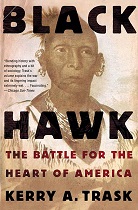
Black Hawk: The Battle for the Heart of America – Kerry A. Trask

While reviewing recommendations from Bookbub, I came across this book from author Kerry A. Trask about Black Hawk (1767-1838), a war chief in the Sauk tribe in North America. Today their descendants can be found in the States of Iowa, Kansas, Nebraska, and Oklahoma. The title grabbed my attention, and I began to ask myself how much I knew of Black Hawk and the Sauk people. I soon realized that I knew extraordinarily little and decided to make the purchase and rediscover a piece of American history. And what I found is a haunting yet important book about our nation’s past.

Prior knowledge of the Sauk tribe or the Black Hawk War of 1832 is not necessary to appreciate this book. The author provides a thorough explanation of Sauk history. The only trouble I initially had was keeping a mental picture of locations in the story. A map nearby may be a useful tool and keeping track of their movements, particularly after the treaty signed between Sauk representatives and the U.S. Government in 1804. This agreement would prove to be the pivotal moment in the story and set the Sauk on a collision course with the United States military. However, America was also going through growing pains, and the author discusses the horrid shape of the army in the early 1800s as confrontations with the native tribes increased with deadly consequences.

It should be noted that the book is not an easy or lighthearted read. In fact, there are parts of the story which will be uncomfortable. There are no glorious moments or riding off into the sunset. This story is vivid, raw and touches on a dark time in American history which should be known, understood, and never forgotten. That does not mean that the book is a story of American aggression against native tribes. While there are moments in which foresight would have helped, actions by the native tribes are equally as haunting and focus on the life and death situations which occurred frequently outside of the borders of the United States. I was mindful that in 1804, there were only seventeen states in the union and territory further west was “unorganized”. I say that loosely due to the fact that British and French fur traders continued to operate outside of America’s borders and further north in Canada.

After learning about the Sauk way of life, the story changes gears when Indiana Territory Governor and future President William Henry Harrison (1773-1841) signs the Treaty of St. Louis with Sauk representatives in November 1804. Each side had their view of the treaty, and the author explains the series of events for the reader to decide. Strangely, the Sauk returned years later and agreed once again on the conditions offered. However, Black Hawk and the older leaders decided that they would not surrender their land and the arrival of white settlers in Sauk territory set the stage for dark acts of retribution which Washington could not ignore. Readers familiar with America’s wars with the “Indians” will not be surprised at the descriptions of violence towards settlers. The text is grim, and emphasizes the risk taken by those venturing into unknown territory. While I read, I was reminded of the Fort Parker Massacre in 1836, discussed extensively in S.C. Gwynne’s ‘Empire of the Summer Moon: Quanah Parker and the Rise and Fall of the Comanches, the Most Powerful Indian Tribe in American History‘, a book which left me speechless. It may be tempting to view the natives as “savages”, but it is imperative to remember that they lived in a world far different from Europeans and had their own customs in regard to conflict resolution and protection of their territory.

The Sauk had been forced to move west in 1831 by military intervention but decided to re-claim their land in 1832. And here is where things escalate. Our ringside seat allows us to see the suspense build as Black Hawk and the association of Fox and Kickapoos, form their war council in response to increasing pressure from the United States. And once the military campaigns begin, the heat is turned up and the months between April and August of 1832 would be remembered for the bloodshed and heartache as the Black Hawk War claimed its victims. Early in the campaign, the native tribes maintain an advantage over American troops, but the military might of the United States and a Iowa County militia Colonel Henry Dodge (1782-1867) would prove to be too much. Interesting, two highly important figures in American history make an appearance in the story: future President Abraham Lincoln (1809-1865) and future Confederacy President Jefferson Davis (1808-1889). This caught me completely off guard and added more intrigue to the story. The climatic Battle of Bad Axe would be the final nail in the coffin of the Sauk but Black Hawk’s story was far from over. However, he could not run forever and eventually accepts defeat, but the story takes a few unexpected turns. Following his death in 1838, the story becomes even more bizarre and disturbing as post-mortem events play out.

This book is a gem, and I did not anticipate the impactful story contained within. It is well-researched, well-written and a frank but enlightening discussion of America’s past. A friend once told me that history should never be erased but always understood. The indigenous tribes of North America endured heartache, separation, betrayal, and death as the United States expanded its borders. However, the tribes also battled each other and committed acts of unspeakable violence against settlers looking for greener pastures. History can be uplifting but it can also be sobering and haunting. As I stated before, there is no glory to be found in this raw look at the past. But we can find value in understanding the story of the Sauk and all that they lost.

ASIN ‏ : ‎ B00GET19F6
Publisher ‏ : ‎ Henry Holt and Co.; First edition (December 24, 2013)

The President and the Freedom Fighter : Abraham Lincoln, Frederick Douglass, and Their Battle to Save America’s Soul- Brian Kilmeade

On December 6, 1865, Congress ratified the Thirteenth Amendment to the United States Constitution, which marked the end to slavery and indentured servitude in the United States. President Abraham Lincoln (1809-1865) had approved the version presented before in January of that year but did not live to see it ratified, having been assassinated at Ford’s Theater on April 14, 1865. The ratification of the amendment was a bittersweet vindication of Lincoln and a former slave who became one of America’s strongest voices for abolition. Frederick Douglass (1818-1895) outlived Lincoln by thirty years but remained committed to the goal of equality and an America representative of all its inhabitants. This book is the story of their lives, friendship and the issue of slavery, over which America pulled itself apart.

This book is a not a standard biography of either Lincoln or Douglass, but author Brian Kilmeade does provide enough background information to give readers a solid understanding of their beginnings which stand in stark contrast. Lincoln, who was born free as a White American, was the extreme opposite of Douglass who was born enslaved in Maryland. But as they both matured, America began to go through a metamorphosis and each man would find his calling in pushing the nation forward. However, to appreciate the crossing of their paths in life, Kilmeade moves back and forth between he key events which shaped their views of America and their purposes in life.

Although the book is not a standard biography of either figure, I did find a wealth of information in the book. And for readers who are well read on both, Kilmeade’s narrative can still be of value. While reading the book I could see the importance in the contrast between Douglass and Lincoln setting the stage for future events. And this is a strong aspect of the book. Each man came to detest slavery but through extremely different paths. Lincoln would use the courts and politics, but Douglass’s journey was far more difficult and dangerous and would take him through abolitionist circles which results in the appearance of notable historical figures in the story which heightens the suspense.

Any story regarding Federick Douglass is incomplete without mention of William Lloyd Garrison (1805-1879), a staunch abolitionist and strong influence in Douglass’s life, and the abolitionist John Brown (1800-1859). Each man plays a significant role in the book, and Brown’s story is fascinating on its own. He remains both famous and infamous depending on who you ask. However, we cannot deny the impact of his raid on the Harper’s Ferry federal arsenal in 1859. That event sent shockwaves across the United States and might have been far more deadly if other noted abolitionists had stood behind Brown’s actions. The relationship between Brown and Douglass is a moving part of the story and highlights the difference between conviction and recklessness.

While the abolitionists are fighting the battle against slavery in public, Lincoln comes into his own as a politician with a bright future. His rise to fame in what became the Republican Party is part of the story as well, and what we witness is an odyssey taking place as Lincoln’s views on slavery are challenged and changed. And part of that progression was his relationship with Douglass, which is the crux of the book. As a history lover, I thoroughly enjoyed this part of the story. Of course, we cannot ignore the “elephant in the room” which is the looming American Civil War. The buildup is part of the account, particularly the growing resentment in South Carolina when it becomes clear that Lincoln is the favorite to win the 1860 presidential election. His victory that November was seen as proof by the newly formed Confederate States of America in January 1861 that secession was the only option. And on April 21, 1861, the first shots of the war were fired, sending America into darkness for the next four years. For Douglass and Lincoln, the conflict brought them closer together and saw the end of their friendship.

As the war heats up, both men are watching with uneasiness as Confederate forces prove to be tougher than expected. The Union needed an advantage and here is another crucial part of the story when the subject of black fighting units takes center stage. Ironically, the idea of colored troops caused division as deeply as the war itself. In hindsight we know that the Union eventually formed units of black soldiers who performed equally as courageous as white troops. The saga of the Union’s colored soldiers is captured with grace and respect by the author who has given us a valuable book regarding a dark time in American history. In April 1865, the war comes to a bloody end, but Douglass’s story is not yet finished. And the South was determined to rise again.

Following the war, the story continues with Douglass’s life and the changes he endured as America was altered for better and worse. Reconstruction, Jim Crow, and southern resentment would affect the lives of Black Americans for decades to come. Douglass remained steadfast in the movement for civil rights, but he could not escape father time and makes his departure from the story in 1895. Both men were gone but their legacies were cemented in history. And through books like this we can step back in time to revisit an era when America was at a crossroads with morality, technology, and the very constitution our nation is founded on. There are tragic moments in the book, but it is a story which provides enlightenment, humility and an appreciation for the things we take for granted. Highly recommended.

ASIN ‏ : ‎ B08Z7RC9N6
Publisher ‏ : ‎ Sentinel (November 2, 2021)