
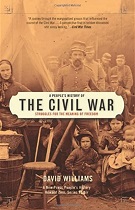
I may have stated this before, but I absolutely love history. However, I have come to realize that there is much about my own country that I still need to learn. Of all the subjects that remains often misunderstood and debated is the American Civil War. There is the common belief that the war about ending slavery but to others it was a case of “Northern aggression”. The truth is that there were multiple reasons for the war and not solely because of one above the others. But I do believe that Major Gen. Smedley Butler (1881-1940) was correct when he said, “war is a racket”. The realization that conflict has a monetary value unsettles the mind and spirit. The truth is rarely pleasant but always required to set the record straight. Author David Williams does just that in this remarkable account of the conflict that tore America apart. It can be argued that the Civil War is still affecting American society. I agree to an extent but for us to understand how and why, a full understanding of America and the war is needed. We can start at the beginning with the issue of slavery which is labeled as the major reason for the war. The image of the Confederacy and “Deep South” was one of abundant slave owners and plantations across the region. But as a I learned here, that was not always the case. In fact, what Williams shows is that the South was nowhere near as coherent as one might think. Nor was the number of slave owner and plantations in existence as one might suspect. As I read the book, I was quite surprised to learn of the reality behind the slave owning South and how it affected morale and pride during the war.
Slavery was a critical issue the country faced as tensions continued to rise. Abolitionist were determined to see it fall and rebellions such as the one led by John Brown (1800-1859) caused pro-slavery parties in the South to take notice. The election of Abraham Lincoln installed fear in the hearts of Southerners, some of whom were certain that he would “take their slaves away”. Washington was aware of abolitionists efforts but what was the real role of Abraham Lincoln (1809-1965)? Apologists have long sought to absolve Lincoln for many things that do not portray him in the most positive light. What can be seen in the book is that Lincoln’s actions and beliefs did not always fall in line with the iconized version presented in history books. In fact, Frederick Douglass was more explicit in his view of the President following Lincoln’s re-election:
“Though they had succeeded in keeping McClellan out of the White House, Radicals were not enthusiastic about giving Lincoln a second term. “When there was any shadow of a hope,” wrote Frederick Douglass, “that a man of a more decided anti-slavery conviction and policy could be elected, I was not for Mr. Lincoln.”
There is far more to Lincoln’s role revealed in the book and readers may be surprised. His plan for free Blacks will certainly cause readers to pause. However, his role in the conflict can neither be overstated or understated. He was a crucial part of the Union effort that ended in victory. And his actions, regardless of true motives, did help end the system of human slavery in the United States.
Once the war begins, the course of battle is anything but predictable. However, the author reveals interesting facts about the Confederacy and its ability to achieve victory. When President Barack Obama won his second term, there was calls for “secession” by those unable to accept his re-election. To any rational individual, it was clear that would not happen. But what did happen when Southern States left the Union after Lincoln’s re-election? And what was the final straw that pushed them over the edge? The answers to those questions can be found within and the author also discusses another motive for secession that businesspeople in the North recognized and refused to accept. It soon becomes clear in the book, that slavery is only one of many reasons for the South declaring its independence.
One of the best parts of the book is the discussion about life in the Confederacy. I strongly recommend readers look at Janet Elizabeth Croon’s “The War Outside My Window: The Civil War Diary of LeRoy Wiley Gresham 1860-1865″, which is an excellent read about life in a Southern family that supports the Confederate effort. Far from the united South we may have been led to believe, there was much taking place in the Confederacy that was far from encouraging. And as the author points out:
“By 1864, President Davis publicly lamented that two-thirds of Confederate soldiers were absent, most of them without leave“
In the North, things were also not as unified, and the image of the “liberal” North is directly challenged by William’s work. Frankly, though the North was free territory, racial harmony was a myth and social conditions could be just as bad as the South. Blacks were free but still lived like slaves. Interestingly, even before Union victory, members in Congress began to think of how Blacks could be enfranchised. Their efforts and those of the Radical Republicans are highlighted to show the missed opportunities that presented themselves to a country at a crossroads and in need of change. Lincoln’s actions and those of his successor Andrew Johnson (1908-1875), left much to be desired.
Surprisingly, what is left out of discussions about the Civil War are the true feelings of Southerners who have been painted with the broad brush of being “sympathizers” to the Confederacy’s mission. The truth is far more complicated and fare less glamorous. In fact, life for poor whites in the Confederacy was not much better and the dark reality is brought to life in the story told here. Desertion was a major problem but there were other factors at play that made the desirability of serving under Davis’ army plummet. Further, battlefield conditions, life as a solider and death for any number of reasons made it clear that war is hell, and no one should take part. To drive home this point, I refer to this section in the book by the author who relays that”
“In The Impending Crisis of the South, published in 1857, Helper argued vigorously that the “lords of the lash are not only absolute masters of the blacks . . . but they are also the oracles and arbiters of all non-slaveholding whites, whose freedom is merely nominal.”
As the war raged on, casualties began to rise from injuries and other conditions that brought death and destruction. Over six-hundred thousand men died in the American Civil War and the manners in which they perished were often barbaric and tragic. The author thoroughly examines the unsettling aspect of the soldier’s experience which included injuries in combat, inadequate clothing and supplies, famine, infections, viruses, and the lack of advanced medical knowledge. In short, life in the 1800s was rough and even rougher if you were an enlistee fighting in a savage conflict deemed to be a “rich man’s war”. Williams’ book should remove any notion of a valiant effort. On both sides, brutality was common, and desertion remained an issue throughout the war. And the induction of both slaves and Native Americans into the war was not because those in power had a “change of heart”. The real reasons are far more sobering. The Native American experience has been discussed by other authors and their removal from their lands remains one of the darkest aspects of America’s creation. The experience of the Indian tribes is also discussed here in relation to the war and readers will shake their heads in disgusts and disbelief.
After I finished the book, I had a moment of silence wherein I allowed myself to digest everything I had read. I had learned of things never presented to me before in any classroom that I can recall. American history is often difficult to accept because the image of America is designed to lift one’s spirits. And while there are aspects of life in the United States that are wonderful, our nation’s history contains dark moments. And it is imperative that we learn the truth so that they never again take place. This book is an invaluable resource for anyone interested in the truth regarding the American Civil War. Highly recommended.
“History is the sum total of things that could have been avoided” -Konrad Adenauer (1876-1967)
ASIN: B007OWQN7Q
 If you have had the chance to view a map of North American Indian tribes prior to the formation of the United States, you may have been just as surprised as I was to see how many were in existence. The story of North America’s early inhabitants known simply as Native Americans, is deeply complex and ultimately tragic. In 2016, 20th Century Fox released Alejandro González Iñárritu’s
 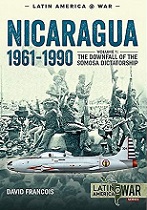 In June 1987, Lt. Col. Oliver North (Ret.) gave testimony in front of the Senate Select Committee on Secret Military Assistance to Iran and the Nicaraguan Opposition and the House Select Committee to Investigate Covert Arms Sales with Iran. The hearings had cast a dark cloud over Washington and the administration of President Ronald W. Reagan (1911-2004) doubled down on anything that could be conceived as illegal pursuant to United States law. I can still recall the shock on my father’s face when the news of the scandal broke across media outlets. The two of us watched the nightly news to learn more about a situation that had danger written all over it. Those who remember the Iran-Contra affair most likely have images in their minds of North testifying in his military dress before Congress. Details of the Reagan administration’s covert plans became unraveled but the full truth about the affair remained elusive for many years. The sale of weapons to foreign nations did not surprise me at all and military hardware has always been big business. But what did catch my attention was the atmosphere in Central America, a region that suffered extensively due to Washington’s support of dictatorships thirsty for blood and determined to crack down on all opposition.
 While reviewing my list of books to read, I did a double take as I read the title of this memoir by Pat Conroy. I had added it for a reason yet at the time, I could not recall why. But I put that aside and decided that there is no time like the present and it might be a hidden gem. It turns out that I was right in my assessment. However, I was not prepared for the incredible story within by Pat Conroy (1945-2016) that sheds light on the lives of those who have been forgotten even in the most powerful nation on earth. I knew that the story centered around education but of course, teaching is never as simple as writing on a blackboard. In fact, what is revealed in the book should remove all doubt that teaching is by any means as easy task. Some of us are naturally gifted to handle a classroom full of students, each with their own peculiar personality. In many ways, the teacher is conductor working the orchestra to fine tune all the instruments and produce a symphony that is pleasing to the ears. Conroy is the conductor here and what he accomplished on Yamacraw Island, South Carolina, will leave you sad, angry, and happy at the same time.
 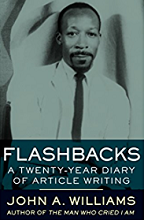 When I saw this book on sale, I felt a small sense of embarrassment because I did not know who John A. Williams (1925-2015) was. While it is true that he would be considered “before my time”, voices from the past are often as important as those of today. And any person that spends twenty years writing articles must have a significant number of experiences to reflect on. I gave in to my curiosity and decided to make the purchase. I can honestly say that I received more than I bargained for and have a newfound appreciation the late journalist. To be clear, the book is not an autobiography but more of a recollection of his most vivid memories about his early life, breaking into journalism and the numerous larger than life figures he had the chance to interview and, in some cases, form friendships with. Writers can tell you that composing an article is not always a simple as it seems and financially, it is not a way to get rich quick. In fact, the author removes all illusions of grandeur when he says:
 It truly is amazing that a person can learn so much about the future by examining the past. In America, there are parts of our nation’s history that people find difficult to control. Race is at the top of the list and continues to find itself the topic of discussions as the country grapples with instances of systematic discrimination and overt acts by individuals. However, America is also a very great nation that has the courage to critically examine itself. The problems we have are not new but instead, more attention is now being paid to them. And I honestly believe that to remedy those issues, we must continue to look at the past for it provides many valuable lessons from which we can learn. I picked up this book because 1) I have been a fan of Lorraine Hansberry (1930-1965) for many years and 2) I knew that the book would contain a wealth of highly intellectual discussions about American society that have relevance, even today. And I can say unquestionably that this short book is a good look at Hansberry’s brilliant mind that was able to dissect America in ways that sets the stage for meaningful dialogue and change.
  Quite some time has passed since my last post, mainly due to work matters and my being fully invested in finishing the book that is the subject of this review. Originally, I had planned on reading this three-part autobiography by William L. Shirer (1904-1993) one book at a time but Amazon also offers them combined and I decided to take the plunge. Shirer is by far, one of my favorite authors and there was no way I could pass this one up. Some of you may be familiar with him and recall that he is best known for his time as a CBS correspondent stationed in Nazi Germany during Adolf Hitler’s (1889-1945) rise to power. Upon returning to the United States, he moved to radio full time and lived the rest of his years as an author of historical non-fiction that has stood the test of time.
 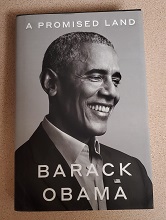 I believe that we can all agree that 2020 was a year unlike any other in modern history. The coronavirus, officially known as Covid-19, brought the world to a grinding halt and disrupted our lives in ways we could have never imagined. Here in the United States, we saw the pandemic take hold, social unrest erupt and the election of Joe Biden, Jr., as the next President of the United States of America. His swearing in on January 20, will mark the final stage in the transition between administrations. For some, it signals the return of politics largely void of the more extreme rhetoric that has gripped the country in recent years. Former President Barack Obama, will undoubtedly be called on for support and advice. I have often thought back to the Obama administration and the decisions that were made on a range of issues. But in particular, I have become even more interested in what life is really like as the Commander-In-Chief. This book, by the 44th President of the United States is exactly what I had been looking for. Not only does it provide an insider’s view into life within the White House, it is also a sobering account of life as a politician. There are highs and lows with a lot in between.
 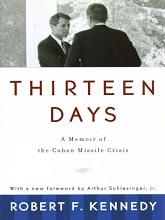 I have had many discussions with my father wherein he recalled his memories of the Cuban Missile Crisis in October, 1962. He explained with vivid detail how he and his classmates had to take part in daily air raid drills due to the increasing threat of a nuclear holocaust. The discovery by U.S. intelligence of Soviet missiles on Cuban soil, accelerated what was already a tense conflict. Today we refer to it as the Cold War but there were many things taking place that were anything but cold. And as former Secretary of Defense Robert S. McNamara remarked in Errol Morris’

You must be logged in to post a comment.