
 I am constantly amazed by the amount of history regarding the creation of the United States that I have yet to learn. The story of North America’s indigenous population is a heartbreaking account that receives scant attention today. America’s expansion from thirteen British Colonies to world superpower is unparallel in world history but the dark reality behind that metamorphosis is that Native American tribes once widespread across the continent were systematically uprooted, and, in some cases pushed into extinction. On the natives’ side, battles for territory and supremacy raged and the blood spilled as tribes waged war with each other cannot be overlooked. The events that took place in North America upon the birth of a nation are a far cry from the happy portrait that that is portrayed at “Thanksgiving”. Author Paul Van Develder explores the past during the era when “Manifest Destiny” drove westward expansion and turned open territory into deadly battlefields.
I warn readers that any notions of a “great American expansion” will not be found here. The author pulls no punches about what really happened and relays that:
“As historian Morgan Gibson has pointed out, nineteenth-century America was a sociopolitical environment controlled by fiercely ethnocentric leaders and followers who, despite all rhetoric to the contrary, regarded all other races and peoples as subhuman.”
The above statement is an uncomfortable truth but also necessary in understanding the beliefs and ideas behind the actions that changed history for America and North America’s indigenous population. That is not to say that all the figures in the book are dark. In fact, there were those who foresaw the fate in store for the natives and sought to prevent it, and others who foresaw the Civil War (1861-1865). And though their efforts were not in vain, they were colliding against government policy, driven by crucial legislation such as the Indian Trade and Intercourse Act of 1790, Indian Removal Act of 1830 and the Dawes Act of 1887. During the years between the passage of these pieces of legislation, Native American tribes continued to fade into oblivion.
Admittedly, the book is not a “comfortable” read, especially as an American. While the general story of the Native American tribes is known, the particular stories of individual tribes are often omitted. As the author shows, they were seen as “savages and scoundrels”, but were also the object of fascination and pop culture references. However, the tribes of North America were distinct and real people, with customs and traditions threatened by expansion of faces they had not seen before. As the story progressed, familiar names popped up as one would expect. The actions by presidents Thomas Jefferson (1743-1826) and Andrew Jackson (1767-1845) in particular, are discussed in detail. Jackson, a former slave owner, made no effort to hide his views on the natives standing in America’s way. However, there is another side to the story, and that is the role of the French, under the leadership of Emperor Napoleon Bonaparte (1769-1821). I found this section to be interesting for it explains the territory we know today as Louisiana. Further, while reading, I thought of scenes from the 2015 film “The Revenant” in which French explorers and traders enter the story and commit unsavory acts. The film centers around explorer/fur trader Hugh Glass (1783-1833), and despite some fiction added, it is a fairly accurate portrayal of events transpiring in North America during that time. On a side note, Glass is mentioned here by the author, as well as other traders from the film. And Louisiana was crucial to America’ s security and expansion, for reasons thoroughly explained in the book.
I found that one way to make it through the story was to keep in mind that the America I know today did not exist then. In 1830, there were twenty-four states in the Union and territory near the Pacific was unknown. And venturing into those areas by brave or ignorant souls, was a matter of life and death with an unknown number of settlers losing their lives at the hands of native tribes and others freely roaming North America. However, I could not excuse the government condoned actions to forcibly remove Native Americans from the only territories they knew. And as one would expect, the infamous Trail of Tears is one of the darkest parts of the book. The full story of the Indian removal and re-settlement are discussed in other books and remains a dark moment in U.S. history. Further, it was an event from which America’s Native Americans never recovered.
The author moves through time chronologically and we pass from one administration to the next. Sadly, the fate of Native Americans remains the same. Manifest Destiny increases in speed and effectiveness, virtually guaranteeing that the natives would never return to the lands they called home. Readers will be repulsed by the statements made by those in power towards the Indians, whom many regarded as infinitely inferior and only salvageable by accepting the ways of white settlers. Today, such comments would be unthinkable. But the author keenly observes that:
“What the United States wanted to do was march across the continent. Beneath the red, white, and blue banner of Manifest Destiny, treaties with Indians became the republic’s legal stepping-stones for building the road to empire in its determined quest to reach the Pacific Ocean”.
From beginning to end, this book kept me intrigued. Considering that some events in the book occurred nearly two-hundred years ago, the ability of the author to bring the past to life in the manner found here speaks volumes. It is an incredible account of history not always found in carefully crafted textbooks. The truths here are unsettling but also the sobering reality of what took place as this nation continued to evolve. We cannot go back and change the past, but we can learn from it. The descendants of Native American tribes know this history well as should the rest of us. Highly recommended.
ASIN : B0029ZBGWK

 On May 10, 1865, Confederate States of America President
 This past Sunday marked the twenty-first anniversary of the September 11th attacks which claimed the lives of 2,996 people. The mood in New York City was somber, with rain and dark clouds all day. However, that did not stop anyone from remembering the tragedies on September 11, 2001, a day that changed America. Friends are always surprised to learn that I have never visited the 9/11 Memorial and Museum. As a New Yorker who was in Manhattan on the day of the attacks, and watched the events unfold from an office window, I will always have my memories of that sad day. But my reluctance to visit the museum has never prevented me from reading and hearing stories from people who were at the World Trade Center and survived. Undoubtedly, there are survivors who have never told their stories, choosing not to re-live the events of that day. Thousands of others did go on the record and their words have been preserved so that the history of 9/11 can continue to be told to future generations. Author Garrett M. Graff has compiled hundreds of statements from survivors, Bush Administration officials, NYC officials, military personnel and first responders, and has turned them into this oral history of the attacks.
 The more I learn about history, the more I realize how much of it is not taught in schools. I recall learning about the Civil War but in limited discussions. And I fondly remember the 1989 film
 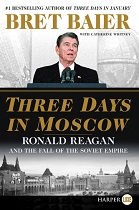 Readers old enough to remember the Soviet Union will recall the shock and disbelief that came with the Union of Soviet Socialist Republics (U.S.S.R.) flag being lowered for the last time on December 25, 1991. The “Cold War” had come to an end, but a long road lay ahead between the United States and Russia in coming to terms with each other’s way of life. On May 29, 1988, United States President Ronald Reagan (1911-2004) and First Lady Nancy Reagan (1921-2016) arrived in Moscow for a three-day summit with Soviet General Secretary Mikhail Gorbachev and his wife Raisa (1932-1999). It has been held as a triumph in American foreign policy and as an example of strong leadership. In less than three years, the Soviet Union dissolved, and Reagan was vindicated in his predictions of its demise. During the summit, Reagan spoke to the people of the Soviet Union at Moscow University and to this day it stands as a breathtaking moment in world history. But as always, there is more than meets the eye. Fox News host Bret Baier revisits the summit in this book about three days that impacted world history.
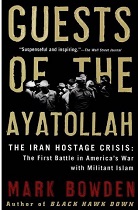 On November 4, 1979, university students seized the U.S. Embassy in Tehran, Iran and detained more than fifty U.S. Government employees. Though some were later released, the majority remained behind for four hundred forty-four days in what is known as the Iran Hostage Crisis. In 1953, Mohammad Mosaddegh (1882-1967) and the National Front Party gained political power in opposition to Mohammad Reza Shah (1919-1980). A twice elected member of Parliament, Mossadegh emerged as a popular figure but within days of the Shah’s exile in August of that year, Mossadegh was removed in a coup sponsored by the British Government and the United States. Mossadegh’s removal and the Shah’s return, inflamed tensions and in November 1979, Iranians decided that America must go. This is the story of the hostage crisis from start to finish in an account that provides a thorough discussion of America’s foreign policy mistakes and Iran’s inner struggle between traditionalism and modernity.
 On March 25, 1985, the 57th Academy Awards ceremony was held at the Dorothy Chandler Pavilion, Los Angeles. During the ceremony, the category of best supporting actor was called, and the winner was Haing S. Ngor (1940-1996), a doctor born and raised in Cambodia, who had survived the Khmer Rouge dictatorship under the notorious Pol Pot (1925-1998). Ngor had starred as Cambodian journalist Dith Pran (1942-2008) in the 1984 film
  The history of America is dark at times, and those moments have been omitted or neglected for many years. However, they are crucial to understanding how and why the United States developed into the nation that it is today. As an American, I am constantly seeking to understand my own country and clarify the myths that have propagated with regards to its past. I am learning uncomfortable truths, but they have not diminished the love that I have for America. In the history of this country, the name of Frederick Douglass (1818-1895) remains a reminder of the institution of slavery that degraded human beings, served as the backbone of an economic system, and led America towards a civil war. Douglass was born into the slave system and became a free man as an adult. This is his story of his time in bondage, freedom from oppression and evolution into a public speaker.


You must be logged in to post a comment.