Lady Death: The Memoirs of Stalin’s Sniper – Lyudmila Pavlichenko

When I saw this title in my recommendation list, I paused for a moment while focusing intently on the cover. As a history lover, World War II (1939-1945) always fascinates me, but I also realized that the material I tend to read typically comes from the American point of view or from those who survived the horrors of the Third Reich. This book was a change of pace and allowed me to read about the war from the view of a soldier in the Soviet Union‘s Red Army by the name of Lyudmila Mikhailovna Pavlichenko (1916-1974). This is her story of how she joined the war effort and became one of the Soviet Union’s deadliest snipers.

The story begins in her native Ukraine in 1916 during World War I, and her childhood post-war is ordinary. But when she is introduced to a rifle, shooting becomes an addictive hobby. However, her life a sniper is still years away and she explains the changes in her personal life including her first husband Alexei and son Rostislav Alekseevich Pavlichenko (1932-2007). But everything changes for all of them when Nazi Germany invaded the Soviet Union on June 22, 1941 in “Operation Barbarossa“. Lyudmila answers the call and joins the military as a sniper determined to defeat the German menace. At this point in the story, the book changes gears as the ugliness of warfare takes center stage. Readers may find her candid discussions of the kill shots she takes to be shocking but it is crucial to remember that the war had affected and shaped her, and Germany atrocities against Soviet men and women had conditioned them to believe that Nazi deaths were the only options. In between her kill shots, she also suffers battlefield wounds, and one incident nearly claims her life. She revisits each one highlighting the danger snipers faced when out on their missions. Frankly, death was everywhere and I felt chills as she recalls the missions.

In between military missions, briefings and keeping her skills sharp, she also finds love in second husband Alexei Kitsenko. The relationship blossoms despite the chaos around them and their roles as snipers, but a series of events shatter everything between them, and as I read I could feel the grief in her words. The section about Alexei is both shocking and heartbreaking, and it also reinforces the words that war is hell. However, a war was still brewing, and Lyudmila’s job was far from finished. She was determined to leave her mark, and it is apparent from the awards she received and her record that she accomplished that goal. In the Soviet Union she becomes a star and is chosen to lead a delegation to visit the United States. Prior to reading this book, I had heard of Pavlichenko’s name, but her story was not familiar with me, and the section about her trip abroad was a surprise. But this is why I love reading as much as I do because there is always something to learn. And when visited America, it was the United States that something to learn.

Upon arriving in America she meets the first couple, President Franklin D. Roosevelt (1882-1945) and wife Eleanor (1884-1962). I enjoyed this part of the book, and learning about her experiences in Washington was fascinating. In the years before the Cold War, the Soviet delegation receives star treatment in America where they are seen as “ambassadors” of good will approved by Soviet Premier Joseph Stalin (1878-1953) himself. There are humorous moments during the visit and some moments which are bewildering, but it is her friendship with the first lady that stands out. It also continued after the war as readers will learn. Following the visit to America, it was off to England where Prime Minister Winston Churchill (1874-1965) and wife Clementine (1885-1977) were waiting for their Soviet guests. The British visit is equally as interesting, and as I read, I thought of the differences in culture and how we as people find common ground. The west was genuinely curious about these Soviet troops and in particular a female sniper which was unheard of in American and British military circles. Pavlichenko was a rarity, but she was appreciated back home, and when the delegation returns to the Soviet Union, she is summoned by Stalin himself who wants to know all about her trip. However, the meeting results in changes she did not expect but nothing negative.

After her service in the field, Pavlichenko is assigned other functions to assist the war effort until the Nazi defeat on April 30, 1945. We follow her after the war when she returns to civilian life and begins to reclaim the parts of her past the war had prevented her from embracing. And although she survived the war, she did not escape unscathed and carried both mental and physical scars with her. But throughout everything she remains humble and tells her story of a young woman from Kyiv (Kiev) who went on to became one of the deadliest snipers in Russian history. And I enjoyed reading her autobiography. Sadly, on October 10, 1974, Lyudmila Pavlichenko died at the age of fifty-eight following a stroke and is buried in Novodevichy Cemetery in Moscow. Post-Traumatic Stress Disorder, alcohol, and physical wounds combined to take their toll later in her life. Pavlichenko died prematurely but during her life, she served her nation as it fought for its survival in the deadliest war in history.

To become a sniper, it is not only important to be able to shoot accurately. One other thing is important – a cold hatred for the enemy, so emotions are subordinated to calculation. Here the iron will of the soldier plays a role. Snipers did not take their eyes of the enemy by day or night, and information in reconnaissance log-books would often be verified through snipers’ operations. A sniper had to know by heart every bump in the ground, every bush in front of his or her position. ” – Lyudmila Pavlichenko

ASIN ‏ : ‎ B07B7MGZ4B
Publisher ‏ : ‎ Greenhill Books,  January 24, 2020

All Blood Runs Red: The Legendary Life of Eugene Bullard: Boxer, Pilot, Soldier, Spy – Phil Keith with Tom Clavin

People have asked me how I decide on the next book I want to read. Well, the truth is I do not always know and sometimes find hidden gems purely by accident. Such is the case with this book. It was not on my radar at all, but I am deeply grateful that I did discover it. And to be brutally honest, I admit feeling a sense of guilt that I did not know of Eugene Jacques Bullard (1895-1961), whose life story is preserved in this biography by Phil Keith with Tom Clavin which left me grateful and humbled. 

Before continuing, I must point out that there are aspects of Bullard’s life lost to history. However, there is a wealth of information about him in public records, and Bullard both wrote and spoke about his life. You might be wondering how this Black American ended up in France becoming an infantry soldier, pilot, business owner, and celebrity in his own right. The proof is in the pudding as they say, and once I began the book, I found myself glued to it, stealing any spare time to open my Kindle and pick up where I left off. There are sections of the book which are not pleasant to read, and readers sensitive to descriptions of warfare and racial discrimination may want to use discretion. Despite the dark moments in the story, the book is an incredible story of a man who made history in his own way.

Bullard’s story begins in the Deep South, in Georgia where he is born in 1895. It is understood that this time in America was exceedingly difficult for Black people, particularly in rural Georgia. And the difficulties one would expect are in the story, highlighting the sacrifices parents made for their children. As for Eugene, it soon becomes clear that life under Jim Crow is not what he wants, and by the age of sixteen, he is on his way to a life abroad which took him to places he could have never imagined. The unorthodox and surprising chain of events detailed by the authors is a testament to the luck and help from others which shape our lives.

Although he had departed from America, the story is far from over. Arrival in the United Kingdom provides the starting point for his European journey which takes him to France and in the trenches during World War I. The story feels like a depiction out of Hollywood, and as I read about the injuries he sustained and the loss of life, I could not imagine the fear and anxiety which must have gripped him and his fellow soldiers. War is brutal and its savagery is on full display here. However, Bullard had an unusual ability to keep pressing forward, first as a boxer and then as a soldier. And when battlefield wounds and a chance opportunity present a rare opportunity, he takes to the skies in the seat of a cockpit. It is here when the story changes gears as the legend is born.

The book has its twists and turns including his brief love affair with a “lady of the night” and the arrival of American forces in World War I (1914-1918) which brings the nightmare of Jim Crow to France where Bullard and his contemporaries make it clear to the Americans that Europe was not the South. Nonetheless, there were those who tried their best to make his life miserable, and Dr. Edmund Gros (1869-1942) proves to be his arch nemesis. Despite the roadblocks, Bullard continues to earn his fame and builds a life in France. Although the country was not void of racial prejudice, Bullard does well for himself and his club became so popular that he entertained people from all walks of life including authors Ernest Hemingway (1899-1961) and F. Scott Fitzgerald (1896-1940).  He also found love and marriage which produced two daughters and an ill-fated son. The marriage did not last, and it is not clear what happened. We have a general idea based on the book, but Bullard remained silent on some details. Regardless, it is a sad moment in his story and the arrival of World War II (1939-1945) would split the family apart. But there is a happy conclusion to their story which will make you smile. The war brought the reality of the Nazi menace to France’s doorstep, and an underground resistance network develops. Bullard finds a friend and partner in Cleopatre “Kitty” Terrier who becomes a lifelong friend and plays an instrumental role in saving Bullard’s family. Resistance to Nazi Germany’s Third Reich was dangerous and Bullard comes close to meeting his maker in one disturbing incident as explained by the authors. The surreal and uplifting story is a  shining moment in the book.

In July 1940, Bullard returned to the United States and Harlem became his home for the rest of his life. But he was not one to sit still and attempts to revisit the past with a trip to his native Georgia. This part of the book will stir emotions for readers who have spent an extensive amount of time away from home. Today we have email, instant messaging, and social media, but in Bullard’s time, letters and telephone were the methods of communication. Reading his plight reminded me of the conveniences of modern technology and the saying that “there is no place like home”. Bullard returned to New York and found employment at Rockefeller Center operating an elevator while attending official functions in Manhattan related to the French government. And that is the iron of his story. In America his skills and war record were unknown but to the French, he was one of their greatest heroes.But a chance encounter with a studio executive gives Bullard his “fifteen minutes” of fame on national television. Alas, the “Black Swallow of Death” had earned recognition on home soil. 

Time catches up with us all and Bullard was no exception. His physical decline is hard to accept but I also thought of the physical and emotional trauma throughout the story and how each took its toll on him. But throughout the book, Bullard kept pressing forward and beamed with pride at the medals and recognition he earned in Europe. And in time, his own country would honor his life in ways he could not have predicted as a young boy living under Jim Crow. His life story is full of highs, lows, heartbreak, and moments of unimaginable glory. This book has quickly become a favorite of mine and I have already recommended it to a close friend. I now recommended it to anyone interested in an incredible story about world history and Eugene Bullard who proved throughout his life that all blood runs red. 

ASIN ‏ : ‎ B07N7G776W
Publisher ‏ : ‎ Hanover Square Press, January 18, 2023

Black Snow: Curtis LeMay, the Firebombing of Tokyo and the Road to the Atomic Bomb – James M. Scott

The surrender of Japan on August 15, 1945, formally marked the conclusion of World War II after five years of anarchy in Europe and Asia. Germany had previously surrendered on May 8 following the collapse of German Chancellor Adolf Hitler’s (1889-1945) Third Reich. Allied commanders felt relief as it became clear that the planned ground invasion of Japan in the autumn of 1945 would no longer be necessary.  The deployment of atomic weapons developed at Los Alamos, New Mexico, ushered in a new era in which world destruction became hauntingly real. America’s use of the bombs remains controversial, but President Harry S. Truman (1884-1972) remained firm in his position that the bomb was needed to end the worst war the planet had seen. Detractors of Truman will point out that Japan would have been defeated without the use of atomic weapons. Of course, we will never know this for certain but the story of the air raids across Japan which included firebombs and the use of the atomic bombs “Fat Man” and “Little Boy”, is interesting and removes any doubt that Japan would lose the war. Author James M. Scott explores this controversial subject and the man whose name sent chills down the spines of enemies, Gen. Curtis E. LeMay (1906-1990).

Before continuing, I want to issue a disclaimer to readers sensitive to descriptions of death and warfare. This book is not easy to read and if you believe that America should never have used atomic weapons, then it may not be for you. And though the author neither condemns or condones the use of either weapon, it is a case study on how Air Force commanders analyzed the failure to cripple Japan, and the lessons learned to inflict maximum devastation on the “Land of the Rising Sun”. But before we arrive at Japan’s doorstep, the author revisits the air campaign in Europe which played a crucial role in Germany’s defeat. The bombings of Dresden and Hamburg are discussed, and readers familiar with each event know that following each air raid, the German people realized increasingly that an overwhelming victory was an illusion. As to when they knew the war was lost is hard to pinpoint, but Operation Gomorrah on July 10, 1943, was a wake-up call. The advance of the Soviet Red Army in 1945 signaled that the end was near, and on April, 30 Hitler lived his last moments buried in his underground bunker before committing suicide. Germany had lost the war, but Japan continued to resist and the grim reality of mass casualties in a ground invasion was hard to accept. But everything changed when LeMay was given free rein to go after Japan. On a side note, LeMay had served in the European Theater and was re-assigned to the Pacific in 1944.

“Tokyo,” LeMay declared, “would be our target—the primary target, the secondary target, and the only target.”

Curtis E. LeMay is one of most controversial military figures in American history, and rightfully so. To some he is seen as a war criminal without feeling who would stop at nothing until victory was secure, but to others he was the person needed to conduct difficult orders which required a cold detailed analysis. The truth about LeMay lies in between both and contrary to his stern appearance, he did have a soft side. Snippets of his letters back home to wife Helen (1908-1992) and daughter Patricia Jane LeMay Dodge (d. 2016) reveal the effects of the war on the LeMay family. But on the outside to those who served under him, he was as tough as they came. Although Scott provides a good discussion of his life, the biographical data is brief in comparison to the larger story at hand which is the crux of the book. Readers who are interested in LeMay’s life will enjoy Warren Kozak’s ‘LeMay: The Life and Wars of General Curtis Lemay‘, which is a good biography of the famous aviator. Here, the story focuses on defeating Japan, and LeMay was determined to bring the empire to its knees. And this is where the story takes a darker turn as the air raids increase and the bombs become more severe in nature. 

As I read the book, I personally did not have difficulty with the subject matter and was aware of LeMay’s role in World War II. I expected a grim picture to emerge as the firebombing campaigns set Tokyo and other cities ablaze. In fact, it is a raw and unfiltered look into the final stages of the war and the destruction from the air raids masterminded by LeMay and his subordinates who ensured that the B-29 bomber earned a place in military history. But as one would expect, it is impossible to finish a book such as this without the issue of morality coming up. The post-bombing descriptions are graphic, but they drive home the brutality of war. And they also force us to confront whether LeMay was morally wrong for his successes. Surely, Japan was brutal to its Asian neighbors and had attacked the United States first, but what occurred under LeMay’s watch disturbed even the most seasoned military veterans. One one point, LeMay issues an interesting statement which makes it clear that if the Allies had lost, he knew his life would be over. But despite the firebombing raids, Japan still refused to surrender. Unbeknownst to Japan, in early summer 1945, LeMay is briefed on a new weapon at Los Alamos and its fate is sealed. 

The remainder of the book following the revelation of the atomic weapons focuses on the plans drawn up to drop the two bombs on Japan. It is not a discussion of the planning or work at Los Alamos. Organizational issues are discussed as LeMay’s squads prepare for the drops. And when they happen, the impact of what transpires can be felt while reading. Scott heightens the suspense as America unleashes weapons that changed history. On the ground, the result is swift, deadly, and catastrophic. And for many years afterwards, Japanese men, women and children would continue to suffer from the effects of the bombs. But they had the intended effect, and the emperor soon realized that destruction was in store if Japan did not surrender. In hindsight we know that it did but in August 1945 after the second bomb was dropped, military officials waited on edge for confirmation that Japan was waiving the white flag. That moment soon arrives and the announcement by the emperor is included in the book, bringing the narrative closer to its conclusion. 

After I finished the book, I sat for a few minutes deep in thought. I had my own questions about LeMay’s actions but also reminded myself that America was at war. And had Japan continued to fight, commanders in the Pacific were ready to drop more atomic weapons which would have resulted in complete destruction for Japan. And a ground war would have resulted in over one million casualties. The air raids were horrific, but they did bring the war to an end. Finally, every military has its own LeMay, that commander who can detach feelings from the mission at hand to ensure maximum carnage and victory. Throughout his life he  never regretted his actions and felt that it had to be done. There is an old saying that “war is hell”. It is but there are lessons to be learned so that the same mistakes are not repeated by future generations. And war also contains warnings not to be ignored. In successfully engineering Japan’s defeat, LeMay vindicated the late Captain William Lendrum “Billy” Mitchell (1879-1936) who warned that air defense was being overlooked at America’s peril. Mitchell was a fierce advocate for air power and his relentless drive to convince Washington earned him a court-martial. But in December 1941, his warnings came back to haunt the country when the Japanese military attacked the U.S. Naval Base at Pearl Harbor. World War II is a part of the past, but it should never be forgotten. The war claimed millions of lives and left millions homeless and refugees as they wandered about in cities left in ruins. But the war also provided pivotal moments in the lives of those who served and survived such as the late Gen. Curtis E. LeMay. Highly recommended.

I had to select a man for the job who had experience, knowledge, judgment, but who was also cold as steel when it came to sending out his missions. I selected Curt LeMay.” —GEN. HAP ARNOLD NOVEMBER 7, 1948

ASIN ‏ : ‎ B09TQ2RRFQ
Publisher ‏ : ‎ W. W. Norton & Company (September 6, 2022)

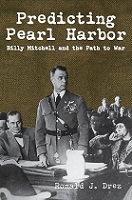
Predicting Pearl Harbor: Billy Mitchell and the Path to War – Ronald Drez

billySeveral days ago, America marked eighty-three years since the Japanese military attacked the U.S. Naval Base at Pearl Harbor, Hawaii. The attack claimed the lives of 2,403 people and paved the way for America’s entry into World War II. On December 8, the day after the attack, President Franklin D. Roosevelt (1882-1945) declared the attack a “Day of Infamy”. Four years later, Japan surrendered following the use of two atomic weapons by the United States Air Force. In the years that followed, there would be speculation as to whether the White House knew in advance that Pearl Harbor would be attacked. The issue remains controversial but there were officials who had predicted a Japanese military attack in the Pacific. Among them was the late Col. William Lendrum “Billy” Mitchell (1879-1936), an early pioneer of air defense whose premonitions were vindicated by the success of Air Force General Curtis E. Lemay (1906-1990) during World War II. Today Mitchell is a footnote in history, but this seasoned commander never wavered in his outspoken belief that Japan would attack America in the pacific. This is his story and how America’s military brass missed a crucial opportunity to take the lead in air defense. 

You may be wondering why you have never heard of Billy Mitchell. Sadly, he died in 1936, three years before German Chancellor Adolf Hitler (1889-1945) gave the green light for the German Wehrmacht to invade neighboring Poland and ignite the second world war. However, his importance to history cannot be overlooked. But the key to understanding Mitchell’s relentless crusade to change the mindset of military commanders lies in the Japanese empire itself, often misunderstood from a historical context. The author provides a thorough discussion of the closed-door policy held by Japan and the risk of execution by those who dared to enter its vicinity and even Japanese seeking to return home. The expedition by U.S. Naval Officer Matthew C. Perry (1794-1858) which is discussed in the book, was a pivotal moment in world history but far from the end of the story. In fact, Japan was the beast that was now wide awake. 

Mitchell was a World War I veteran, but his focus had shifted to the Pacific which he came to believe was the perfect avenue for Japanese expansion. His reasons are explained methodically by the author who relays Mitchell’s own observations and writings about what he learned as he toured the Far East in 1923. In America, he knew he was facing an uphill battle but believed that demonstrations were key. Thus, we learn from the story of several demonstrations of air power which left commanders speechless and proved that air combat was a reality. Mitchell was on the money, but the military was not yet ready to listen. Undeterred, his mission to change the view of air power proceeded, but he soon found enemies from within. 

As I read the story, I kept asking myself why very few people in high command were watching Japan. The author reviews the country’s movements in the years before Pearl Harbor as its empire expanded across Asian. Further, Japan’s departure from the League of Nations on March 27, 1933, alarm bells should have been ringing throughout the nation. Readers will see the pieces of the puzzle come together as the Land of the Rising Sun ramps up its war effort. Mitchell and the late Gen. Homer Lea (1876-1912), an officer in the army of Chinese President Sun Yat-sen (1886-1925), had both warned of Japanese influence but to no avail. But Mitchell would not give up and we eventually reach the final act of the book when he is tried before a military court due to his refusal to abandon support for a dedicated air defense system. 

The court trial proceeded like the staged event Mitchell expected but he came out swinging, backed by public opinion and supported by fellow aviators who later made their claims to fame. While reading I had hoped that Mitchell would prevail, but he knew his fate was sealed. The court testimony is riveting and shows the politics at play in the armed forces. But in the end, Mitchell could not escape the court-martial waiting for him. The sad conclusion marks the end to a valiant effort to alert America to a growing threat in the Far East. Unfortunately, it would take the attack at Pearl Harbor to wake up America’s military which then pushed for an air defense network and combat network. Mitchell’s chilling warnings in his report on the Pacific were shunned and ignored but later came back to haunt the American military. But the air force would not let his memory die, and the B-29 bomber conducted the missions that would have made Mitchell proud. The author writes in smooth narrative that keeps the reader engaged from start to finish. And at the end of the book, we are given another story about events on the Pacific Island of Niihau which provided the blueprint for internment of suspected foreign sympathizers here in America. Highly recommended. 

“With us air people, the future of our nation is indissolubly bound up in the development of air power.” – Col. Billy Mitchell

ASIN ‏ : ‎ 1455623156
Publisher ‏ : ‎ Pelican Publishing (August 15, 2017)

The Betrayal of Anne Frank: A Cold Case Investigation – Rosemary Sullivan

anneOn August 4, 1944, Dutch Police Inspector Karl Josef Silberbauer (1911-1972) and a team of officers arrived at 263-267Prinsengracht to conduct an inspection and arrest of any Jews in hiding. That day, eight people were taken from the annex. The youngest, Annelies Marie “Anne” Frank (1929-1945), was forced to leave behind her diary which she kept as the occupants remained hidden during World War II, as the Third Reich’s military executed German Chancellor Adolf Hitler’s (1889-1945) vision for world domination.  Seventy-nine years have passed since the conflict concluded but the question remains, who betrayed Anne Frank and the other occupants of the secret annex? Author Rosemary Sullivan and a team of seasoned investigators formed a unit to investigate the raid at the warehouse and determine who gave officials the information they needed to send Frank and her fellow annex residents to their deaths.

A commonly held belief is that the police received a tip about people hiding in the annex. That raises the issue of who would have wanted to give up the annex’s residents and why? The team tackles the matter from every angle and there are a few things that stand out which place the case in a vastly different light. From Anne Frank’s own words in ‘The Diary of a Young Girl’, we know that the warehouse underneath the annex had been burglarized at least three times. And during the last break in, the men in the annex had gone to inspect the damage and had been seen by people outside the building. However, there is no evidence that any of those people betrayed them. The key to solving the puzzle may be found in post-war events that reveal open secrets.

I do recommend reading Frank’s diary before starting this book, but it is not required. The reason is that Anne’s recap of day-to-day events provides a vivid picture of life inside the annex, complete with the hope, tension and terror that gripped them each day. In this investigative report, the team jumps straight into the raid and its aftermath. Suspicion of who betrayed them began instantly. Of the warehouse workers suspected as being an informant, Willem Van Maaren (1895-1971) stands out the most. Although he was not well-liked and distrusted, the evidence against him is scant and his guilt was never proven. But there are others who may have had a stake in the raid on the annex, and the suspense increases as the investigation unfolds.

Following the war, Anne’s father Otto (1889-1980) returned to Amsterdam and learned that his family had died in the Holocaust. He is responsible for the publishing of Anne’s diary, but as the authors show, there was more that he knew about that last day in the annex. Sullivan and the team provide a thorough discussion of Otto’s life, his marriage to Edith Frank (1925-1945), and the family’s exodus from Nazi Germany in 1933.  Otto was a very shrewd businessman with extensive contacts and knew more about the Dutch Police and Nazis that I first suspected. And an encounter with an employee named Job Jansen, Sr. (1887-1952) provides insight to his awareness of the danger surrounding him, his family and the Jews in Amsterdam. The Jansen story is interesting and adds another level of intrigue. But the mystery only gets deeper as the book progresses.

There was a surprise in the story that caught me off guard. Otto had a dedicated and loyal employee named Miep Gies (1909-2010) who secured Anne’s diary after the raid. In later years, she gave interviews about the annex and raid, and a statement she made in one discussion caught my attention. If she was being truthful when she spoke, then that leads me to believe that Gies knew who the betrayer was. As to why the identity remained secret, it is possible she held the same position as Otto who issues a similar statement. Gies undoubtedly knew more than she was willing to say for reasons she took with her to the grave. But she was candid, a witness to history and the person who had to console Otto when he learned that his wife and daughters had died. But the story is far from over.

To understand how the betrayal occurred, the authors focus on the Jewish community itself in the Netherlands. And to my dismay, the country deported more Jews than any territory outside of Germany. But how did they accomplish this? There are two clues in the Jewish Council, an organization the Germans had compelled them to institute and the compromised Jews who had been flipped by Nazi officials into trapping those in hiding. If you are Jewish and lost relatives in the Holocaust, this part of the book will be difficult. But even if you are not Jewish, it is still difficult to accept. The acknowledgment that Jews betrayed other Jews is a component of the story that required further exploration. Sullivan and her team take a deep dive into this area, uncovering crucial and disturbing information.

Two people enter the story which changes the narrative immensely. The first is Anton Christiaan “Tonny” Ahlers (1917-2000) a Dutch nazi and bounty hunter, and the second is Arnold van den Bergh (1886-1950), a Dutch notary. Both men had compelling reasons to betray Otto and the annex’s occupants, but did they? Ahlers was a nefarious figure and a blackmail artist, and very well could have tipped off the police. The full story is told within, and it is surreal. Van den Bergh’s story is a bit different. As a Dutch notary, he was in an extremely  prominent position and had secured benefits under Nazi rule. However, he and his family had come under scrutiny and were subject to deportation. Did he give up the Franks to save himself and his family? You can be the judge.

The investigative team exhaustively researched the case and with a careful process of elimination, clarifies who did not betray those in the secret annex. Further, they provide convincing evidence to support their conclusion as to who did. After this book was published, it was critizied heavily for the theories it presents. Towards the end of the book, the author addresses those criticisms and how they proceeded with their work. And in regard to the biggest critique of the book’s hypothesis, it is something that had been known when Otto returned to Amsterman and not created by the investigative team. Depsite the negativity from the literary field, what the authors present strongly supports Otto and Mies’s statements regarding the betrayer. But this is just my opinion. Please read it for yourself and find out what we do know about the betrayal of Anne Frank.

“In attempting to determine how Adolf Hitler had taken control, the US Office of Strategic Services commissioned a report in 1943 that explained his strategy: “Never to admit a fault or wrong; never to accept blame; concentrate on one enemy at a time; blame that enemy for everything that goes wrong; take advantage of every opportunity to raise a political whirlwind.” Soon hyperbole, extremism, defamation, and slander become commonplace and acceptable vehicles of power.” 

ASIN ‏ : ‎ B0BLSQLV3L
Publisher ‏ : ‎ Harper Perennial (January 17, 2023)

The Diary of a Young Girl: The Definitive Edition – Anne Frank, Otto Frank , Mirjam Pressler and Susan Massotty

AnnA couple of weeks ago I was in search of a new book to read, however, an old favorite popped up in my list of recommendations. I had previously read and reviewed ‘The Diary of a Young Girl’ by Annelies Marie “Anne” Frank (1929-1945) but I noticed this 75th anniversary edition which drew me in further, and I decided to read it again.  I have always found it fascinating that Frank had no idea her private diary would one day become a best-selling book. Her mind was pre-occupied with things one would expect from a teenage girl. However, it was also occupied with war raging across Europe as the Allied forces collided with the Axis powers during World War II.

The prior review I wrote in 2015 was brief, but it touched on important aspects of the story and times. After reading her diary again, I have a deeper understanding of Anne and what happened leading up to their last days in hiding. The diary begins shortly before the family relocates to the annex, and Anne provides a succinct description of how unbearable life has become for Jews in Amsterdam. This part should come as no surprise to anyone who is familiar with her story and that of World War II.  The diary contains nothing about life in Germany, but Nazi ideology had spread extensively, and the Netherlands had already fallen into German hands. The Franks and their fellow Jewish neighbors were living in an occupied zone. The family soon arrives at the attic where they are joined by several others, whose names are slightly altered by Anne in the diary in which she writes to the fictional reader “Kitty”,  in memory of the cat she left behind, Moortje. Her housemates, the Van Pels, become the Van Daans, and Fritz Pfeffer (1889-1944) becomes Mr. Dussel.  Additionally, there are several others who are not Jewish and live outside of the annex and do their best to help when possible. Daily life inside the attic takes center stage with all the drama one would expect. And having visited the attic myself in person, I remain astounded that all of them found refuge in such tight quarters. However, their lives were on the line as the Third Reich tightened its grip over Europe and commenced the “Final Solution“.

As I read the diary, I was struck by Anne’s maturity at such a youthful age. Of course, there are times where she comes off as obnoxious and defiant, and other occasions when she is not the nicest to her mother Edith (1900-1945). In fact, there are several journal entries in which Anne explains a confrontation which had occurred earlier in the day resulting in the two not speaking. However, she does love her mother, but their bond stands in stark contrast to the overwhelming love she had for her father Otto. He was by far, the person she was closest to and cherished the most. He also had the unfortunate role of mediator as his wife and daughter clashed. Otto returned the favor to his daughter after surviving the war by publishing her diary which has become the gift that continues to give. But I do not want to forget Anne’s older sister Margo (1926-1945), who appears on occasion throughout the diary but rarely in favorable light. While Anne did not dislike her old sister, there was a sibling rivalry. Added to the issues within the Frank family are the interactions with the fellow residents in the attic. To say that things were tense would be an understatement. There are fights over food, territory, opinions on the war, and child raising with jealousy providing a source of ignition for conflict. However, Anne is not oblivious to what drives the dysfunction, and I agree with her assessment. The situation in the attic was far from normal, and they lived under tremendous strain and fear, side by side daily until the end, on August 1, 1944, her last journal entry. But, the question remains, were they betrayed?

To the best of my knowledge, there is no conclusive evidence of anyone informing the local authorities, but Anne provides a clue that might explain the chain of events that led up to the discovery. In her journal, she writes about three burglaries that took place while the family was in hiding. The third and final break-in she details was the most serious as the men in the attic were seen from the outside as they responded to the after-hours incident. Although they were spotted, the police did not arrive that night. However, there were other things taking place at the warehouse underneath the attic that the family may not have been aware of. The break-ins and the suspicious activity in the warehouse may have caught the attention of the Dutch police. It is known that it took about an hour before they discovered the secret annex, but it is unclear if that was the sole reason for their visit. Of course, it is possible that they were betrayed but the answer may be lost to history.

Anne was a gifted writer and fiercely determined for her age. She was also incredibly young, and still had much to learn about the world. There are times she comes across as spoiled in the book, but other times keenly observant. I did remind myself that she was only fifteen when the annex was discovered. All the things you might expect from a teenage girl are here, but that makes her story even more relatable. She was not a celebrity and understood the danger they faced due to being Jewish. And in one of the notations made in this edition, we learn that she intentionally kept some sections under guard for personal reasons. In another diary entry, she makes a remark about her journal being read ten years later and its reception. If only she could see how important her diary became. It remains one of the most important books of World War II. Anne was not afforded the chance to mature into adulthood and learn the error of her ways. Had she lived, I believe she would have come to understand and cherish her mother and older sister Margot. I cannot say whether Peter Van Pels (1926-1945) would have become her beau, but the signs were certainly there.

If you have the chance to visit Amsterdam, please be sure to visit the annex museum if you have not done so already. It is a moving experience that I cannot put into words. But if you cannot make it there in person just yet, Anne’s diary provides a wealth of information about their lives during one of the darkest periods in world history. Highly recommended.

I get frightened myself when I think of close friends who are now at the mercy of the cruelest monsters ever to stalk the earth. And all because they’re Jews.” – Anne Frank

ASIN‏ :‎ B0041OT9W6

© Anchor Publishing, 2010

The Devil’s Diary: Alfred Rosenberg and the Stolen Secrets of the Third Reich – Robert K. Wittman and David Kinney

RosenbergOn October 16, 1946, former Nazi theorist and ideologue Alfred Rosenberg (1893-1946) met his demise following his conviction at the Nuremberg trials in the wake of World War II. His ideologies and actions had contributed to the Third Reich’s quest for world domination, spearheaded by Reich Chancellor Adolf Hitler (1889-1945). Several decades after Rosenberg’s death, researchers discovered the remaining pages of his diary which had been kept hidden by former Nuremberg prosecutor Robert Kempner (1899-1993), who had fled Germany when the Nazis came to power. The discovery raised important questions. Why did Kempner keep the unmarked pages of the diary and what was Rosenberg’s role as the Nazis took over Germany? The answer to the first question is lost to history as Kempner is no longer with us. The answer to the second question is dark and disturbing.
Authors Robert K. Wittman and David Kinney explore the incredible story of Rosenberg’s diary in this book that is a fascinating account of the dysfunction within the Third Reich, its deadly effect on the world, and the events that sealed its fate. However, the story is also about Kempner, whose own life was filled with unbelievable twists and turns. Admittedly, I did not know about him prior to reading this book. I was familiar with lead prosecutor Robert H. Jackson (1892-1954), and have become aware of other officials who fulfilled their duties in bringing the remaining members of the Third Reich’s government to justice. But before the authors go into the war and the fallout from the Allied victory, we first learn about Robert Kempner’s life and the how the diary was discovered.

Today it would be unthinkable that an item of importance such as Rosenberg’s diary could disappear from official archives. After Rosenberg’s death, the diary became moot in prosecuting his crimes but from a historical perspective, its value could not have been overlooked. And had it not been for its discovery in Kempner’s Philadelphia home, it may have been lost forever. The story of how it came to light is interesting but by no means simple.  is quite unorthodox. Further, Kempner’s personal life has its own secrets which the authors do not shy away from. What we learn about him does create a contradiction that is hard not to notice. But it is imperative to remember that Kempner had been forced to flee Germany himself, and his migration to the United States had its own complexities as seen in the story. What is clear is that the Nazis had created an enemy who would come back to haunt them following Germany’s defeat.

Following the discovery of the diary, the story shifts gears and focus is redirected on Hitler’s cabinet and the war. Rosenberg comes off as an odd figure, highly unlikeable and seen as a quack by others. His book ‘The Myth of the Twentieth Century‘ is discussed, and is privately ridiculed. Even Hitler himself takes shots as Rosenberg’s ideology. Publicly the book sold well, but one could argue that not supporting the Nazi party mantra would not have gone over well. Despite his quirks, Hitler kept him close as he continued to plan an all-out assault on Europe. Back in London, officials were keeping an eye on the growing Austrian menace and on September 1, 1939, all doubts were removed when Germany invaded Poland. But why did the Nazis invade? They knew that Britain could come to Poland’s defense. But while reading the book and learning more about Rosenberg, I came to see that the Nazi party was full of deceit and people who had little experience to the world outside of Germany. In fact, Hitler himself had never crossed the Atlantic Ocean. The plots and shaky alliances are on full display here as dirty laundry comes to the surface and scores are settled against those seen as “subversive”. The most chilling example in the book is the “Night of the Long Knives” in June 1934. Rosenberg was power hungry just like Reich Minister of Propaganda Joseph Goebbels (1897-1945) and Reichsführer of the Schutzstaffel Heinrich Himmler (1900-1945). Further, he played a crucial role in the tragic “Final Solution“. And through their own words, it is evident that they had little respect for each other and no one thought highly of their co-conspirators. We also learn secrets of the Reich, including the artwork and valuables stashed away in Nazi hideouts to avoid detection. 

On June 22, 1941, Germany invaded the Soviet Union in what could only described as insanity. Early victories provided Hitler with a premature sense of security but by 1943, reality began to set in as the Russians pushed back and Allied troops continued their march across Europe. The collapse of the Reich plays out here, and the writing is soon on the wall. Rosenberg makes his escape but is eventually captured by Allied forces. And this is the beginning of the end for the fanatical ideologue. Robert Kempner had earned a place working for the U.S. Government, and as seen in the story, he had made overtures to none other than former Federal Bureau of Investigation Director J. Edgar Hoover (1895-1972). He never joined the bureau but found himself in an interesting position when he is asked to return to Germany and assist in Nuremberg. His personal life was still complicated as the authors show, and even when he arrives in Germany, his son Lucian is still going through tribulations of his own. His son’s ordeal is also surreal but highlights the danger that existed for potential “enemies” of the Reich. In Nuremberg, Kempner came face to face with those who had forced him to leave the country of his birth. And through parts of the transcript provided here by the authors, we see him spar verbally with Rosenberg in what can only be described as mind bending.

While reading the snippets from Rosenberg’s trial, I could not help but sit in disbelief at the answers he gave. It was either lunacy or extreme arrogance, but regardless, neither was going to save him from the gallows. But what I found the most disturbing is the disconnect he shows towards his role in the deaths of millions of Jews. This part of the story gave me chills. But it also shows how deeply he believed his own crackpot ideology. Frankly, I can see why Hitler kept him close: he was far more dangerous outside the party than inside of it. After the saga of Rosenberg’s futile attempts at avoiding guilt, the final act plays out. There is no fanfare or celebration at his ending. He is removed from the picture and becomes a footnote to history. However, his diary continues to exist and stands as a window into the madness of the Third Reich. If you are fascinated by World War II and looking for material to expand your knowledge, this should be on your list.

“There is no record in history,” one academic wrote, “of any more pronounced or more uncompromising anti-Jewish polemicist than Alfred Rosenberg.”

ASIN :‎ B00PQRH7VC

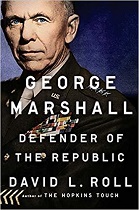
George Marshall: Defender of the Republic – David L. Roll

MarshallIf you were to ask me to find one word to describe the late Gen. George C. Marshall (1880-1959), the word that comes to mind is unsung. In comparison to the larger-than-life figures who served in World War II such as President Dwight D. Eisenhower (1890-1969) and Gen. Matthew B. Ridgeway (1895-1993), Marshall remained behind the scenes and helped formulate the plans behind the missions that sustained and propelled the Allied effort. When I saw this book on sale, I decided to take a look into Marshall’s life to learn more about the man whose name was given to the “Marshall Plan“. And what I learned has improved my understanding of World War II, the existential threat from  Adolf Hitler’s (1889-1945) Third Reich, and the conflict’s impact to this day.

Marshall’s story begins in Uniontown, Pennsylvania, a city known for its role in the Underground Railroad, which was supported by the staunch abolitionists who resided there. Among them was Marshall’s mother Laura. The family is typical of what one would expect in late 1800s America. Marshall grows into a fine young man and finds his calling at the Virginia Military Institute. It is here that his introduction to the armed forces begins and is the first step on a journey that took him across the world and made him a part of history. The story picks up in pace after he marries his first wife Lily, but also takes an unexpected turn as we learn of the relationship between Marshall and his older brother Stuart, who disappears from the remainder of the story for reasons explained by the author. Life was good for the young couple in the years that followed, but in 1914, World War I would change everyone’s lives.

The first world conflict was a turning point in history and Marshall was on the front lines to see its effect. His service in the war is discussed by the author and we learn that he performed admirably and earned the respect of those who knew him. But it is not long before commanders realize that Marshall is far more effective as a planner of campaigns. His tutelage under the late Gen. John J. Pershing (1860-1948) would advance his career in ways no one could have imagined. Marshall returns home from the war and resumes his career in the armed forces. The war was over, but he had become convinced that America needed to improve its military for future threats. As can be seen in the book, it becomes an uphill battle before events in Europe begin to change the minds of Americans. In 1927, Marshall would face his first experience with personal tragedy as he confronts his wife Lily’s mortality. Her story is heartbreaking, and it is clear throughout the story that Marshall never fully recovered. A second wife named Katherine enters the story and their life-long romance is included as back drop to main story, which is Marshall’s life in the military which changed yet again on September 1, 1939, when the Third Reich invaded Poland and ignited World War II. On that same day, Marshall was appointed as chief of staff of the U.S. Army and was determined that America would face any threat and win.

Undoubtedly, World War II where the book gains momentum and the suspense increases as Marshall fights for military spending, a draft and sounds the alarm about the growing German threat. However, there was another threat as we see in the book, which later came back to haunt Marhsall and his subordinates. Tensions between the United States and Japan had been increasing before the attack on Pearl Harbor and this was not lost on the Army Chief of Staff or the White House. Roll revisits the weeks before the attack to examine what commanders did know and which actions, they performed to warn commanders at Pearl Harbor of a Japanese operation. And though there is no “smoking gun” that gave precise details of the upcoming attack, there were warning bells that the military should have been on heightened alert. The author does not explore any conspiracy such as President Franklin D. Roosevelt (1882-1945) “allowing” the attack to happen. If Roosevelt knew for certain and did nothing, then that is information he surely took with him to his grave. The author does explore what is know about the Japanese communications which had been decrypted by the military. Once the attack happened, all of that was out the window as America had become drawn into World War II, and Marshall would have to rise to the occasion. The war would touch him in many ways, including personally, as he and wife Katherine suffered their own loss. Further, the war also opened Marshall’s eyes to the experiences of Black soldiers who faced rampant discrimination, segregation, and violence. His faults at understanding the issue of race are presented by the author, and Marshall himself later makes statements about his failures to take needed actions. While it easy to condemn Marshall, I also understood how he viewed things from a military perspective and not a civilian or political vantage point.

There are few words I can say about the savagery of World War II that have not already been said. It remains the most brutal conflict in world history. The Allied victory was won through enormous sacrifice and the brilliant minds of Marshall, subordinate Dwight Eisenhower, and scores of legendary military leaders who fought in America’s defense. Interestingly, without Marshall, Eisenhower may not have made a name for himself in Europe. Their relationship is explored in the book, and I wondered what would have happened if Marshall had taken control of the European Theatre. He may have succeeded Truman as president. But Marshall was not a political person and his aversion to politics is clear in the book. His goals were to defend the nation and improve the military. While reading the section regarding World War II, I noticed that the author streamlined the narrative beautifully. We are given enough information to understand the military operations being launched and the behind-the-scenes interactions with the British who sorely needed American support and the Soviet Union. The relationships were not without friction but what is clear is that without American intervention, the war in Europe may have concluded very differently. In the Far East, China was a simmering hot plate as the battle between Chiang Kai-Shek (1887-1975) and Mao Zedong (1893-1976) heated up. And sitting back examining all aspects was the Soviet Premier Joseph Stalin (1878-1953) whose Red Army helped turn thetide against Nazi Germany. If you love World War II history, this part of the book will have you glued to the pages. At some point we know Germany’s defeat is imminent, and it does come. Following the European victory, we reach the Pacific’s climax with the introduction of the Atomic bomb, and its use on the Japanese cities of Hiroshima and Nagasaki. Following the collapse of the Axis powers, Marshall focused on rebuilding Europe and his vision which became the Marshall Plan, remains a critical part of world history. But, his work was far from done and President Harry S. Truman (1884-1972) would call him back into service again as Asia heated up.

On June 25, 1950, the North Korean military invaded the South and kicked off the Korean War. Marshall would once again find himself involved with a conflict that threatened world peace. Compounding his frustrations and those of Truman, was the tense situation between Washington and Gen. Douglas McArthur (1880-1964). The late general had become both a legendary and mythical figure. But as we see in the book, his unilateral actions, contradictory to White House policy, caused fear and panic that America would be drawn into World War III. The unbelievable story plays out here again but the full story has been covered thoroughly by author H.W. Brands in ‘The General v. The Present: McArthur and Truman at the Brink of Nuclear War. Today we know with hindsight that a world war did not happen, and an armistice was signed on July 27, 1953. But the possibility of a wider war was very real, and Marshall had no illusions of Chinese and Soviet intervention. The Chinese did get involved, forcing several American retreats but the Soviets did not. The world had dodged a bullet. For Marshall, there was not much left to do as he had aged, Mao Zedong had established the People’s Republic of China and the DMZ was created in Korea. He returns to private life following the Korean conflict and the story reaches its own sad conclusion with his passing in 1959. The book is a remarkable account of an incredibly important figure that is sometimes a footnote in history. Marshall is truly an unsung hero. This biography is invaluable in learning about the life of the man who changed the United States Armed Forces.

ASIN‏ :‎ B07JYQV52N

Last Man Out: Surviving the Burma-Thailand Death Railway: A Memoir – H. Robert Charles

lastmanoutThe soldier above all others prays for peace, for it is the soldier who must suffer and bear the deepest wounds and scars of war. ” – Gen. Douglas McArthur (1880-1964)

Seventy-eight years have passed since Japan surrendered to Allied forces, marking the end of World War II. The war’s brutal conclusion, culminating with the detonation of two atomic weapons, changed history. Although subsequent wars have been fought, World War II remains the deadliest conflict in human history. The European theater of combat during the war has received significant attention due to the existential threat to the world in the form of the Third Reich. However, in the Pacific, the Japanese military waged its own campaign of death and destruction across Asia. H. Robert Charles served as United States Marne about the USS Houston, and on February 28, 1942, he found himself among the survivors of a Japanese attack in the Sunda Strait that decimated their forces and vessel. The surviving soldiers were taken captive as Prisoners of War (“POW”) by the Japanese, who had every intention of making the Americans pay for the battle against Japan. The prisoners were forced to build the Burma-Thailand railway, and this is Charles’s story of the nightmare ordeal the POWs faced until liberation.

Before starting the story of his captivity, a foreword opens the book, followed by a prologue explaining the long road from war survivor to author. It is apparent that he returned home with what we call Post-Traumatic Stress Disorder (“PTSD”) today. But after being coaxed by a fellow veteran to seek counseling, he has a discussion with a therapist who helps break down the walls preventing him from telling his story. And with determination and a sense of purpose, he has left us with this story of a dark time in history which we should never wish to repeat.

As to be expected, the author recalls his early life in post-depression America before joining the United States Marines in 1940. On December 7, 1941, life for Americans changed when the Japanese army bombed the Pearl Harbor, Hawaii Naval Base. The act was in effect a call to arms for the United States. But for Charles and fellow soldiers aboard the USS Houston, the war took them in a different direction. Following their surrender to Japanese forces, the men are moved to Serang, Java and began their ordeal at the labor camp. There is no shortage of brutality by the Japanese, but the men eventually find a solace in a doctor who becomes a savior in the story: Dr. Henri Hekking (1903-1994) of the Royal Dutch Army. To say that he was a godsend would be an understatement. Admittedly, I had never heard of Hekking, but I am sure he is one of many unsung heroes of World War II.

Hekking was a physician well versed in standard practice, but he was also experienced in herbal treatments, often referred to as “unconventional”. As the story progresses, we witness the deterioration in the condition of the prisoners, who begin to suffer from the effects of malnutrition and lack of proper sanitary and hygienic protocols. Injuries are also an issue, and the lack of antiseptic tools made infection a prime concern. However, the doctor proves to be more resourceful than anyone could have imagined. But he was not without his detractors as we see in the story. Despite early misgivings, “Doc” as he is known, earns the trust of everyone as he brings back plants, roots and other items from the nearby jungles that help keep the men alive as the Japanese compel them into manual labor building the long-awaited railway they desired. Morale is low at times as physical exhaustion sets in, but Hekking never gives up and offers these words of advice which still hold true today:

 “It is in the nature of things that without despair there can be no hope, without darkness no daylight,” Doc said. “There has to be meaning. Even if we can’t see it.”

Although Hekking emerges as a pivotal figure, the author is sure to tell his own story which becomes permanently linked to the experience of their Dutch savior who commands respect even from the Japanese, who are never short on cruelty. Unbeknownst to the soldiers, events outside the camp mandated their transfer across several camps, one as far as Saigon in French Indochina. And without warning, they are told that World War II is over, and deserted by evacuating Japanese troops. This is by far the most bizarre part of the book. However, the empire had fallen, and Japan reduced to shell of its former self. For Charles, Hekking and the survivors, their ordeals were far from over as they were faced with having to rebuild their lives in the wake of the war. The author returns to the Midwest and confronts his own demons. Hekking continued to search for his wife and children, with whom he is eventually reunited. And years later, the doctor makes his way to America to see the boys one more time. There is far more to the story contained in the book, which concludes on an uplifting note. If you need an enjoyable book about the Japanese aspect of World War II, this will be a welcomed addition to the library.

“Thanks to Dr. Hekking, only thirteen out of 194 were dead—less than seven percent. It was the best report of any of the doctors in the sixty-five slave labor camps along the railway.” – H. Robert Charles 

ASIN :‎ B005S741XW

War Diaries: 1939-1945 – Astrid Lindgren

astridWhen I learned that Astrid Lindgren (1907-2002), the author of the fictional character Pippi Longstocking, had kept a diary during World War II, I was instantly intrigued. Like millions of others, I remember Pippi Longstocking and the impact it had on pop culture here in America and abroad. But who would have known that the character she created almost remained hidden from the public? The story behind the character is contained within as well as a different view of the war, from neutral Sweden. When I started the book, I had realized that I had forgotten Sweden’s neutrality. But that is not to say the Swedes did not have an opinion of Adolf Hitler (1889-1945) and the Third Reich. In fact, Lindgren is very vocal about the expanding war and the terrors of the Nazi regime. However, there is also another side to the diaries, and that is her family life, which includes her roles as a mother and wife. Her diaries encompass a range of topics but come together to reveal a woman deeply concerned about society and the effects of warfare.

This is the first book that I have read from the Swedish point of view. In contrast to neighboring countries, Lindgren humbly explains that shortage of food and supplies was not a significant issue in Sweden. There are occasions where the author feels guilt for the excesses they have at home, but the nation’s neutrality undoubtedly affected its ability to remain stable. However, the Swedes were aware of the war’s developments, the plague of the Jewish people attempting to flee Germany, starvation across Europe and the monstrous acts committed on people deemed “undesirable” within Reich territories. Lindgren was deeply affected by what she read and carries a heavy heart from start to finish. At one point she sadly explains that: 

“Poor human race: when I read their letters I’m staggered by the amount of sickness and distress, grief, unemployment, poverty and despair that can be fitted into this wretched earth”

The wave of terror Germany unleashed across Europe led to Lindgren lamenting the human capacity for war. In one entry she questions why England and France were slow to respond to the growing threat from Berlin. Readers interested in the slow response to the Germany arms build-up will find ‘Why England Slept‘ by John F. Kennedy (1917-1963) to be a thorough analysis of the inaction from London. To be fair, outside of Germany, knowledge of internal movement would have had its limits. But Hitler’s actions building up to the invasion of Poland were no secret. And by the time nations realized how far he was willing to go, the world was at war. For Lindgren, every day became another chapter in a brutal war that claimed millions of lives. The author does her best to remain positive and fills the diary with details about Swedish delicacies, holiday traditions and family matters to which we can relate. But above everything, she desired an end to the war that should never have taken place. 

As we move to 1943 in the book, the tide begins to turn in war and a German victory becomes further from reality. The fighting between the Russians and Germans is the focus in this section. And though America had entered the war by this point, the battles across the Soviet Union were of major importance. She clearly wanted the war over, and Germany defeated but she did not ignore the danger posed by the Red Army and wanted no part of Russia’s army in Sweden. And this is a part of World War II often neglected. The Red Army could be as savage as the Germany Army and in some cases, it was far worse when atrocities were committed. Entries in the diaries will clue readers in. The savagery of the war was not lost on anyone in neutral territories, but that neutrality was of the utmost importance as she acknowledges towards the end of the book. 

The section focused on 1944 sees an elated author as the Americans invaded and former Nazi territories were liberated. The Soviets are still battling Hitler’s troops on the eastern front and Germany is in trouble. Step by step the allies push back Germany divisions and as 1945 approaches, hope builds for the war’s end. The suspense can be felt in her words as news of Allied victories filter in. And by the time 1945 arrives, the world is waiting for Germany’s collapse which comes at the end of April. She follows the news from Berlin of Hitler’s defeat and demise but finds herself shocked at the introduction of the atomic bomb. She contemplated what she learned and somberly reflects that: 

“Nineteen forty-five brought two remarkable things. Peace after the Second World War and the atom bomb. I wonder what the future will have to say about the atom bomb, and whether it will mark a whole new era in human existence, or not. The peace is not much to put one’s faith in, with the atom bomb casting such a shadow over it.”

The war ended but the reality of atomic weapons became very real. There are other entries in the diaries about nuclear weapons and her concern about their place in society. But the sense of relief that the war had ended cannot be overstated. Today it may be hard for us to understand how dark the future looked during her time. But her diaries provide a valuable resource to understand a time when the world was at war. Her family survived the war, and she created a character that still entertains children today. But she also carried with her dark memories of the years in which Adolf Hitler embarked on a quest for world domination. Highly recommended. 

ASIN:‎ B01M299IMP