
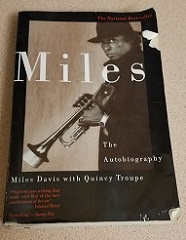
 In July, 1992, my father purchased the album Doo Bop, the last studio album completed by the late Miles Dewey Davis, III. Through my father and uncles, I had been exposed to jazz music and knew the names of many of the greatest artists to ever perform. I grew to love the music and that has not changed to this day. In fact, I still listen to the album when I get in the mood to hear Miles’ songs. When he died on September 28, 1991, I remember my uncle and dad being devastated. Both he and my father were huge fans of Davis but were also aware of the chaotic life Davis had led. They would often spend hours discussion Miles, jazz and the other legends of the genre over wine, rum and cigars. When Miles he died he was less than 70 years of age and his death seemed surreal at the time. Today, many years after his death, his legacy lives on and his music continues to be study for inspiration and analysis. In 2016, the movie Miles Ahead starring Don Cheadle was released to select theaters to mixed reviews. I saw the film and thought that Cheadle captured Miles’ character quite well. There were points in the film where I had to remind myself that it was actually Cheadle on screen and not Davis himself. However, the film moves around too much and the story line fails to deliver. The result is a haphazard biopic that does not help the viewer to understand the life of one of jazz’s greatest musicians. Hollywood is always prone to taking liberties when making films and with on 90 minutes of film to work with, it would be quite challenging to capture all of his life on the silver screen. A saving grace is this autobiography which was written with the assistance of Quincy Troupe, who conducted extensive interviews with Davis and those who knew him. And the rest is one of the best autobiographies I have ever read. Miles is frank by nature and he holds nearly nothing back in the book regarding his life. His story is so engaging that I finished the book in only two days. Simply put, his story is quite the experience and we can be eternally grateful that he did tell his story before he died.
So just who was Miles Davis? And why is he so important to the history of jazz? Well, those two questions and more are answered in this book which is guaranteed to keep you entertained. From his beginnings in Alton, Illinois to his death in Santa Monica, California, his life was one situation after another that sometimes defied logic. But such was his life and one that few people will live. From the start, he is very open about his childhood and his relationships with his parents and siblings. Incredibly, from a very young age, music is in his blood and he never wavers in his quest to become a pioneer and change jazz music, something he did more than once during a career that spanned more than 40 years.
Davis was a very blunt speaker and as a result, his words are laced with profanity. So for those who cringe at foul language, be warned that he does not speak to sound comforting but talks the way he always has. At first, I thought it was a bit much but as I made my way through the book, it became an afterthought and overshadowed by the incredible story he was telling. Aside from his salty language, he had a great ability to analyze himself and open up about where he went wrong in life. It seems almost absurd that someone who was so successful in music, led a wild and tormented life at home. But his life mimics that of other creative geniuses who often straddle the fine line between genius and insanity. As we learn in the book, he constantly tried to pick up as much as he could from other great artists around him and I believe that it was helped him become the legend that he is today. He never stopped learning or changing and even says during the book that “knowledge is freedom and ignorance is slavery”.
His story is incredible but what makes the book even more outstanding is that Davis either knew or worked with the major names in the jazz music at the time. His friendship and working partnership with Charlie “Bird” Parker is both eye-opening and tragic but sheds light on the many dangers faced by performers and Parker’s downfall and death. Bird is just one of many characters to appear in the book, he is joined by Dizzy Gillespie, Charles Mingus, Thelonious Monk, John Coltrane, Gil Evans and Clark Terry. In addition there are many others involved with the emerging bebop genre that appear in the book as they come in and out of Miles’ life adding to his experiences and wisdom.
Although deeply personal, he opens up about his medical conditions and demons in particular that nearly ended his life. As a father of several children, he struggled being a parent and is brutally honest about his relationship with them as his former wives. His marriage to actress Cicely Tyson is the best known of the three but the other two are the marriages that had the biggest impacts in his life as the reader will see. Nonetheless, his words are intoxicating and even as the book concluded, I found myself wishing for just a few more chapters in the book to see what else would happen or what he had learned as he aged. However, I am grateful to him for leaving us with these memories. Show business is rough, drugs are hard and marriage is tough. Some artists balance all three but for many that is not the case. He had his addictions and failings but was also a creative genius. And throughout the book, he is the coolest person in the room. This is Miles as raw as it gets.
ISBN-10: 0330313827
ISBN-13: 978-0330313827
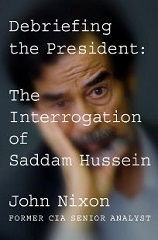 On March 20, 2003, the United States military invaded the Republic of Iraq. The invasion marked the second time US and Iraqi forces faced off in armed conflict. Saddam Hussein, the ruler of Iraq was deposed and fled into hiding. He was captured several months later on December 10, 2003 and three years later, executed by hanging. Over 10 years have passed since his death and Iraq continues to struggle with stability in the face of internal factions divided along tribal and religions lines and the emergence of ISIS intent of claiming their portion of territory across the Middle East. After he was captured, he was debriefed by American forces. The man who many Americans had seen as a powerful dictator on television, was reduced to another captured fugitive on a most wanted list. His appearance before cameras with a full beard and unkempt hear, remains one of the most popular images from that decade. However, it was a stark contrast from the man who allegedly had his mind-set on the destruction of America. But is that was Saddam Hussein really wanted? And what were his thoughts leading up to and during the invasion? John Nixon served as a former Senior Analyst with the Central Intelligence Agency and was tasked with debriefing the fallen dictator. This book is a recap of his career and the conversations he had with Hussein following his historic capture.
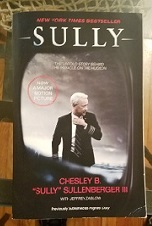 On January 15, 2009, US Airways Flight 1549, commanded by Captain Chesley B. “Sully” Sullenberger and first officer Jeffrey B. Skiles, made an emergency landing in New York City’s Hudson River. The successful landing and evacuation of all passengers and crew became known as the miracle on the Hudson. Sullenberger is now retired from US Airways but remains involved in the aviation industry. His efforts that day in conjunction with those of Skiles remain a classic example of the necessity of extensive training and extraordinary ability to focus on the issues at hand. Sullenberger has said that he does not consider himself a hero. In his mind, he was doing what a well-trained pilot was supposed to do; fly the plane and try to land it while preserving the lives of everyone on board. And on that day, that is exactly what happened. Prior to the incident, his name was largely unknown outside of US Airways. His face just another pilot that thousands of passengers walk past each day as they leave their flights. The men and women who travel the skies are rarely acknowledged for a job that requires tremendous sacrifice, patience and dedication. But just who is Chesley Sullenberger? And why is his story so amazing?
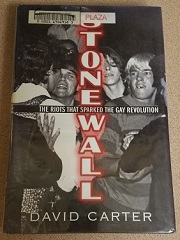 On the nights of June 27 and June 28, 1969, riots occurred that changed the history of New York City and gave strength to the movement for equality and legal rights for gay men, lesbian women, transgender and transsexual people. The incidents became known as the Stonewall riots, and took place in and outside of the Stonewall bar in Manhattan’s West Village neighborhood. The bar is no longer there, but on those hot summer nights in 1969, the LGBT community made a stand that shocked not only the New York City P0lice Department but an entire city. The episode stands out as one of the movement’s most powerful moments that has never been forgotten. David Carter presents to us an investigative report of what really happened during the Stonewall riots and allows us to understand why and how they came to be.
 FREETHINKING BIBLIOPHILE
You must be logged in to post a comment.