
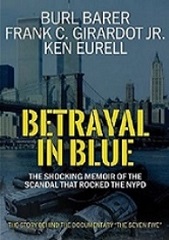
 Nearly twenty-six years ago, New York City Police Officer Michael Dowd was arrested by the Suffolk County Police Department in cooperation with the U.S. Drug Enforcement Agency for the possession and distribution on narcotics. His arrest, trial before Judge Kimba Wood of the Southern District of New York and testimony before the Mollen Commission solidified Dowd’s reputation as the dirtiest cop in NYPD history. Arrested with him were other officers, drug dealers and other participants. Ken Eurell was retired at the time of his arrest but during his active tenure, he patrolled the streets of the Seventh-Fifth precinct with Dowd and embarked on a path of corruption that is still unbelievable to this day. The duo recounted their life of crime in the 2015 documentary The Seven Five. Undoubtedly, Dowd is the main focus and his recollections are backed up by Eurell and the other former officers. This is the story from Eurell’s point of view about how and why he found himself more deeply immersed in crime with Dowd.
Eurell starts off by explaining his family history and how he joined the NYPD. Hi story is relatively straightforward and certainly non-eventful until he crosses paths with Dowd. Corruption had already existed and as Eurell points out, it was quite widespread throughout the department. Incoming officers were forced to learn on the quickly and those who made the decision to inform on dirty cops often faced a career derailed from being ostracized. Dowd is not just corrupt but takes everything to the extreme and is blessed with a mind geared for exploiting every angle possible. It does not take long for Eurell and Dowd to begin to pull off numerous capers and form a working relationship with two of the biggest drug dealers in East New York.
I lived five blocks from the 75th Precinct and remember when the story broke. Prior to Dowd’s arrest, there at had been stories of arrest at other precincts of cops that engaged in corruption of all sorts. Most of the people in the neighborhood were not surprised as most of the officers from the “75th” were considered to a bunch of cowboys. Having read this account by Eurell and that of Internal Affairs Investigator Joseph Tromboli in his book Good Cop, Bad Cop, the moniker of cowboys is a huge understatement. They were nothing short of out of control and Dowd was on a mission to self-destruct and might have succeeded in the end if not for Eurell’s decision to cooperated with authorities.
The book is shocking at times but I do think Eurell and the authors were right about what East New York was like during the 1980s and 1990s. Having lived there at the time, I can say with all honesty that the neighborhood looked like a war zone. Poverty was rampant, murders common and the police struggled with containing the constantly increasing criminal elements. But what happens when the cops are part of the element? Through participation with Adam Diaz and Baron Perez, Dowd and Eurell had crossed a line from which there was no safe return. East New York, described by officers herein as the “Land of F*ck”, was hell on earth and the problems that plagued the neighborhood extended far beyond the reach of the NYPD and led directly to City Hall. Today, those days are long gone and the landscape bears no resemblance to what it used to look like. Vacant lots have disappeared, crack-cocaine is no longer the drug of the street and the faces of the NYPD are now more diverse. But the 75th is still there at 1000 Sutter Avenue and for older residents, the place that was once the source of the dirtiest cops in all of New York City.
Today, Ken Eurell no longer lives in New York, having relocated to Florida as he attempted to put his life back together again following the fallout after Dowd’s final downfall. As he tells his story he is candid about what he did, how he was seduced by the lifestyle and the pain he inflicted upon his own family. He does not ask for sympathy, freely admits where he went wrong and never portrays himself as a victim or hero. This is simply his part of the story and I think a good supplement to Tromboli’s book and the documentary. I would go as far as to say that if you have watched the film and read Tromboli’s book, then his is another piece of the puzzle. Some of the information is revealed in other places but I do think Tromboli’s book contains a bit more because it is told from the side of Internal Affairs so he is able to convey what was known about Dowd and when NYPD brass knew it. Some readers might be tempted to ask how did they get away with it for so long? The answers are in the book and they just might surprise or even shock you. But this was New York City in the 1980s and 1990s, when it was one of the most dangerous cities in America before gentrification arrived.
I often think about my childhood and early adult life in East New York. Many of my friends have long left the neighborhood and I no longer live there myself. But we all carry many memories and they will remain with us for the rest of our days as I am sure they will for Dowd and Eurell. The East New York they knew is different today and if the City is successful, it will be unrecognizable to them in just a few years. But no matter how much transformation occurs, the dark history of corruption within the Seven-Five will remain in its history.
ISBN-10: 194226674X
ISBN-13: 978-1942266747
 Ross was never a “in-ring talent” and spent most of his days commentating or behind a microphone and a result, he possesses an invaluable insight into the promotional side of the business and how stars and heels are created and then sold to the public. Contained within the pages of this book is a story that every pro wrestling fan should read. Some readers may be tempted to think that because he was not a “superstar” in the sense that most people used to, he does not have an amazing story to tell. I would like point out that they would be highly mistaken. In fact, Ross’ story is just as crazy as others that have been told. The reason is that not only did he know the best but partied and traveled with them as well. Like a sponge soaking up everything in its vicinity, he observed and learned over four decades what it takes to survive in the crazy world of what my father used to call “rassling”.
 The murder of John F. Kennedy (1917-1963) continues to maintain its place among the greatest crimes in American history. The official story as published by the Warren Commission is that former Marine Lee Harvey Oswald (1939-1963) fired three shots in six seconds from the sixty floor of the Texas School Book Depository, fatally wounding Kennedy and severely wounding Texas Governor John Connally (1917-1993). To many, including the author of this book, David Lifton, the government version seemed to be the best and final explanation. But over time Lifton came to doubt the official story and after obtaining a set of the twenty-six volumes that composed the Commission’s investigation, his doubt turned into disbelief and lead him down the path that culminated with this national bestseller.
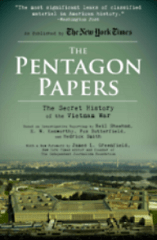 The names of the 58,000 Americans who died in the Vietnam War that are found on the memorial in Washington, D.C., are a reminder of a conflict deemed by many to be the worst the United States has ever been involved in. The withdrawal of U.S. forces in March, 1973, brought a sigh of relief to the American public which had long grown tired of a war with no end in sight. The dark truth which we now know is that we did not by any means accomplish the mission. And the mighty American war machine failed to secure a victory. I have met many veterans of the war and have an uncle who served. What I recall most about all of them is that they do not speak of their experiences while in combat. I know the memories are there and for some of them, they were unable to leave parts of the war behind. Today we call it PTSD, but back then you simply found a way to move forward in life. But why were they in Vietnam to being with? Was the domino effect really a threat to the United States?
 On September 9, 1971, inmates at the Attica Correctional Facility in Attica, New York, staged a revolt in protest of the treatment they received by prison officials and the living conditions employed therein. Several days later, New York State Troopers regained control of the prison after approval from Governor Nelson Rockefeller (1908-1979). The siege had tragic consequences and ended with the deaths of nine hostages and twenty-nine inmates. The fallout from the retaking was swift and to this day the story of Attica is considered the worst prison uprising in American history. The riot caused sharp division among people with some believing in the inmates’ actions and others supporting the State of New York. In fact, among Rockefeller’s most ardent supporters was President Richard M. Nixon (1913-1994) who would himself resign in 1974 due to the Watergate scandal. The riot and its aftermath were so powerful that even Hollywood became interested and produced the television series Attica (1980) starring Morgan Freeman and Against the Wall (1994) starring Samuel L. Jackson (1948-) and Kyle MacLachlan (1959-). Both film productions earned award nominations and the stars in each film would go on to have successful careers in Hollywood. However, the questions always remain, how much did the producers get right, how much did they get wrong and how much did they leave out? Further, how much do we, the public know about one of New York State’s darkest days?
 FREETHINKING BIBLIOPHILE
You must be logged in to post a comment.