
 The first time I read Charles W. Bailey, II (1929-2012) and Fletcher Knebel’s (1911-1993) ‘Seven Days in May‘, I understood why it was so important and why it was one of President John F. Kennedy’s (1917-1963) favorite books. The plot of the story is simple: a conspiracy is hatched to overthrow the sitting president of the United States. In 1964, Paramount Pictures released the film of the same name starring Burt Lancaster (1913-1994) and Kirk Douglas (1916-2020) with director John Frankenheimer (1930-2002) at the helm. The book and film were works of fiction but thirty years prior to the film’s release, there was a plot to remove the sitting president of seize control of the government. Jules Archer and Anne Cipriano Venzon researched the unbelievable and chilling story in this book that sheds light on a little-known part of American history. And at the center of the story is legendary United States Marine Corps General Smedley D. Butler (1881-1940).
In 1933, German Chancellor Adolf Hitler (1889-1945) tightened his grip over Germany and began to plot its course for world domination. Across the Atlantic few believed that he would ignite a war that remains the deadliest conflict in the history of mankind. As the Third Reich made its presence felt, it soon became clear that the Nazi menace was nothing to ignore. Despite the outbreak of war, the United States held firm on its isolationist stance and the Neutrality Acts passed by Congress limited the president’s ability to send aid to European allies. For President Franklin D. Roosevelt (1882-1945), the Great Depression and European war proved to be the biggest challenges to his time in office. And failing health provided the ammunition needed by his detractors who believed that Roosevelt would not live to finish his time in government. Sadly, they were proven right on April 12, 1945.
The first question I had for myself when I started reading the book was why Butler? I knew he had become anti-war in later years and had even published a book called ‘War is a Racket‘ in which he exposes the monetary interests behind armed conflict. As the book progresses, it becomes clear why Butler was their choice and the biography included by the authors provides a fair amount of information about his life and rise in the military ranks. Further, the respect he earned from current and former soldiers made him the ideal choice. And to understand why Butler was so respected, one only needs to read of his accomplishments which are discussed here. I found myself both in awe and speechless learning of his commitment to the Marines and belief in morale. To be clear, Butler harbored no ill-will towards Roosevelt and was a pacifist by nature. That, however, did not stop him from suiting up when the Marines were needed.
Following his retirement from the Marines, Butler became a sought-after speaker across the country and beloved by the Veterans of Foreign Wars organization. In the story, we soon learn the names of Gerald C. McGuire and Bob Doyle of the American Legion, who approached Butler with incentives to join their plot in taking over the government, but the seasoned marine was suspicious from the start. Having worked for a time in the Department of Public Safety in Philadelphia, Pennsylvania, Butler was no stranger to criminal activity. Still, without evidence he knew he could not go public with allegations of a plot to attack to the United States Government. Further he knew the people who approached him had powerful backers and could not be trusted. But after a meeting with Philadelphia Record writer Paul Comly French (1890-1956), Butler decided that the plot needed to be exposed and went before the Special Committee on Un-American Activities to tell what he knew. Portions of his testimony (both public and sealed) are included here and reveal how serious the threat was to the democracy of the United States. And though no one was ever prosecuted because of what the committee learned, it did raise awareness of the importance of preserving our democratic institutions.
The list of conspirators revealed as part of the plot is surreal and may have been a case of sensationalism by McGuire. However, the amount of money behind the plot, as Butler learns, could only have come from wealthy figures. Readers will be surprised to learn of the connection between former New York State Governor Alfred E. “Al” Smith (1873-1944), and ring-wing figures, who were opposed to Roosevelt and his New Deal policies. In time America would see the rise of other organizations such as the John Birch Society and the Minutemen, and the contributors to these various ring-wing parties revealed dark truths about power in America. Regarding one group, the authors explain:
“Heavy contributors to the American Liberty League included the Pitcairn family (Pittsburgh Plate Glass), Andrew W. Mellon Associates, Rockefeller Associates, E. F. Hutton Associates, William S. Knudsen (General Motors), and the Pew family (Sun Oil Associates). J. Howard Pew, longtime friend and supporter of Robert Welch, who later founded the John Birch Society, was a generous patron, along with other members of the Pew family, of extremist right-wing causes. Other directors of the league included Al Smith and John J. Raskob.”
Butler’s refusal to go along with the plot surely led to its demise but had they approached another figure, things may have turned out differently. At the 1930s moved forward, the signs that war would break out became vividly clear and on September 1, 1939, all doubts were removed with the Nazi invasion of Poland. Butler held firm on non-intervention and at the time of his death, the United States had no legal grounds to enter the war. That all changed on December 7, 1941, when the Japanese military attacked Pearl Harbor. Butler did not live to see that attack but if he had, I have no doubt that he would have supported America defending itself from Japanese aggression. His years of service and experiences in combat had left him with dark memories of the horrible injuries sustained by soldiers on the battlefield. He had become anti-war but was never anti-American, and any threat to the democracy of the United States was an attack on the principles he believed in. His courage in exposing what could have been an earth-shattering event, should not be lost to history. In closing out the book, the authors have this to say about Butler:
“If we remember Major General Smedley Darlington Butler for nothing else, we owe him an eternal debt of gratitude for spurning the chance to become dictator of the United States—and for making damned sure no one else did either.”
History is full of untold stories and that is one reason I enjoy it as much as I do. This story may not be well-known nor remembered but it should never be forgotten. Highly recommended.
ASIN: B00VKI49X0
 On January 15, 1953, President Harry S. Truman (1884-1972) gave his farewell address after serving as the Thirty-Third President of the United States. He had taken office on April 12, 1945, after the death of President Franklin D. Roosevelt (1882-1945). At the time of Roosevelt’s death, allied forces were pushing further into German territory to bring the Third Reich to its knees. In the Pacific, the war against Japan continued to rage but in less than six months, it too surrendered after the devastation left by two atomic bombs. In the first four months that Truman was in office, the entire world changed in ways no one could have imagined. Had Roosevelt lived, the war might have ended differently, and domestically, America might have moved forward at a different pace. He did not live to see his post-war plans come to light and for Truman, the title of president was thrust into his lap. He had never wanted the presidency but due to circumstance, he had become what author A.J. Baime calls the accidental president.
 On September 4, 1886, Apache warrior Geronimo (1829-1909) surrendered for the last time to United States military personnel. The famous warrior had eluded capture for years as the American Indian Wars took place across North America. In the years following his death, Geronimo has become a pop-culture icon whose name holds a permanent place in the American lexicon. The irony is that this famous warrior was never a chief in his time and was not driven by fame. In fact, his personal story is darker and more tragic than any Hollywood production. Voltaire (1694-1778) once said that “to the living we owe respect but to the dead we owe only the truth”. Author Robert M. Utley is a former chief historian for the National Park Service and researched Geronimo’s life to dispel rumors and bring to life unknown facts. The result is this biography that is crucial to understanding the creation of the United States of America and the Native American experience.
 Seventy-seven years ago, allied forces defeated Adolf Hitler’s (1889-1945) Third Reich and the Axis powers, bringing an end to World War II. In the years following Germany’s defeat, historians have authored books, filmmakers have published documentaries and social media provides endless content about the man who ignited a world conflict. In the wake of the war, outspoken critics of the Third Reich were vindicated in their belief that Hitler would cause Germany’s destruction. He nearly succeeded and following the nation’s surrender on May 7, 1945, the German people faced the cruel reality that their country was in ruins, they were widely despised and faced years of rebuilding, de-Nazification and coming to terms with what had been done in their name. As we have sought to understand the aura of Hitler and his ascension to the position of Chancellor, sharp focus was needed on how and why the Nazis were able to take over Germany. Author William Sherian Allen decided to focus on the town of Northeim to examine the Nazi seizure of power. Northeim lies in the Lower Saxony area of Germany and between the years 1922-1945, the Nazis executed their plan to take over Germany one town at a time. This is the story of how it was done.
 On August 8, 1974, President Richard M. Nixon (1913-1994) resigned from his position as the thirty-seventh Commander-In-Chief. In the months preceding his announcement, the Watergate scandal investigation had gained significant traction and Nixon faced the possibility of impeachment. The nation watched in shock and silence as Nixon gave his speech. It marked the first and only time in history that a United States President had resigned from office. In the decades that followed, scores of books, articles, and documentaries have been published regarding the Watergate affair. I strongly recommend Fred Emery’s “
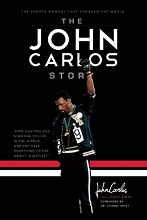 On October 16, 1968, U.S. track and field runner John Carlos ascended the podium to accept his bronze medal following the 200m race. His teammate and gold medal winner Tommie Smith joined him on the podium and as the United States anthem played in the stadium, the pair raised their fists in solidarity with the growing movement for civil rights in America. Silver medal winner and Australian native Peter Norman (1942-2006) showed his support for the American duo by wearing an Olympic Project for Human Rights badge. The image of them standing with their fists raised remains one of the most powerful pictures of the Civil Rights Movement. However, behind the scenes, the fallout from their gesture was immense and even Norman, who was not American, suffered tremendously. This is the story of John Carlos in his words, which explains the events leading up to the pivotal moment in world history and his life which has been anything but ordinary.
 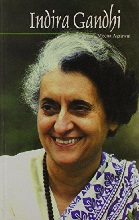 Few places are as fascinating as the nation of India. Its constitution officially recognizes twenty-two languages. English continues to serve as a critical method of communication in the business sector. Natives will proudly tell you that India is one of the most diverse countries in the world. Yet, despite the diversity, social issues such as poverty, corruption, and overpopulation are a reminder that India’s long struggle for success is far from over. Recently I was reading only and came across the name of Indira Gandhi (1917-1984), the former prime minister who was assassinated on October 31, 1984. Her father, Jawaharlal Nehru (1889-1964), served as the nation’s first prime minister after India gained its independence in 1947. Both father and daughter left behind legacies that remain with India to this day.
 In April 1916, Irish Republicans used the Easter holiday week to launch an insurrection against British rule in Ireland. Through the British regained control of Dublin and later conducted executions of selected participants, the uprising stands to this day as a pivotal moment in the movement for a united Ireland. When I visited Dublin in February 2016, I took a moment to observe murals dedicated to Irish history. I realized that the Ireland I was visiting had changed since the visit of U.S. President John F. Kennedy (1917-1963) in April 1963. Ireland was once known was the most conservative country in Europe but had now become the most liberal. As I walked the streets of Dublin, I heard accents from countries throughout the world and the diversity of languages reminded me of my hometown, New York City. But how did Ireland undergo such a drastic change? The answer can be found in this book that captures an important aspect of Irish history.
 On June 3, 1968, artist, and film director Andy Warhol (1928-1987) was shot and severely wounded as he talked on the telephone in his office located at 33 Union Square West in Manhattan. He was rushed to the hospital and declared clinically dead by doctors before being resuscitated. He underwent grueling surgeries that left a myriad of scars across his torso and required him to wear a surgical corset for the remainder of his life. Hours after the shooting, a young woman walked up to a police officer in Times Square, handed over her weapons and confessed to shooting Warhol. She was arrested and booked for the crime. The public soon learned the name of Valerie Solanas (1936-1988). Today she is best remembered as the woman who shot Andy Warhol. Her actions were horrific and nearly took Warhol’s life, however her story is not as widely known. Breanne Fahs decided to change that and find out the truth about Solanas’ turbulent life. This biography explores the life of Solanas, her relevance to the radical feminist movement and her descent into anarchy after shooting one of the biggest pop icons in history.
 On November 4, 1979, university students seized the U.S. Embassy in Tehran, Iran and detained more than fifty U.S. Government employees. Though some were later released, the majority remained behind for four hundred forty-four days in what is known as the Iran Hostage Crisis. In 1953, Mohammad Mosaddegh (1882-1967) and the National Front Party gained political power in opposition to Mohammad Reza Shah (1919-1980). A twice elected member of Parliament, Mossadegh emerged as a popular figure but within days of the Shah’s exile in August of that year, Mossadegh was removed in a coup sponsored by the British Government and the United States. Mossadegh’s removal and the Shah’s return, inflamed tensions and in November 1979, Iranians decided that America must go. This is the story of the hostage crisis from start to finish in an account that provides a thorough discussion of America’s foreign policy mistakes and Iran’s inner struggle between traditionalism and modernity.
 FREETHINKING BIBLIOPHILE
You must be logged in to post a comment.