 On January 15, 1953, President Harry S. Truman (1884-1972) gave his farewell address after serving as the Thirty-Third President of the United States. He had taken office on April 12, 1945, after the death of President Franklin D. Roosevelt (1882-1945). At the time of Roosevelt’s death, allied forces were pushing further into German territory to bring the Third Reich to its knees. In the Pacific, the war against Japan continued to rage but in less than six months, it too surrendered after the devastation left by two atomic bombs. In the first four months that Truman was in office, the entire world changed in ways no one could have imagined. Had Roosevelt lived, the war might have ended differently, and domestically, America might have moved forward at a different pace. He did not live to see his post-war plans come to light and for Truman, the title of president was thrust into his lap. He had never wanted the presidency but due to circumstance, he had become what author A.J. Baime calls the accidental president.
In contrast to a standard biography, the focus of the book is on the four months between Truman taking office and the surrender of Japan. The story begins with Roosevelt’s last day alive. Following his death, all eyes become fixed on Truman who is largely unknown to the American people. Washington insiders knew of his background but even within those circles, he was somewhat of a mystery. His unassuming look and plain-spoken Midwest nature made him appear as just another person in the room. But little did anyone know that the next president would usher in a new era in warfare and set the course for future domestic programs and U.S. foreign policy.
Before entering the lengthy discussion of the war and Truman’s role in it, Baime provides a short biography about his early life in Independence, Missouri, and his entry into politics that culminates with his arrival in Washington. One aspect that stood out is Truman’s military service in World War I which is often not discussed. I believe his experiences in combat surely helped his ability to make decisions during World War II. After we learn of Truman’s unusual entry into politics and nomination for vice-president, the author shifts gears and takes us right into the war with a heavy focus on Japan where the U.S. Air Force is conducting firebombing raids under the legendary and controversial General Curtis E. LeMay (1906-1990). Despite the fierce allied attacks, Japan would not surrender but in Europe, the Third Reich was on life support. Adolf Hitler’s (1889-1945) dream of a master Aryan nation spread across continents had collapsed and the tyrant himself was hiding in his bunker. The Red Army was closing in and the German people knew that retribution from the Soviets was not something any of them wanted to experience. On April 30, 1945, Hitler met his demise and escaped punishment at Nuremberg. Washington breathed a sigh of relief at the German defeat but knew that Soviet leader Joseph Stalin (1878-1953) could not be fully trusted. The seeds of the Cold War had been firmly planted as World War II reached its shocking and brutal conclusion. With Germany no longer a threat, the story moves to the war in the Pacific where allied forces are determined to crush the Japanese military.
As the book progresses, it really splits into two stories; the race to finish the bomb and the negotiations at the Potsdam, Cecilienhof conference between Truman, Stalin, and British leader Winston Churchill (1874-1965). The debate over whether Truman should have used the bomb will continue but the author does a good job of showing what was being discussed behind the scenes. Truman knew the decision he had to make was unlike anything a president had faced before. He also knew that he would be judged throughout history for it. Baime summarizes Truman’s historical recognition with this accurate statement:
“Truman is remembered first and foremost for his decision to employ atomic weapons—Little Boy and Fat Man, the only two nuclear bombs ever used against human targets. More than seventy years later, this decision remains almost certainly the most controversial that any president has ever made.”
However, the war with Japan needed a conclusion, and allied forces had already begun to plan the full-scale invasion of the island on November 1, 1945. The bomb was the ace up Truman’s sleeve, but until a test was conducted, questions surrounding its efficacy remained. All of that changed on July 16, 1945, in Los Alamos, New Mexico when the first successful test was conducted and the outcome of World War II began to take shape.
Remarkably, throughout the reports of carnage, the tension surrounding the bomb program, and interactions with the Soviets, Truman always comes across as incredibly calm. And what we see is that for a man who was the accidental president, he rose to the occasion and showed no hesitation when action was required. The power of the bomb was not lost on Truman or others with knowledge of its existence. Lead scientist J. Robert Oppenheimer (1904-1967) also makes an appearance in the story as the full gravity of the bomb’s creation comes down on all of them. No one knows for certain exactly when Truman decided to use the bomb and as Baime explains, there is no written record of it. Eventually, the moment in the book we know is coming arrives on August 6 when the city of Hiroshima receives the first atomic bomb. Three days later, Nagasaki suffered similar devastation which finally convinced the Japanese Emperor Shōwa (Hirohito) (1901-1989) that to continue the war would mean Japan’s ultimate destruction.
Finally, the war was over but the destruction and death that ensued were permanently seared into the memories of all who witnesses man’s savagery. Truman personally observed Berlin for himself and the experience is revisited in the book. Survivors of the nuclear bombs provide additional feedback regarding the immediate impact of the detonation. Their words provided a chilling effect to the introduction of atomic weapons. Back in America, Truman’s popularity soared and the little-known senator from Missouri became an American hero. This stands in stark contrast to his wife Bess (1885-1982) whose disdain and avoidance of the public spotlight are also part of the story. The book concludes after the formal surrender of Japan but Baime provides an epilogue that takes a closer look at Truman’s time in office following the war. He never again reached the level of popularity that he enjoyed during the war era but he remains one of the most important leaders in world history. Few knew who he was when took control of Washington on April 12, 1945, but in just fourth months, he cemented his legacy and showed that even an accident president can be just what the country needs.
“No President could ever hope to lead our country, or to sustain the burdens of this office, save as the people helped with their support. I have had that help–you have given me that support–on all our great essential undertakings to build the free world’s strength and keep the peace. Those are the big things. Those are the things we have done together. For that I shall be grateful, always.” – Harry S. Truman, January 15, 1953
ASIN: B01MQVT9TG

 Billy the Kid remains one of the most mythical figures of the American Old West. There are parts of his life that remain a mystery, but “the Kid” did shoot and killed several men before his own death at the hands of Deputy U.S. Marshall Pat F. Garrett (1850-1908), on July 14, 1881. Following the Kid’s death, Garrett authored this book regarding his former acquaintance. For decades it stood as the best account of the Kid’s life but has been surpassed and challenged. Further, the book is Garrett’s account and not subject to cross-reference within. While it is true that Garrett did know the Kid, questions remain about the outlaw’s life.
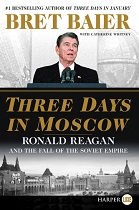 Readers old enough to remember the Soviet Union will recall the shock and disbelief that came with the Union of Soviet Socialist Republics (U.S.S.R.) flag being lowered for the last time on December 25, 1991. The “Cold War” had come to an end, but a long road lay ahead between the United States and Russia in coming to terms with each other’s way of life. On May 29, 1988, United States President Ronald Reagan (1911-2004) and First Lady Nancy Reagan (1921-2016) arrived in Moscow for a three-day summit with Soviet General Secretary Mikhail Gorbachev and his wife Raisa (1932-1999). It has been held as a triumph in American foreign policy and as an example of strong leadership. In less than three years, the Soviet Union dissolved, and Reagan was vindicated in his predictions of its demise. During the summit, Reagan spoke to the people of the Soviet Union at Moscow University and to this day it stands as a breathtaking moment in world history. But as always, there is more than meets the eye. Fox News host Bret Baier revisits the summit in this book about three days that impacted world history.
 In December 1963, one month after the assassination of U.S. President John F. Kennedy (1917-1963), former President Harry S. Truman (1884-1972) authored an op-ed piece in the December 22, 1963, edition of the Washington Post about the Central Intelligence Agency (CIA) and its role in America. While reflecting on what the CIA had become, he stated “there is something about the way the CIA has been functioning that is casting a shadow over our historic position and I feel that we need to correct it.” The agency had been established through the National Security Act of 1947 which was intended to both centralize and simplify national defense and the intelligence apparatus. Five years before the National Security Act was signed into law, President Franklin D. Roosevelt (1882-1945) had also addressed the need for foreign intelligence and through Executive Order 9128 on July 13, 1942, he formally established the Office of Strategic Services (OSS). And to lead the new agency, he turned to former director of the Coordination of Information (COI), the legendary William Joseph “Wild Bill” Donovan (1883-1959). Though he was never director of the CIA, Donovan is credited as being the father of intelligence. Author Richard Dunlop examines Donovan’s life in this intriguing biography and historical account of how the intelligence community came to exist.
 In 2019 the Urban Institute conducted an analysis of the welfare system in the United States. It found that at least fifty-nine million Americans were on some form of public assistance mostly obtained through six major welfare programs in the country. The people in need of assistance will vary but the image that was once presented to the public stands in stark contrast to reality. In his first run for office of the president, California Governor Ronald Reagan (1911-2004) (R-CA) used the welfare system as part of his program to appeal to conservative voters. Unbeknownst to voters, Reagan had set his focus on a woman in Chicago who would later be called the “Welfare Queen”. The truth is not as glamorous and far more bizarre but that did not deter Reagan from using the case of Linda Taylor (1926-2002) who represented all that was wrong with the system in his eyes. His first campaign for president failed but he mounted a second campaign that culminated with the defeat of sitting President James E. “Jimmy” Carter in 1980. By then Taylor was an afterthought but her life was far from over. In fact, as Josh Levin shows in this biography, her life was full of mystery, tragedy, and dark moments.
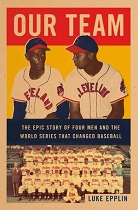 In 2012 Warner Bros. Pictures released the film ’42’ which tells the story of how Jack Roosevelt “Jackie” Robinson (1919-1972) broke the color barrier in Major League Baseball (“MLB”). The late film star Chadwick Boseman (1976-2020) starred as Robinson in the biopic and delivered a phenomenal performance. Robinson did break the color barrier, but he was not the only player to do so at that time. In Cleveland, Ohio, Indians owner William Louis “Bill” Veeck (1914-1986) was determined on further integrating baseball and set his eyes on the Negro Leagues as a pool for untapped talent. Soon enough, he had purchased the rights to Lawrence Eugene “Larry” Doby (1923-2003). The Indians subsequently signed Negro League pitcher Leroy Robert “Satchel” Paige (1906-1982) who joined the ranks and became another teammate of the team’s ace, Robert William Andrew “Bob” Feller (1918-2010).
 The first time I read Charles W. Bailey, II (1929-2012) and Fletcher Knebel’s (1911-1993) ‘
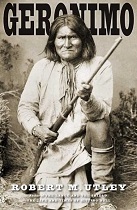 On September 4, 1886, Apache warrior Geronimo (1829-1909) surrendered for the last time to United States military personnel. The famous warrior had eluded capture for years as the American Indian Wars took place across North America. In the years following his death, Geronimo has become a pop-culture icon whose name holds a permanent place in the American lexicon. The irony is that this famous warrior was never a chief in his time and was not driven by fame. In fact, his personal story is darker and more tragic than any Hollywood production. Voltaire (1694-1778) once said that “to the living we owe respect but to the dead we owe only the truth”. Author Robert M. Utley is a former chief historian for the National Park Service and researched Geronimo’s life to dispel rumors and bring to life unknown facts. The result is this biography that is crucial to understanding the creation of the United States of America and the Native American experience.
 Seventy-seven years ago, allied forces defeated Adolf Hitler’s (1889-1945) Third Reich and the Axis powers, bringing an end to World War II. In the years following Germany’s defeat, historians have authored books, filmmakers have published documentaries and social media provides endless content about the man who ignited a world conflict. In the wake of the war, outspoken critics of the Third Reich were vindicated in their belief that Hitler would cause Germany’s destruction. He nearly succeeded and following the nation’s surrender on May 7, 1945, the German people faced the cruel reality that their country was in ruins, they were widely despised and faced years of rebuilding, de-Nazification and coming to terms with what had been done in their name. As we have sought to understand the aura of Hitler and his ascension to the position of Chancellor, sharp focus was needed on how and why the Nazis were able to take over Germany. Author William Sherian Allen decided to focus on the town of Northeim to examine the Nazi seizure of power. Northeim lies in the Lower Saxony area of Germany and between the years 1922-1945, the Nazis executed their plan to take over Germany one town at a time. This is the story of how it was done.
 On August 8, 1974, President Richard M. Nixon (1913-1994) resigned from his position as the thirty-seventh Commander-In-Chief. In the months preceding his announcement, the Watergate scandal investigation had gained significant traction and Nixon faced the possibility of impeachment. The nation watched in shock and silence as Nixon gave his speech. It marked the first and only time in history that a United States President had resigned from office. In the decades that followed, scores of books, articles, and documentaries have been published regarding the Watergate affair. I strongly recommend Fred Emery’s “

You must be logged in to post a comment.