
 I saw this book in my list of recommendations but did not know the face on the cover. However, the high rating caused my interest to raise and I decided to see why it is so highly rated. The name Gauri Lankesh (1962-2017) did not sound familiar but I thought to myself that she must have been someone unique to have a memoir written about her life by ex-husband Chidanand Rajghatta. As he explains, they had been divorced for more than twenty-five years but had remained close friends to the day she died. On September 5, 2017, Lankesh was shot and killed at her home in Rajarajeshwari Nagar, Bangalore. She was fifty-five years old. Her death marked a very dark turn in the ongoing battle between extremism and rationalism. And as Rajghatta points out throughout the book, Lankesh was never one to hold her tongue. She stood by her beliefs and gave her life for what she believed in. This book is his tribute to his former wife, close friend and pioneer for a more tolerate and diverse India.
India truly is one of the most fascinating countries on earth and I do believe many of us fail to appreciate just how diverse it is. There are hundreds if not thousands of languages and faiths spread across the country sometimes with large variations in practices. Growing up, the people I encountered here in New York from India subscribed to the Hindu belief system. Former classmates whose families had emigrated from India explained as best they could what Hinduism was. As a result, my friends and I had to come to associate Hinduism with India and remained unaware that it is only one of the many system of belief. Now that I have aged, I see how much we did not know and I am proud to say that I am no longer young enough to know everything. Hinduism is indeed a fascination belief system and the author addresses the confusion surrounding Hinduism, relaying it in layman’s terms with this statement:
“Hinduism itself is not considered a dogmatic religion and not strictly a religion of any one book. Some would say it is not even a religion but a loose set of beliefs constructed around many books—the Vedas, the Puranas, the Bhagavad Gita (which is a part of the Mahabharata) and the Ramayana.”
Here, the author steps deep inside the topic of faith in India, allowing us to see how extremist and rationalist have been set on a collision course that shows no signs of changing direction. And while I read through the book, I began to see that there is much about religion in India that I still did not yet know. However, the author did not write a book solely on that topic but rather an account of his memories of Gauri. Religion is central to the story but certainly not its basis. Readers who are not well versed in Indian may find the discussion on faith to be slightly overwhelming. The main focus is on Lingayatism, a Shaivite Hindu tradition which both the author and Lankesh know intimately. However, neither are religious and the author admits that he is in fact agnostic. And others who are a part of the story are of the same mindset and even atheistic. This may surprise some readers who expect to find dedication to a strict belief system but I feel that the book shows without question that within India, faith has no set standard.
By the author’s account, Gauri Lankesh was truly one of a kind. And it is admirable that the two remained friends for so many years after divorcing. But it does show that what existed between was genuine love, not necessarily entirely romantic, but simply between one person and another. Rajghatta truly misses her and her rhetoric which even he had to admit was nothing short of challenging. I felt that this statement about her sets the tone for the book:
“Gauri Lankesh was disputatious to a fault. I should know. We argued relentlessly, mostly good-naturedly, in our exuberant youth when India was so full of promise and problems, as it still is. But she was also a large-hearted and fair-minded woman, a trait that extended our friendship beyond marriage.”
It is not always common to receive such words of praise from a former spouse but it is a testament to her influence on those who knew her best. As Rajghatta gets into the story, what develops is a picture of a changing India once known as a place for liberal and progressive expression, into one that does not tolerate dissent from ideology. Lankesh was appalled at this shift and throughout her life crusaded against fundamentalism taking over Indian society. She paid the ultimate price but her spirit shall always remain present. Disturbingly, her death was one in a series of murders of those who spoke out against the shift to the religious right. The murders are brutal and following the deaths of each, Rajghatta and Gauri ponder what is happening to the India they called home. Gauri never left India but Rajghatta moved to the United States in the years that followed their divorce. And when taking a look at India, he makes this keen observation:
“A word about the title: as an Indian who has worked abroad for nearly twenty-five years, I’ve often felt it is only when you reside outside India you understand India better. Distance lends perspective. Living in India tends to desensitise us to both its good and bad.”
To help us understand the sharp divisions surrounding faith, Rajghatta focuses on the scriptures that have formed part of Indian culture. The most famous are the Ramayana and Mahabharata. He discusses them but not in extensive detail as that would have required another and much longer book. But they are relevant to the story at hand so that we can see their influence of dogma and its development. I believe that it may help readers to look up each book independently for further reading as there is a good story to be found within both.
What I liked the most about the book is that it did not read like a standard biography but felt more like a discussion about a friendship that was unique. It is clear that Gauri Lankesh was unorthodox in mainstream India (she never had children and abhorred religious customs) and because of her free spirit nature, she had earned the wrath of those committed to fundamentalism. She continued the Lankesh Patrike, the publication that was created by her father P. Lankesh and backed legislation opposed to funamentalist expansion. Her position was not an easy one to take but her courage shines brightly in the memories of Rajghatta. As India continues to change, we can only wonder which direction it will go and what Lankesh would think if she were still alive. Those in the west may not know her story but I do recommend this book to learn who she was and why she matters in India. Further, it should remind Americans of the value in freedom and why extremist ideology poses a constant threat to our way of life. Lankesh is gone but her work is far from done and others are proudly carrying the torch.
“In old India, it was a badge of honour to be called a radical, a liberal, a progressive—labels that conveyed a readiness to shed one’s selfish concerns to fight for a better world. Today, they are words of abuse and any action that questions the status quo or seeks to alter it can be deemed extremist, or worse, anti-national.” – Chidanand Rajghatta
Highly recommended.
ASIN : B078PMPZZK
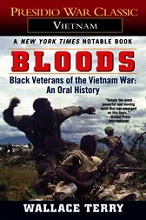 The last time I saw my Uncle William in person, we discussed his time in Vietnam and later discharge from the military in the 1960s. During a routine physical, it was discovered that he had suffered damage to hearing in one of his ears due to being too close to the 50-caliber machine gun while on patrol. As a result, his balance and coordination began to suffer, and he was declared not fit for active duty. He accepted the discharge and found work with the postal service before moving on to the private sector. Over the years he has only talked about Vietnam on a handful of occasions and the stories were typically very brief. He never went into too much detail but there are couple of stories that made the hair stand up on the back of my neck. His experiences are like those of other black veterans of the Vietnam War whose struggles have not received the full attention that they undoubtedly deserve. Wallace Terry (1938-2003) was a journalist and oral historian who conducted interviews with dozens of veterans and chose twenty of them which are the focus of this book. It is a detailed look at the life of black soldiers in a war that remains a dark memory in American history.
 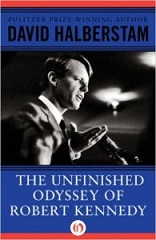 In the midst of what can only be described as a vitriol filled political climate, I decided to revisit this short but insightful book by the best-selling author David Halberstam (1934-2007), about the political transformation of the late Robert F. Kennedy (D-NY) (1925-1968). In 1968, the Vietnam War had become a nightmare for the administration of Lyndon B. Johnson (1908-1973) and calls for a change in American policy were growing louder. On the domestic front, social unrest began to peak as blacks and other minorities became increasingly frustrated with the lack of advancement in society that the Civil Rights Bill of 1964 and Great Society had failed to deliver. While blacks had equal rights under federal law, opportunity was still highly elusive. Johnson’s opponent, Richard M. Nixon (1913-1994) represented a shift to the right that alarmed those of the left and even moderate voters. And while Nixon did get elected, it took a series of events in 1968 to make that possible. And nearly all of them involved Robert Kennedy.
 On January 11, 2016, the music legend David Bowie (1947-2016) died peacefully at his home with his family by his side following a nearly two year battle with cancer. His passing deeply affected fans and he is fondly remembered as one of the most eccentric stars in music history. His high profile marriage to former model Iman, is one of the visions most recalled by fans of the late star. But prior to finding his soulmate in Iman, David Bowie had crafted a persona over the course of several decades and to say that it was a wild ride would be an understatement. Author Wendy Leigh takes a look at his life in this biography that is sure to keep you asking for more.
 This weekend, I took advantage of some free time to revisit this classic book by the late author George Orwell (1903-1950). I had been thinking about it for some time as I watched news to remain aware of the continuing Covid-19 pandemic and developments in China, in particular Beijing’s efforts to place Hong Kong firmly in its grip. North Korea increased tensions with South Korea by termination diplomatic relations and destroying the joint liaison office used for meetings between world powers and Pyongyang. The world seems to be at the brink of anarchy as right-wing figures rise to power and in the process take their nations in a different course away from progressivism. In some nations, the state becomes the face of nation and party rules over the individual. Essentially, in the years since this book was written, we have seen the rise of what Orwell called Big Brother.
When he wrote this book in 1949, I do not believe that Orwell had any idea that this book would become the blueprint for the totalitarian police states we see in existence today. This book became so popular that not only is it assigned reading for many students but it was also adapted for the silver screen in 1984 by Michael Radford. The film of the same name was released on March 22, 1985 and starred John Hurt and the late Richard Burton. Since that time, it has remained a masterpiece about the watchful eyes of the government and is often cited during discussions about invasion of privacy and overreach by the government.
The main character is Winston Smith, a party worker in the Records Department within the Ministry of Truth, whose job it is to re-write the past according to Big Brother’s doctrine. He is married but separated from his wife Katherine who appears briefly in the story and always in the past. He suffers from an ulcer that will not heal and spends his days revisioning history using the new language Newspeak. He has no life outside of the party and his existence is a repetition of the prior day. Winston does his job with no emotion but has his doubts about Big Brother. His co-workers Syme and Parsons tow the party line and make every effort to show allegiance to the state.
By chance, Winston meets a young lady in the department named Julia. At first she is elusive but the two eventually become close, too close for comfort according to Big Brother. They seek refuge at the residence of Mr. Charrington under the impression that their meetings are discreet. They are committed in their belief that Big Brother is a fraud and that their way of life cannot continue to exist in that form. Winston and Julia are soon introduced to a crucial character named O’Brien and in his presence they confess their true feelings. O’Brien invites them to the Brotherhood and they leave with strict instructions as to how to move forward. The main requirement is that they read the book by Emmanuel Goldstein, the radical figure who remains the target of the “Two Minutes of Hate” program aimed at discrediting his reputation. Winston eventually gets his hands on the book and during a tryst with Julia, begins to read to to her. But unbeknownst to them, things were about to take a dark turn for the worst and Big Brother was about to make his presence felt.
The final part of the book is without question the best. As O’Brien’s true role emerges, the reality of Big Brother’s endgame becomes hauntingly clear. The party’s slogan that War is Peace, Freedom is Slavery and Ignorance is Strength, are reinforced sadistically by O’Brien. His goal is get Winston to see the truth in Big Brother’s existence and is committed to breaking him down so that Winston can be rebuilt. Today we would call it “re-education” as it is known in state-controlled nations. The full party doctrine comes flowing out of O’Brien’s mouth and there is one line in particular that sums up the party’s stance:
This weekend, I took advantage of some free time to revisit this classic book by the late author George Orwell (1903-1950). I had been thinking about it for some time as I watched news to remain aware of the continuing Covid-19 pandemic and developments in China, in particular Beijing’s efforts to place Hong Kong firmly in its grip. North Korea increased tensions with South Korea by termination diplomatic relations and destroying the joint liaison office used for meetings between world powers and Pyongyang. The world seems to be at the brink of anarchy as right-wing figures rise to power and in the process take their nations in a different course away from progressivism. In some nations, the state becomes the face of nation and party rules over the individual. Essentially, in the years since this book was written, we have seen the rise of what Orwell called Big Brother.
When he wrote this book in 1949, I do not believe that Orwell had any idea that this book would become the blueprint for the totalitarian police states we see in existence today. This book became so popular that not only is it assigned reading for many students but it was also adapted for the silver screen in 1984 by Michael Radford. The film of the same name was released on March 22, 1985 and starred John Hurt and the late Richard Burton. Since that time, it has remained a masterpiece about the watchful eyes of the government and is often cited during discussions about invasion of privacy and overreach by the government.
The main character is Winston Smith, a party worker in the Records Department within the Ministry of Truth, whose job it is to re-write the past according to Big Brother’s doctrine. He is married but separated from his wife Katherine who appears briefly in the story and always in the past. He suffers from an ulcer that will not heal and spends his days revisioning history using the new language Newspeak. He has no life outside of the party and his existence is a repetition of the prior day. Winston does his job with no emotion but has his doubts about Big Brother. His co-workers Syme and Parsons tow the party line and make every effort to show allegiance to the state.
By chance, Winston meets a young lady in the department named Julia. At first she is elusive but the two eventually become close, too close for comfort according to Big Brother. They seek refuge at the residence of Mr. Charrington under the impression that their meetings are discreet. They are committed in their belief that Big Brother is a fraud and that their way of life cannot continue to exist in that form. Winston and Julia are soon introduced to a crucial character named O’Brien and in his presence they confess their true feelings. O’Brien invites them to the Brotherhood and they leave with strict instructions as to how to move forward. The main requirement is that they read the book by Emmanuel Goldstein, the radical figure who remains the target of the “Two Minutes of Hate” program aimed at discrediting his reputation. Winston eventually gets his hands on the book and during a tryst with Julia, begins to read to to her. But unbeknownst to them, things were about to take a dark turn for the worst and Big Brother was about to make his presence felt.
The final part of the book is without question the best. As O’Brien’s true role emerges, the reality of Big Brother’s endgame becomes hauntingly clear. The party’s slogan that War is Peace, Freedom is Slavery and Ignorance is Strength, are reinforced sadistically by O’Brien. His goal is get Winston to see the truth in Big Brother’s existence and is committed to breaking him down so that Winston can be rebuilt. Today we would call it “re-education” as it is known in state-controlled nations. The full party doctrine comes flowing out of O’Brien’s mouth and there is one line in particular that sums up the party’s stance:
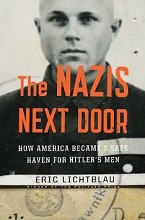 Seventy-five years have passed since Germany suffered defeat in World War II. Adolf Hitler (1889-1945) escaped justice by shooting himself with a pistol after watching Evan Braun (1912-1945) succumb to the ingestion of a poison laced capsule. Allied forces had hoped to put Hitler on trial for the whole word to see but the Austrian menace had no desire to fall into their hands. While the hunt was on for other high-ranking Nazi officials, a secret operation was underway to bring hundreds of Hitler’s former conspirators to the United States as Washington began to prepare for the Cold War against the Soviet Union. The mission was given the name Operation Paperclip and during its existence, some of the most notorious figures of the Third Reich were given a free pass to America and welcomed with open arms. Author Annie Jacobsen thoroughly examined the secret plan in her best-selling book
 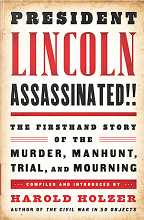 The assassination of President Abraham Lincoln (1809-1865), remains a pivotal moment in American history when the nation was truly at a crossroads. A brutal civil war had just ended and millions of former slaves found themselves unsure of their future post-bondage. The former Confederacy was left in shambles and the Radical Republicans were intent on reconstructing the south in the model of the Union as a whole. Lincoln, was either loved or hated depending on who you asked. In the Confederacy, there was no love lost when he was murdered and as Jefferson Davis (1809-1889) bluntly stated: “Well, General, I don’t know; if it were to be done at all, it were better that it were well done; and if the same had been done to Andy Johnson, the beast, and to Secretary Stanton, the job would then be complete.” Investigators had tried to link Davis to the assassination but the former Confederate leader was never tried or convicted for Lincoln’s murder. The crime cast a dark cloud over the nation and millions of American went into mourning at the loss of the fallen leader. Author Harold Holzer takes us back in time as we re-live the murder and events that followed as they happened in 1865.
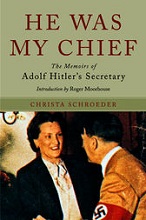 Recently, I reviewed the memoir of Traudl Junge (1920-2002) who served as one of Adolf Hitler’s (1889-1945) secretaries during World War II. Her book,
 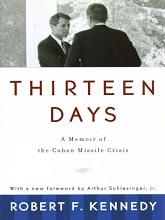 I have had many discussions with my father wherein he recalled his memories of the Cuban Missile Crisis in October, 1962. He explained with vivid detail how he and his classmates had to take part in daily air raid drills due to the increasing threat of a nuclear holocaust. The discovery by U.S. intelligence of Soviet missiles on Cuban soil, accelerated what was already a tense conflict. Today we refer to it as the Cold War but there were many things taking place that were anything but cold. And as former Secretary of Defense Robert S. McNamara remarked in Errol Morris’
  It is not often that I need a moment to myself after finishing a book but alas, it has happened once again. Prior to reading this breathtaking and riveting book by author Harriet A. Washington, I last found myself at a loss for words after finishing David E. Stannard’s

You must be logged in to post a comment.