
 Peace is a state of being that mankind constantly seeks to achieve even as tensions flare between nations making the threat of armed and nuclear conflict a very real possibility. The detonation of the bombs over the Japanese cities of Hiroshima and Nagasaki in August, 1945, changed modern warfare permanently. Man had entered the nuclear weapon era and the fear of complete annihilation reached even the most hardened leaders of the free world. In the wake of World War II, the United States and Soviet Union took center stage in the battle for global supremacy. The Cold War ushered in a new level of caution as Washington and Moscow became increasing distrustful of each other.
In January, 1960, John Fitzgerald Kennedy (1917-1963) was elected over Richard M. Nixon (1913-1994) in one the slimmest election margins in United States history. The young Irish-Catholic president had pulled off a stunning victory in a race that seemed destined to be decided in Nixon’s favor. Upon assuming office, Kennedy inherited the successes and failures of his predecessor, retired General Dwight D. Eisenhower (1890-1969). Moscow watched the election with keen interest and tested the new president in ways he could have never imagined. Under the command of Nikita Khrushchev (1894-1971), the Soviet Union became determined to continue the spread of its communist ideology and confront American whenever and wherever necessary. In October, 1962, tensions reached an all-time high when the world came to the brink of nuclear war. For thirteen days, the world watched with fear as the two superpowers threatened the planet with extinction. Crisis was averted by back-channel communication between the two nations and the commitment of both Khrushchev and Kennedy to avoid total destruction. The Cuban-Missile Crisis changed Kennedy’s view on U.S. foreign policy and he became determined to avoid a similar situation in the future. And he had begun to visualize his quest for peace. Author Jeffrey Sachs takes a close look at Kennedy’s in this short yet remarkable account of a time in world history that will be studied for years to come.
Kennedy constantly walked a tight rope in dealing with foreign powers and satisfying domestic opponents as home. His determination not to be seen as a dovish president, had taken him down a path in which Cold War warriors exerted their influence with the final objective of refuting Soviet expansion by force if necessary. It should be noted that the book is not an examination of the Cold War but rather it places its focus on Kennedy himself and the decisions he made when faced with the threat of catastrophe. Of course, the author addresses the most important events during his short time in office which came to a tragic conclusion on November 22, 1963 in Dallas, Texas. The assassination itself is not discussed in detail for obvious reasons. The focus here remains throughout on Kennedy’s plan for peace which he put into action through a series of events that were quite bold for his time. And although he did not live to see many of his ideas come to pass, he did lay the groundwork for many things, most importantly the Civil Rights Act which would signed into law by his successor Lyndon B. Johnson (1908-1973) on July 2, 1964. Kennedy was not only concerned about world peace but was highly aware of domestic issues at home that centered on the issue of race in America. In recalling Kennedy’s words, Sachs writes:
“The heart of the question, said Kennedy, was this: If an American, because his skin is dark, cannot eat lunch in a restaurant open to the public, if he cannot send his children to the best public school available, if he cannot vote for the public officials who represent him, if, in short, he cannot enjoy the full and free life which all of us want, then who among us would be content to have the color of his skin changed and stand in his place? Who among us would then be content with the counsels of patience and delay?”
Peace became Kennedy’s dominant focus and his actions n the later half of his administration showed his commitment to seeing the world truly change. Whether through his appeals to the United Nations or the creation of the Alliance for Progress, Kennedy was putting his plan into action to see change materialize. But he also understood that peace does not happen overnight. In fact, Sachs explains Kennedy’s vision perfectly in this statement:
“Kennedy’s third precept was that peace is a process, a series of step-by-step confidence-building measures. He recognized that moves by one side lead to moves by the other. A situation of high distrust necessitated a series of confidence-building steps.”
Had he lived, I believe that President Kennedy would have continued his plan of peace and that America would not have remained in Vietnam. He fully understood that the world was heading down a dangerous path and sought to reverse course before mankind destroyed itself. His assasination changed America and to this day, his murder haunts this nation as a reminder of what could have been. However, in just a few short years, he set into a motion a number of events. His commitment to true peace is sometimes overlooked or not fully understood. Here, Jeffrey Sachs explains it all perfectly so that readers can see what Kennedy wanted to accomplish and how he planned to do it. And as a bonus, the author includes text from Kennedy’s speech at American University on July 10, 1963 which is considered by many, including myself, to be his finest. And the fact that he was murdered only five months later, speaks volumes about how much of a threat the young president was to what Eisenhower called the military industrial complex.
I do admit that Kenney’s administration as not perfect and at the beginning of his tenure, he made a series of missteps that increased tensions between America and opponents abroad. But his removal of holdovers from previous administrations, finally allowed him to chart his true course. And by the time he was ready to speak at American University, he had become a seasoned leader who understood that not everyone can be pleased. There are times when being president means doing what is best even if it may be unpopular. And to fully drive home where Kennedy’s thoughts lay in the months before his death, we can turn to this snippet of his speech before that graduation class:
“What kind of a peace do we seek? Not a Pax Americana enforced on the world by American weapons of war. Not the peace of the grave or the security of the slave. I am talking about genuine peace, the kind of peace that makes life on earth worth living, and the kind that enables men and nations to grow, and to hope, and build a better life for their children—not merely peace for Americans but peace for all men and women, not merely peace in our time but peace in all time.”
John F. Kennedy has been dead for more than fifty years but his legacy remains with us. There are many what if questions surrounding his death and what it meant to the United States. However, he left behind quite a bit of ideas and material for us to study, understand and learn from. One of the most important was his desire to move the world in his quest for peace.
ASIN: B00BVJG3C8
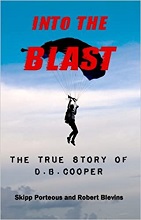 On November 24, 1971, Northwest Airlines Flight 305 departed from Portland International Airport with a destination of Seattle, Washington. Among the passengers was a middle man who gave the ticket agent the name “Dan Cooper”. Minutes after takeoff he handed a note to a stewardess Flo Schaffner a note that he had a bomb in his briefcase. To prove his point, he had the suspicious flight attendant sit down next to him and opened the case for her viewing. Upon realizing that Cooper could in fact destroy the aircraft, authorities were alerted that a hijacking was taking place. After refueling in Seattle, the plane took off again but with $200,000 aboard as per Cooper’s instructions. Once airborne, Cooper had flight attendant Tina Mucklow show him how to operate the aft stairwell on the Boeing 727. Shortly after 8:00 p.m., the warning light went off in the cabin indicating that the aft stairwell had been deployed. When the plane landed in Reno, Nevada, Cooper was nowhere to be found. And to this day, his whereabouts are unknown. Or are they? And had D.B. Cooper been hiding in plain sight while the Federal Bureau of Investigation (FBI) struggled to solve the case? Authors Skipp Porteous and Robert Blevins decided to examine the D.B. Cooper mystery and what they found is sure to catch the eye of even the most ardent supporters of the theory that the hijacker died after jumping from the aircraft.
 Within the past several years I have found myself becoming more and more familiar with the life and legacy of James Baldwin (1924-1987). And I have come to realize that while he is widely appreciated as an author, he is at the same time, underrated as a voice of reason with regards to the country he called home. Curiously, Baldwin spent many years of his life in Europe, finding solace and residency in France and Turkey. However, his life outside of the United States allowed him to view America from the eyes of a foreigner. That position gave him a unique opportunity to view America through the lens of a microscope where all of its social ills were readily visible. In his time he was seen as a trouble maker and rabble rouser due to his outspokenness and sadly because of his sexual orientation. But to focus on his frank dialogue and homosexuality would be misjudgment of his true genius. Baldwin possessed an uncanny ability to dissect American society and highlight where the nation was going wrong. Today America is at a crossroads with a looming presidential election in a nation fiercely divided and deeply polarized. Eddie S. Glaude, Jr. takes another look at James Baldwin, who comes back to life as a voice of reason during which are certainly difficult times.
 In the early morning hours of June 6, 1993, a shipping vessel named the Golden Venture ran aground at Rockaway Beach in Queens, New York. National Park Service officers began to inspect the incident and noticed human figures jumping over the sides of the boat and scurrying out of the light. It soon became clear that the ship was carrying human cargo, more specifically, Chinese men and women being smuggled into the United States. The next day, my parents, brother and I watched the news broadcasts in shock. But what none of us realized was that the smuggling of human beings into the country had been taking place right under our noses. However, my father who was undoubtedly the most street savvy out of the group remarked that people have been smuggled into the United States for years. But looking back, I do not believe that even he knew the scope of the operation. Patrick Radden Keefe, the author of the phenomenal
 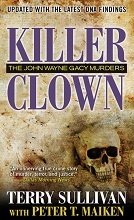 On December 11, 1978, Robert Jerome Piest (1963-1978) was finishing up his shift at Nisson Pharmacy when an older man approached him with the offer of a job in his contracting company. Piest told his mother Elizabeth that he would only be a few minutes. That was last time anyone saw Robert Piest alive. Police would soon learn that the older gentlemen observed conversing with Piest was a local named John Wayne Gacy (1942-1994), a well-respected but peculiar figure who owned a company named PDM Contractors. Gacy initially denied any knowledge of Piest or his whereabouts that night but detectives felt that he was certainly hiding something. Although he was only a person of interest at that time, none of the detectives could have known then that in only two years, the worst serial killer in American history would be convicted of multiple counts of murder. Terry Sullivan was Supervisor of the Cook County State’s Attorney’s Third District office and here he teamed up with Peter Maiken (1934-2006) to bring us the inside story of the effort to bring John Wayne Gacy to justice.
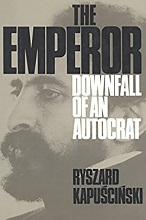 On August 27, 1975, news reports began to emerge that Tafari Makonnen, known to the world as Haile Selassie I (1892-1975), had died at the Jubliee Palace in Addis Ababa, Ethiopia. The man who ruled Ethiopia for forty-four years and who had served as the icon of the Rastafarian movement was eighty-three years old. Selaisse had lived his final years in exile after being deposed in a coup that took place in September, 1974. The world-renown leader was a larger than life figure although he only stood 5’2″. He was recognized on the world stage and helped Ethiopia modernize itself as the wave of independence swept over the African continent in the 1960s. However, his reign was not free of controversy and Selassie was viewed by some as a greedy tyrant who used his position of power to enrich himself and those closest to him. Ryszard Kapuściński (1932-2007) was a Polish journalist who traveled to Ethiopia and interviewed former members of Selassie’s administration. This book is a collection of what they remember from their time in office with regards to the emperor’s daily routine, his achievements and also his downfall.
 On January 24, 1989, the executioner on Florida State Prison’s stepped forward to exercise his duty in carrying out orders of the state. But this was no ordinary execution. In fact, it was one that no one would ever forget. At 7:16 a.m., Dr. Frank Kilgo declared the prisoner deceased and his announcement provided the conclusion to the final chapter in the life of American serial killer Theodore Robert “Ted” Bundy (1946-1989). During his incarceration, Stephen G. Michaud and Hugh Aynesworth conducted a series of interviews with Bundy in an attempt to understand thoughts and motives, and to clear up mysteries surrounding his crimes. The result is this intimate look at Bundy through the eyes of the authors who came face to face with a killer who is firmly entrenched in the annals of American criminal history.
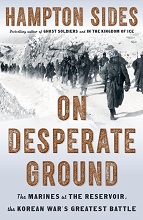 On June 8, 2020, the Democratic People’s Republic of Korea (North Korean Government) cut all lines of communications with the Republic of Korea (South Korean Government). Eight days later, an explosion destroyed the joint liaison building which had been used to host meetings between the two governments. The bombing was instantly seen as an act of aggression by North Korea and prompted a sharp response from its South Korean counterpart. Fears of an armed conflict gripped neighborhood countries as tensions continued to rise. Many eyes in both China and the United States were watching for the events very well could have led to the re-ignition of the Korean War (1950-1953), a conflict that never officially ended. I am constantly amazed at the expressions of surprise people display upon learning this fact. It seems surreal but the fact is that the Korean is still an “open” conflict that is only contained by the 39th Parallel and the watchful eyes of several foreign countries over North and South Korea. The war itself is often reserved for military buffs and overshadowed by both World War II and the Vietnam War. However, the reality is that the conflict in Korea nearly evolved in World War III. Author Hampton Sides is here to tell us about the role of the United States Marines and their experience in the Battle of the Chosin Reservoir.
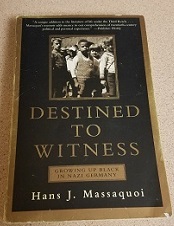 January 30, 1933 – Adolf Hitler (1889-1945) becomes Chancellor of Germany and his National Socialist German Workers’ Party becomes the dominant political party in Germany. As Hitler marched through the streets of Germany under the banner of the Third Reich, millions of Germans watched the history unfolding before them with both anticipation and apprehension. Among them was a young Germany boy named Hans-Jürgen Massaquoi (1926-2013), who was born to a Liberian father and German mother. Over the next twelve years, he witnessed the transformation of German society in a bastion of racial ideology founded on Hitler’s unrelenting thirst for world conquest. This is the story of his life growing up black in Nazi Germany.

You must be logged in to post a comment.