
 Many years have passed since I studied philosophy in college. Names such as Kant and Freud were part of my regularly assigned reading. However, one name I was not particularly exposed to was Carl Gustav Jung (1875-1961), the late Swiss psychiatrist and psychoanalyst who is widely held high regard as a pioneer in the field of psychology. I saw this biography on Amazon and decided to take another look at his life and beliefs. When starting the book I had no judgments about Jung but was sure I would learn a new way of looking at the human mind and what lies behind our thoughts and actions. And while I did find some very interesting concepts put forth by Jung, there is far more to the book than meets the eye.
First and foremost, the book is an autobiography and Jung takes center stage. He begins with his childhood in Keswill, Switzerland which is idyllic of life in Europe in the years prior to the outbreak of the First World War. He is soon joined by a younger sister but quickly learns that his family is slightly different from others in terms of status and finances. His parents Paul Achilles Jung (1842–1896) and Emilie Preiswerk (1848–1923) are common people but from early on, the differences between mother and father become vividly clear. For young Carl, his relationship with each would help shape his future endeavors. His father admonishment to never become a theologian was partly followed mainly due to Jung being somewhat of a rebel as he explains early in his story. His anecdotes about his actions as a kid make it clear early on that his life was destined to be anything but ordinary.
One thing I did notice is that Jung does not mention many parts of his life with exact details but rather summarizes the main events. In fact, only the major occurrences that are discussed in detail are the death of his father in 1896 and mother in 1922. His wife’s death in 1955 is mentioned in passing during a passage about another topic. Even his children are rarely mentioned. We can only guess as to why they receive such scant attention. Regardless, the story is still highly engaging and Jung has plenty of discuss regarding his thoughts on human psychology, allowing his brilliant mind to be put on full display.
As the book progresses, Jung begins to travel abroad and his trips across Africa, India, America and the Middle East, result in highly interesting observations from the visitor’s point of view. His ability to place himself in another person’s shoes and objectively examine his European background are food for thought and shows Jung’s evolution into the figure that the world holds in high esteem. He is not without fault however and relates his shortcomings. His relationship with Sigmund Freud is an interesting part of the book and Jung explains why it ran its course and where he felt that Freud has psychology wrong. In the appendix to the book are several letters from Freud to Jung that some readers may find interesting. Letters from Jung to Freud are not included here.
A book about Carl Jung would be incomplete without some discussion of the psyche, the unconscious and God. All three and much is discussed in detail presenting compelling arguments that might challenge your current thoughts on them and how they relate to your own life. Love also finds a place in the discussion and Jung’s opinion of it and how man handles it, provides an insightful and valuable explanation of a topic and liberates, confuses and in some cases destroys. Jung has answers as to why and I believe his reasoning is still valid today, having stood the test of time.
Readers familiar with Jung’s work will find the book easier to follow along than readers who are not. However, one does not need prior knowledge of Jung’s work to follow the story. In fact, I felt that he is very clear in his thoughts and even someone who has no exposure to psychology can quickly pick up the material. His experiences provide a wealth of material into the human psyche and can spark discussions that can last for hours. His gift in this book is a gift that keeps on giving. His thoughts are not the final word but a starting point for future discourse. If you are fan of Carl Gustav Jung and want to know more about the man behind the legend, his memories, dreams and reflections are exactly what you are looking for.
ASIN: 0679723951
 President John F. Kennedy (1917-1963) is known primarily from his time in the White House and untimely death but many forget that he was also an accomplished writer. In the well-received “
 When I saw this book on Amazon, I was a skeptical as to what I found find inside of it. However, the nearly five star reviews convinced me to inspect it a bit further. I took the plunge and ordered it to see exactly what Shelby Steele had to say about race, a topic that continues to either unite or divide people in America. The phrase “content of our character” is known to many of us. It was the pivotal moment of Dr. Martin Luther King, Jr.’s (1929-1968) “I Have a Dream” speech on August 28, 1963. Fifty-seven years have passed since that monumental moment in American history and the question remains, do we judge each other on the content of our character? Further, have we progressed as a society or is America still the same place it was when Jim Crow made life miserable for millions of black Americans and others who emigrated to the United States in search of opportunity?
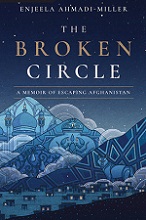 On December 25, 1979, the armed forces of the Soviet Union invaded Afghanistan in support of pro-Communist forces engaged in a power struggle with insurgent forces known as the mujahideen. Soviet forces marched into the capital city of Kabul and later succeeded in staging a coup in which President Hafizullah Amin (1929-1979) was removed and replaced with Soviet loyalist Babrak Karmal (1929-1966). Thousands of Afghan citizens were rendered homeless as bombs fells and brutal fighting produced collateral damage. For Enjeela Ahmadi-Miller, the war changed her life in ways she could have never imagined.
 In November, 2019, I had the opportunity to read “
 The looming exit from the European Union by England will undoubtedly be watched by the whole world, which has been kept in suspense by the referendum in 2016 and failure of former British Prime Minster Theresa May to garner enough votes for a formal separation. Current Prime Minister Boris Johnson has declared it will happen and on January 31, 2020, he will be proven right or wrong on the matter. In Northern Ireland, there is fear and uncertainty regarding how the move by England will affect Ulster County, the loyalist stronghold composed of majority that stands firmly behind the Crown. The Irish Republican Army (“IRA”) will be following as well to see how the move will affect its goal for a united Ireland free of British interference. Time will tell how the departure from the European Union will affect both Britain and other nations. Recently, I decided to do some further reading on Northern Ireland and I came across this book by Tim Pat Coogan about an Irish revolutionary I was previously unfamiliar with. His name was Michael Collins (1890-1922) and this is the story of his group of assassins known as the Twelve Apostles and their fight for freedom from Downing Street by famed author Tim Pat Coogan.
 In the state of South Dakota, the Pine Ridge Reservation is home to the descendants of the Oglala Sioux Native American tribe. The children of Pine Ridge aspire to enroll in the Red Cloud High School with hopes of attending college. Many of their parent, suffer from alcoholism, a plague that has followed the Oglala Sioux since their first encounter with white settlers in the early 1800s. Poverty and discrimination have resulted in depression and despair which has yet to be fully addressed. The true story of the Native American experience remains misunderstood and in some cases neglected. They current day Oglala are the descendants of indigenous people whose home was a North American continent in which life was simple yet effective with languages largely unwritten and passed down through oral teaching. The Sioux were only one of hundreds of tribes, some of whom are now extinct such as the Canarsie Indians. Chief Luther Standing Bear (1868-1939) was born in Rosebud, South Dakota into the Oglala Sioux tribe and this is his story of his life and his people.
 On September 22, 1980, the Iraqi military marched into neighboring Iran under the orders of President Saddam Hussein (1937-2006). Tensions between Hussein and Ruhollah Khomeini (1902-1989) had been brewing over control of the Shatt al-Arab river, Iraqi nationalism and Khomeini’s calls for the Ba’ath party to overthrow the Iraqi government. The conflict raged for eight years before a cease-fired was signed in August, 1988. It is estimated that the war resulted in the deaths of nearly 1.5 million Iraqis and Iranians. On both sides, villages were destroyed, leaving thousands homeless and families permanently separated. Children as young as thirteen were conscripted to serve, becoming trained killers before the age of twenty-one. After the cease-fire, prisoners of war remained held in prisons on both sides before they were slowly repatriated. This book is the story of two of those prisoners who survived the war, living to tell their story about the war that changed their lives.
 The African-American experience is a reflection of America’s dark past and its bright future. Jim-Crow, anti-miscegenation laws and other legal conditions, provided roadblocks to the social and economic advancement of black Americans and other minorities. However, over time, individuals once considered minorities have made great strides and achieved great success. In spite of this, black America finds itself confronted with issues that cause many to wonder what is really holding black men, women and children back? When I saw this book on Amazon, I thought to myself that whoever wrote this book is beyond brave and was undoubtedly subject to attacks from all angles by those who wish to refute his conclusions. Upon closer inspection, I saw that the book was written by a black American, John McWhorter, who is a professor in English and comparative literature at Columbia University. He has also worked at the University of California, Berkeley. His experiences while tenuring at UC, Berkeley are what form the backbone of this book.
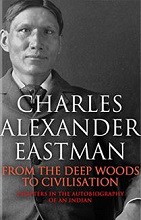 The history of Native Americans was for many years, untold and in some cases omitted. the trail of tears is just one example of the systematic process of relocation enforced by the United States Government as America continued to expand. The natives were seen as uncivilized in comparison to their American and European counterparts. The natives would readily say their lives were uncomplicated and simple. Many resisted the influence of soldiers on their land and fought to the death to preserve their homes. Others did not resist and accepted the lifestyle and religion of the white man. Dr. Charles Alexander Eastman (1858-1939) was one of those who migrated from one world to another and in this short but interesting autobiography, he recalls his life and his path from the deep woods to civilization.

You must be logged in to post a comment.