
 On July 7, 2014, Israeli began a full scale assault on the Gaza Strip, a self-governing Palestinian territory. the assault claimed the lives of more than 1,600 men, women and children. The conflict was a culmination of long-simmering tensions between Israel and the Palestinians. The Israeli government has made it clear that it wants Hamas to recognize its right to exist. Hamas has called for a Palestinian state on the land it believes belongs to the Palestinian people. Multiple foreign governments have made an attempt to mediate the dispute, most notably Egypt. The role of the United States has generally been in support of its ally Israel. The vicious assault was captured and uploaded by Palestinians to such sites as Twitter and Facebook. The images on social media only tell part of the story of the realities faced by the Palestinians who found themselves under siege and facing an opponent superior in both weapons and finances. The full story of what was happening inside the Gaza Strip is a much darker and tragic story, revealed here as the Palestinians are given a platform to the break the silence surrounding their experiences under occupation.
Before reading this book, I do believe it is a good idea for readers to brush up on the conflict’s history. One source that I can recommend is Ilan Pappe’s ‘A History of Modern Palestine ‘, which I have found to be an in-depth and thought provoking compendium on the Palestinian people, their home and the creation of the State of Israel. A solid understanding of the conflict will undoubtedly highlight why this book is so important. It is a story that I am sure no reader will ever forget.
As a warning, the book contains graphic descriptions of bombings, shootings and other forms of military force. The devastating results are tough to read at times and I found myself on more than one occasion wondering when the carnage would end. Quite frankly, this book is not for the faint at heart. It is dark, gritty and without a happy ending. The damage to the Palestinian homeland and psyche is on full display and Israel flexes its military might. The voices in the book are not soldiers or even leaders, but farmers, reporters, businessmen and others who find ways to survive in a system that resembles apartheid in South Africa and the ghettos of Poland in World War II. Some of the deplorable conditions Palestinians live in, include a largely inoperative sewage system, lack of water, restricted exports and woefully understaffed and under-equipped medical facilities. Famine, disease and infection are the usual culprits aside from violence that have nearly broken the will of the Palestinian people.
I would like to point out that some of the tensions that do exist are not solely the cause of Israel. Hamas has been labeled a terrorist organization and its actions at times have not helped peace negotiations. Whether its removal from Palestine will finally result in peace remains to be seen. In December, 2016, the United Nations passed resolution 2334 condemning Israeli settlements in Palestinian territories. The United States abstained from voting. The reacting by Israel was swift and denounced by the Israeli government. For Palestinians and the international community, it was seen as a first step towards truly achieving a legitimate two-State existence.
To understand why life in Gaza exist the way it does, we must first ask why does Israel keep the Palestinians in such conditions? There are many answers here and some of what is revealed might surprise some readers. Money plays a role in nearly every major conflict and certainly does here, but the anti-Arab propaganda and horrific acts of discrimination against Arabs are some of the most shocking parts of the book. The xenophobic thoughts are not just from random common folk, but also espoused by members of government, in effect providing a license to kill to those who believe in extremism. Readers who are sensitive to this type of subject matter might want to use discretion.
In spite of the many dark lessons to be learned here, there is a bright side. Voices for change can be heard on both sides of the conflict. Older Israelis angered by the actions of their government and the younger generation have become more vocal in voicing opposition to the conditions in the Gaza Strip. The social media platforms that unmasked the devastation have also been used to gather support for a new approach by those who wish to see the conflict end. And there are many who believe that attitudes on all sides are slowly changing and that peace is a real possibility. But before that can happen, the truth about the Palestinian experience and life in Gaza has to be told.
ASIN: B019136FE6
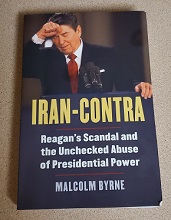 I still remember the video footage taken during the live testimony of Lt. Col. Oliver North (Ret.), as Congress sought to unravel interconnected covert operations that revolved around Iran, Israel and Nicaragua. North appeared on television in full military dress, earing the sympathy and admiration of a large segment of American citizens. There were some who felt he should have been incarcerated and that his actions were a dishonor to the very uniform he had on. Regrettably, his testimony did little to help fully understand what had really taken place. And even my father who follows politics and news religiously did not fully understand what had taken place. Wh
 On October 4, 1970, singer Janis Joplin (1943-1970) died from a lethal combination of heroin and alcohol at the Landmark Hotel in Los Angeles. The building is still there but has been renamed the Highland Gardens Hotel. In death, she joined the 27 Club, a group of famous stars who all tragically died at the young age of twenty-seven. In stardom, she had come to symbolize the culture change taking place across America as the ideals of the 1950s and 1960s were replaced by the liberated generation of the 1970s. To some, she was everything wrong with the “hippie” culture and to others she was inspiration and an example of someone who came from humble beginnings to leave their mark on the world. To a small group of people, she was simply Janis, daughter and older sister. This book is a look at her life from the eyes of her younger sister Laura, born six years after her famous sibling.
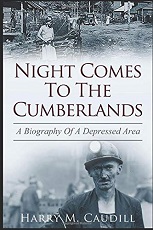 Recently, I have become more interested in the Appalachia region in the Southern United States. What many of us have come to know as “coal country” is a region with a long story, often underrepresented in discussions about poverty and greed in America. The people of this region are sometimes the butt of jokes with images of “backwoods hillbillies” from the movie ‘Deliverance’ coming to mind. However, the true story of Appalachia and in particular the Cumberland region in Kentucky is an American tragedy with residual effects that continue to this day. The late Henry M. Caudill (1922-1990) looked into the lives of the miners and the region that have called home. And what he reveals in this book is sure to open the eyes to many and confirm for others, beliefs they have long held about coal country.
 I decided to change gears and take a look at the former Roman Emperor Marcus Aurelius (121 AD – 180 AD) who is known for the classic work ‘Meditations’. During his reign he earned a reputation as a stoic philosopher and this book is a collection of 12 of his works taken throughout his life that highlight some of his most inner thoughts with regards to his fellow man, life and the gods. This translation was completed by the late classical scholar George Long (1800-1879). I cannot comment on the accuracy compared to the original work but the book did receive high ratings by other readers. Putting that aside, I did find the book to be a very thought provoking read and a nice break from my usual regimen of historical non-fiction.
 On December 31, 1972, a DC-7, loaded beyond its maximum capacity, taxied down the runway at San Juan International Airport in Puerto Rico. The plane had been chartered by Pittsburgh Pirates star Roberto Enrique Clemente Walker (1934-1972), who set out to deliver supplies to the Central American nation of Nicaragua that was struggling to recover in the wake of a devastating earthquake. There were no survivors and Clemente’s body was never found. He was 38 years of age and left behind a widow Vera (1941-2019) and three sons. He was posthumously inducted in the Major League Baseball Hall of Fame and his number, 21, was officially retired by the Pirates in 1973. More than forty years have passed since his death, but to this day he is regarded as one of the greatest Latin baseball players to have ever played the game. This is the story of his life by fan and author David Maraniss.
 The life of Joseph Stalin (1878-1953), former dictator of the Union of Soviet Socialist Republic (“USSR”), has been the focus of endless books, articles and documentaries. His tyrannical reign over the Soviet Union resulted in the deaths of millions of Soviet citizens, persecuted for the slightest of offenses. The Gulag known in English as a forced labor camp, was the place most were exiled to in particular the Siberian region known for its desolate geography and brutally cold winters. The very word itself caused fear and stroked paranoia across the USSR. No one was safe, not even members of Stalin’s family, some of whom would find themselves banished to Siberia. This climate of distrust, violence and vengeance would cause a ripple effect that culminated with his daughter Svetlana Alliluyeva’s (1926-2011) defection to the United States in 1967. Undoubtedly, the news was explosive and if her father had been alive at the time, he surely would have issued an order for her death no matter where on earth she would have attempted to find refuge. When I saw the title of this book, I had to take a second look. I knew of Stalin’s family but I did not know the life story of his daughter Svetlana. In fact, in the books I had read that discuss him, his sons are mentioned but rarely his daughter. Rosemary Sullivan has changed all of that with this biography that is simply outstanding.
 Martin Scorcese’s recent film ‘The Irishman’, reunited the legendary director with ‘Goodfellas’ stars Robert Dinero and Joe Pesci. Al Pacino also joined the cast, taking on the role of former Teamsters President James “Jimmy” Hoffa (1913-1975). The movie is great cinema and Scorcese delivers the goods with an all star cast. However, Hollywood is known to take liberties with films and here is no different. In fact, there is a lot of Frank Sheeran’s (1920-2003) story that is up for debate. His book ‘
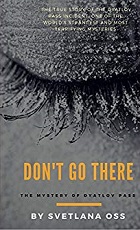 The deaths of nine hikers in the Ural Mountains of Siberia in February, 1959, endures as one the world’s most bizarre mysteries. The official explanation at the time was that their deaths were caused by an extraordinary force. Exactly what that means was never fully explained. As the hikers were found, autopsies were performed which revealed many disturbing facts and do not match the official explanation. The remains of the tragic hikers were buried at the direction of party officials without much or any input from their parents. Almost from the start, Moscow stepped in and gave orders that were to be followed strictly with no deviation. The official explanation still stands today but is that what really happened? Or was there a darker and more sinister reason for their shocking deaths?
 The hunger strike at the HM Prison Maze in 1981, captured the attention of the British Government and earned the IRA sympathy around the world. On May 5, news broke that IRA member Bobby Sands (1954-1981) had died after 66 days of refusing to eat. Sands and his fellow strikers were determined to be recognized as political prisoners and earn several other concessions from Margaret Thatcher’s (1925-2013) government. London had refused to give in and Thatcher had earned the nickname of “The Iron Lady”. Today, the “Troubles” as they are known, continue in Northern Ireland. The IRA remains committed to its goal of a unified Ireland and the removal of the British Crown from Ulster County. Sands had risen among the ranks in the IRA and during his incarceration, his reputation as a leader and intellectual grew every day. This book is a collection of his writings which were smuggled out in parts (The IRA prisoners at HM Prison Maze were engaged in a long running standoff with guards and were being kept in bare minimum cells with mainly a mattress and bucket to be used as waste disposal).

You must be logged in to post a comment.