 There are a number of adjectives that come to mind to describe the late Eldridge Cleaver. (1935-1998) If I had to choose one in particular, my choice would be unpredictable. His voice is legendary among the most prominent of the Civil Rights Movement. He co-founded the Black Panty Party but was later expelled by Huey P. Newton due to ideological differences. In 1954, he was convicted of possession of Marijuana and sentenced to slightly over two years at Folsom Prison in Represa, California. He began to write letters in his cell and those writings form the basis of this book considered be a classic text on revolution, racism, sexuality and the future of America. The book was published in 1968 after Cleaver had served a second prison term for an attempted rape with assault conviction. Married by then to Kathleen Cleaver, the marriage eventually fell apart due to his erratic behavior and philandering ways. In later years following his split from the Panthers, he distanced himself from his Muslim faith, ran for President, created the “penis pants” and eventually joined the Mormon church. He died on May 1, 1998 in Pomona, California. The cause of death was withheld from the public. Today he is still a controversial figure and his writings and the confessions within have resulted in a split of opinion; readers either like him or hate him. However, the fact remains that he was a valued and highly intellectual voice within the movement that attempted to manifest the issues that faced Black and White America.
But what is it about the book that gets favorable reviews? Cleaver was an extreme figured and is to be expected, he is extreme at some points during the book. At two hundred ten pages, the book is shorter than others by figures such as Newton but within the pages of this book are passages that will cause even the most hardened mind to think deeply. From the beginning Cleaver pulls the reader in with his seductive writing style and deadly accurate analysis of society. Reading about racial discrimination and America’s dark past is always tense but the part of the book is Cleaver’s admission to becoming a rapist in an attempt to get revenge against white men. For all of his creative genius, expert analysis on revolution and highly perceptive mind, his biggest shortcoming by far is his admission to being a sexual predator. The trauma endured by minorities throughout America’s history is tragic and regrettable but it does not excuse the violence and sexual exploitation of women. Furthermore, the truly baffling part is that Cleaver admits that he was wrong but is then convicted in 1958 of attempted rape. Additionally, he is believed to have fathered several children out-of-wedlock. That caused me to ask myself if he truly did have remorse for his past actions. Putting that part of the book aside, the other parts are highly introspective but require an open mind to truly see the genius in his writing.
He touches on several topics and dissects them thoroughly. The youth of today may have extreme difficulty in understanding Cleaver’s points. America has changed in many ways since the 1960s. Vietnam is a relic in the past for the millennial generation with names such as Johnson, Nixon and Mao only discussed history textbooks. But at the time of the publication of this book, they were all very real and Cleaver, like millions of other African-Americas watched the struggles around the world develop as they continued to face their battles at home.
The book has many highlights and Cleaver is a shining star and an example of what could have been if creative and intellectual minds had continued in the right direction. Religion is a central theme early in the book in particular during his time at Folsom. He is a Muslim but attends classes in the prison. He describes his daily life behind bars and the challenges faced by inmates to retain their sanity and optimism that they will one day see freedom. Moving on he touches on the death of Malcolm X, who at first earns the wrath of the Nation of Islam by disavowing the Honorable Elijah Muhammad. But after returning from Mecca, changing his ideology and creating the Organization for Afro-American Unity, Malcolm gained old and new followers, Cleaver included. His death at the Audubon Ballroom on February 21, 1965 was a heavy blow to the Civil Rights Movement and the hearts of the men and women who considered him their black shining prince. Vietnam is not spared nor is the administration of Lyndon Baines Johnson. The personal conflict within the hearts and minds of black soldiers returning from combat to a country that refuses to grant them their rights is truly one of the saddest moments in American history and in the book.
It would have been nearly impossible for Cleaver to analyze social conditions without examining the issue from an opposing view. He writes about white heroes and their extinction due to the changing mindset of the young white youths of America whom he says have rejected the ways of their elders and embraced the culture of their fellow Black Americans. Never straying too far from his Muslim faith at the time, Cleaver gives an interesting portrayal of Muhammad Ali and his importance to the struggle for equality. In fact, Cleaver refers to him at point as the “Fidel Castro of Boxing.” The unfortunate scapegoat in this case is Floyd Patterson who is not able to defend himself. He also gives attention to James Baldwin and his opinions of the late author could be considered controversial. Those who believe Baldwin to be beyond reproach will have a hard time accepting Cleaver’s criticism. And while I do not agree with everything he said about Baldwin, I respect his opinion for Baldwin also attacked Richard Wright and according to many, in a highly unfair manner. Sadly, both Baldwin and Cleaver are deceased but I would love to see them sit down today and have a discussion about the current state of America.
Cleaver in his ideology and writings was aligned with Marxists and his name is mentioned along those such as Guevara, Lenin, Mao and Castro. He does avoid the topic of imperialism and its devastating effects around the world. Particularly close attention is paid to the hypocritical policies of a government that publicly declares support for freedom of foreign nations but struggled to give equality to its own citizens. This chapter in the book is among the strongest and highlights an argument made repeatedly by those committed to an end to colonialism. America has many dark secrets but no shortage of those wishing to expose them. In exposing them, we can see where policy goes wrong and what it is truly needed to correct it.
Towards the end of the book, Cleaver touches on two topics which are sure to cause a range of emotions. It is imperative to remember that these are his beliefs and can be rejected or accepted. In his analysis of male and female relations he has composed four characteristic traits; the Ultrafeminine, the Amazon, the Omnipotent Administrator and the Supermasculine Menial. There is some truth to what he says but there always exceptions to the rule. Nonetheless it is an interesting take on the relationships between men and women. This relationship is carried over into his exploration of the connection between white women and black men. Setting the stage, Cleaver explains that he is with two acquaintances he calls Eunuchs. They are joined by the Infidel who they believe to be a fraud and not aligned with the movement. The dialogue quickly turns to the topic of interracial couples and apparent dysfunctional relationship that the infidel says exists due to the system of slavery. Incredibly, it was not until 1963 that laws against interracial marriage were ruled unconstitutional paving the way for the rescinding of miscegenation laws by states in the union that had not done so. While I do not deny that there are many stereotypes affixed to couples of mixed background, the youth of today are unable to relate to the times in which Cleaver lived. Furthermore, as someone who has dated women that are from many parts of this world, Cleaver through the voice of the Infidel would be off base today. But this was the 1960s and a completely different time in America. And I would be foolish to deny that there are in fact some of us who are exactly what that section of the book discusses. If there is one thing I have learned about love, it is that it strikes us when we least expect it and we never know to whom it will be directed. But when it does happen, all that we can do is go with it and see where it takes us.
It is undeniable that Cleaver was a polarizing and truly mystifying figure. Is this book outdated? Maybe. But it is still a guide that many youths lived by during those turbulent times. And if America seeks to move forward and improve itself, then we will need to revisit the past on occasion so that we do not make the same mistakes again. Eldridge will be with us as one of those voices to reminds of the failure that awaits those who do not study the past.
ASIN: B01ELOLI6U

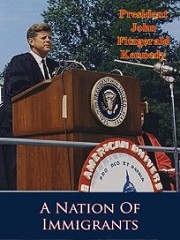 America is often referred to as the land of opportunity for anyone wishing to start a new life far away from home. Since the days of Amerigo Vespucci, the territory we now call the United States has been a primary destination for world travelers. In recent years, legislation regarding immigration has been an important topic which provokes fierce debate. Every country has its issues with immigration and none has a perfect regarding the same. However America has been the place where millions of immigrants have made a new home. The late John F. Kennedy, formerly the Thirty-Fifth President of the United States, left us with many writings, interviews and speeches before his untimely death in Dallas, Texas. His sharp wit, uncanny foresight and fierce independence catapulted him to the top of the list of Americans whose names live on forever. As the descendants of Irish settlers from Ireland escaping the potato famine, his family came to America in search of a new life. Their journey was long and their assimilation into a new society rough, with prejudice and xenophobia forming substantial obstacles to peace and happiness. Their plight was never forgotten and is told again in this short but engaging book that clarifies his position that America truly is a nation of immigrants.
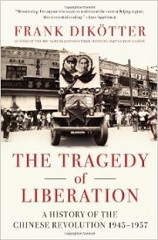 Today, the People’s Republic of China continues to feel the effects of the policies of it most popular leader, the late Mao Zedong (1893-1976). Known as Chairman Mao, his successful campaign against the Nationalist led by Chiang Kai-Shek (1887-1975) set the stage for the founding of the People’s Republic of China on October 1, 1949. Mao ruled the nation until his death on September 9, 1976 at the age of eighty-two. During his tenure he came a controversial figure and is credited with causing millions of deaths through the failed policies of collectivization and the infamous “Great Leap Forward.” The aura of promise and hope that surrounded the commencement of his administration subsided as millions of Chinese endured long periods of poverty and famine while Mao enjoyed unlimited perks through his role as Chairman. Propaganda is a power tool used by the darkest of dictators to enforce their will on the masses of people they wish to control. An official story of triumph supported by an unwavering commitment to the revolution by ordinary men and women, helped cast an illusion of a progressive new China, modeled on its Soviet counterpart. In reality, the story is far different and in some cases, horrific as can been seen in this study of the early years of the Chinese Revolution by Dutch historian Frank Dikötter. (1961-)
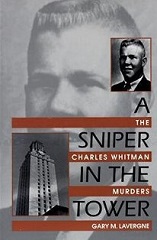 On August 1, 1966, the citizens of Austin, Texas woke up to yet another brutally hot summer day. The heat was typical for the summer season but that day would be remembered for more than just the temperature. At 11:35 a.m., Charles Whitman (1941-1966), a former United States Marine and student at the University of Texas, ascended to the observation deck of the UT Tower and unleashed a deadly shooting assault on suspecting civilians below. In ninety-six minutes, Whitman murdered fourteen people and wounded at least thirty-one before he was shot and killed by responding law enforcement officers Houston McCloy and Ramiro Martinez who were joined by civilian Allen Crum. The shooting left the city shocked and ushered in a new concept in American history; the mass shooting spree.
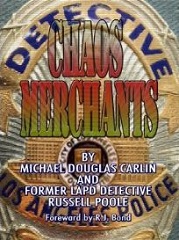 More than twenty years have passed since the deaths of rap stars Tupac Shakur and The Notorious B.I.G. (Christopher Wallace). The two rappers were both under thirty years of age and left behind grieving friends and family members who struggled to come to terms with such a sudden and tragic loss. Officially, both murders are still open investigations. Fans of the fallen artists have expressed shock that the murders have remained unsolved for so many years. Theories have been presented surrounding their deaths but no final conclusion had been reached. Following Shakur’s death, his mother Afeni successfully sued Death Row records for control of her son’s master recordings, unpaid earnings and royalties. The parties reached a
 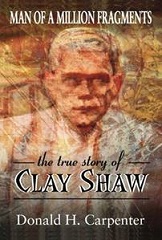 In December, 1991, Warner Brothers pictures released Oliver Stone’s JFK, the film adaptation of the investigation by New Orleans District Attorney Jim Garrison (1921-1922) into the death of President John F. Kennedy. The film is filled with an all-star cast and remains one of Stone’s greatest accomplishments. Reviews of the movie are generally favorable but there are many critics who have voiced their dissatisfaction with the film believing that Stone omitted crucial information and glorified Garrison on screen. The famed director did an incredible job of bringing the past of life and his effort paid off immensely as more records related to President Kennedy’s assassination were released to the public. The actors that took part in the landmark film all did an incredible job in making the story one that will continue to spark curiosity. From history, we know that Lee Harvey Oswald (1939-1963) was the alleged assassin but was murdered himself before he could stand trial. Several years later, Garrison began his own investigation, focusing on what he believed to be a plot in his own City of New Orleans to murder Kennedy. His investigation resulted in the arrest and prosecution of local businessman Clay L. Shaw (1913-1973). The trial became infamous for its absurdity and Shaw was exonerated in March, 1969. Garrison later tried Shaw on the charge of perjury and Shaw subsequently filed a civil suit against Garrison and others for the violations of his civil rights. These matters and others were unresolved at the time of Shaw’s death from lung cancer on August 15, 1974.
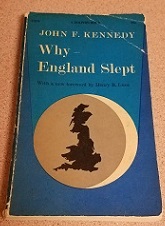 On September 1, 1939, Adolf Hitler’s Third Reich invaded Poland and started the Second World War. In violation of the terms of the Treaty of Versailles, Germany had rearmed itself and under the determination of Hitler, set its eyes upon conquering all of Europe. The looming threat of German domination had been lingering for quite some time before the outbreak of the war. But sadly, many of the nations that would later be opposed to Germany did not think that Hitler would be brazen enough or have the resources to initiate a world conflict. In hindsight, we know that way of thinking was short-sighted and later highly regrettable. The actions of the British government in response to Hitler’s annexation of Czechoslovakia, resulted in the condemnation of Prime Minister Neville Chamberlain and established Germany as a legitimate threat to world peace. The episode has been recalled in history books and documentaries and continues to provoke discussion about how Hitler could have been stopped before his army invaded neighboring Poland.
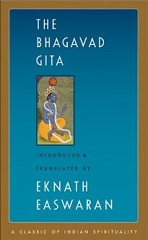 Throughout our lives we sometimes find ourselves in search of the meaning of life and where we go after our time on earth reaches its conclusion. Religion has played a central role in the question, giving millions a sense of calm and relief that upon death, there is an afterlife awaiting us where we continue to live for an eternity. There are those among us who do not believe in any God or Deity, but feel that it is up to humans to create heaven on earth. Judaism, Hinduism, Christianity and Islam are the world’s dominant religion with each having millions of followers. There are thousands of other deities worshiped throughout the world and dozens of separate faiths. Hinduism reigns as one of the world’s oldest religions predating Christianity by thousands of years. Its ancient scriptures are prized and studied for guidance through life by Hindus and others seeking spiritual enlightenment. Among these cherished scriptures is The Bhavagad Gita, the classic of Indian spirituality that earned the love of readers world-wide. It is rare for me to pick up any book on religion but I decided to give this a read following the completion of a biography of J. Robert Oppenheimer. (1904-1967) Having finished the text I can see why it is loved by many.
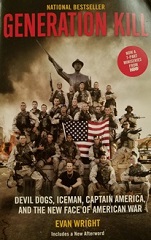 Fourteen years have passed since the United States military invaded the nation of Iraq and deposed its former ruler Saddam Hussein. President George W. Bush had declared Iraq America’s number one enemy and vowed to remove Hussein from power. Hussein fled but was captured in December, 1993 and eventually executed for his crimes against his own people. For many Iraqis and Americans, his death was long overdue and they bid farewell to one of history’s worst dictators. Critics of the war remain and remind us that our military is still in Iraq and no clear permanent solution to establish true democracy is in place. The war is as controversial as those that precede it. But for the men and women that served in the war, their stories are often unnoticed. However in this phenomenal story, Evan Wright brings their story to light for the world to see what warfare was like for thousands of troops. In March, 2003, he accompanied the First Reconnaissance Battalion as the invasion begins. The group becomes known as First Recon and is tasked with clearing town after town until the Iraqi army capitulates. Baghdad eventually falls, Hussein escapes and the marines have done their job for the time being. America celebrates and Bush stands stoically as the armed forces once again succeed. The infantry soldiers return to civilian life or choose to remain enlisted. Their stories fade in time and their names are often never heard of by the mainstream public. But just who are these brave souls and why do they voluntarily put their lives on the line? Wright explores this and more in the book that became a New York Times Bestseller and inspired the HBO hit series of the same name.
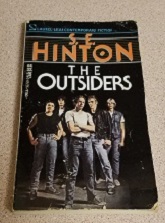 This past weekend I had the fortune of becoming re-acquainted with two of my teachers from the eighth grade. One of them has now turned eighty and looks as sharp as she did when I was a thirteen year-old kid. During the conversation, I mentioned that I still had my copy of The Outsiders, the book we read as a class that has remained with me to this day and occupies a space on my bookshelf. I find it incredible that after nearly twenty-five years, I still love the book and remember passages from the book in their entirety. It is a classic story given to us as a gift that keeps on giving by famed author S.E. Hinton (1948-). The book is popular among many of my peers and my former teacher has recently given a copy to her grandsons so that they may find joy in the book. I had the pleasure to meet both of them and believe that they will turn out to be fine young men. Many years from now, they took will look back on The Outsiders as one of the greatest books they have ever read.

You must be logged in to post a comment.