
 The Second World War remains one of the most studied and brutal conflicts in the history of man. The rise and fall of Adolf Hitler and the Third Reich have become a case studies for history buffs and students learning about a war that nearly resulted in the complete destruction of Germany and the continent of Europe. It is true that Hitler had many supporters but he also had large numbers of detractors, some of whom were serving in his own army. The attack of personal liberties and treasured institutions, caused shock and consternation across Germany. The persecution of the Catholic church by the National Socialists is among Hitler’s darkest deeds. Throughout the war, Hitler would ramp up his attacks on the church and his bloodthirsty purge of religion knew no bounds. The horror with which the clergy watched the rise of the Third Reich spurred many to action and they were determined to rid Germany and the world of the man they saw as the very incarnation of evil. Among them was Dietrich Bonhoeffer (1906-1945), the man who became a pastor, martyr, prophet and spy.
Before reading this book, I had never head of Bonhoeffer. I did know of Hitler’s persecution of the church and his never ending attacks on anyone deemed to be against the Reich. This excellent biography by author Eric Metaxas came as a recommendation on Amazon and encouraged me to revisit Nazi Germany. From start to finish, the book is seductively intriguing and it caused me to wonder why Bonhoeffer’s story is not more widely known. In history classes, his name was never discussed and in none of the specials I watched regarding the war, was he ever mentioned. But having finished the book, I can say with certainty that his story and that of the resistance by the Catholics opposed to Hitler, is a side of the war that needs much further exploration and exposure.
History continues to examine how and why Adolf Hitler was able to seize control of Germany and plunge the world into yet another major conflict. By nearly all accounts, he was initially viewed as a mere distraction in politics and his group of brown shirts were seen as thugs determined to interfere with important elections. The Beer Hall Putsch nearly cost Hitler his life but even that was not enough to deter the Austrian menace. Hitler had a sharp eye with regards to social changes and human nature. As Paul Von Hindenburg (1847-1934) saw the end of his life near, he made one decision that change the course of world history and for the German people, cast upon them a stain that Germany may never be able to remove. Some Germans saw the writing on the wall and left the country before Hitler unleashed his wave of tyranny and insanity. Others remained and for those of Jewish heritage, the genocidal Final Solution would result in a horror that one will ever be able to forget.
Hitler’s promotion to Chancellor of Germany was the moment the Austrian had been waiting for and the Nazis wasted no time in enforcing new laws based on racial ideology. The Nuremberg Laws and others that not only stripped Jews of their rights but in the process made them second class citizenst shocked many Germans. The persecution of the Jews eventually reached the church, which would have to make a decision regarding the growing menace from Berlin. Bonhoeffer had come to embrace the teachings of the church and his beliefs would lead him on a course that no one thought possible for a man of the cloth. But his story is among of the most fascinating that I have ever read. Metaxas presents his life beautifully here and includes many of Bonhoeffer’s writings to show the mindset and the very personal side of a man who followed the path of God while at the same time joined several plots to assassinate Hitler.
The thought of a pastor assisting in an assassination plot is simply astounding. But Bonhoeffer was not living in ordinary times and Germany was under siege and caught in the grip of a madman whose only goal was world domination. Metaxas does an incredible job of not only capturing Bonhoeffer’s life but also revisits key moments in the advancement of Hitler’s agenda. The two sides are on a collision course and the plotters knew they would have to act at some point in time. Bonhoeffer is firmly entrenched in it all while at the same time, holding on to his convictions and proving to many why he was such a beloved figure by those who knew him well.
As the author told Bonhoeffer’s story, I found myself in amazement at the things that I learned. Bonhoeffer was multi-lingual, an excellent writer, world traveler and a strong advocate for civil rights as a result of his two visits to America. His experiences in Harlem were surely eye opening for a New York such as myself. But what really struck me the most was his calm ability to accept the fate that he knew awaited him. His prophetic nature is on display early in his writings and his final act is a testament to his commitment to the word of the lord. His words are touching and uplifting. And his observations about the world he embraced are still relevant today. Long before Dr. Martin Luther King, Jr., Bonhoeffer saw the direction that would be needed for true change to occur in America and for Black Americans to have equal rights under the law. How ironic it is that the horrors he saw in America were slowly being replicated and in some cases surpassed by the devious and sadistic officials of Hitler’s inner circle.
To say the book is well-written would be an understatement. If you are curious about the Third Reich and the impact it had on German religion, then this book is a good place to start. Further, the book is not only Bonhoeffer’s story but that of many others including Hitler himself. World War II buffs will absolutely love this book. Bonhoeffer’s story is inspiring yet tragic but one that is integral to the history of Nazi Germany. And in this soul-reaching biography, Eric Metaxas has given Bonhoeffer his rightful place in the annals of Germany history.
ASIN: B003GY0K48
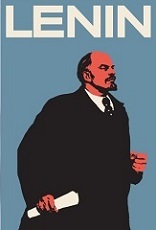 The dissolution of the United Soviet Social Republics (USSR) remains one of the most important and world changing moments in history. The lowering of the hammer and sickle on December 26, 1991, was the end of seventy-four years of Soviet dominance over Eastern Europe. But the remnants of the Soviet Union can still be found today and the ghost of its founder, Vladimir Ilyich Ulyanov (1870-1924), continues to haunt Russia. In Red Square, Moscow, Lenin’s corpse remains on permanent display and is maintained by a full-time staff of technicians. To believers in the old-guard and Marxism, Lenin is the eternal leader of the Bolshevik revolution. To his detractors, he was madman who unleashed a wave of terror and was outdone only by his successor Joseph Stalin (1878-1953). Undoubtedly, Stalin ruled the Soviet Union with an iron grip built upon fear, intimidation and murder. But those tactics were not new methods of operation, having been in use long before he took power. During the reign of the Soviet Union, information regarding Lenin’s private life was kept secret and only the most privileged of researchers were able to see any official records. The passage of time and change in attitudes had resulted in the disclosure of Soviet records that many thought would never be revealed. The thaw which began with Nikita Khrushchev (1894-1971) has allowed the world to learn the truth behind the Iron Curtain. Author Victor Sebestyen has taken another look at Lenin’s life in this well-researched and revealing biography of the iconic and infamous Soviet leader.
 In 1993, Loud Records released an album that re-defined the rap music genre. A group of nine lyricists from the borough of Staten Island in New York City joined together and created Enter the Wu-Tang (36 Chambers). The album was a smash hit and before long, millions of hip-hop fans knew the names of each member by hard. As a New York City native, I remember when the single Protect Ya Neck was released and the buzz surrounding this new group that was in your face, raw and uncut. To some, the group was just another rap entourage from the streets, that was profane and too rough around the edges for mainstream society. But to fans, they represented a new concept and sound that no one had ever seen before from rap artists. The latter won out and through many albums, tours and even television appearances, the group cemented their legacy as one of rap’s greatest acts. But for all of the glitz and glamour, there also existed a behind-the-scenes story that was playing out in ways that no fan could have ever guessed.
 Recently, I have become fascinated with the troubles in Northern Ireland, a culmination of long-simmering tensions between Catholics and Protestants in Ulster Province. The conflict is among the longest running in the world and has claimed the lives of thousands. In each of the books that I have read, I kept coming across the name Bobby Sands (1954-1981). I knew he was one of several prisoners at the Long Kesh correctional facility who died following a hunger strike in protest of the conditions at the jail and the policies of London. However, I did not know much about his life. I became focused on him and eagerly searched online for whatever I could find. Amazon delivered yet again with this definitive biography of Sands’ life by author Dennis O’Hearn that is nothing short of riveting.
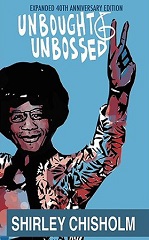 Many years before Hilary Clinton decided to run for the office of President of the United States, there was another politician who had eyes on the White House. And although she did not win the Democratic nomination, she earned a significant amount of votes and in the process, showed that a women candidates were more acceptable to society than many have long believed. Her name was Shirley Anita Chisholm (1924-2005) and through sheer determination, she launched a political campaign that challenged many accepted norms in American society and helped to break down barriers, even today. In January, 2019, thirty-six women joined the House of Representatives following the success by Democrats in the 2018 mid-term elections. The number is now the record for the most women in the House of Representatives and if current trends are an indication, that number will continue to grown through future elections.
 When I first learned of the country called Burkina Faso, I felt a sense of shock at how little of it I had heard not only in school but through the media. The landlocked African nation was never mentioned in the history books that I had read and even today it remains a minor player on the world stage. But between the years of 1983 and 1987, events transpired there that were both remarkable and tragic. Had success prevailed, the world would know Burkina Faso today as the pioneer of progressiveness in modern day Africa driven by the ideas of its late leader Thomas Isidore Noël Sankara (1949-1983).
 If you have traveled to or live in Louisiana, I think you will agree that it is one American’s most unique states. The City of New Orleans has a storied past on its own and each year, it attracts millions of visitors, curious to see Mardi Gras (Fat Tuesday) and the world-famous French Quarter. Baton Rouge proudly serves as the state’s capitol and an icon on the landscape of the deep south. However, there is also a dark history of Louisiana, one that filled with racism, corruption, crime and poverty. Louisianans with a long memory will remember that there once lived a governor who ruled the state with an iron grip until his reign was ended by an assassin’s bullet. He was Huey P. Long (1893-1935), the 40th Governor of Louisiana who left a complicated legacy that is nothing short of surreal.
 On February 13, 1961, United Nations Ambassador Adlai Stevenson (1900-1965) placed a call to President John F. Kennedy (1917-1963) and informed him that Patrice Lumumba (1925-1961), the first Prime Minister of the Independent Democratic Republic of the Congo, had been murdered a month earlier. The moment that Kennedy took the call was captured by a photographer and the image shows him with his hand covering his face in shock. The picture truly does speak a thousand words and Kennedy’s dismay resonated with millions of people around the world.
 Legends never die, that is an absolute fact. Some legends never live past fifty years of age, often leaving their mortal coil through tragedy or illness. For Alexander Fu Sheng (1954-1983), a single car accident was the cause of his demise and in the early morning hours of July 7, 1983, he died at the young age of twenty-eight. He left behind grieving parents, siblings and his widow Jenny Tseng, an accomplished Hong Kong singer who has also performed abroad. At the time of his death, he had risen to become one of the most popular stars to come out of the legendary Shaw Brothers Studio. Before ceasing film production in late 1985, Shaw Brothers had released several hundred films which had been locked away until Celestial Pictures bought the rights to the films and digitally remastered the majority of the collection. As a long-term fan of the martial-arts film genre, I had amassed a large collection of films which included all of Fu Sheng’s movies. My favorite is the film that catapulted him to international stardom,
  FREETHINKING BIBLIOPHILE
You must be logged in to post a comment.