
 On December 31, 1972, a DC-7, loaded beyond its maximum capacity, taxied down the runway at San Juan International Airport in Puerto Rico. The plane had been chartered by Pittsburgh Pirates star Roberto Enrique Clemente Walker (1934-1972), who set out to deliver supplies to the Central American nation of Nicaragua that was struggling to recover in the wake of a devastating earthquake. There were no survivors and Clemente’s body was never found. He was 38 years of age and left behind a widow Vera (1941-2019) and three sons. He was posthumously inducted in the Major League Baseball Hall of Fame and his number, 21, was officially retired by the Pirates in 1973. More than forty years have passed since his death, but to this day he is regarded as one of the greatest Latin baseball players to have ever played the game. This is the story of his life by fan and author David Maraniss.
It goes without saying that baseball fans will more than likely be highly interested in this book if they have not previously read it. But even if you are not a baseball aficionado, I firmly believe that you will enjoy this biography of the late star. Personally, I could not put it down and the time flew by as I read through the book. As one would expect, the story begins in Carolina, Puerto Rico where we are introduced to Clemente’s parents, Melchor and Luisa. On August 18, 1934, Roberto enters the world but no one at the time had any idea of the fame and tragedy that laid ahead. If you have been to Puerto Rico or even the Dominican Republic, then you know how important baseball is on those two islands. For young Roberto, baseball quickly became a way of life and before the age of 20, he finds himself already being scouted by the big players in the United States. However, his path to the Pirates was more intricate than has been publicly acknowledged. Maraniss pieces the story together so that we can see how race, money and baseball acumen combined to create a chain of events that resulted in Clemente being signed by the team he would play for during his spectacular career.
Once in the major leagues, his career takes off but off the fields, many other things took place that highlight the strong conviction with which Clemente held his beliefs. In the era of Jim Crow, segregation and horrific discrimination were widespread in the many parts of the United States. The difference in social attitudes between Puerto and the states was not lost on Clemente and his determination to combat racial discrimination is truly one of the best parts of the book and shows why he was and is so revered. Maraniss provides Clemente’s own statements as added emphasis to show the seriousness of his beliefs and actions. And until his final days, he never stopped in is beliefs of equality and the responsibility that we all have to help each other in times of need.
The book is a little heavy on statistics and descriptions of some of Clemente’s best games including the 1971 World Series in which Pittsburgh defeated the Baltimore Orioles four games to three. Batting averages and percentages are found throughout a good portion of the book and readers unfamiliar with baseball might find b studying a quick reference of what each means and its importance. Baseball fans will recognize the importance of each in relation to Clemente’s story. Something that I did learn which added to my view of Clemente, was his physical condition throughout his career. His ability to perform at the professional level in spite of his ailments is nothing short of miraculous and a testament to his durability and strength as a person and professional athlete.
The author does briefly mention Clemente’s service in the United States Marines but does not go into much detail about that which I felt slightly detracted from the book. Clemente served in the Marines from 1958 to 1964, during off-season periods while in the major leagues. He did not see any combat and his service is largely unmentioned in discussions about his life. Perhaps the author did not feel it added much importance to the story and could very well have been the case. But I was surprised that it received scare attention. Regardless, the book is still phenomenal and there is so much to the story that the reader will quickly move forward as Clemente’s life continues to evolve.
Maraniss does his due diligence as a biographer and does not shy away from showing us the dark side of Clemente which manifested itself in some surprising acts. Also highlighted is the morbid vision Clemente had of his own death. Those parts of the book gave me chills and I am sure that for those present at the time he made remarks about his own death, they also must have felt a strange sensation rush through their body. Sadly, his visions came to pass and the story behind how and why his plane crashed shorty after takeoff. And like all crashes, there was no single event that could be blamed for it but a series of events that are outlined by the author. As I read the recreation of the events leading up the crash, I could only shake my head in disbelief and anger. Before he died, Clemente remarked to a friend that no one dies the day before they are supposed to. The words are beyond chilling but also prophetic.
As a sub-story, the events in Nicaragua are worth researching independently of the book. The Somoza regime had been in power for decades and its relationship with the Nixon, Carter and Reagan administrations are some of the darkest moments of American foreign policy. And although this book is not focused on that subject, the earthquake and its aftermath does bring it to light as Maraniss shows the reaction of Washington amid fears of a political upheaval in the wake of the disaster. Clemente’s decision to go to Nicaragua is both admirable and surprising but he was not one to shy away from what he truly believed in and it shows throughout the entire book.
To say that I enjoyed reading this definitive biography would be a severe understatement. It is one of the best biographies that I have read. If you are interested in the life of Roberto Clemente, this is a great place to start. Highly recommended.
ISBN-10: 074329999X
ISBN-13: 978-0743299992
 The life of Joseph Stalin (1878-1953), former dictator of the Union of Soviet Socialist Republic (“USSR”), has been the focus of endless books, articles and documentaries. His tyrannical reign over the Soviet Union resulted in the deaths of millions of Soviet citizens, persecuted for the slightest of offenses. The Gulag known in English as a forced labor camp, was the place most were exiled to in particular the Siberian region known for its desolate geography and brutally cold winters. The very word itself caused fear and stroked paranoia across the USSR. No one was safe, not even members of Stalin’s family, some of whom would find themselves banished to Siberia. This climate of distrust, violence and vengeance would cause a ripple effect that culminated with his daughter Svetlana Alliluyeva’s (1926-2011) defection to the United States in 1967. Undoubtedly, the news was explosive and if her father had been alive at the time, he surely would have issued an order for her death no matter where on earth she would have attempted to find refuge. When I saw the title of this book, I had to take a second look. I knew of Stalin’s family but I did not know the life story of his daughter Svetlana. In fact, in the books I had read that discuss him, his sons are mentioned but rarely his daughter. Rosemary Sullivan has changed all of that with this biography that is simply outstanding.
 Martin Scorcese’s recent film ‘The Irishman’, reunited the legendary director with ‘Goodfellas’ stars Robert Dinero and Joe Pesci. Al Pacino also joined the cast, taking on the role of former Teamsters President James “Jimmy” Hoffa (1913-1975). The movie is great cinema and Scorcese delivers the goods with an all star cast. However, Hollywood is known to take liberties with films and here is no different. In fact, there is a lot of Frank Sheeran’s (1920-2003) story that is up for debate. His book ‘
 When I read the synopsis for this book, I was a bit surprised. Stories by defectors from North Korea are not uncommon, but the name of the author caused my interest to rise. The surname is clearly Japanese but the connection to North Korea was the part that pulled me in. Masaji Ishikawa was born in Japan to a Japanese mother and Korean father. In 1959, the Japanese Red Cross Society and the Korean Red Cross Society secretly negotiated a “Return Agreement”, allowing any native born North Koreans living in Japan to return to their homeland. The General Association of Korean Residents in Japan, then initiated a repatriation campaign which reached the Ishikawa family. His father was convinced by the league to return to North Korea in 1960, the family moved to North Korea under the illusion of a bright and prosperous future.
 A few days ago I was browsing recommendations on Amazon and came across this book whose title caught my attention. I have not read anything on Nazi Germany in quite some time so I decided to take a closer look. I was unaware of Hans Baur (1897-1995) and his relationship with Adolf Hitler (1889-1945). As the Fuhrer’s pilot, I knew Baur would have very intimate knowledge of Hitler’s life behind the scenes and the book does not disappoint. However, it should be noted that it is really Baur’s story with Hitler filling many of the pages for obvious reasons. The story is interesting but I could not help feel that Baur left many things out. Readers may also feel the same way for reasons that will be discussed below.
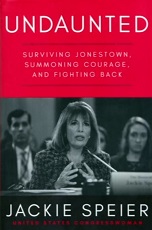 Forty-one years ago, over nine hundred men, women and children died at the People’s Temple compound in Jonestown, Guyana. Their charismatic and paranoid leader, Jim Jones (1931-1978), died of a gunshot wound to the head, avoiding the lethal liquid concoction given to a majority of his followers. Disturbingly, many of the deaths were not in fact suicide, but outright murder. Children and infants were forced to ingest the deadly brew that took their lives in a matter of minutes. The events of November 18, 1978, concluded the final tragic chapter in Jones’ tyrannical reign.
 In 1955, Warner Brothers released ‘Rebel Without a Cause’ starring the late film icon James Dean (1931-1955). And though the film cemented Dean’s legacy in Hollywood, the actor tragically died the month before the film’s release in a violent car crash while en route to Salinas, California. In death, Dean became the poster boy for the new sense of rebellion sweeping across America. In the film, he was joined by actress Natalie Wood (1938-1981) who played the role of Judy and Sal Mineo (1939-1976) in the role of Plato. The film was a hit and is considered a classic. The enormous success enhanced the careers of the three stars and Mineo quickly became one of Hollywood’s hottest new stars. The Italian kid from the Bronx had arrived with charming good looks and acting skills to match. For the next twenty-one years, he would leave his mark on Hollywood and television before his tragic departure on February 12, 1976. In just thirty-seven years, he had lived what could be considered for some, a lifetime. I knew of Mineo before reading this book but there was much about his life that I was completely unaware of. This book came up as a recommendation and I decided to see for myself, why Mineo is still revered.
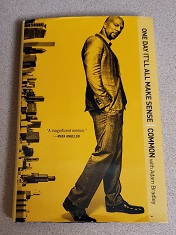 Some of you known him as a rapper, others know him as a film star. To be fair, he is both of them and a lot more. Personally, I knew of Common for years before he broke into Hollywood. The star of ‘John Wick 2‘ and ‘Run All Night‘ earned his stripes on the underground rap circuit before going mainstream. I saw him perform live at the Brooklyn Academy of Music and it was a show for the ages. The electricity was in the air and the place erupted as soon as he stepped on stage. He was larger than life and rightfully so. I saw this book in the lobby of my building and instantly grabbed it. Admittedly, I was unaware of this biography but thoroughly intrigued to see what he had to say.
 When I first heard of this book, I was slightly puzzled. As a fan of the NLF, the name Curt Warner was very familiar to me but it turns out that I had the wrong person in mind. And I am willing to wager that a large number of people who come across this book will also make the same mistake and instead think of the NFL player Kurt Warner, who once played for the New York Giants. Both are retired but only one has a family of four that includes twin sons born with autism. Many of us many know someone who struggles with autism. And others may be teachers who have taught autistic students. Regardless, we can all agree that it is a condition which requires enormous patience and understanding. This is the story of Curt and Ana Warner, two parents faced with the monumental task of raising twin sons born autistic while maintaining family life that includes tow other children.
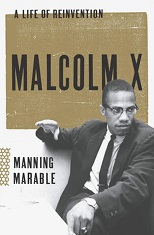 Last week, my mother and I had a discussion about the actor Denzel Washington, who is widely regarded as one of Hollywood’s greatest stars. For both of us, his role as civil rights figure Malcolm X (1925-1965) in 1992 biopic ‘Malcolm X‘, was a shining moment in which he showed the world his talent as an actor and Spike Lee’s known skills as a powerful filmmaker. I had been contemplating my next book to read and came across this biography by late author Manning Marable (1950-2011). I had previously read

You must be logged in to post a comment.