
 On January 11, 2019, Netflix released ReMastered: Massacre at the Stadium, a look back at the violent coup in September, 1973 in which President Salvador Allende (1908-1973) was overthrown by the Chilean military. In his place, General Augusto Pinochet (1915-2006) assumed power and unleashed a reign of tyranny that lasted sixteen years and caused the deaths of thousands of Chileans. His reign came to an end when Patricio Aylwin (1918-2016) was elected as the next President of the Republic of Chile. Pinochet was arrested in October, 1998, by British intelligence and repatriated to Chile on March 3, 2000. He died on December 10, 2006, without having served a day in prison for the human rights violations that occurred during his time in office. Today he is largely recognized as one of Latin America’s most infamous tyrants. The story of his rise to power and fall are covered beautifully in Peter Kornbluh’s The Pinochet File: A Declassified Dossier on Atrocity and Accountability . His ruthlessness knew no bounds that tragic September day, and the military engaged in a purge of all perceived enemies of the new regime. Among the endless number of victims was former activist, playwright and singer, Victor Lidio Jara Martínez (1932-1978), known to the world as Victor Jara.
Jara’s widow Joan, is now 92 and has never ceased in her efforts to promote Victor’s legacy and find justice for his murder. In the Netflix documentary, his brutal death and the successful lawsuit against former Chilean soldier Pablo Barrientos, take center stage in the mission to unravel Jara’s final moments at the stadium. The film is thought-provoking and I do believe there is more to his death that remains hidden. After I finished the film, I became determined to learn as much as I could about Jara and his importance in Chilean history. I found this book by Joan Jara, wherein she discusses the Victor she knew and her life in Chile, a place that became her home away from home. British by birth, life took her across the Atlantic and to Santiago, where she continued to perfect her craft as a performer. Soon she was divorced with a young daughter trying to find her purpose far away from the bustling city life in London. Soon, a young charismatic singer crossed her path and before long, the story of Victor and Joan Jara had begun.
The beauty in this book is that Joan allows us into their home, to learn about Victor’s private life and his rise from the poverty-stricken town of Lonquén to become one of Chile’s most vocal supporters of Allende’s government. She provides a short biography on Victor and herself, filled with anecdotes that show how the basis for their political beliefs. As she admits, at first she had no fondness for anything communist but after witnessing the poverty and inequality in Chile and other parts of Latin America, she became more accepting of communist ideology. These beliefs would have far-reaching and tragic implications up until the time she fled Chile with Manuela and Amanda, her daughter with Jara. Today, it seems unreal that someone should be physically assaulted or even murdered for political affiliation, but this was the atmosphere that existed in Chile under Allende’s administration. Joan captures the atmosphere, recalling tense situations in which anarchy could have prevailed at the drop of a hat. Her analysis is a prime example for anyone seeking to understand how and why the coup had formed.
Joan takes us through the development of their relationship, their new daughter and success in the theater, a place she and Victor have always called home. Life is good and the girls are growing up nicely, but there is an undercurrent of dissent among the right-wing faction, determined to end Allende’s rule by any means necessary. The involvement of the Central Intelligence Agency (CIA) in Allende’s downfall is well-documented. And the further fracture of Chilean society is critically examined in A Nation of Enemies: Chile Under Pinochet by Pamela A. Constable and Arturo Valenzuela. I found myself startled as I read the book, at the revelations that it was openly assumed by many Allende supporters that the CIA was actively working to bring down Allende. It seems as if it was the secret that was not no secret. Perhaps the events in Cuba, Guatemala and Vietnam had provided fuel for the suspicion. The political turmoil that later engulfed the nation had started to build nearly the day that Allende was sworn in. The right-wing extremists failed to get the two-thirds vote to remove him from office and it was clear to Allende’s detractors that his removal would only come through violence. Allende was not oblivious to his precarious situation and even gave an unofficial last address to the nation in the days leading up to the coup. Little by little, dissension grew and the stage was set for September 11, 1973.
Open contempt by opposing parties had reached toxic levels in the week leading up to the coup and the audacity exemplified by enemies is recounted here by Joan. Some of the behavior might shock some readers. The descriptions of the brutality inflicted upon political opponents is reprehensible and as a woman states in the book, the coup taught Chileans how to hate. Similar to the Netflix film, Joan discusses that day in detail and how she came to learn about Victor’s death, her retrieval of his remains and her actions in the wake of his untimely demise. The story is riveting and Victor’s death silenced a voice of hope in a country that later endured a tyranny that soon spread across the continent, making its mark in places such Argentina and Uruguay under the regimes of Juan Perón and Juan María Bordaberry. Today, the dictatorships are a dark reminder of the past and the perils of extremism.
In January, 2019, I visited Chile and it has found a place in my heart as a true gem. It is hard to put into the words, the feeling that comes over the body upon the arrival on Chilean soil. To many of its neighbors, Chile is the black sheep of Latin America. But similar to its neighbors, it too has suffered through and survived its own history of military rule under right-wing dictatorship. Victor Jara was one of many voices who spoke out and took action to transform society in the hope of correctly many of mankind’s mistakes. His belief in his actions made him a marked man but Jara refused to abandoned his position and stood by his beliefs until the end. Joan has kept her husband’s memory alive in both the Netflix documentary and his book about their time together and the man she simply knew as Victor and his life which truly is an unfinished song.
ISBN-10: 0747539944
ISBN-13: 978-0747539940
 The United States and Iran share a long and storied past, defined in moments that changed world history. The removal of Mohammad Mossadegh in 1953, followed by the reinstatement of the Shah and the Iran Hostage Crisis in 1979, set the stage for decades of tension between the two nations. And incredibly, it was under this tension that the administration of U.S. President Barack H. Obama engaged in talks that resulted in the The Joint Comprehensive Plan of Action, simply known as the Iran Nuclear Deal. The deal was both heralded as a landmark achievement and a kowtow of the worst kind. But what many Americans did not know, was that there was far more taking place behind the scenes, including the release of U.S. prisoners held in Iranian jails. Among those prisoners, was American born journalist Jason Rezaian, of The Washington Post. You may remember him from his appearance on Anthony Bourdain’s (1956-2018) hit show No Reservations. The episode was beautifully done and Rezaian and his wife Yeganeh, appear as voices of insight into Iranian culture. At the conclusion of the episode, there is a message on the screen that they both had been taken by Iranian intelligence. The episode is my second favorite, the first is Vietnam in which President Obama makes a surprise appearance and enjoys a meal with Bourdain in Ho Chih Minh City. On January 16, 2016, Rezaian was released was repatriated to the United States. Joining him were his Iranian born wife and his mother who never stopped fighting for her son’s release.
 Those of us who have visited the Museum of Modern Art in New York City, can testify to its seduction of visitors with a passion for treasured art. The second floor is home to Campbell’s Soup Cans and Other Works, 1953–1967, a collection of thirty-two pieces by the late Andy Warhol (1928-1987). February 22 will mark thirty-two years since his untimely death at the age of fifty-eight. Art students and museum aficionados have long studied his work as the shining example of the Pop Art movement that swept across the United Kingdom and United States during the 1950s. Warhol undoubtedly became the poster child for the movement with his sleek frame, white wig, large frame glasses and black sweater. His personal life, carefully hidden from the public, became a mystery to those seeking to know just who is and who was the real Andy Warhol? Bob Colacello worked for Warhol on their publication Interview, for twelve years and in this intriguing account of their time together, he reveals the Andy Warhol he knew with all his quirks, ingenuity and fears in life.
 On September 1, 1939, the Second World War began as the German army invaded Poland as part of Adolf Hitler’s quest for world domination. Britain had warned Germany that any military action against Poland would result in England coming to the aid of its ally. Interestingly, Adolf Hitler (1889-1945) did not want to go to war with England, preferring to accomplish the annexation of Poland through diplomatic methods after having successfully partitioned Czechoslovakia in what is infamously referred to as the “appeasement at Munich”. But if Hitler did not want to wage war against Britain, knowing their intention to save Poland, then why did he give approval to the invasion that plunged the world into a major conflict? The answer to that question lies in the story of his Foreign Minister and Nuremberg defendant, Ulrich Friedrich Wilhelm Joachim von Ribbentrop (1893-1946).
 This past Saturday was the fifty-fourth anniversary of the death of the late American playwright and author Lorraine Vivian Hansberry (1930-1965). Her untimely death at the age of thirty-four silenced one of literature’s greatest voices. However, more than fifty years after her death, her masterpiece, A Raisin In the Sun, continues draw audiences curious to learn why the play is one of the longest running on Broadway. I personally attended a run starring Denzel Washington and his portrayal as Walter Lee Younger is as good as the original performance by the legendary Sidney Poitier. For some, Hansberry remains a bit of a mystery. and a throwback to an era long past. The younger generation of today largely have yet to discover her genius and her influence on the African-American experience. And what many of them are unaware of is that five decades ago, she was a voice advocating for the many freedoms they have today. Sadly, it has taken many years for her to be recognized for the gifted writer that she was. As we come to know her work more intimately, we must ask ourselves, who was the real Lorraine Hansberry? Imani Perry searched for and found her in this semi-autobiography and psychoanalysis. The book is an examination of Lorraine’s thoughts and writings while also adding recollections of historical events filled with larger than life figures who are no longer with us today. But make no mistake, this is about Lorraine, the woman who changed Broadway.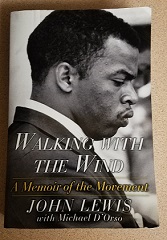
 It is difficult to put into words, the polarizing effect of the trial of O.J. Simpson had on America. The ugly history of racism took center stage as lead attorney Johnnie Cochran (1937-2005) formed a defense based on it and the prosecution under the guidance of lead attorney Marcia Clark, sought to exclude it. The crime was beyond brutal and contained a level of savagery that caused a twitch even in the most hardened of stomachs. Photos of the crime scene are available on the internet in all of their shocking and gory details. I vividly recall the car chase that played out on the television screen as the Los Angeles Police Department followed Simpson’s white Ford Bronco. The truck later became fodder for parody but at the time, caused bewilderment as everyone wondered where on earth Simpson could be going. When he was acquitted of murder, loud cheers could be heard throughout the school. To many of us, it seemed unfathomable that Simpson, the gridiron great could have committed such a heinous crime. Further, the L.A. Riots remained fresh on our minds and the video footage of the beating of Rodney King, a reminder of the fragile co-existence between the police and Black communities across the country. To some, the justice system had worked and we knew O.J. was innocent. Or did we? Were we assuming his innocence based on his skin color and our need for a hero? Or was it, as some believed, a chance to “get even” with the system? The trial was many things but above all it was surreal.
 In the annals of Latin American history, perhaps no other figure is as studied as Simón Bolívar (1783-1830), the liberator of South America. Former Venezuelan President Hugh Chavez (1954-2013) famously spoke with images of Bolívar behind him as he sought to transform the country into a contender on the world stage. The life of Bolívar lasted less than fifty years but within two decades he became the leading figure in the Latin American movement for independence from the Spanish Empire. The nations of Colombia, Peru, Ecuador, Venezuela, Panama and Bolivia (his namesake) are the products of his vision, a united South America free from the influence of its northern neighbor. And prophetically, many of his beliefs about the future of South America have come to pass, cementing his legacy as one of the continent’s greatest heroes. Marie Arana, a native of Bolívar’s beloved Peru, has composed a stunning biography of the late figure that shows a complex character, driven by ideology but crippled by his own generosity and disregard for personal well-being.
 Any former First Lady of the United States will tell you that there is nothing “easy” about that lifestyle. As the wife of the most powerful man on the planet, there is a high demand on appearance, initiatives and unwavering support for the policies that originate from the White House. Michelle Obama is an alumnus of this world, serving as the nation’s First Lady from January, 2009 to January, 2017. Her style, look and presence is unmistakable and she will be remembered in time as one of the most dynamic to have lived in the White House. Almost two years have passed since Donald J. Trump took office and the where the United States is headed seems at times uncertain. There exist a political climate built on division and hate, which will require many years ahead for healing and understanding. As the first Black-American woman to be a First Lady, she has unique perspective on Washington, D.C., and the country she calls home. Her views and life story are presented here in this phenomenal autobiography of the life of Michelle Robinson who went on to become Mrs. Barack Obama.
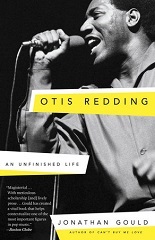 On December 10, 1967, a charter plane carrying singer Otis Redding (1941-1967) crashed in Lake Monona in Madison, Wisconsin as it made its final landing approach. Redding was twenty-six years old and left behind a widow Zelma, and three young children. At the time of his death, he was a top-selling recording artist on the brink a stellar career and the song he recorded shortly before his death “Sitting On The Dock Of The Bay”, went on to become a hit that still sounds good to this very day. His widow Zelma, is the president of the Otis Redding Foundation and his children Karla, Otis, III, and Dexter are on the board of directors. Through their hard work, Redding’s legacy lives on as millions of fans of the Soul music replay his songs singing along with an artist who helped define a genre and an era.
 FREETHINKING BIBLIOPHILE
You must be logged in to post a comment.