
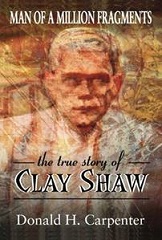
 In December, 1991, Warner Brothers pictures released Oliver Stone’s JFK, the film adaptation of the investigation by New Orleans District Attorney Jim Garrison (1921-1922) into the death of President John F. Kennedy. The film is filled with an all-star cast and remains one of Stone’s greatest accomplishments. Reviews of the movie are generally favorable but there are many critics who have voiced their dissatisfaction with the film believing that Stone omitted crucial information and glorified Garrison on screen. The famed director did an incredible job of bringing the past of life and his effort paid off immensely as more records related to President Kennedy’s assassination were released to the public. The actors that took part in the landmark film all did an incredible job in making the story one that will continue to spark curiosity. From history, we know that Lee Harvey Oswald (1939-1963) was the alleged assassin but was murdered himself before he could stand trial. Several years later, Garrison began his own investigation, focusing on what he believed to be a plot in his own City of New Orleans to murder Kennedy. His investigation resulted in the arrest and prosecution of local businessman Clay L. Shaw (1913-1973). The trial became infamous for its absurdity and Shaw was exonerated in March, 1969. Garrison later tried Shaw on the charge of perjury and Shaw subsequently filed a civil suit against Garrison and others for the violations of his civil rights. These matters and others were unresolved at the time of Shaw’s death from lung cancer on August 15, 1974.
But just who was Clay Shaw and what really was his significance in the murder of John F. Kennedy? In the film we do not know much about Shaw’s past and the focus remains on his alleged connections to Oswald and David Ferrie (1918-1967). The impression that can be made from the movie is that a plot to kill Kennedy evolved among homosexual right wing extremists determined to see the President removed from office. Curiously, nearly none of the popular books on the assassination regard Shaw as a conspirator in the President’s murder. The reality of the case, as shown by Donald Carpenter in this phenomenal biography of Shaw, is that his life was far different from what we have been led to believe and the real Clay Shaw really was a man of a million fragments.
Carpenter researched Shaw’s life over a period of eighteen years before completing the book. Interviews with those who knew Shaw were conducted and Carpenter also reviewed Shaw’s surviving documents, newspaper clippings, statements given by Shaw on screen and other important notes and memorabilia. The final story is simply one of amazement and sheds light on a man who lived a incredible life. For those of us who have visited the French Quarter in New Orleans, we can attest to the level of enjoyment that awaits all of those who pay visit to the legendary Bourbon Street. Today Shaw’s name is an afterthought but at one time, he was a well-known, respected and beloved resident of the French Quarter whose efforts to transfer the neighborhood paid off well and earned him a permanent place in the City’s history.
For all of the shortcomings that plagued JFK, the film was correct regarding the issue of Shaw’s sexual orientation. And in the book it is a reoccurring subject which follows Shaw throughout his life and takes center stage during his trial. The true motives for Garrison trying Shaw remain somewhat elusive and the “evidence” of Shaw’s guilt was fragile at best. Further, rumors about Garrison’s own sexual conduct become fodder for conversation peaking with an incident involving a minor at an athletic club in 1969. I had previously read about Garrison’s indiscretions which are directly addressed by the late Kent “Frenchy” Brouilette (1936-2015) in his autobiography Mr. New Orleans: The Life of a Big Easy Underworld Legend. If Brouilette is truthful, which appears to be the case, then the anecdotes contained within this book carry more clout and shed light on Shaw’s statement to more than one friend that he would tell them the real motive behind his persecution after the trial was completed. As far as we know and the author has concluded, there is nothing in Shaw’s handwriting or oral statements by him addressing the issue.
Carpenter did an immaculate job of chronicling Shaw’s life providing a staggering amount of information on the late star of the International Trade Mart. In particular, he dives into the topic of Shaw’s affiliation with the Central Intelligence Agency bringing more clarity to the issue while also refuting unfounded conspiracy rumors. Shaw’s life is covered from beginning to end and it was an incredible journey that included service in World War II, a stint in New York City, a career with foreign trade, restoration of the French Quarter and a showdown with a controversial district attorney whose case threatened the foundation of the U.S. legal system. There are many things that we do know about Shaw’s life, but there are many more that went with him to his grave. This is by far the most accurate detailed analysis of Shaw’s life that I have read to date. And if you have watched Stone’s groundbreaking film, are planning to or are curious about Clay Shaw, this is the place to start.
ISBN-10: 0692226419
ISBN-13: 978-0692226414
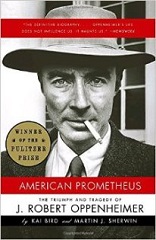 In August, 1945, the course of modern warfare was changed forever when the United States dropped two atomic bombs on Japan, striking the cities of Hiroshima and Nagasaki. Following the successful deployment of the bomb, the Soviet Union and other nations enhanced their own programs to develop a nuclear weapon. The nuclear arms race produced a fear in mankind that still exists today as war continues and dictators drunk on power set their eyes on world domination and a test of egos. It has often been said that the next major world war will be the last war mankind will ever fight. Humanity now has the absolute power to destroy itself literally at the push of a button. Thankfully, since the second world war, there has been no further use of atomic weapons in an armed conflict. But the danger still exists and there have been many who have warned against the escalation of nuclear armament. One of these voices was that of J. Robert Oppenheimer (1904-1967), referred to as the father of atomic bomb and in this excellent biography, an American Prometheus. Kali Bird and Martin J. Sherwin have captured Oppenheimer’s life splendidly making sure that his life is recorded for history.
 During a trip back to New York from Miami this week, I was browsing the books at the terminal’s newsstand and came across this book by Anderson Cooper and his mother Gloria Vanderbilt. Like most Americans, I know Cooper from CNN and the years of journalism that he has provided to us. I was not aware of his mother’s story or that she is still going strong at ninety-three years of age. I decided to purchase the book and I am delighted to say this New York Times Bestseller was worth the investment. The title is quite self-explanatory but there is so much more in this book which is a collection of correspondence between Cooper and his mother. It takes place over a period of time and through electronic means. The story of their lives is fascinating and contains an interesting history of its own.
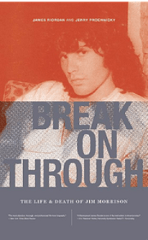 In death several musicians have become in a sense larger than life. Their recordings, writings and interviews become collector’s items catapulting them to legendary status. A cruel irony in life is that some of the greatest artist and performers to have graced a stage, died a young age before reaching their full potential. James Dean (1931-1955), Tupac Shakur (1971-1996), Janis Joplin (1943-1970), Jimi Hendrix (1942-1970) and Jim Morrison (1943-1971) are just a handful of names of talented individuals who rose to fame and were gone before thirty years of age. Morrison, with his band The Doors, had become a sex icon and the poster boy for the anti-establishment movement sweeping across the United States. His death on July 3, 1972 concluded a chaotic life that seemed to get even more bizarre as it continued. Eerily, Morrison joined the group of musicians who died at twenty-seven. Joplin, Hendrix and Brian James of The Rolling Stones all died at the age of twenty-seven. And Morrison’s long-term girlfriend Pamela Courson (1946-1974), also died at the age of twenty-seven. The dark coincidences highlights the fragility of life and its unpredictable nature for we are here one day and sometimes gone the next. In death, Morrison became an even bigger legend and still has millions of adoring fans across the globe. But for all of his wild antics on stage, some of which nearly resulted in his incarceration for an extended-stay, the real Morrison proved to be a mysterious and confusing character as evidenced by this informative and well-researched biography by James Riordan and Jerry Prochnicky.
 In this third volume, we catch up with Eleanor in 1939 as German Chancellor Adolf Hitler is making his presence felt in Europe and threatening to turn the continent into a German Reich. Her husband and president, Franklin, finds himself at odds over the growing German menace. ER is right by his side serving as both a voice of reason and cabinet adviser as FDR determines the position of the United States in regards to the looming crisis across the Atlantic. In this manner the book differs from
  Jazz music is as American as apple pie and fireworks on the 4th of July. Its popularity has resulted in jazz festivals around the world . The festival in Berlin is among the most popular in the world. Some of the greatest musicians in history made their names famous through their talents of the wide range of instruments that gave us the many great songs that have been studied and imitated to decades. Among these legendary artist is the late John Coltrane, who performed with the all time greats such as Miles Davis, Thelonious Monk and Charlie “Bird” Parker. Davis is still the best-selling artist in jazz history with his 1959 album
  On October 10, 2016, the Taj Mahal Casino in Atlantic City, New Jersey, closed its doors after 21 years in business and just hours after the second debate in the 2016 presidential race. The casino was the vision of Donald J. Trump that became a reality. At the time it opened, it was the largest casino in Atlantic City and rivaled the highlights of the Las Vegas Strip. Its closing closed another chapter in the sad history of Atlantic City, the coastal town that was once the gambling mecca of the east coast of the United States and home to many of the greatest boxing events during the 1980s. Today, the town is a remnant of its former self. Several well-known casinos closed years ago never to be replaced resulting in large sections of Atlantic City having no structures in place at all. The life that was once the backbone is now gone having been replaced by a feeling of dread and desertion. Only time will tell what will happen to the struggling city and it remains to be seen if the current president will do anything to help the place in which he earned and lost millions of dollars.
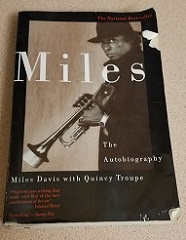 In July, 1992, my father purchased the album Doo Bop, the last studio album completed by the late Miles Dewey Davis, III. Through my father and uncles, I had been exposed to jazz music and knew the names of many of the greatest artists to ever perform. I grew to love the music and that has not changed to this day. In fact, I still listen to the album when I get in the mood to hear Miles’ songs. When he died on September 28, 1991, I remember my uncle and dad being devastated. Both he and my father were huge fans of Davis but were also aware of the chaotic life Davis had led. They would often spend hours discussion Miles, jazz and the other legends of the genre over wine, rum and cigars. When Miles he died he was less than 70 years of age and his death seemed surreal at the time. Today, many years after his death, his legacy lives on and his music continues to be study for inspiration and analysis. In 2016, the movie Miles Ahead starring Don Cheadle was released to select theaters to mixed reviews. I saw the film and thought that Cheadle captured Miles’ character quite well. There were points in the film where I had to remind myself that it was actually Cheadle on screen and not Davis himself. However, the film moves around too much and the story line fails to deliver. The result is a haphazard biopic that does not help the viewer to understand the life of one of jazz’s greatest musicians. Hollywood is always prone to taking liberties when making films and with on 90 minutes of film to work with, it would be quite challenging to capture all of his life on the silver screen. A saving grace is this autobiography which was written with the assistance of Quincy Troupe, who conducted extensive interviews with Davis and those who knew him. And the rest is one of the best autobiographies I have ever read. Miles is frank by nature and he holds nearly nothing back in the book regarding his life. His story is so engaging that I finished the book in only two days. Simply put, his story is quite the experience and we can be eternally grateful that he did tell his story before he died.
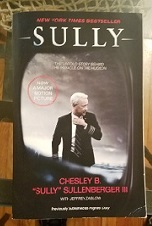 On January 15, 2009, US Airways Flight 1549, commanded by Captain Chesley B. “Sully” Sullenberger and first officer Jeffrey B. Skiles, made an emergency landing in New York City’s Hudson River. The successful landing and evacuation of all passengers and crew became known as the miracle on the Hudson. Sullenberger is now retired from US Airways but remains involved in the aviation industry. His efforts that day in conjunction with those of Skiles remain a classic example of the necessity of extensive training and extraordinary ability to focus on the issues at hand. Sullenberger has said that he does not consider himself a hero. In his mind, he was doing what a well-trained pilot was supposed to do; fly the plane and try to land it while preserving the lives of everyone on board. And on that day, that is exactly what happened. Prior to the incident, his name was largely unknown outside of US Airways. His face just another pilot that thousands of passengers walk past each day as they leave their flights. The men and women who travel the skies are rarely acknowledged for a job that requires tremendous sacrifice, patience and dedication. But just who is Chesley Sullenberger? And why is his story so amazing?


You must be logged in to post a comment.