
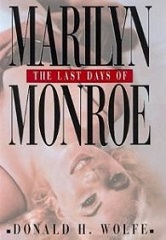
 On August 5, 1962, newspapers around the world relayed the news of the death of Hollywood star Marilyn Monroe (1926-1962) the night before at her home in the Brentwood section of Los Angeles, California at the age of thirty-six. The cause of death was listed as suicide from an overdose of the drugs Pentobarbital and chloral hydrate. However, decades after her death, several question still remain regarding that tragic night of August 4, 1962. What really happened that night and why was she paid a visit by then Attorney General Robert F. Kennedy (1925-1968) and his brother-in-law Peter Lawford (1923-1984)?
The image we have been given of Monroe is a drug-addicted sex symbol, starved for validation from the opposite sex and unable to cope with the rigors of Hollywood. Her previous suicide attempts gave credence to this perpetuated image and for many, it was the ending that they expected for quite some time. Her life reads like a tragic novel of a heroine unable to fully come to terms with herself and seeking love and affection in all of the wrong places. However in just thirty-six years, she lived a live that some can only dream of. At at one point in her life, she was the most desired woman in the world. Donald H. Wolfe takes us back in time to the those final days in August, 1962 to piece together what really did happen and why.
The book opens by revisiting the night of August 4 and the pandemonium that ensued following Monroe’s death. Immediately we learn of several disturbing facts that set the tone of the book. Wolfe does an incredible job of keeping the suspense going and the reader engaged. And rightfully so, he not only explores her death but also provides a concise biography that sets the stage for events that took place later in her life. Behind the facade of a starlet singing happy birthday to the President, lay a woman raised in a childhood which could best be described as tragic. However, in order to understand Monroe’s life and her death, it is necessary to explore her beginnings which Wolfe presents to us without breaking the momentum of the book. And I can assure you that once you start you will be hard pressed to put it down.
Although the book is about Monroe’s final days, there are many sub-stories that are told which gives us an inside view of the inner-workings of Hollywood and politics in the middle of the twentieth century. As she moves through one circle to the next, some of the biggest names in show business, sports and politics make an appearance in her life such as John F. Kennedy (1917-1963), Frank Sinatra (1915-1998), Clark Gable (1901-1960), J. Edgar Hoover (1895-1972) and Yankee legend Joe DiMaggio (1914-1999). However, among all of the people who cross paths with her, her life takes a much darker and tragic turn through her association with the Kennedys and their associates and it is this relationship that forms the crux the remaining third of the book. After you have finished the book, you may come to see the administration in a different light. Today it is public knowledge that an affair did take place between Jack Kennedy and Marilyn Monroe. And if all accounts are correct, Monroe and Robert Kennedy also had their intimate moments. The sexual content is fodder for gossips and tabloid magazines. But what was critical was the true nature of their relationship and the many secrets Monroe possessed about the most powerful man in the country. In fact, it is quite possible that she did have the power to bring down a presidency. Was this the reason for the urgent visits by J. Edgar Hoover to the White House in May, 1962 and that last visit by Robert Kennedy on the day she died? Or was this the reason for the heated arguments that took place between Monroe and Robert Kennedy in the weeks leading up to her death? And how much did she know about their association with Frank Sinatra and mobster Sam Giancana? Certainly, many of their discussions which were likely picked up by the FBI may never be known. Other recordings by the President are locked away in the Kennedy library. A little over one year after Monroe’s death, John Kennedy himself was cut down in a hail of bullets in Dallas, Texas on November 22, 1963. Several years later, Bobby would be gone as well, also the victim of an assassination at the Ambassador Hotel in Los Angeles, California on June 5, 1968. In death they joined a long list of political figures and stars that died during the turbulent decade of the 1960s.
Marilyn Monroe remains a sex icon decades after her death. Young women still hang posters of her on their walls and purchase t-shirts with her image. In death, she became a legend whose left this world far too soon. Her life was in some ways a soap opera with affairs, fairy tale romances, political scandals, drugs, mental health issues and tragically, broken homes. Sadly, many people in her life failed her not just on one but on several occasions. But if there is one inspiring aspect of the story, it is her resiliency to move forward in life and command respect even in the most difficult of times. And had her life taken a slightly different course, then perhaps she might still be alive today well into her senior years and full of knowledge about Hollywood’s golden era. This is the story of the life and final days of Marilyn Monroe, a true Hollywood icon.
ISBN-10: 0688162886
ISBN-13: 978-0688162887
 The Second World War remains the most brutal conflict in history. The number of those who perished is still up for debate and there are many secrets of the war that have been lost to history forever. In the United States, foreign-born citizens with roots in any of the countries part of the Axis powers, found their selves under suspicion and in the case of the Japanese, placed into concentration camps. Although not as inhumane and deadly as the camps in Germany and Poland, they resulted in the rise of resentment among Japanese-Americans toward the United States Government and the country they called home. The dropping of the Atomic bombs further heightened the feeling of resentment and was the first and only time a nuclear weapon was used in warfare. Survivors of the bomb attacks can still be found today, advanced in their years but tragically familiar with the barbarity of modern warfare. Across the pacific, Japanese-American veterans of the war remember the tragedy that befell Japan, the nation to which their families trace their origins. But what happens when half of a family is in Japan and the other half is in the United States? Or what do you do when one son is part of the Japanese Imperial Army and the other is part of the United States Armed Forces? And when the war is over, how do you come to terms with the effects war has had on your family and yourself? This is the story of the Fukuhara family whose lives are the answer to those questions. Written by Pamela Rotner Sakamoto and containing snippets of interviews conducted with those relevant to the story, Midnight in Broad Daylight is a heart wrenching story of a family struggling to survive, having been affected by a war in more ways than one.
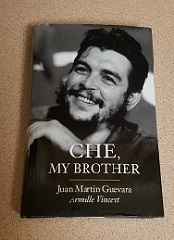 October 10, 1967 – Argentine newspaper Clarin announces that Ernesto “Che” Guevara (1928-1967) has died in Bolivia on October 9 after being capture with a group of guerrilla fighters attempting to spread revolutionary ideology throughout Latin America. In Buenos Aires, his family receives the news of his death and is completely devastated. Juan Martin, his younger brother, races to his father’s apartment where his mother and siblings have gathered as they attempt to piece together the last moments of Ernesto’s life. Che was secretly buried in an unmarked grave and his remains remained hidden for thirty years before author Jon Lee Anderson convinced a retired Bolivian general to reveal the grave’s location. His remains were returned to Havana on July 13, 1997 where he was buried with full military honors on October 17, 1997. In death, Che’s legacy grew exponentially and even today in 2017, he is the icon of revolution around the world. But after his death, what happened to his family and where did their lives take them? Juan Martin, at seventy-two years old, has decided to tell his story and reveal to us many facts about the Guevara family that have sometimes been overlooked by history.
 As a student growing up in the United States, my classmates came from many different backgrounds. Some came from as far away as India and Korea. Others from Guyana and Dominican Republic. No matter where they came from, we were equal peers studying to enhance our lives through prosperity. However, only sixty-four years ago, the ruling of
  October 1st marked forty-seven years since James Marshall “Jimi” Hendrix (1942-1970) died in the flat of Monika Danneman in the Kensington section of London at the age of twenty-seven. Today his music is still revered and Hendrix is considered one of the greatest electric guitar players in music history. In fact, there are those who believe that we was the greatest to ever live. The collection of music he left behind continues to be discovered by younger generations and maintains a place in my own collection. His cover of Bob Dylan’s All Along The Watchtower and the classic Hey Joe are among my favorites and some of Hendrix’s best works.
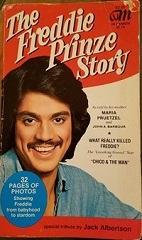 At 1 p.m. on January 29, 1977, Freddie Prinze, Sr., died at the UCLA Medical Center after suffering a self-inflicted gunshot wound the night before while talking to his manager Marvin “Dusty” Snyder. Prinze was twenty-two years old and left behind grieving parents, siblings, a widow and a son, Freddie, Jr., who would go on to have successful career of his own in Hollywood. Prinze rose to stardom at the age of 19 and in just three years went from aspiring comedian to a star on the comedy circuit and in the hit show Chico and the Man. His time on earth was brief but at the height of his career, it is estimated that his face had been seen by nearly 40 million viewers. I had often heard about Prinze and listened to my parents talk about him in conversations about their favorite shows from the past. I had always wondered what drove him to take his own life? And could it have been prevented? His late mother Maria Pruetzel (1921-2013) tells her story and the story of Freddie’s short but incredible life in this memoir of their time together as mother and son. His father Karl (1914-1979) is also in the story but in a supporting role for reasons Maria explains early in the book.
 The summer of 2017 is winding down and a new school year is nearly upon us here in the United States. Seven months have now passed since Donald J. Trump was sworn in as the 45th President of the United States. And in that time, the world has witnesses events that few can claim to have seen before. I previously reviewed
  Harlem, New York has been and still is crucial to New York City politics. The area that was home to the majority of African-Americans has been affected by the wave of gentrification that has reached nearly every major city across the nation. Musicians, actors, gangsters and politicians have found fame and fortune in the neighborhood with a storied past. And of all of the colorful characters to use Harlem as their base of activity, perhaps none is as famous as the late Adam Clayton Powell, Jr. (1908-1972) There is a street named in his honor in the area but sadly, the generation of today is largely unaware of his story and his contributions to American society. He has been described as flamboyant, stubborn, cunning and of great intelligence. He earned the affection of his congregation and millions of minorities and the wrath of presidents and senators determined to put an end to his career. Forty-five years have passed since his death on April 4, 1972. Cancer proved to be his biggest opponent, taking his life at the age of sixty-three. But who was the real Adam Clayton Powell, Jr? And why is he so important to the Civil Rights Movement and the African-American experience? Wil Haygood has researched Powell’s life and compiled this definitive account of the late congressman’s life.
 Today, sixty-four years after his death in, Joseph Stalin (1878-1953) remains one of the most polarizing and studied figures of the 20th century. As the leader of the Soviet Union during the Second World War, he enforced the legendary Red Army as it fought off a German onslaught and helped the Allies put an end to Germany’s Third Reich. Following the war, tensions between the United States and the USSR escalated giving birth to the Cold War. In 1991, the USSR collapsed and today Russia is under the control of Vladimir Putin, undoubtedly one of the world’s most controversial figures. Stalin’s reign may seem to be in Russia’s distant past but it was less than one hundred years ago that Stalin ruled with an iron fist, striking fear into the hearts of not only his enemies but those closest to him. Rumors have surfaced over the years regarding everything including his love life, health, mental state and bungled policies. But who was the real Joseph Stalin? Born Ioseb Jughashvili in Gori, Georgia on December 18, 1878 to Besarion “Beso” Jughashvili (1850-1909) and Ketevan “Keke” Geladze (1858-1937), few could have imagined that the young child would grow up to rule an entire nation. His life in later years became mysterious to those inside and outside of Russia. Misconceptions and falsehoods have spread, causing even more confusion about the truth. Stephen Kotkin has takes on the late leader’s life in a multi-part definitive biography that is simply outstanding.

You must be logged in to post a comment.