
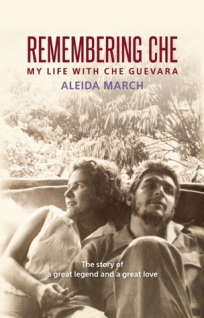
 In 1967, Ernesto Che Guevara (1928-1967) left Cuba for the last time as he engaged in his plan to spread social revolution across Latin America. Fueled by his beliefs in Marxist-Leninist ideology, he was determined to see Latin America free from the grip of Yankee capitalism. On October 8, 1967, he was executed by the Bolivian military following his capture several days later. His death pushed him into martyrdom and to this day, he is by far, the most iconic revolutionary, both loved and loathed. His actions on the battle field and later as part of the Cuban Government have produced enough material for several books. But what was often overlooked was his role as a husband and father. When he departed Cuba and began his final expedition, he left behind a wife and five children from two women. His youngest child was an infant when he left. His widow Aleida and his children have carried his legacy, never letting us forget who he was and what he stood for.
Che Guevara continues to arouse interest and actor Benicio Del Toro took on the role of Che in the 2008 biopic of the same name. And as Cuba slowly moves closer to social reform and the end of the Castro regime, his name will arise in discussions about Cuba’s difficult past. Many of the figures that took part in the Cuban Revolution are no longer with us, having departed this world for the next life. Raul Castro remains one of the few from the old guard and carries the spirit of the revolution as he oversees the country that his brother transformed.
As much as I could go on about Che, the story at hand belongs to his widow Aleida and these are her recollections of her life with him. The two met during the guerrilla campaign and were married in 1959 following Che’s divorce from his first wife Hilda Gadea (1921-1974) with whom he had a daughter, Hilda Guevara (1956-1995). Aleida would go on to give him four children, all of whom resemble their iconic father. To the public, he was the key piece to the battle at Santa Clara which changed the war and to others, the man responsible for the executions at the La Cabana prison. At home, he was dad and as Aleida shows us, a typical father trying to be a good husband who adores his kids. Following the expulsion of Fulgencio Batista, Che took on several jobs, typically working from Monday through Saturday. It has been said that he sometimes slept in his office. And even on Sundays, he worked for several hours before going home to his family. For most women, this would have been too much, but for Aleida, she remained dedicated to her husband, his beliefs and the revolution they both took part in.
Those who might be looking for a revelation will not find it here. The book is mainly about their life together as they bring several children into the world. Che was dedicated to his cause and revolution is a part of their daily lives. Aleida’s anecdotes highlight many instances where his rigid beliefs interfered with their daily lives. And to her credit, she never stopped loving him nor did she remarry after his death.
Undoubtedly, the crux of the book is how Che came to leave Cuba for the last time and how Aleida handled his decision. Her disclosures about her feelings regarding Che’s decision to leave might surprise some readers. She is very frank and clear in her thoughts but I could not help to think that she was beyond dejected to see him leave. And for Che, leaving his family must have been one of the hardest decisions he had ever been forced to make. Aleida very vividly and thoughtfully, explains how Che came to make that fateful decision. Today we have the luxury of asking what if? What if he had never left Cuba and stayed there with his family? Would he have become the revolutionary icon that he is today? We will never know those answers but through Aleida’s fond memories, we can see the other side of Ernesto Che Guevara.
ISBN-10: 0987077937
ISBN-13: 978-0987077936
 On May 24, 2011, police responded to calls reporting gunfire on a quiet street in Newark, New Jersey. Inside the basement apartment, the found a young man slumped over from several gunshot wounds. He was already deceased and at the time, his life and accomplishments were unknown to the officers. His name was Robert DeShaun Peace (1971-2011). He was
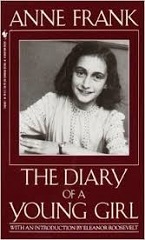 The stories of those who survived the Holocaust have been read by millions and their words a reminder of one of history’s darkest times. Their will to live and courage in reliving their experiences have given the world invaluable treasures in books that have stood and will continue to stand the test of time. Among them is the story Annelies Marine “Anne” Frank (1929-1945), whose diary kept while hiding from the Third Reich, became one of the most popular books in the world. In June, 2013 while visiting The Netherlands, I paid a visit to the Anne Frank Museum. As I entered the museum and made my way up to the attic, I was overcome by chills at just how small it really is. Pictures and words do not suffice, it is something to be seen in person. And it continues to boggle my mind that several people lived in such a compact space. But their will to survive kept them focused on their surroundings and remaining in the attack for as long as possible. Their hiding place was eventually discovered and for many years it was believed that the family was betrayed. However, historians have never found conclusive proof that the family’s location was given to the Sicherheitsdienst (SD) in the form of an anonymous phone call as is widely believed. The truth may remain lost to history. Frank was sent to the Bergen-Belsen camp where she died of Typhus in February, 1945, several days after her sister Margot and would have been simply another victim of the Final Solution if not for her father Otto, who survived the war and returned to Amsterdam where he found her diary. Believing his daughter’s words to be important to future generations, he found a publisher willing to put the words in print. And the result is a literary masterpiece that is read each year by growing numbers of young students across the world.
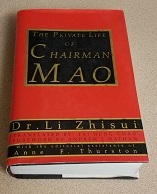 On September 9, 1976, Mao Zedong (1893-1976) died in Beijing, China at the age of eighty-two. The late Chairman served as ruler of the People’s Republic of China following the defeat of Chiang Kai-Shek’s Kuomintang (KMT) party in 1949. The People’s Liberation Army, under the guidance of Mao, pushed the KMT to complete physical exhaustion before claiming victory. To some, Mao represented the face of a new frontier for the people of China. To others, his regime was viewed as an expansion of Soviet influence as Communism became embraced in Europe and Asia. His failed policy of the Great Leap Forward resulted in mass starvation and is viewed as an epic failure in planning at the highest levels. Over time, many became disillusioned with the “Cultural Revolution” as the reality of a Communist government drearily set in. Mao, seemingly impervious to the deadly effects of his actions, continued to live the opulent lifestyle he had created for himself as the new leader of China. And the “Closed Door” policy afforded him with a shield to protect his empire from the prying eyes of the western hemisphere. But Mao’s meeting with President Richard M. Nixon in 1972 offered a glimmer of hope that the two world powers could form a bond that would in turn bring the two countries together through mutual understanding. Today relations between China and the United States remain tense and show no signs of changing in the foreseeable future. China continues to go through social change but the nation remains haunted by the legacy of Mao Zedong.

You must be logged in to post a comment.