
 This may come as a shock to some, but I have always found the topic of death fascinating. I find it so because how we leave here often explains how we lived when we were alive. I am sure we have all asked the same question upon hearing of someone’s death: what was the cause? To determine the cause, care and faith is entrusted to the talents of forensic pathologists who become masters at unraveling the mysteries behind the final moments in the lives of humans. In the City of Los Angeles, pathologists have often faced heavy workloads in a city has seen its share of violent crime. For many years, Dr. Thomas Noguchi was the lead coroner in the County of Los Angeles and was tasked with performing some of the most important autopsies in history. In this short but highly engaging account of the cases that stand out, he explains what he found as he examined the bodies of larger-than-life figures Senator Robert F. Kennedy (1925-1968)(D-NY), actress Marilyn Monroe (1926-1962) and several other Hollywood stars. And though there are no “smoking guns”, Noguchi does a masterful job of explaining the forensic approach and how mysteries are sometimes simpler than they appear.
The book opens with the case of Natalie Wood (1938-1981) who drowned while on a pleasure boat with film stars Christopher Walken and Robert Wagner. The circumstances surrounding Wood’s death have given rise to numerous theories including murder. But Noguchi is not prone to conspiracy theories and searches for the facts. He does give his opinion for her death and the explanation is certainly plausible. However, his position caused a stir at the time and even today the official explanation for her death is viewed by some with skepticism. As I read through his account of the process to determine how she died, I took notice of his approach which is as detailed as one could ask for. Wood’s tragic death remains one of Hollywood’s darkest moments, but Noguchi is not done. In fact, the book becomes even more fascinating as the cases keep coming in.
In between discussing each high-profile case, Noguchi recalls his personal life starting with his father’s career as a physician and Noguchi’s decisions to leave Japan for the United States. His journey exemplifies the saying by President John F. Kennedy (1917-1963) that America is “a nation of immigrants”. As a Japanese immigrant there were hurdles to be faced but Noguchi was determined and eventually landed a position with the County of Los Angeles. But he could not have known that he would find himself the center of attention despite the deaths of major stars. But it is the nature of the beast in the City of Angels. His skill and fame would catapult him into in the public spotlight and give others reason to engineer his downfall. Noguchi’s fight to remain in his position is also discussed and it is unbelievable to learn just how far some were willing to go to remove him from his post.
As we move on from Natalie Wood, Noguchi shifts his focus to the life and death of Marilyn Monroe (1926-1962). To this day, questions surrounding her death persist and the official cause of suicide is often disputed. But was there a sinister plot to murder Monroe? Noguchi takes on the case and explores all possibilities and what he discovered does answer some questions regarding her death. But for those who are searching for a conspiracy, his words may not prove to be persuasive. To be fair, Noguchi does acknowledge that initially some aspects of the scene did not make sense and raised more questions. However, after considering the evidence before him, he makes his final analysis and if there is more to what happened that night, the truth may be lost to history. Readers interested in Monroe’s story might enjoy Donald Wolfe’s The Last Days of Marilyn Monroe which I believe will satisfy the curiosity of most.
Of all the cases in the book, perhaps none is as high profile as that of Robert F. Kennedy. His assassination on June 5, 1968, sent shockwaves through the world and we will never know if he would have become president. After learning of Kennedy’s shooting, Noguchi steadies himself to conduct an autopsy that would prove to be the most controversial of his career. And the reason why is sure to have some readers scratching their heads. Thoughts of “not another Dallas” reverberated throughout America as investigator pieced together the Senator’s final moments in the pantry area of the now demolished Ambassador Hotel. The question that has haunted many is did Sirhan act alone? There is reason to believe that he did but there is also reason to believe that he did not. The coroner is on the job and the facts are laid out for all to see. Noguchi is not a conspiracy theorist but what he finds combined with the testimony of witnesses at the scene does give rise to more disturbing questions about Kennedy’s murder. However, the focus here is on the forensics and Noguchi delivers the goods.
After concluding the discussion on Kennedy, the book moves into darker territory with the murders of actress Sharon Tate (1943-1969) and several friends by followers of Charles M. Manson (1934-2017). This is by far the most graphic part of the book and the descriptions of the victims may be a bit much for some readers. Discretion is advised. As the lead coroner, Noguchi was responsible for examining the victims and putting together the puzzle of what happened that night. His account is haunting, and I cannot imagine the scene waiting for police officers as they arrived at 10050 Cielo Drive. It must have been disturbing enough for many of them to wonder how one human being could do these things to another. Manson and his followers were eventually tried and convicted. Their heinous crimes at the Tate residence and the LaBianca home remain some of the most macabre crimes in American history. Noguchi explains how he was able to uncover which weapons were used and show the full savagery of the crime from the wounds alone. I think it is safe to say that forensic science is an invaluable tool.
The author is still far from done after the Manson family crime spree and moves on to other cases such as that of Patty Hearst and the Symbionese Liberation Army (“SLA”) and the deaths of stars Janis Joplin (1943-1970), John Belushi (1949-1982) and William Holden (1918-1981). All of the cases are gripping but the Hearst file is surreal. Noguchi’s recollections of the final standoff and its aftermath feel as if they are straight out of Hollywood but they did happen in real life. And with regards to Belushi’s final moments, Noguchi performs what could only be called a one man show as he leaves officers shocked to discover that their original assumptions about the actor’s death were wrong. But as Noguchi puts it himself:
“It is a system of observation at the scene which I’ve tried to teach young investigators over the years. Don’t worry about the body; the body will stay there. (If it gets up, that’s another story.) First, examine the room in a systematic, preplanned way, beginning with the ceiling. Clues may be up there: bullet holes, bloodstains, chipped plaster.”
The book was completed in 1983 and Noguchi has been retired for many years. At the age of 94, he is still going strong and carries with him a wealth of knowledge about forensic science. Here he takes us behind the scenes allowing us to witness a master technician at work as he reveals what really killed some of the biggest names in history.
ASIN : B00L5M8U68
 On more than one occasion my father has commented that the 1960s was the scariest decade of his life. The threat of Nuclear War, increasing tensions in Southeast Asia and the growing Civil Rights Movement captivated American society and the world. During one conversation he turned and said to me “at the time of the Cuban Missile Crisis, we didn’t know if we would live to see tomorrow or die in a nuclear exchange with the Soviet Union”. The assassinations of several activists and politicians spread fear across the nation and to many, it seemed as if America was on the verge of total anarchy. Richard N. Goodwin (1931-2018) worked in the administrations of Presidents John F. Kennedy (1917-1963) and Lyndon B. Johnson (1908-1973) and helped draft some of the most memorable speeches given by the iconic figures. In 1988 he completed this memoir which was re-published in 2014, of the decade he spent in politics with two presidents and two presidential candidates. And the result is a spellbinding account of a critical time in American history during which the country underwent profound heartache and change.
 While reviewing my list of books to read, I did a double take as I read the title of this memoir by Pat Conroy. I had added it for a reason yet at the time, I could not recall why. But I put that aside and decided that there is no time like the present and it might be a hidden gem. It turns out that I was right in my assessment. However, I was not prepared for the incredible story within by Pat Conroy (1945-2016) that sheds light on the lives of those who have been forgotten even in the most powerful nation on earth. I knew that the story centered around education but of course, teaching is never as simple as writing on a blackboard. In fact, what is revealed in the book should remove all doubt that teaching is by any means as easy task. Some of us are naturally gifted to handle a classroom full of students, each with their own peculiar personality. In many ways, the teacher is conductor working the orchestra to fine tune all the instruments and produce a symphony that is pleasing to the ears. Conroy is the conductor here and what he accomplished on Yamacraw Island, South Carolina, will leave you sad, angry, and happy at the same time.
  The Chileans have a saying that the Andes do not give back what they take. The survivors of Uruguyan Air Force Flight 571 are reminded of this each year as the anniversary of their ordeal is observed. On October 12, 1972 athletes from the Old Christians Rugby Club and selected family members departed from Montevideo, Uruguay en route to Santiago, Chile for a scheduled match. Inclement weather forced a stopover later that day in the Argentine city of Mendoza. On Friday, October 13, their plane departed Mendoza for the final leg of the trip but none of the passengers could have known that their flight would never reach its final destination. At 3:34 p.m., the plane impacted the mountains below causing the aircraft to break apart, killing several passengers nearly instantly. As the fuselage came to a rest, survivors found themselves in the valley of a mountain during the winter season and in unfamiliar territory. And for the next seventy-two days, the fuselage became their home as they struggled to keep going in the face of severe adversity. Eduardo Strauch was on the plane that day and survived the crash. But for more than thirty years, he has kept his silence about what he remembers and how it impacted his life. This short but poignant memoir is his account of what is known as the “Miracle in the Andes”.
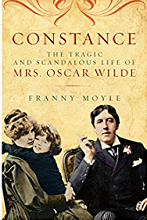 It is no secret that I absolutely love books and this blog is proof of that. The discovery of new reading material literally gives me a dopamine rush that only fellow bookworms can understand. When I saw this book about Constance Wilde (1858-1898), the wife of the late playwright Oscar Wilde (1854-1900), I knew that I had to purchase it. I often quote Wilde in conversation and when writing. He had a keen sense of human nature and his quotes still hold true today. At the height of his career, his plays were a hit, and the money was rolling in. But a scandal surrounding his sexual orientation changed all of that and left him a bitter and broken man. His story is complicated but what is often left out of it, is the role of his wife Constance whose own story is equally as moving. Author Franny Moyle takes a look at her life in this biography that just might make you look at the Wildes in a very different light.
 Every time I board a flight at New York’s John F. Kennedy International Airport, I am amazed at the concept of flight. And while I do understand how an aircraft works from a technical standpoint, the process of taking off, cruising and landing still fascinates us and captivates our attention. Today, we reap enormous benefits from the trials and errors of those before us who sometimes gave their lives in the pursuit of flight. In June, 1939, a German pilot named Erich Warsitz (1906-1983) flew an aircraft named the Heinkel He – 176, equipped with a rocket booster for extra lift and speed. The flight was successful and the result of many years of dangerous tests. The pilot and the engineers around him had just changed history forever and ushered the world into the jet engine era. This book is a look back at that miraculous time and Warsitz’s life as presented by his son Lutz.
  If you look at cover of this book, you will see of deeply concentrated eyes staring back at you and it becomes instantly clear that behind those eyes is a long story yearning to be told. When I saw this book in my list of recommendations on Amazon, I did not recognize the face. I had heard the name but admittedly, did not know anything about his life. Those of us who find solace and deep interest in the arts are probably familiar with the life of Jean-Michel Basquiat (1960-1988), who in death has earned a place on the list of the best artists from the 1980s. In this stunning biography, author Phoebe Hoban explores Basquiat’s brief and unorthodox life. And it is a story that is both hard to accept and difficult to ignore.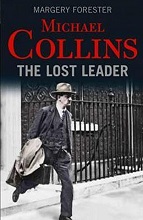
 On January 11, 2016, the music legend David Bowie (1947-2016) died peacefully at his home with his family by his side following a nearly two year battle with cancer. His passing deeply affected fans and he is fondly remembered as one of the most eccentric stars in music history. His high profile marriage to former model Iman, is one of the visions most recalled by fans of the late star. But prior to finding his soulmate in Iman, David Bowie had crafted a persona over the course of several decades and to say that it was a wild ride would be an understatement. Author Wendy Leigh takes a look at his life in this biography that is sure to keep you asking for more.
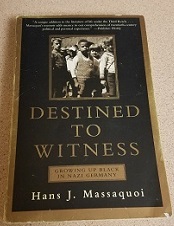 January 30, 1933 – Adolf Hitler (1889-1945) becomes Chancellor of Germany and his National Socialist German Workers’ Party becomes the dominant political party in Germany. As Hitler marched through the streets of Germany under the banner of the Third Reich, millions of Germans watched the history unfolding before them with both anticipation and apprehension. Among them was a young Germany boy named Hans-Jürgen Massaquoi (1926-2013), who was born to a Liberian father and German mother. Over the next twelve years, he witnessed the transformation of German society in a bastion of racial ideology founded on Hitler’s unrelenting thirst for world conquest. This is the story of his life growing up black in Nazi Germany.
 FREETHINKING BIBLIOPHILE
You must be logged in to post a comment.