
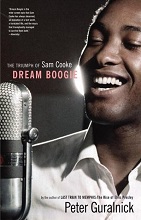
 If you have ever listened to a song by Sam Cooke (1931-1964), then I am sure you can agree that no one is ever the same after hearing his voice. My parents and grandparents played his albums and knew many of his songs by memory, singing them with as much passion as Cooke did while on stage. For millions of black Americans, Sam Cooke was the best singer of his time and his death on December 11, 1964, sent music fans into mourning as one of the most beloved singers in America was laid to rest. Today, almost fifty-six years after his death, the songs he produced sound as if they were recorded yesterday. In fact, earlier today, I listened yet again to ‘A Change is Gonna Come’ which many people believe to be his best recording. Spike Lee opted to use it in the 1992 film ‘Malcolm X’, in the scene where Malcolm (Denzel Washington) walks toward the Audubon Ballroom and his fate after parking his car. Cooke’s music has stood the test of time and will continue to do so. But just who was the real Sam Cooke?
Author Peter Guralnick researched Cooke’s life and has composed a biography that shows the many sides of the late singer. The book is well over seven hundred pages, so by no means is it a short read. But contained within these pages, is a wealth of information about Cooke’s life and the music industry in which Sam found himself fully immersed. Guralnick was able to speak to many individuals who knew Sam and were able to provide him with invaluable access to archival documents, footage and anecdotes. It is an exhaustive effort for sure but one that has certainly paid off.
The story begins in Clarksdale, Mississippi, in the home of the Rev. Charles Cook and his wife Annie Mae whose marriage produced eight children. Sam came in fifth but would go on to become the most popular and most tragic child. From an early age, his father drilled into him that no matter what you do, you do it the best. It was a lesson that helped fuel Cooke’s work ethic which is on display throughout the book in both positive and negative light. After becoming part of several singing groups early in his career, Cooke makes the decision to become a solo artist. It was a decision that would change his life forever and re-shape music in America.
There are many high moments in the book as Cooke’s life reaches new heights. However, not all of the story is smiles and giggles. Sam was a complex figure like many superstars and some of the sides to him were darker than what many fans were allowed to see. Guralnick explores these sides of Cooke which might come as a shock to the even his most ardent supporters. Cooke was not impervious to the demons that come with success in the music business and it is not long before money, fame and women become the vices with which he lived. Lawsuits, contract and paternity disputes haunted Cooke and I admit that I was unaware of some of the other children he had sired. However, Barbara remains central to the story and was the wife the public knew. But behind the scenes, Cooke’s relationship with his wife was a constant storm brewing that occasional developed into a full blown tornado with Sam’s dark side rising to the occasion. The tragedy of their son Vincent is central to their relationship later in the book. I warn readers that some of the events that take place between Sam and Barbara are tough to digest and remind us that even stars have their faults.
Cooke rose to fame during a time in America where segregation was still legally employed in many cities across the United States. The ugly face of Jim Crow appears as Sam and the other artists are forced to navigate and endure a system of discrimination that was designed to humiliate and subjugate its victims. Cooke is determined to buck the system and his actions in opposition to segregated audiences is both legendary and truly one of the most inspiring moments in the book. His refusal to perform in front of segregated audiences helped set the stage for the eventual demise of Jim Crow. And battling right along with him are Malcolm X (1925-1965), Muhammad Ali (1942-2016) and even Dr. Martin Luther King, Jr. (1929-1968), all of whom make an appearance in the story. Sam found himself at the forefront of the Civil Rights Movement and used both his music and star power to challenge the establishment. By all accounts he was a straight shooter and fair regardless of who the person was. He exemplified integration with a supporting cast composed of people from all walks of life. For Cooke, all that mattered was the music and the revenue.
It should be noted that many industry greats appear in the story on various occasions. You may find yourself taking a significant amount of notes. However, if you are familiar with Cooke’s story, you will already know some of the history presented here. Regardless, the book has a steadily moving narrative that flows effortlessly through the author’s words. The inclusion of the recollections by Sam’s close confidants adds the right amount of authenticity to completely tell the story of his life. At one point, it seemed as if for Sam, the sky was the limit. But his attraction to money and fast women would prove to be his undoing and at times, I found myself wondering why he acted in the ways in which he did. The final act in which he visits the Hacienda Hotel with Elisa Boyer seems surreal so many years later. Perhaps we may never know what completely happened that night. Maybe Sam was over his head filled with rage. Or perhaps there was a darker and far more sinister reason for Bertha Lee Franklin putting an end to the legend of Sam Cooke.
If you are a fan of Sam Cooke, this book is a must read. It is by far, an authoritative account of his life that steps deep inside the life of the man behind the music. He is long gone but his powerful words remain with us and even in the most adverse of situations, I often think of Sam and remind myself that yes, a change is gonna come.
ISBN-10: 0316013293
ISBN-13: 978-0316013291
 On Easter Sunday, my mother would have my brother and I watched the epid Hollywoof Film ‘The Ten Commandements’. It is one Chartlon Heston’s (1923-2008) best roles and his agtonist in the film, Yul Brynner (1920-1985), delivers an equally compelling performance a Ramesses II. In fact, it remains the film by which I have always recognized Brynner. However, like most great stars of his era, often called the “Golden Era of Hollywood”, there was more to his life than the public was able to see. His son Rock Brynner decided to turn memories of his childhood into this memoir of the time he spent with his father, one of Hollywood’s leading men.
 Many years have passed since I studied philosophy in college. Names such as Kant and Freud were part of my regularly assigned reading. However, one name I was not particularly exposed to was Carl Gustav Jung (1875-1961), the late Swiss psychiatrist and psychoanalyst who is widely held high regard as a pioneer in the field of psychology. I saw this biography on Amazon and decided to take another look at his life and beliefs. When starting the book I had no judgments about Jung but was sure I would learn a new way of looking at the human mind and what lies behind our thoughts and actions. And while I did find some very interesting concepts put forth by Jung, there is far more to the book than meets the eye.
 On December 25, 1979, the armed forces of the Soviet Union invaded Afghanistan in support of pro-Communist forces engaged in a power struggle with insurgent forces known as the mujahideen. Soviet forces marched into the capital city of Kabul and later succeeded in staging a coup in which President Hafizullah Amin (1929-1979) was removed and replaced with Soviet loyalist Babrak Karmal (1929-1966). Thousands of Afghan citizens were rendered homeless as bombs fells and brutal fighting produced collateral damage. For Enjeela Ahmadi-Miller, the war changed her life in ways she could have never imagined.
 In the state of South Dakota, the Pine Ridge Reservation is home to the descendants of the Oglala Sioux Native American tribe. The children of Pine Ridge aspire to enroll in the Red Cloud High School with hopes of attending college. Many of their parent, suffer from alcoholism, a plague that has followed the Oglala Sioux since their first encounter with white settlers in the early 1800s. Poverty and discrimination have resulted in depression and despair which has yet to be fully addressed. The true story of the Native American experience remains misunderstood and in some cases neglected. They current day Oglala are the descendants of indigenous people whose home was a North American continent in which life was simple yet effective with languages largely unwritten and passed down through oral teaching. The Sioux were only one of hundreds of tribes, some of whom are now extinct such as the Canarsie Indians. Chief Luther Standing Bear (1868-1939) was born in Rosebud, South Dakota into the Oglala Sioux tribe and this is his story of his life and his people.
 On September 22, 1980, the Iraqi military marched into neighboring Iran under the orders of President Saddam Hussein (1937-2006). Tensions between Hussein and Ruhollah Khomeini (1902-1989) had been brewing over control of the Shatt al-Arab river, Iraqi nationalism and Khomeini’s calls for the Ba’ath party to overthrow the Iraqi government. The conflict raged for eight years before a cease-fired was signed in August, 1988. It is estimated that the war resulted in the deaths of nearly 1.5 million Iraqis and Iranians. On both sides, villages were destroyed, leaving thousands homeless and families permanently separated. Children as young as thirteen were conscripted to serve, becoming trained killers before the age of twenty-one. After the cease-fire, prisoners of war remained held in prisons on both sides before they were slowly repatriated. This book is the story of two of those prisoners who survived the war, living to tell their story about the war that changed their lives.
 The history of Native Americans was for many years, untold and in some cases omitted. the trail of tears is just one example of the systematic process of relocation enforced by the United States Government as America continued to expand. The natives were seen as uncivilized in comparison to their American and European counterparts. The natives would readily say their lives were uncomplicated and simple. Many resisted the influence of soldiers on their land and fought to the death to preserve their homes. Others did not resist and accepted the lifestyle and religion of the white man. Dr. Charles Alexander Eastman (1858-1939) was one of those who migrated from one world to another and in this short but interesting autobiography, he recalls his life and his path from the deep woods to civilization.
 On October 4, 1970, singer Janis Joplin (1943-1970) died from a lethal combination of heroin and alcohol at the Landmark Hotel in Los Angeles. The building is still there but has been renamed the Highland Gardens Hotel. In death, she joined the 27 Club, a group of famous stars who all tragically died at the young age of twenty-seven. In stardom, she had come to symbolize the culture change taking place across America as the ideals of the 1950s and 1960s were replaced by the liberated generation of the 1970s. To some, she was everything wrong with the “hippie” culture and to others she was inspiration and an example of someone who came from humble beginnings to leave their mark on the world. To a small group of people, she was simply Janis, daughter and older sister. This book is a look at her life from the eyes of her younger sister Laura, born six years after her famous sibling.
 On December 31, 1972, a DC-7, loaded beyond its maximum capacity, taxied down the runway at San Juan International Airport in Puerto Rico. The plane had been chartered by Pittsburgh Pirates star Roberto Enrique Clemente Walker (1934-1972), who set out to deliver supplies to the Central American nation of Nicaragua that was struggling to recover in the wake of a devastating earthquake. There were no survivors and Clemente’s body was never found. He was 38 years of age and left behind a widow Vera (1941-2019) and three sons. He was posthumously inducted in the Major League Baseball Hall of Fame and his number, 21, was officially retired by the Pirates in 1973. More than forty years have passed since his death, but to this day he is regarded as one of the greatest Latin baseball players to have ever played the game. This is the story of his life by fan and author David Maraniss.
 The life of Joseph Stalin (1878-1953), former dictator of the Union of Soviet Socialist Republic (“USSR”), has been the focus of endless books, articles and documentaries. His tyrannical reign over the Soviet Union resulted in the deaths of millions of Soviet citizens, persecuted for the slightest of offenses. The Gulag known in English as a forced labor camp, was the place most were exiled to in particular the Siberian region known for its desolate geography and brutally cold winters. The very word itself caused fear and stroked paranoia across the USSR. No one was safe, not even members of Stalin’s family, some of whom would find themselves banished to Siberia. This climate of distrust, violence and vengeance would cause a ripple effect that culminated with his daughter Svetlana Alliluyeva’s (1926-2011) defection to the United States in 1967. Undoubtedly, the news was explosive and if her father had been alive at the time, he surely would have issued an order for her death no matter where on earth she would have attempted to find refuge. When I saw the title of this book, I had to take a second look. I knew of Stalin’s family but I did not know the life story of his daughter Svetlana. In fact, in the books I had read that discuss him, his sons are mentioned but rarely his daughter. Rosemary Sullivan has changed all of that with this biography that is simply outstanding.
 FREETHINKING BIBLIOPHILE
You must be logged in to post a comment.