Overland Railroad: The Green Book and the Roots of Black Travel in America – Candacy A. Taylor

In March of this year, my family and I embarked on a road trip to Maryland for a cousin’s baby shower. On Interstate 95, we made a couple of expected stops for hungry stomachs and full bladders. The rest stops were filled with people from all backgrounds, stopping briefly before continuing to destinations across America. Sadly, there was a time when rest stops looked completely different, and for non-white travelers, the interstate highway system was frightening and dangerous. Jim Crow was alive and strong, and across the nation, change was coming but at a slow pace. However, that did not stop millions of people from driving across America, and to aid black Americans, a useful tool called the “Green Book” provided information which could save one’s life. Author Candacy Taylor looks at the Green Book and how it aided black people brave enough to set out on a classic American road trip. 

I was familiar with the Green Book but admittedly, there was much I did not know. So, I made the purchase and started reading instantly. Before I continue, I should point out that this book may cause you to feel angry and feel a sense of outrage. I say this because today it is unconceivable to think that a person of Indian or Chinese descent cannot use a rest stop on an interstate highway because of how they look. But, several decades ago they would have been forced to suffer indignity and humiliation due to restrictive laws which enforce segregation, and the threat of violence from people determined to maintain a social order they saw as being right for everyone. However, the United States was changing, and the movement for civil rights continued to grow. But until legislation guaranteed equal rights, creative tools were needed to navigate society. 

The Green Book was the creation of Victor Hugo Green (1892-1960), a gentleman I knew little about before reading the book. Taylor focuses on his life which begins in New York City. Green had realized that the automobile was going to change America, and black motorists needed both help and protection on the road. In 1936, the first Green Book was born but that was only the beginning. In fact, the author takes us a long journey which focuses not only on the book for travelers, but America’s past and how discrimination affected its citizens. And what she discusses enhances the importance of the book.

Undoubtedly, there are dark moments in the story, but there are bright spots as well. In fact, both white and black Americans played a role in affecting change, and the importance of Esso (ExxonMobil) gas stations and the foresight of the Chrysler Motor Company should not be overlooked. The Green Book is paramount in the account, and the information it provided was invaluable. Imagine wanting to take a road trip but having no idea whether an area is safe because of your ethnicity or needing a restroom and having to use the woods or drive an extra one hundred miles miles because every sign you see says, “no colored allowed”. It seems surreal today, but it should be a reminder of the freedoms we take for granted.

The automobile changed life for millions of Americans, but it also introduced new challenges and dangers which took time to resolve and answer. However, as the author tells the story of the lifesaving book, there is another element to the picture that should not be overlooked. Black Americans began to purchase automobiles, and it was a step up in class. But it did not go unnoticed and the reaction to upward mobility of blacks is a crucial aspect of the Green Book story and shows that America was not only confronting the issue of race but also the issue of class. Further, World War II had opened a door for blacks which they were determined to walk through. It should be noted that there were black people who did not want integration, but not for reasons one may suspect. 

Today, most of the locations in the Green Book are gone, and the book itself has been long out of publication. Its demise is due to several factors, and one adds a twist of irony to the initial need for it. Although the book is now gone, its role and importance in the lives of black people traveling America’s roads will never be forgotten. And if we continue to move forward, we will never need the Green Book again. But to do that, we must always remember where we came from and how far we have progressed. This book fills in the gaps that may be missing for some. 

ASIN ‏ : ‎ B07QDK1MFD
Publisher ‏ : ‎ Holiday House, January 28, 2020

The Lynching: The Epic Courtroom Battle That Brought Down the Klan – Laurence Leamer

Warning: This writing contains discussions of sensitive topics which include descriptions of violence and racial discrimination.

On March 21, 1981, police in Mobile, Alabama responded to a call that a body had been placed on Herndon Avenue in the downtown section of the city. First responders arrived to find the severely mutilated body of Michael Donald (1961-1981) which had been tied to a tree. The crime was horrific and left residents of the city stunned. But as police investigated the crime and more information surfaced, Mobile’s dark past would also come into focus, with a spotlight on racial terror under Jim Crow in the South. I placed a disclaimer at the top of the page because this book will affect you. Although the author does not focus extensively on acts of violence, incidents are discussed to emphasize the level of danger black people found themselves living with. Black Alabamans had come to accept that justice was not blind, and if you were not white, your life did not matter as much. However, that would change with Donald’s death. 

Prior to reading the book, I did not know about Donald’s murder, so this was my first time learning about the case. However, the book is more than a discussion of a tragic homicide. In fact, it is a valuable tool for insight into the long struggle for equality in America and the sacrifices made by the people on the front lines who gave their lives so that others could live in peace. After the initial shock of the crime subsides, the focus shifts to the culprits. And we are introduced to Bennie Jack Hays (1915-1993), his son Henry F. Hays (1954-1997), and James “Tiger” Knowles. Of all the books I have read, these men by far are among the darkest figures I have come across. In fact, Bennie was beyond dark, completely unrepentant and the personification of evil. And to remove all doubt, this quote by his own attorney sums it up:

“Bennie was one of the most truly evil people that I’ve ever come across,” says Mays. “Even in my criminal law practice, I’ve had few people I’ve represented who you could say basically were born without a conscience. Bennie Hays had no conscience. None.”

It should be noted that the men were not lone soldiers but members of the United Klans of America (“UKA”), and subordinates to its leader Robert Shelton (1929-2003) who reappears later in the story during civil ligation. Initially the case was cold, but a surprise break by federal agents leads to the arrests of the murderers. And more surprisingly, there is a confession by Henry. But that is far from the end of the story. And though Henry would be convicted of capital murder, the Donald family’s journey had more ground to cover, and this is where we learn about the family’s lawyer Morris Dees. I was familiar with Dees’s name but personal story I did not know. Having finished the book, I can now say that he is one of the most important people in civil rights litigation and the Southern Poverty Law Center (“SPLC”), an organization he co-founded, remains an icon in the never-ending battle for equality. But as readers will see in the book, Dees was not always the crusader for racial justice. In fact, his own odyssey from a “good old boy” to game changing litigator as told in the story is as surreal as the criminal case itself. However, people can and do change. 

In the wake of the criminal case, Dees approaches Beulah Mae Donald (1920-1988) and asks if he can represent her in a civil suit against the UKA. She is initially hesitant, not believing a jury would ever find the UKA responsible for her son’s death. But Dees was determined, and she agrees, and the book takes another turn but one back into time to examine the history of Alabama and Dees’s life. Readers from Alabama do not need a history lesson I am sure, but for those of us who have not lived in the state or are unfamiliar with the contents of the book, you are in for a difficult yet redeeming journey in which we are provided a front row seat to the dark side of human nature and the influence of former Alabama Governor George C. Wallace (1919-1998).  Readers should be aware that the incidents discussed are difficult to accept and seem unbelievable today. However, they happened, and in many cases, the perpetrators of violence escaped punishment. Interestingly, I did notice one source of paranoia for supporters of segregation and discrimination which left me shaking my head in disbelief. I do not want to issue any spoilers, but readers will notice it too as the book progresses. 

The section of the book which focuses on the civil rights era and events in Alabama is haunting. It is hard to put into words how deadly the 1960s was in America and the climate of death which followed civil rights leaders and activists. The violence became so intense that it warranted the involvement of the Federal Bureau of Investigation (“FBI”) and J. Edgar Hoover (1895-1972) himself. And at the top of the chain of command in Alabama there was Wallace leading the fight against integration. Frankly, the story is horrifying but it will also make you realize that there are rights we have today which should be protected at all costs. Wallace was a chameleon in many ways but undeniably responsible for violence which engulfed Alabama. His personal story is equally as dark, but the concluding chapter of his life is a complete 180 degree turn from when he proudly declared “segregation now, segregation tomorrow and segregation forever!”. An irony I noticed in the book is that the most unsavory characters were also the most tragic and their lives did not end well. Karma never forgets. 

Eventually, the civil trial arrives in which Shelton must take the stand and defend the UKA. He is confident of victory and his arrogance seeps through the pages. However, times had changed, Alabamans had seen too much violence and racial terror, and being a Klan member no longer afforded the level of protection that it once did. As someone who works in litigation now, the discussion of the proceedings hit close to home, and I felt overwhelming satisfaction when the jury announced the verdict. The UKA was financially finished, but its members did not disavow their beliefs overnight, and some never did.  But Mobile’s black residents finally had faith that justice was indeed blind. Of course, nothing is perfect, and the case did not eliminate discrimination, but it did show that hate comes with a hefty price tag. In 2006, the City of Mobile renamed Herndon Avenue to Michael Donald Way and made it clear that his name would never be forgotten. And this book by Laurence Leamer ensures that his murder and its impact on Alabama can be studied in the present and by future generations. 

ASIN‏ :‎ B0151VIAKO
Publisher‏ : ‎William Morrow; Reprint edition (June 7, 2016)

The Rise and Fall of Jim Crow – Richard Wormser

crowIn 1954 the United States Supreme Court issued a historic ruling in the matter of Brown v. Board of Education which declared that segregation in public schools was unconstitutional. The groundbreaking decision widened the doors for the growing  Civil Rights Movement which was gaining traction across America. However, in the South, the system of Jim Crow was refusing to die, and found support from staunch segregationists determined to resist the Government’s involvement in matters they viewed as being within their state’s authority. In hindsight we can see today that the resistance was futile and compliance with the Supreme Court would be enforced. Jim Crow did fall, but it did not happen overnight. Further, in understanding its demise, we must also focus on its rise, and how, and why it was allowed to happen. Author Richard Wormser provides a recap of the rise and fall of Jim Crow in America, and why these important lessons are still relevant. 

On April 9, 1865, Confederate General Robert E. Lee (1807-1870) and his troops surrendered to Union General and future President Ulysses S. Grant (1822-1885) in Appomattox Court House, Virginia, signaling the final stage of the American Civil War. For Black Americans, the Confederacy’s defeat was welcome news, along with the realization that slavery was gone for good. The former slaves had freedom, but a new challenge emerged for them and lawmakers. How would the former slaves be incorporated into mainstream society? In the South, former slaveowners were left without their source of manual labor as new freed slaves left their former places of bondage for good. In Congress, Republicans wasted no time in reshaping the United States with the goal of healing a nation that tore itself apart. However, the South was far from finished and sought to rise again. As the story here opens, we revisit the time after the war, when Americans treated their wounds, physically, emotionally, and psychologically. 

It would be impossible to discuss the reconstruction period after the war without mentioning U.S. President Andrew Johnson (1808-1875) who gave the South the lifeline it needed to recover and re-enforce its platform of racial segregation. However, the book is not a biography of Johnson and the attempt to impeach him in 1968 is discussed but briefly. What is given focus are his actions to thwart attempts by Republicans to ensure that the states part of the Confederacy paid fully for their war against the North and the facture of the Union. Johnson was so effective that less than fifteen years after the war, the South had removed itself from the destitution that was widespread during the conflict. And as Wormser points out: 

“By 1876, Democrats had regained control of every Southern state except Louisiana and North and South Carolina.”

Once the Democrats regained control of the South, Jim Crow found its footing and would make life unbearable for millions of Black Americans across the region. The system was designed with a focus on brutality and retribution for past events. I warn readers that the descriptions of the violent acts committed against minorities will be difficult to read. Readers sensitive to this subject matter should use discretion. But for those who are willing and able to understand America’s dark past, these sections are crucial because they also helped set the stage for Jim Crow’s downfall. Admittedly, it is hard not to recoil in disgust at what we learn about life under Jim Crow. Today it would be unimaginable for a city in America to operate in such a manner. But prior to the decision in Brown v. Board of Education and legislation by Congress, it was the reality for millions of people viewed as being less than human. 

Jim Crow’s brutality was no secret, but what was happening in Washington as it flourished? The author discusses the White House and the inaction by presidents who sat idling while Jim Crow held the South in its grip. Some were reluctant to act and even supported keeping Blacks contained to the lowest levels of society such as President Woodrow Wilson (1856-1924) whose administration was a Godsend to Jim Crow. That dark period is covered in the book and will leave readers speechless. Local authorities were just as dark and even worse depending on the territory. But in 1914, events in Europe would ignite the spark behind the Civil Rights Movement. On June 28, 1914, Gavrilo Princip, a Bosnian Serb, assassinated Archduke Franz Ferdinand (1863-1914) setting off World War I. For Black Americans, service in the military was seen as a path for recognition that would continue the lengthy line of enlistment by blacks since the American Civil War. But this time, the meaning was more profound as troops returned home with a purpose after serving in Europe where they witnessed society standing stark contrast to America. The genie was out of the bottle and accelerated ‘The Great Migration‘ (1910-1970). 

As blacks continued to gain ground, an organization which had been created in 1909, continued to advocate for Black Americans: the National Association for the Advancement of  Colored People (“NAACP”). This section of the book was interesting and I appreciated the discussion about Walter White (1893-1955) and the risks he took to expose the horrors of Jim Crow and lynching. It is surreal how close he came to death while he investigated the American nightmare. The times were dangerous but there was no turning back, and Black Americans were determined to change America. And in time, another war would see them rise to the occasion. But this time, Jim Crow would not survive. In fact, its demise is due in part to President Harry S. Truman (1884-1972) who was outraged at the treatment returning Black soldiers faced in America where their service meant nothing under Jim Crow. The bold actions by Truman revisited in the story, changed the military, and also pushed him towards reelection in 1948. But more importantly, it was a severe blow to Jim Crow itself which was under attack from all angles. 

Anyone with clear foresight could see that Jim Crow was destined to the trash heap of history. It was only a matter of when. Well, following the 1954 Brown v. Board of Education decision, a new generation of activists rose to the occasion, and they would not rest until minorities in America were afforded equality under the law. We all know their names but those are stories for another time. When I finished the book, I sat for a moment and thought of how much America has changed. There are dark moments in the story, and I found myself enraged while I read certain sections. But it also made me appreciate the United States even more. This book is an incredible discussion of how American split in half, reunited, gave way to a new reign of terror before correcting course. The movement never ends, but the times we live in now are far better than what we read about in books like this. And the most important lesson, we learn from the author’s exhaustive efforts is that Jim Crow should never happen again. 

ASIN:‎ B00IHCNOLK
Publisher : St. Martin’s Press (April 8, 2014)

The Young Lords: A Radical History – Johanna Fernández

Lords

In two weeks, Black History month will commence and highlight the legacy and story of Black Americans. The achievements of  America’s black citizens will come into sharp focus, but the story is far from monolithic. In fact, within and around the movements were organizations who modeled themselves after the Black Panther Party of Self-Defense, Student Non-Violent Coordinating Committee (SNCC) and others. Among those groups was the Young Lords, a primarily Hispanic America organization which originated in the windy city of Chicago before spreading to other places including my hometown of New York City. This is their story by author Johanna Fernández and the radical history they created in the struggle by Puerto Ricans for their place in American society.

Although not necessary, I do recommend two other books which could serve as primers for the story of the Young Lords. The first is ‘War Against All Puerto Ricans: Revolution and Terror in America’s Colony‘ by Nelson A. Denis and the second is ‘Fantasy Island: Colonialism, Exploitation, and the Betrayal of Puerto Rico‘ by Ed Morales. Both are invaluable tools in understanding the current-day state of Puerto Rico. I also recommend ‘When I Was Puerto Rican‘ by Esmeralda Santiago. The story here originates in the City of Chicago, where a young Puerto Rican man named Jose “Cha Cha” Jimenez reaches his breaking point after witnessing the discrimination and exploitation of Puerto Ricans who relocated to the mainland United States from their Caribbean island. A native of the island himself, Jimenez understood the experiences of others who had to make a new home in cities they were unfamiliar with. Added to their despair was the social climate of America during the turbulent 1960s when America found itself going through profound change.

I was fascinated learning about Jimenez’s story, and the transformation he undergoes as he becomes aware of the plight facing his neighborhood. The author does an excellent job in allowing the reader to view things as Jimenez would have in the late 1960s. We learn that his mother, who is from an older generation, sees things differently and the two are sometimes at odds over how to move forward when others see them as a threat. His path to the outspoken Lords figure started early. In fact, a Fernandez explains:

“Cha Cha Jiménez had been a Young Lord since the age of eleven. He was among a group of seven youths—six Puerto Ricans and one Mexican—who had organized the gang in 1959. The others included the group’s unofficial leader, Orlando Dávila, as well as Benny Perez, David Rivera, Fermín Perez, Joe Vincente, and the Mexican-descended Sal del Rivero.” 

It is surreal that at the age of eleven, Jimenez and others were envisioning their path when other kids would typically be signing up for little league baseball or making plans for summer camp.  Further, the author does not shy away from another complicated issue: race within Puerto Rican culture itself.  The identity of Afro-Puerto Rican is a major component of the story that actually propels the Young Lords forward. However, it is also taboo, but in the book, the members of the Young Lords are not afraid to confront it and use it as a tool for solidarity. For Jimenez and others like him, they had to confront the issue of being labeled a “minority” while also exploring their heritage. It was a journey in search of two identities.

As the story progresses, the Young Lords grow in size as other young Puerto Ricans are drawn to their message. However, the issue of class comes up, and there is friction between the older middle-upper class Puerto Ricans and the young bearded revolutionaries who were reading the works of Chinese Communist Party leader Mao Zedong (1893-1976), Argentine revolutionary Ernesto “Che” Guevara (1928-1967) and others. The movement could not be contained, and the story picks up the pace when a new chapter for the Lords is formed in New York City. Taking the cue from Chicago, the New York chapter moves full speed ahead in terms of organization and operations that caught the attention of the entire city. The story left me speechless at times and I also felt a tinge of embarrassment for not knowing the Young Lords story and their place in the history of the Five Boroughs. From the seizure of the First Spanish United Methodist Church to the occupation at Lincoln Hospital, the Lords were determined to make their voices heard and did. The unbelievable events are re-told in vivid detail and highlight the organizational skills and commitment by the Lords to their cause. Today both episodes are footnotes in history but in 1970, the New York Police Department took them very seriously.

Following the events of 1970, the story takes a sharp turn when the group shifts its focus from New York to Puerto Rico itself. How and why the decision was made is covered in the book, and as I read, I was confused  at the change in course. Of course, Puerto Rico was the heart of the group even with twenty-five percent of the members being Black Americans. However, the island was very different from New York City and Chicago, and that becomes clear in the story. It is not long before the Lords re-focus on New York but by then, the Federal Bureau of Investigation (“FBI”) had them on their radar. And like the Panthers and other left-wing groups, the infamous COINTEL program found its mark. Before the bureau was done, shockwaves traveled through the organization all the way up the chain of command. The story of party official Gloria Fontanez and her marriage are an example of how far the bureau had infiltrated the group. It can be argued that this was the beginning of the end for the Young Lords. However, their impact could not be ignored, and for thousands of Puerto Ricans, they instilled pride and hope, that they too will move forward in life.

Upon finishing the book, I sat back for a minute to digest what I had read. The Young Lords had accomplished what no one imagined, in such a short period of time. Aside from the public actions which caught the attention of City Hall, they had also started a newspaper called ‘Palante’. They understood that knowledge is power, and to learn, reading is a necessary tool. To drive home the point about Palante and its creation, Fernández explains that:

“With little to no experience in newspaper production or training in journalism, the approximately ten young radicals who were on the Palante team at any given time worked doubly hard to produce one of the few bilingual newspapers of the period—no small accomplishment for an organization with few members who were fluent or formally trained in Spanish.”

The success of Palante was no small feat but by 1971, the Young Lords’ offices in New York City were gone. We learn of the split between the New York and Chicago chapters of the organization which is eerily similar to the fallout within the Black Panther Party. Party expulsions, deaths and exodus for other reasons only served to deplete the ranks of the once formidable revolutionary party. But it does not diminished the heights the Young Lords reached in a time when being Puerto Rican was seen as below-human and few understood the pride that came with being Boricua. If you want to know more about the Young Lords and New York City History, this is the place to start.

ASIN ‏:‎ 1469653443

Ballots and Bullets : Black Power Politics and Urban Guerrilla Warfare in 1968 Cleveland – James Robenalt

Robenalt

On November 13, 1967, Carl Stokes (1927-1996) was sworn in as the 51st Mayor of the City of Cleveland, Ohio and became the first African-American mayor of a major metropolitan city in the United States. His successful campaign was surprising due to the city’s majority white population. However, Stokes was a strong candidate and assumed control over a city strife with racial conflict during the turbulent 1960s. And less than one year later, his administration was tested when a shootout at 12312 Auburndale Avenue on July 23, 1968 turned the city upside down. It is known as the “Glenville Shootout”. When we think of the Civil Rights Movement, city names such as Selma, Birmingham and Memphis come to mind. But what I learned in this book by James Robenalt is that Cleveland was also a hot spot for the social unrest America found itself in after the passage of the Civil Rights Act in 1964.

The author provides a thorough account of 1960s Cleveland and the problems that existed. Like other cities in America, blacks continued to push for equality and better living conditions.  The scene is bleak and as I read through the book, I could feel the tension brewing. Conditions in Cleveland drew the attention of  Dr. Martin Luther King, Jr. (1929-1968) who found himself shocked at the vitriol he received as he walked the city’s streets in protest.  His comment on the matter, included here by the author, challenges the idea that the South was the center of prejudice. In fact, what we see in the book is that the North also had its fair share of prejudice that was equally as vicious as its southern counterpart. And watching this unfold was Fred “Ahmed” Evans (1931-1978), who emerges as the most controversial figure in the book. The Korean War veteran had become energized after seeing Malcolm X (1925-1965) speak and began his own Black Nationalists of New Libya who were determined to bring change by any means necessary.

Stokes had been working on plans for reform which included Cleveland: Now!, a joint public and private funding program for revitalizing Cleveland.  The plan was ambitious, but Stokes could not have predicted that the future of the program would be tied to actions of Evans and his associates. Evans is clearly unstable and unpredictable but the surveillance by the police department and covert actions by the Federal Bureau of Investigation (“FBI”) through the COINTEL program were of grave concern not just to Evans but all activists in the movement. The secret program had successfully infiltrated and disrupted other groups and was also used to dismantle the Black Panther Party for Self-Defense. However, in the story at hand, the Cleveland Police Department takes center stage as tips come in that Evans and his supporters are stockpiling weapons. At this point in the book, the story changes gears and suspense increases. We know something is coming and it will not be good.

To this day it is not clear who fired the first shot on July 23, 1968, but what is certain is that mayhem ensued and as a result of the shootout, re-told in full detail here, there were twenty-two casualties, carnage and a city left reeling after three police officers and four members on Evans’ side perished from their wounds. But readers will be shocked to learn how much information had been obtained prior to the shooting by Cleveland Police and the FBI. This raises questions as to whether the fatal shootout could have been avoided. By the time the violence finishes, the sobering reality hits home. Cleveland was left unhinged and in the wake of the bloodbath, rioting erupted causing further damage and further strain on relations in the city.  The aftermath is surreal and Evans becomes public enemy number one. His fate is revisited as the author recounts the trial and Evans’ conviction. As for Carl Stokes, he could only watch as Clevland nearly came apart the seams. His goal of improving Cleveland’s African-American neighborhoods suffered a significant setback and Cleveland: Now! became collateral damage.  Stokes did go on to win re-election and finished his second term in 1972. But the Glenville Shootout earned a permanent place in the history of Cleveland and is tied to his time in office.

As I read this book, I thought of my father’s words that the 1960s was the scariest decade he ever lived through. The Glennville Shootout came less than five months after the murder of Dr. Martin Luther King, whose death had also resulted in widespread rioting. Eventually order was restored in Cleveland but the shooting has a haunting legacy that is a reminder of America’s long road to where it is today and where it should hope to go. For a thorough analysis of Stokes, Cleveland: Now! and the shootout that changed Cleveland, this is a good place to start.

ASIN : B075TH4YNT

Power to the People: The World of the Black Panthers – Stephen Shames and Bobby Seale

ShamesIn his renowned book titled ‘Revolutionary Suicide’, Huey P. Newton (1942-1989) began by saying “the first lesson a revolutionary must learn is that he is a doomed man”. The prophetic words are haunting for many members and affiliates of the Black Panther Party met untimely deaths or were forced to flee the United States and live in exile. However, the Black Panther Party for Self Defense became part of history and when Bobby Seale and Newton created the organization in 1966, the created something that changed the way Black Americans viewed themselves. The image that comes to mind when one speaks of the Panthers are young black men with leather jackets and rifles. But behind the imposing public facade, the Panthers were brilliant community organizers and had a vision for Black Americans that could have changed the United States. Photographer Stephen Shames began to cover Panther rallies and eventually followed their progression. This book, co-authored with Seale, gives former members of the party a platform to explain their actions and decisions, in a time when America was amid social upheaval.

Instead of a standard account of the party’s creation, rise and demise, the authors here present a collection of interviews that touch on all aspects of the party’s existence. And to my surprise, I learned a few things I did not previously know. The beauty in the book is that readers can see the passion and hard work behind the scenes that motivated the Panthers to help the community. Party members were surely a mixed bag of characters, but at its core, the group and its affiliated chapters were committed to uplifting Black Americans and helping them to become self-sufficient so that they too could live the American dream. But what stood out to me nearly immediately was the age of the members. In fact, Ericka Huggins explains that: “one thing that people don’t understand about the Black Panther Party is that the median age of a party member in 1969 was nineteen years old“. Today we would say they were just kids but in 1966, those kids became adults and were determined to make their mark.

Readers familiar with the history of the party will know of the free-breakfast program which incredibly was deemed a threat by former Federal Bureau of Investigation (“FBI”) director J. Edgar Hoover (1924-1972). It is no secret that Hoover feared and loathed civil rights organizations whom he felt had “communist” influence. And the introduction of the infamous COINTEL program succeeded in breaking up the Panthers but at an inflated cost to the FBI and Hoover’s image in later years. But as I read the book, I was curious about other programs that Panthers initiated not just in Oakland, California, but across America. What I learned was impressive and surprising. One event that stands out is that shortly before his death, Fred Hampton (1948-1969) had reached an agreement with Jeff Fort, leader of the Black P. Stones gang in Chicago that would have struck fear in Washington, D.C. But due to Hampton’s assassination on December 4, 1969, the agreement died out. These events were recreated in the 2021 film ‘Judas and the Black Messiah‘, starring Daniel Kaluuyah as Hampton and LaKeith Stanfield as William O’Neal (1949-1990), the FBI informant who played a crucial role in Hampton’s demise. As the book progressed, it became even clearer to me why the Panthers were feared. It was not so much due to the presence of firearms but rather the knowledge and pride being instilled in Black Americans which was sorely needed following the murder of Malcolm X (1925-1965). Seale himself has said that had Malcolm not been murdered, the Black Panther Party would have never been created.

Eventually, the party began to disintegrate under the strain of infiltration by FBI informants which instilled paranoia and distrust among party members. The fallout is discussed by the participants, but the book is not an examination of why the party failed. It is chiefly a collection of memories, both good and bad. Among the more tragic parts is the death of George Jackson (1941-1971) on August 21, 1971, while incarcerated at San Quentin State Prison in San Quentin, California. The book ends before Newtown’s own death in 1989 but there is a discussion of the Panthers’ legacy and the situation in America which should be of concern to everyone regardless of their background. The Panthers no longer exist as the group they were once known as, but their presence and importance cannot be overlooked. And contained within this book are voices from the people that were there, risking their lives to give all power to the people.

ASIN: B01IDGS5EK

My People are Rising: Memoir of a Black Panther Party Captain – Aaron Dixon

DixonOn August 22, 1989, former Chairman of the Black Panther Party for self-defense Huey P. Newtown (1942-1989) was shot and killed in Oakland, California at the early age of forty-seven. The violent ending to his life is a reminder that the streets are unforgiving, and should one choose to embrace them, death is a constant threat. In prior years, Newton rose to fame with party co-founder Bobby Seale as the organization spread across America and became an unavoidable presence, catching the eye of Washington, D.C. The Panthers became so feared that former Federal Bureau of Investigation (“FBI”) Director J. Edgar Hoover (1895-1972) said “the Black Panther party, without question, represents the greatest threat to the internal security of the country.” Hoover refused to see that the Panthers had become an image solidarity and masculinity to thousands of Black youths who had seen and suffered racial discrimination. In the Pacific Northwest, a young man named Aaron Dixon listened to a speech by Bobby Seale and knew from that point on that he was destined to join the Black Panther Party. This book is his memoir of life on the West Coast and the ten years he spent as a Black Panther Party Captain.

It is not necessary to have extensive knowledge of the Black Panther Party before reading this book, but it will be helpful to know who the party’s leaders were. Bobby Seale enters the story quite early, and Dixon is clear that the speech he watched served as the moment when he knew he had found his calling. As a captain, he was required to make the acquaintance of party leaders such as Eldridge Cleaver (1935-1998), Fred Hampton (1948-1969) and Stokely Carmichael (1941-1998). However, they were assigned to other duties within the party and Dixon was dispatched to his hometown of Seattle. But before we get to the Seattle Chapter of the party, Dixon takes us down memory lane to his childhood. Readers will be surprised to learn that the author did not come from a broken home. And while things were not perfect, his background is not that of a child coming from dysfunction and gravitating to the streets. In high school he became a star athlete but the 1960s proved to be too scary, too unpredictable, and too painful for Dixon to focus solely on sports. But when he made the decision to see Seale speak, he did not know that his life would change forever.

When we think of the 1960s and America’s dark past of racial discrimination, images of the Deep South come to mind. But as Dixon shows, the South was not the only place where discrimination was an issue. And the stories that Dixon tells are crucial in understanding why the Panthers were so alluring and needed. From the start, he is fully committed to the party and emphatically says:

“For us, this was what putting on the Panther uniform was all about—standing up strong, refusing to be brushed aside and marginalized. We were dead serious when it came to the rights of the people. One thing was certain: if we had to die in the process, most of us were ready for that, too.” 

Huey P. Newton once said that the first thing a revolutionary must understand is that he is doomed from the start. Success becomes subjective in the face of imprisonment and death. Dixon experienced both extensively before leaving the party but his memories of the people who changed history are recorded here and serve as an invaluable account of how the party functioned from day to day. The public saw black leather jackets and matching berets but in private, things were not always as glamorous as the author shows. One thing that stood out is that the party members did not always know where they would be from one day to the next. This inevitably made marriage and children difficult and resulted in strained relationships between party members. And the threat of infiltration and arrest kept everyone on high alert. Despite the risks, there are success stories in the book that offset the events that nearly shattered the party’s morale.

To anyone watching, it was only a matter of time before the FBI placed the party in its crosshairs. J. Edgar Hoover’s paranoia about Black unity, spurred him to go after anyone and any group that had the power to alter American society. The bureau relied on deception and coercion cloaked under the guise of the infamous Counterintelligence Program (“COINTEL”). The covert actions utilized by the FBI set into motion a series of events that fractured the party resulting in mass exodus and expulsion of people who had joined at its start. And the influence of illegal narcotics in Black communities cannot be understated. Even party members were not immune to their destructive effects. Newton’s battle with drugs is widely known and discussed here as the party slides further into turmoil. Newtown’s paranoia became fueled by drug use and the party saw one of its darkest moments when Newton and Cleaver had a falling out live on air. Dixon can only watch as the party he joined with hopes of changing America, comes apart at the seams.

Before I mentioned that party members found it difficult to have “normal” lives. Dixon is no exception. He is frank about where he went wrong in life and speaks freely of the challenges that came with fatherhood, marriage, and lack of focus on accountability. I am sure that if Dixon could go back in time, he would change his past actions. Joining the party is not one of them. Following the devastating effects of COINTEL, the party became a shell of its former self. Dixon explains how the party changed its focus while trying to hold true to its roots. The section about Elaine Brown and her effect on Bay Area politics is interesting but even she could not avoid the increasingly paranoid Newton. Dixon had a working relationship with Brown and despite their differences, he gives her the praise she is due. However, as the book moves forward, Newton begins his downward spiral. Dixon did know Newton but not intimately as he explains in the book. And while he was in awe of Newton, he was not oblivious to his escalating drug habit and distrust of anyone he thought to be subversive.

While reading Dixon’s account of the party’s decline, it was clear that the writing was on the wall. When he makes his exit, he has given ten years of his life to the party. But as we learn, his life after the party was anything but normal. In fact, there are unexpected twists and turns in the story including a manhunt by the U.S. Marshall Service. I found myself speechless while reading the book’s conclusion. But there is redemption in the story and Dixon did learn from everything he experienced. Further, he is alive today and continues his political activism. Though his days in the Black Panther Party are long gone he is still a Panther at heart. This book was a surprise, and I am glad that I decided to add it to my library. The Black Panther Party, borne in a turbulent time in American history, stands as an example of the people rising up and saying, “no more”.

“I have no regrets about my ten years as a soldier in the Black Panther Party. In the end it is the memories that make life worth living, particularly the good memories. My memories of Huey P. Newton are of a young, rebellious, brave, captivating, eloquent genius who ignited a flame that will never die. My memories of the Black Panther Party are of men and women rising in unison to carry that flame, taking up a position of defiance, of sacrifice, and of undying love, infused with passion and determination to write a new, bold future for Black America. That eternal beacon will shine on, lighting the way for future generations and illuminating the past, helping us remember a time when the possibilities for humanity were endless.” – Aaron Dixon

ASIN: B009UXSHD0

RFK: His Words For Our Times – Robert F. Kennedy, C. Richard Allen and Edwin O. Guthman

20210724_203834In 1968, the race for the next President of the United States intensified as sitting President Lyndon B. Johnson (1908-1973) issued a public statement that he did not want, nor would he accept the nomination for his party’s candidate for the oval office.  The announcement stunned the nation and took the election in a much different direction.  The late David Halberstam (1934-2007) had been following the campaign of former Attorney General and then Senator Robert F. Kennedy (1925-1968)(D-NY).  As he observed Kennedy’s evolution into a powerhouse figure, he noted that “Robert Kennedy was in many ways the most interesting figure in American politics, not only because he was a Kennedy, not only because so much of his education had taken place in the public eye—it could be traced by putting together film clips of this decade—but primarily because he was a transitional figure in a transitional year.”  Kennedy was riding a wave of popularity and had resurrected the image of Camelot that was assigned to the presidency of his older brother John F. Kennedy (1917-1963). But Bobby, as he was known, was not Jack and had seen many things that his brother did not live to experience.  His eyes had been opened to the growing gap between wealthy and poor, black, and white, and right and left. He sought to bridge those gaps and had a vision to change America. Sadly, he too was cut down by an assassin’s bullet on June 5, 1968.   His death marked the end to what Halberstam had called his unfinished odyssey. 
Each time I read about Kennedy, I find myself discovering more of his statements, speeches, and ideas.  And what is deeply intriguing is that he was the icon of liberals across America but early in his political career he undoubtedly aligned more with conservatives.  That changed with the arrival of the civil rights movement and the gritty violence that played out on the streets of America as the country moved closer to the brink of anarchy.   Kennedy was highly observant as the chief of the Justice Department and later as a senator from my home state.  Editors C. Richard Allen and Edwin O. Guthman have compiled selected speeches and comments by him and memories by those who knew him into this book that provides the platform for Kennedy to speak to us in his own words.  And if we pay close attention, we can see that there is a wealth of thought-provoking words by the fallen figure. 

John F. Kennedy is regarded as one of the most gifted orators in history.  Even today I still listen to his speeches in particular his address at American University on June 10, 1963, which is referred to historically as the “peace speech”.  His inaugural address in January 1961 is perhaps the greatest in American history.  And directive to Americans that they “ask not what your country can do for-ask what you can do for your country” are still profound over half a century later.  Though he did not possess the charm of his older sibling, Robert Kennedy was a profound speaker in his own right and the speeches he gave show his preciseness for words and the direct approach to matters which became his trademark. He minced no words and did not hesitate to act when needed.  Some referred to him as “ruthless Bobby” but statements by those who knew him and the anecdotes in this book show that he was also extremely compassionate.   Further, he was also guided by the ancient Greek author Aeschylus’ words “to tame the savageness of man and make gentle the life of this world“.  Kennedy believed in America and never wavered in his goal to see society change so that all Americans regardless of race could live in peace and prosper.   The speeches he gave on the plight of black Americans and the apartheid system in South America are what needed to be said.  Frankly, he had no fear in going to places where other politicians did not dare to go.  In all fairness, Lyndon Johnson had made his own visit to Appalachia and instituted policies to help the poor through his “Great Society” platform, but Kennedy was willing to take it one step further and there is no doubt that he would have used the powers of the presidency to focus on America’s disenfranchised citizens.

I purchased the paperback but do think for anyone who wants to take notes, the Kindle version is a much better option.  Of course, the speeches included here can be found elsewhere but I found this book to be the right collection of material for anyone who wants to get an idea of where Kennedy came from and where he intended to go.   And as we move forward, we can always come back to his words here as a reference guide so that we do not continue to make the mistakes of the past.  Kennedy is long gone physically but he lives on in spirit as an integral part of the American experience.

“Freedom means not only the opportunity to know but the will to know. That will can make for understanding and tolerance, and to ultimately friendship and peace.” – Robert F. Kennedy (1925-1968) 

ISBN-10 ‏ : ‎ 0062834142
ISBN-13 ‏ : ‎ 978-0062834140

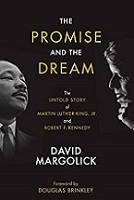
The Promise & The Dream: The Untold Story of Martin Luther King, Jr. and Robert F. Kennedy – David Margolick

dreamOn January 6, 2021, I and millions of people in America and abroad watched the events at the U.S. Capitol in which thousands of individuals breached security and entered the historic building in the belief that the 2020 Presidential Election had been stolen from Donald J. Trump.  As I watched the video footage, a sense of gloom came over me due to the realization that the pillars of our vision of democracy were under siege. Personally, I have no political affiliation and regardless of which party we belong to, none of them are above reproach when our government is threatened from within or abroad.  By evening, the dust had settled over Washington and officials began to piece together the chain of events that left several dead, dozens injured, and hundreds detained or the target of criminal investigation.  Messages from family members and friends started to arrive on my phone with nearly if I had seen the events in Washington, D.C.   The insurrection forced many of us to confront unsettling realities and acknowledge that threats exist all around us.  Further, the day also showed how far America has strayed from the principles it professes to believe in. 

When I find myself attempting to understand the present or the future, I instinctively turn to the past for the answers.  History is an invaluable tool if applied correctly.  Amazon must have sensed that I was in need for another lesson when this book by author David Margolick showed up in my list of recommendations.  I have previously written about both men on the cover, former U.S. Attorney General and Senator Robert F. Kennedy (19125-1968)(D-NY) and civil rights leader Dr. Martin Luther King, Jr.  (1929-1968).  Their deaths occurred roughly two months apart in 1968 and some have said more than once that America never recovered.  The nation was forced to live with the endless questions of what if they both had lived.  Each man had a sense of duty to change America for present and future generations.  And though they had met in person on few occasions, they were connected in the civils right movement and in death.  The violent decade of the 1960s claimed many victims and their murders brought an end to what the author calls the promise and the dream.  But there is far more to their story than some may realize.  Publicly they did not present an image of harmony but behind closed doors they were critically important to each other.  The private side of their relationship is explored here in this remarkable account of two human beings who had achieved nearly deity status as America grappled with social and political change. 

I would like to point out that there are no smoking guns in the book regarding the assassinations of each.  The crimes are discussed but briefly and constrained to small sections in the much larger story.   Readers who are interested in the assassination will find William Pepper’s “Orders to Kill: The Truth Behind the Murder of Martin Luther King” and “The Assassination of Robert F. Kennedy: Crime, Conspiracy and Cover-Up” by Tim Tate and Brad Johnson to be very good. The author’s focus here is on the relationship beween Kennedy and King which went through several phases due in part to the administrations of John F. Kennedy (1917-1963) and his successor, Lyndon B. Johnson (1908-1973).  The Kennedys had been criticize for not taking a stronger stance in defense of civil rights.  Margolick re-examines the issue and in the process, we see Bobby’s role in a much clearer lense.  The story is well-known, but I believe that Margolick presents the narrative in a thorough format which reveals that the Kennedys did act and had John Kennedy survived Dallas,  U.S. forces most likely wiould have withdrawn from Vietnam and civil rights legislation would have been the focus in 1964.  Johnson did turn Kennedy’s dream into a reality in July 1964, but America still had a long way to go.  In fact, Bobby wisely observed that:  

“You could pass a law to permit a Negro to eat at Howard Johnson’s restaurant or stay at the Hilton Hotel,” Kennedy said. “But you can’t pass a law that gives him enough money to permit him to eat at that restaurant or stay at that hotel.”

This quote is important for several reasons. The first is that many had been focused on the civil rights act and rightfully so but having the legal right to something and access to it are two different things.  The second is that it showed Kennedy realized that more than legislation would be required to change the plight of Black Americans in the United States.   In all fairness, Kennedy had undergone his own transformation as the gritty reality of life in America’s ghettos hit home.  His personal journey is one of the highlights in the book and it is not hard to see why he attained such a large following.  To many Black Americans, he was a candidate who understood or “got it”.   Curiously, Martin Luther King, Jr. never gave official statements endorsing Robert Kennedy or his brother and stayed largely out of politics and elections. But he did seek an audience with politicians whom he knew were crucial to changing America.  Both presidents and Bobby have their encounters with King in the book and the differences in the interactions King has with all three are interesting.   But each encounter is overshadowed by the wiretaps placed on King by the Federal Bureau of Investigation (“FBI”) under the grip of J. Edgar Hoover (1895-1972).  As an official of the Justice Department, Hoover’s boss was Kennedy himself who knew of and gave consent to the taps on some occasions.  The saga is revisited and reveals the dirty tricks the bureau was willing to employ to bring down King whom Hoover considered to be a “communist”.  The former director’s paranoia knew no bounds and his massive accumulation of secrets on those in powers safeguarded his thirst for power and intention to remain the head of the FBI which he did until his death in 1972.  The FBI never did prove that King was a “communist” but surely did try. 

As John Kennedy moves through his presidency, he is confronted not just with the threat of nuclear war but of unrest at home. But it was not until things exploded in the deep South that his administration began to realize the powder keg they needed to diffuse.  Civil rights activists were determined to integrate the South and eradicate Jim Crow. But first, blood would have to be spilled even if it made the Kennedy Administration uneasy.  Those tragic events are revisited and may be upsetting to some readers.   The visual recording of violent scenes by the media had thrust the reality of racial discrimination into the homes of millions of Americans.  In Washington, the president and his administration knew it had to act because if it did not, things would soon go from bad to deadly.   The attorney general was not about to let that happen.   And when action was needed, Kennedy stepped to the plate and his role in several key events are cemented in American history.  Of course, activists were still leery of the new administration but on person had this to say:

“You can fault the Kennedys in many ways on civil rights, but there are three things for which you must give them credit: their talk, their appointments, and Bobby Kennedy,” the head of the Americans for Democratic Action and one of the liberal stalwarts of mid-twentieth-century politics, Joseph Rauh, was to say.

Eventually, the story progresses to the trip to Dallas where John Kennedy met his tragic fate.  Bobby’s life is turned upside down and he exist in a sort of limbo for a significant period of time.  In the wake of his brother’s death, Kennedy realized that he had gone from one of the most powerful figures in Washington to someone who would soon be an outsider as the Johnson Administration took over.  However, he soon found himself again and eventually becomes a senator representing my beloved State of New York.   Watching the events play out is King who is the observer of all things and on occasion makes himself heard in Washington.  John Kennedy’s death had opened both King and Bobby’s eyes to the fact that they too would meet an early demise.  Their fatalism is conveyed in the book and I felt a chill as I read how each had essentially predicted his own violent death.  It was not lost on either that America had become engulfed in a climate of hate and that threat that still exist today.  But when asked about their premonitions of early deaths and the threats to their lives, each accepts both as conditions that apply.  Kennedy gives an even more blunt assessment of it with this statement: 

“I’ve got to present myself to the people as intimately as possible and get rid of some of these old bugaboos about me — let them know that I’m a human being.” But what would it do to the country, he asked, to lose another person of his stature? “That wouldn’t be good, but I can’t help that,” Kennedy replied. “If they want to get me, they’re going to get me — whether it’s in a crowd or whether I’m alone. I play Russian roulette every morning when I get up.”

And as for King, he was even more bleak: 

Befitting someone under constant threat, King talked about death incessantly and matter-of-factly. (The producer Abby Mann, who was to do his life story, asked him in 1966 how the film would end. “It ends with me getting killed,” King replied. “He was smiling, but he wasn’t joking,” Mann recalled.)

Despite the constant threat of death, each moved forward in their determination to bring true change to American society.  Kennedy continues to evolve and moves closer to where King is already at.  It is almost as if Martin was waiting for him.  Throughout the book we are witnesses to the transformation of the future candidate who eventually becomes the visionary that many had hoped for and wanted several years earlier. But as it is sometimes said, we do not choose the time, the time chooses us.  As I read through the book, I appreciated the author’s telling of the story in which we see the dance the two do around each other although they know their fates are intertwined. Further, Margolick does offer clues that the two spoke at great length privately but gave the impression publicly that they were cordial at best.  And in a tragic irony, following Bobby’s death, the widows of all three slain figures (JFK, RFK and MLK) have a meeting that their husbands may have wanted to have on a regular basis.  In death, many were united in ways they did not wish for. 

After finishing the book, I developed even more respect for Robert F. Kennedy and have deeper affection and grief for the loss of him and Martin Luther King, Jr.  The promise and the dream they were, and their deaths are some of the darkest moments in American history.  But on a positive note, the change that each desired continues to happen although there is still more work to be done.  As we look to the future we can return to the past and revisit the words and actions of these two legendary figures.   The key test will be for each of us to ask ourselves what type of country we want to live in.  In the book, we revisit a night when Kennedy had returned home from a trip to a poverty stricken location. He entered the house in a somber mood and as his daughter explained: 

“He said, ‘I’ve just come in and seen a family live in a room smaller than our dining room, with their tummies distended and sores all over them because they don’t have enough to eat and they don’t have healthcare,’” Kennedy’s eldest daughter, Kathleen Kennedy Townsend, later recalled. “‘Do you know how lucky you are? Do you know how lucky you are? Do something for this country.’” 

Kennedy had seen the face of poverty; a face Dr. King knew all too well having made his own journey across America.   What stood out to me in the book is although the two had infrequent contact, they were remarkably similar in many ways.   Quite frankly, they would have made a great team at whatever they did.   Sadly, any discussions they did have off the record are now lost to history.  But it is clear from their statements and writings that there did in fact exist affection and respect between the two. And I will always feel that one of Kennedy’s greatest speeches was his unscripted remarks in Indianapolis after Dr. King was shot and killed on April 4, 1968.  For Martin, his speech at the Washington Monument is part of the American Experience and remains one of the best oratorical deliveries in history. 

The amount of history contained in this book is both staggering and beautifully re-told by Margolick.  I absolutely loved how the narrative flowed without any lag or drifting into any particular direction. The story is streamlined, and as we move through time in the 1960s we can see its brutality and sources of hope.  I understand even more why my dad has always said that the 1960s “scared the hell out of him”.   Many figures met their ends during the 1960s but the list of names is too long to include here.  Heroes and icons were cut down before their time due to fears of unity, revolution and progress.  America will need to look at itself in the mirror as we move forward and combat the threats of unfounded radical ideology and misinformation.   Threats to our democracy must be challenged and eliminated.  The pillars upon which we place our faith in the system of government that has been adopted around the world must be protected not only for our time but future generations.  And maybe we can once again have a dream and a promise.  Highly recommended. 

ASIN ‏ : ‎ B07R6VMYHP

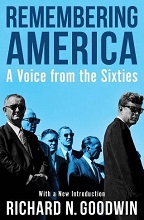
Remembering America: A Voice from the Sixties – Richard N. Goodwin

GoodwinOn more than one occasion my father has commented that the 1960s was the scariest decade of his life.  The threat of Nuclear War, increasing tensions in Southeast Asia and the growing Civil Rights Movement captivated American society and the world.  During one conversation he turned and said to me “at the time of the Cuban Missile Crisis, we didn’t know if we would live to see tomorrow or die in a nuclear exchange with the Soviet Union”.  The assassinations of several activists and politicians spread fear across the nation and to many, it seemed as if America was on the verge of total anarchy.  Richard N. Goodwin (1931-2018) worked in the administrations of Presidents John F. Kennedy (1917-1963) and Lyndon B. Johnson (1908-1973) and helped draft some of the most memorable speeches given by the iconic figures.  In 1988 he completed this memoir which was re-published in 2014, of the decade he spent in politics with two presidents and two presidential candidates.  And the result is a spellbinding account of a critical time in American history during which the country underwent profound heartache and change.

Goodwin’s account is in part an autobiography in which he revisits his upbringing as part of a Jewish family in the City of Boston and State of Maryland.   His exposure to racism came early as anti-Semitism reared its ugly head in the Old-Line State.  In stark contrast to his comfortable existence in Boston, Maryland would help shape Goodwin’s views that would remain with him throughout his life.  Age and opportunity is on his side and he is blessed with the fortune of working for former Associate Justice of the Supreme Court of the United States, Felix Frankfurter (1882-1965).  The experience further sharpened Goodwin’s legal and writing skills which later became highly valued and sought after.   As 1960 approached, President Dwight Eisenhower (1890-1969) focused on the remainder of his term and the upcoming election that would determine his successor.  All eyes were on the two candidates engaged in battle for the White House: John F. Kennedy (1917-1963) and Richard M. Nixon (1913-1994).   The Vice-President at the time, Nixon,  represented all that Goodwin opposed and he had come to like and admire Kennedy who won the election with one of the slimmest margins in history.  The young Irish-Catholic president soon embarked on a mission to change America and usher in “the New Frontier”.   Goodwin became a clutch player and Kennedy’s point man on Latin American affairs.  Some readers will recall that it was Goodwin who met and conversed with famed revolutionary Ernesto “Che” Guevara de la Serna (1928-1967).  Excerpts of their discussion are transcribed, and the dialogue is interesting for it shows the missed opportunity by Washington to understand the Cuban point of view.   As the story progresses, the two develop a mutual respect and upon learning of Guevara’s death years later, the author laments:

“And I like to think that I would have done what little I could to prevent Guevara’s execution. We were both trapped in the contending forces of a world we had not made; passionate adversaries in the struggle to control the future. Yet I liked the man. He had humor and courage, intellectual gifts and an unmistakable tenderness of spirit. I understood that he also contained ruthlessness, self-defeating stubbornness, and a hatred strong enough to cripple the possibilities of practical action. It is the paradox of the revolutionary that such divergent feelings must coexist in the same man.” 

Cuba proved to be the biggest test of Kennedy’s career in 1961 and again in 1962.  Goodwin takes us behind the scenes to witness the key events from another angle and observe the inner workings of the administration as it grappled with one crisis after another.  His proximity to Kennedy allowed him to make some keen observations about the president and behind the cool public image was was another side to John F. Kennedy.  I can only say that Bobby was not the only Kennedy with a temper.  The actions and reactions by Kennedy shed light on the frustrations of running an administration that struggled to stay in cohesion.  After each debacle Kennedy did shuffle around his cabinet and had become wise to game being played by figures loyal to the establishment.  And Goodwin does not hold back regarding his issues with speechwriter Ted Sorenson (1928-2010).   However, there is no gossip here but only what Goodwin witnessed and knew for certain.  And it is because of this streamlined focus that the story moves forward as fluidly as it does.  Over time, the Kennedy Administration began to fire on all cylinders and the seasoned president began to tighten his grip over Washington.  But with every story about Kennedy’s time in office, there is always the elephant in the room and his trip to Dallas soon approaches.  Goodwin was not with Kennedy that day and can only revisit how he learned of the assassination and the events that took place later that day in Washington.  There is no smoking gun about the crime or conspiracy theories about what happened that day.  Kennedy’s death affected Goodwin deeply and he grieved with millions of Americans.  John F. Kennedy was dead but far from forgotten.  Although his time in office was short he had set into motion a chain of events.  Goodwin is far more eloquent than I and this statement explain’s Kennedy’s importance:

“John Kennedy was not the sixties. But he fueled the smoldering embers, and, for a brief while, was the exemplar who led others to discover their own strength and resurgent energy; their own passion, love, and capacity for hate.”

America had begun the process to give John Kennedy a proper send-off while adjusting to a new leader in the White House. In just a few years, Lyndon B. Johnson would change America in ways no one thought possible. Goodwin had left Washington but soon receives a call from Johnson himself who uses his trademark influence to coerce Goodwin into joining the team.  He accepts and begins to draft statements that Johnson would use to increase his popularity and push legislation through the Senate. The passage of the Civil Rights Bill was a monumental feat but like a master puppeteer, Johnson knew which strings to pull to accomplish the unthinkable.  On July 2, 1964, the bill became reality as Johnson signed it into law and a year later he signed the Voting Rights Act.  Further, he also begun to initiate programs that were part of his vision for American that he famously labeled the “Great Society”.  But a little country in Southeast Asia would change all of that and seal his fate in 1968.  Goodwin was a firsthand witness to the rise and fall of Johnson and sums up the tragic figure he becomes as follows:

“For in the single year of 1965 — exactly one hundred years after Appomattox — Lyndon Johnson reached the height of his leadership and set in motion the process of decline.” 

In 1954, the French military suffered a humiliating defeat at Dien Bien Phu in Vietnam and soon withdrew their forces from Indochina.  The staggering amount of U.S. financial aid was not enough to turn the tide against the North Vietnamese Army and the movement spearheaded by Ho Chi Minh (1890-1969) known affectionately as “Uncle Ho”. Followin the Geneva Accords, the country was divided into a Communist North Vietnam and Democratic South Vietnam.  Washington continued to eye Hanoi with suspicion and tensions regrettably began to simmer.  Things came to a head in August 1964 as U.S. patrol ships traveling through the Gulf of Tonkin encountered North Vietnamese patrol boats. The events of August 2 and August 4 are still subject to examination, but Johnson used them as a pretext for Congressional approval to escalate the growing war in Vietnam.  Initially, public support is behind Johnson and the fear of the “Domino Theory” combined with misleading intelligence reports resulted in increasing numbers of U.S. troops arriving in Vietnam.  But as we see in the book, the truth about Vietnam could not be hidden forever and became increasingly clear and more disturbing as the war dragged on.  On an interesting note, there were many figures who strongly opposed the war, including Kennedy himself who was highly aware of the dangers of a war.  Goodwin revisits this earlier statement by Kennedy who was still senator at the time and several years away from the throne in Washington:

“No amount of American military assistance in Indochina,” said Senator John Kennedy in April of 1954, “can conquer an enemy which is everywhere and at the same time nowhere, ‘an enemy of the people’ which has the sympathy and covert support of the people.”

As 1965 progresses, Lyndon Johnson’s fall from grace begins to accelerate.  Goodwin recalls the series of events that transpire as Vietnam becomes a dark cloud over Washington and the Civil Rights Movement gains momentum.  Although the book is not a biography of Johnson, Goodwin captures the multiple sides of of him perfectly.  And what we see is man self-destructing one step at at time due to a war he cannot end and a country turning against him.  Paranoia soon takes hold and his final descent into madness begins.  Everyone becomes a suspect and unworthy of his confidence and trust. Goodwin would also become the target of his wrath and be accused of being one of those “Kennedy people”.  A sad reality is that throughout his presidency, Johnson struggled with Kennedy’s legacy and never ceased to believe that “they” were out to get him along with the “liberals”.  The revelations by Goodwin are simply mind-boggling and as I read the story, I believe that had Johnson not stepped down, it is possible that a commission might have been formed to study his behavior.  He was clearly losing touch with reality and perhaps the entrance of Robert F. “Bobby” Kennedy (1925-1968) into the 1968 election saved Johnson from himself.

After departing from Johnson’s administration and publicly voicing opposition to the war, Goodwin became public enemy number in Johnson’s eyes.  The continuing war and domestic turmoil became too much for Goodwin to accept and he begins to work for presidential candidate and Senator Eugene McCarthy (1916-2005) who sought to capture the Democratic nomination for president.  Upon his arrival at the McCarthy campaign headquarters, he soon finds that there is much work to be done. But Goodwin is a seasoned professional and soon helps to transform the campaign into a well-oiled machine. However, the looming threat of a Kennedy campaign is never far away and after the New Hampshire primary, Bobby formally announces his candidacy.  Goodwin is now placed in a difficult position and must make a decision between McCarthy and Kennedy, with whom he had become remarkably close friends. The saga and its aftermath are thoroughly explained by the author whose observations about politics are some of the sharpest I have ever seen.  And Goodwin was correct in his belief that McCarthy was a great candidate, but Bobby was presidential.  As Kenedy’s campaign kicks off, the author witnesses a transformation of the Senator from New York.  Bobby was reinventing himself and challenging any notion that he was not fit for president. In one gripping scene, Goodwin recalls this experience that shows the passion for America that served as the basis for Kennedy’s actions:

“Kennedy asked, “How many of you left school or good jobs to work in the McCarthy campaign?” Almost every hand went up. “How many of you are going to stick with it to the end, even if it goes all the way to November?” Again, nearly all the hands were raised. “I know some of you might not like me,” Kennedy continued, “think I just jumped in to take your victory away. Well, that’s not quite the way I see it. But it doesn’t matter what you think of me. I want you to know that you make me proud to be an American. You’ve done a wonderful thing. I’m only sorry we couldn’t have done it together.” With that Kennedy got up to leave, and, as we began to start down the street, he turned and waved. Every person on the steps waved back.” 

Readers who are interested in Kenney’s campaign will thoroughly enjoy David Halberstam’s (1937-2007) The Unfinished Odyssey of Robert F. Kennedy which shows the incredible change in the candidate as the race for Washington heated up.  Like Jack Kennedy, we know that Bobby’s tragic destiny awaits, and I steeled myself as it approached.  Kennedy is riding the wave of popularity and arrives in Los Angeles determined to win California.  He won the state but was shot and mortally wounded after his acceptance speech. Doctors performed emergency surgery but the wounds to Kennedy had proved to be too devastating and ruled out any chance of survival. Goodwin goes in to see his friend for the last time and his description of Kennedy’s final moments in the hospital bring the story to a melancholy conclusion.

When I finally put the book down, I felt as if I had just taken a ride for the ages.  This is an incredible story about pivotal moments in America’s story that continue to play themselves out.  Many years have passed since Robert and John Kennedy were murdered but their messages and the issues they fought for and against are still with us. However, the past is always prologue and I do believe America can and will make great strides.  Goodwin was also a believer in America and in looking back at that decade of the 1960s, he provides the following quote that confirms his optimism:

“We cannot, of course, go back to the sixties. Nor should we try. The world is different now. Yet, two decades have passed since that infinitely horrifying day in Los Angeles which closes this book. And a new generation is emerging. They can pick up the discarded instruments and resume the great experiment which is America. There is no question of capacity, only of will.”  – Richard N. Goodwin 

ASIN : B00L8FBEWO