
 On more than one occasion my father has commented that the 1960s was the scariest decade of his life. The threat of Nuclear War, increasing tensions in Southeast Asia and the growing Civil Rights Movement captivated American society and the world. During one conversation he turned and said to me “at the time of the Cuban Missile Crisis, we didn’t know if we would live to see tomorrow or die in a nuclear exchange with the Soviet Union”. The assassinations of several activists and politicians spread fear across the nation and to many, it seemed as if America was on the verge of total anarchy. Richard N. Goodwin (1931-2018) worked in the administrations of Presidents John F. Kennedy (1917-1963) and Lyndon B. Johnson (1908-1973) and helped draft some of the most memorable speeches given by the iconic figures. In 1988 he completed this memoir which was re-published in 2014, of the decade he spent in politics with two presidents and two presidential candidates. And the result is a spellbinding account of a critical time in American history during which the country underwent profound heartache and change.
Goodwin’s account is in part an autobiography in which he revisits his upbringing as part of a Jewish family in the City of Boston and State of Maryland. His exposure to racism came early as anti-Semitism reared its ugly head in the Old-Line State. In stark contrast to his comfortable existence in Boston, Maryland would help shape Goodwin’s views that would remain with him throughout his life. Age and opportunity is on his side and he is blessed with the fortune of working for former Associate Justice of the Supreme Court of the United States, Felix Frankfurter (1882-1965). The experience further sharpened Goodwin’s legal and writing skills which later became highly valued and sought after. As 1960 approached, President Dwight Eisenhower (1890-1969) focused on the remainder of his term and the upcoming election that would determine his successor. All eyes were on the two candidates engaged in battle for the White House: John F. Kennedy (1917-1963) and Richard M. Nixon (1913-1994). The Vice-President at the time, Nixon, represented all that Goodwin opposed and he had come to like and admire Kennedy who won the election with one of the slimmest margins in history. The young Irish-Catholic president soon embarked on a mission to change America and usher in “the New Frontier”. Goodwin became a clutch player and Kennedy’s point man on Latin American affairs. Some readers will recall that it was Goodwin who met and conversed with famed revolutionary Ernesto “Che” Guevara de la Serna (1928-1967). Excerpts of their discussion are transcribed, and the dialogue is interesting for it shows the missed opportunity by Washington to understand the Cuban point of view. As the story progresses, the two develop a mutual respect and upon learning of Guevara’s death years later, the author laments:
“And I like to think that I would have done what little I could to prevent Guevara’s execution. We were both trapped in the contending forces of a world we had not made; passionate adversaries in the struggle to control the future. Yet I liked the man. He had humor and courage, intellectual gifts and an unmistakable tenderness of spirit. I understood that he also contained ruthlessness, self-defeating stubbornness, and a hatred strong enough to cripple the possibilities of practical action. It is the paradox of the revolutionary that such divergent feelings must coexist in the same man.”
Cuba proved to be the biggest test of Kennedy’s career in 1961 and again in 1962. Goodwin takes us behind the scenes to witness the key events from another angle and observe the inner workings of the administration as it grappled with one crisis after another. His proximity to Kennedy allowed him to make some keen observations about the president and behind the cool public image was was another side to John F. Kennedy. I can only say that Bobby was not the only Kennedy with a temper. The actions and reactions by Kennedy shed light on the frustrations of running an administration that struggled to stay in cohesion. After each debacle Kennedy did shuffle around his cabinet and had become wise to game being played by figures loyal to the establishment. And Goodwin does not hold back regarding his issues with speechwriter Ted Sorenson (1928-2010). However, there is no gossip here but only what Goodwin witnessed and knew for certain. And it is because of this streamlined focus that the story moves forward as fluidly as it does. Over time, the Kennedy Administration began to fire on all cylinders and the seasoned president began to tighten his grip over Washington. But with every story about Kennedy’s time in office, there is always the elephant in the room and his trip to Dallas soon approaches. Goodwin was not with Kennedy that day and can only revisit how he learned of the assassination and the events that took place later that day in Washington. There is no smoking gun about the crime or conspiracy theories about what happened that day. Kennedy’s death affected Goodwin deeply and he grieved with millions of Americans. John F. Kennedy was dead but far from forgotten. Although his time in office was short he had set into motion a chain of events. Goodwin is far more eloquent than I and this statement explain’s Kennedy’s importance:
“John Kennedy was not the sixties. But he fueled the smoldering embers, and, for a brief while, was the exemplar who led others to discover their own strength and resurgent energy; their own passion, love, and capacity for hate.”
America had begun the process to give John Kennedy a proper send-off while adjusting to a new leader in the White House. In just a few years, Lyndon B. Johnson would change America in ways no one thought possible. Goodwin had left Washington but soon receives a call from Johnson himself who uses his trademark influence to coerce Goodwin into joining the team. He accepts and begins to draft statements that Johnson would use to increase his popularity and push legislation through the Senate. The passage of the Civil Rights Bill was a monumental feat but like a master puppeteer, Johnson knew which strings to pull to accomplish the unthinkable. On July 2, 1964, the bill became reality as Johnson signed it into law and a year later he signed the Voting Rights Act. Further, he also begun to initiate programs that were part of his vision for American that he famously labeled the “Great Society”. But a little country in Southeast Asia would change all of that and seal his fate in 1968. Goodwin was a firsthand witness to the rise and fall of Johnson and sums up the tragic figure he becomes as follows:
“For in the single year of 1965 — exactly one hundred years after Appomattox — Lyndon Johnson reached the height of his leadership and set in motion the process of decline.”
In 1954, the French military suffered a humiliating defeat at Dien Bien Phu in Vietnam and soon withdrew their forces from Indochina. The staggering amount of U.S. financial aid was not enough to turn the tide against the North Vietnamese Army and the movement spearheaded by Ho Chi Minh (1890-1969) known affectionately as “Uncle Ho”. Followin the Geneva Accords, the country was divided into a Communist North Vietnam and Democratic South Vietnam. Washington continued to eye Hanoi with suspicion and tensions regrettably began to simmer. Things came to a head in August 1964 as U.S. patrol ships traveling through the Gulf of Tonkin encountered North Vietnamese patrol boats. The events of August 2 and August 4 are still subject to examination, but Johnson used them as a pretext for Congressional approval to escalate the growing war in Vietnam. Initially, public support is behind Johnson and the fear of the “Domino Theory” combined with misleading intelligence reports resulted in increasing numbers of U.S. troops arriving in Vietnam. But as we see in the book, the truth about Vietnam could not be hidden forever and became increasingly clear and more disturbing as the war dragged on. On an interesting note, there were many figures who strongly opposed the war, including Kennedy himself who was highly aware of the dangers of a war. Goodwin revisits this earlier statement by Kennedy who was still senator at the time and several years away from the throne in Washington:
“No amount of American military assistance in Indochina,” said Senator John Kennedy in April of 1954, “can conquer an enemy which is everywhere and at the same time nowhere, ‘an enemy of the people’ which has the sympathy and covert support of the people.”
As 1965 progresses, Lyndon Johnson’s fall from grace begins to accelerate. Goodwin recalls the series of events that transpire as Vietnam becomes a dark cloud over Washington and the Civil Rights Movement gains momentum. Although the book is not a biography of Johnson, Goodwin captures the multiple sides of of him perfectly. And what we see is man self-destructing one step at at time due to a war he cannot end and a country turning against him. Paranoia soon takes hold and his final descent into madness begins. Everyone becomes a suspect and unworthy of his confidence and trust. Goodwin would also become the target of his wrath and be accused of being one of those “Kennedy people”. A sad reality is that throughout his presidency, Johnson struggled with Kennedy’s legacy and never ceased to believe that “they” were out to get him along with the “liberals”. The revelations by Goodwin are simply mind-boggling and as I read the story, I believe that had Johnson not stepped down, it is possible that a commission might have been formed to study his behavior. He was clearly losing touch with reality and perhaps the entrance of Robert F. “Bobby” Kennedy (1925-1968) into the 1968 election saved Johnson from himself.
After departing from Johnson’s administration and publicly voicing opposition to the war, Goodwin became public enemy number in Johnson’s eyes. The continuing war and domestic turmoil became too much for Goodwin to accept and he begins to work for presidential candidate and Senator Eugene McCarthy (1916-2005) who sought to capture the Democratic nomination for president. Upon his arrival at the McCarthy campaign headquarters, he soon finds that there is much work to be done. But Goodwin is a seasoned professional and soon helps to transform the campaign into a well-oiled machine. However, the looming threat of a Kennedy campaign is never far away and after the New Hampshire primary, Bobby formally announces his candidacy. Goodwin is now placed in a difficult position and must make a decision between McCarthy and Kennedy, with whom he had become remarkably close friends. The saga and its aftermath are thoroughly explained by the author whose observations about politics are some of the sharpest I have ever seen. And Goodwin was correct in his belief that McCarthy was a great candidate, but Bobby was presidential. As Kenedy’s campaign kicks off, the author witnesses a transformation of the Senator from New York. Bobby was reinventing himself and challenging any notion that he was not fit for president. In one gripping scene, Goodwin recalls this experience that shows the passion for America that served as the basis for Kennedy’s actions:
“Kennedy asked, “How many of you left school or good jobs to work in the McCarthy campaign?” Almost every hand went up. “How many of you are going to stick with it to the end, even if it goes all the way to November?” Again, nearly all the hands were raised. “I know some of you might not like me,” Kennedy continued, “think I just jumped in to take your victory away. Well, that’s not quite the way I see it. But it doesn’t matter what you think of me. I want you to know that you make me proud to be an American. You’ve done a wonderful thing. I’m only sorry we couldn’t have done it together.” With that Kennedy got up to leave, and, as we began to start down the street, he turned and waved. Every person on the steps waved back.”
Readers who are interested in Kenney’s campaign will thoroughly enjoy David Halberstam’s (1937-2007) The Unfinished Odyssey of Robert F. Kennedy which shows the incredible change in the candidate as the race for Washington heated up. Like Jack Kennedy, we know that Bobby’s tragic destiny awaits, and I steeled myself as it approached. Kennedy is riding the wave of popularity and arrives in Los Angeles determined to win California. He won the state but was shot and mortally wounded after his acceptance speech. Doctors performed emergency surgery but the wounds to Kennedy had proved to be too devastating and ruled out any chance of survival. Goodwin goes in to see his friend for the last time and his description of Kennedy’s final moments in the hospital bring the story to a melancholy conclusion.
When I finally put the book down, I felt as if I had just taken a ride for the ages. This is an incredible story about pivotal moments in America’s story that continue to play themselves out. Many years have passed since Robert and John Kennedy were murdered but their messages and the issues they fought for and against are still with us. However, the past is always prologue and I do believe America can and will make great strides. Goodwin was also a believer in America and in looking back at that decade of the 1960s, he provides the following quote that confirms his optimism:
“We cannot, of course, go back to the sixties. Nor should we try. The world is different now. Yet, two decades have passed since that infinitely horrifying day in Los Angeles which closes this book. And a new generation is emerging. They can pick up the discarded instruments and resume the great experiment which is America. There is no question of capacity, only of will.” – Richard N. Goodwin
ASIN : B00L8FBEWO
 While reviewing my list of books to read, I did a double take as I read the title of this memoir by Pat Conroy. I had added it for a reason yet at the time, I could not recall why. But I put that aside and decided that there is no time like the present and it might be a hidden gem. It turns out that I was right in my assessment. However, I was not prepared for the incredible story within by Pat Conroy (1945-2016) that sheds light on the lives of those who have been forgotten even in the most powerful nation on earth. I knew that the story centered around education but of course, teaching is never as simple as writing on a blackboard. In fact, what is revealed in the book should remove all doubt that teaching is by any means as easy task. Some of us are naturally gifted to handle a classroom full of students, each with their own peculiar personality. In many ways, the teacher is conductor working the orchestra to fine tune all the instruments and produce a symphony that is pleasing to the ears. Conroy is the conductor here and what he accomplished on Yamacraw Island, South Carolina, will leave you sad, angry, and happy at the same time.
  It truly is amazing that a person can learn so much about the future by examining the past. In America, there are parts of our nation’s history that people find difficult to control. Race is at the top of the list and continues to find itself the topic of discussions as the country grapples with instances of systematic discrimination and overt acts by individuals. However, America is also a very great nation that has the courage to critically examine itself. The problems we have are not new but instead, more attention is now being paid to them. And I honestly believe that to remedy those issues, we must continue to look at the past for it provides many valuable lessons from which we can learn. I picked up this book because 1) I have been a fan of Lorraine Hansberry (1930-1965) for many years and 2) I knew that the book would contain a wealth of highly intellectual discussions about American society that have relevance, even today. And I can say unquestionably that this short book is a good look at Hansberry’s brilliant mind that was able to dissect America in ways that sets the stage for meaningful dialogue and change.
 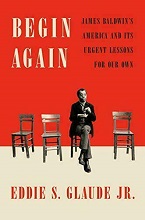 Within the past several years I have found myself becoming more and more familiar with the life and legacy of James Baldwin (1924-1987). And I have come to realize that while he is widely appreciated as an author, he is at the same time, underrated as a voice of reason with regards to the country he called home. Curiously, Baldwin spent many years of his life in Europe, finding solace and residency in France and Turkey. However, his life outside of the United States allowed him to view America from the eyes of a foreigner. That position gave him a unique opportunity to view America through the lens of a microscope where all of its social ills were readily visible. In his time he was seen as a trouble maker and rabble rouser due to his outspokenness and sadly because of his sexual orientation. But to focus on his frank dialogue and homosexuality would be misjudgment of his true genius. Baldwin possessed an uncanny ability to dissect American society and highlight where the nation was going wrong. Today America is at a crossroads with a looming presidential election in a nation fiercely divided and deeply polarized. Eddie S. Glaude, Jr. takes another look at James Baldwin, who comes back to life as a voice of reason during which are certainly difficult times.
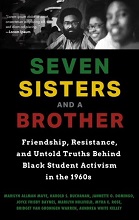 I saw this book in my list of recommendations on Amazon and decided to take a closer look. The cover caught my attention and after reading the full title, my interest peaked. On January 9, 1969 a group of students belonging to the Swarthmore Afro-American Students Society (SASS), took over the admissions office at Swarthmore College. In the months prior, a working paper regarding the recruitment and admission of black students had been released, resulting in immediately backlash from the university’s black students who felt their privacy had been violated and their experiences ignored. The animosity between the students and Dean Hargadon continued to increase and the students felt they had no option but to act. Joyce Frisby Baynes, Harold S. Buchanan, Jannette O. Domingo, Marilyn J. Holifield, Aundrea White Kelly, Marilyn Allman Maye, Myra E. Rose and Bridget Van Gronigen Warren moved into the admissions office and over the next few days, their resistance changed the course of history for Swarthmore College.
 The African-American experience is a reflection of America’s dark past and its bright future. Jim-Crow, anti-miscegenation laws and other legal conditions, provided roadblocks to the social and economic advancement of black Americans and other minorities. However, over time, individuals once considered minorities have made great strides and achieved great success. In spite of this, black America finds itself confronted with issues that cause many to wonder what is really holding black men, women and children back? When I saw this book on Amazon, I thought to myself that whoever wrote this book is beyond brave and was undoubtedly subject to attacks from all angles by those who wish to refute his conclusions. Upon closer inspection, I saw that the book was written by a black American, John McWhorter, who is a professor in English and comparative literature at Columbia University. He has also worked at the University of California, Berkeley. His experiences while tenuring at UC, Berkeley are what form the backbone of this book.
 Recently, I had been revisiting material regarding pivotal moments in the U.S. Civil Rights Movement. My focus became trained on the Black Panther Party, led by the late Huey P. Newton (1942-1989) and Bobby Seale. The Party has been viewed in both positive and negative lights depending on the view of the person assessing its rise and effect on American society. Newton, who later earned a Ph.D., was a charismatic and gifted orator who in turn used those skills in the form of the written word. His autobiography, ‘
 The cover of this book is bound to cause many to do a double take. The crossing out of the word black is far from subtle, but anyone who is familiar with the late Richard Claxton “Dick” Gregory (1932-2017), will know that subtlety was not in his character. He was known as a star comedian for many years but he was also a civil rights activist, nutrition guru, social critic, writer and occasional actor. His death marked the passing of a icon whose sharp wit and frankness earned him the respect of his peers and people across the nation. Published after his death, this book takes a look at the official history of African Americans that Americans have been told for more than a century. Gregory makes it clear early in the book that American History and Black History are one in the same. It is a valid point and for African Americans, the United States is the only home that many have ever known. The history that has been taught in classrooms across America continues to be re-examined in the pursuit of the truth by historians and independent researchers. The gift of the internet has allowed truth-seekers to reach audiences of monumental sizes as we step back in time to learn what really did happen with regards to pivotal events that shaped the modern day United States.
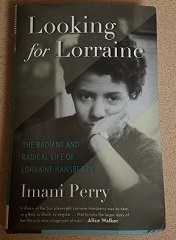 This past Saturday was the fifty-fourth anniversary of the death of the late American playwright and author Lorraine Vivian Hansberry (1930-1965). Her untimely death at the age of thirty-four silenced one of literature’s greatest voices. However, more than fifty years after her death, her masterpiece, A Raisin In the Sun, continues draw audiences curious to learn why the play is one of the longest running on Broadway. I personally attended a run starring Denzel Washington and his portrayal as Walter Lee Younger is as good as the original performance by the legendary Sidney Poitier. For some, Hansberry remains a bit of a mystery. and a throwback to an era long past. The younger generation of today largely have yet to discover her genius and her influence on the African-American experience. And what many of them are unaware of is that five decades ago, she was a voice advocating for the many freedoms they have today. Sadly, it has taken many years for her to be recognized for the gifted writer that she was. As we come to know her work more intimately, we must ask ourselves, who was the real Lorraine Hansberry? Imani Perry searched for and found her in this semi-autobiography and psychoanalysis. The book is an examination of Lorraine’s thoughts and writings while also adding recollections of historical events filled with larger than life figures who are no longer with us today. But make no mistake, this is about Lorraine, the woman who changed Broadway.


You must be logged in to post a comment.