
 On January 11, 2019, Netflix released ReMastered: Massacre at the Stadium, a look back at the violent coup in September, 1973 in which President Salvador Allende (1908-1973) was overthrown by the Chilean military. In his place, General Augusto Pinochet (1915-2006) assumed power and unleashed a reign of tyranny that lasted sixteen years and caused the deaths of thousands of Chileans. His reign came to an end when Patricio Aylwin (1918-2016) was elected as the next President of the Republic of Chile. Pinochet was arrested in October, 1998, by British intelligence and repatriated to Chile on March 3, 2000. He died on December 10, 2006, without having served a day in prison for the human rights violations that occurred during his time in office. Today he is largely recognized as one of Latin America’s most infamous tyrants. The story of his rise to power and fall are covered beautifully in Peter Kornbluh’s The Pinochet File: A Declassified Dossier on Atrocity and Accountability . His ruthlessness knew no bounds that tragic September day, and the military engaged in a purge of all perceived enemies of the new regime. Among the endless number of victims was former activist, playwright and singer, Victor Lidio Jara Martínez (1932-1978), known to the world as Victor Jara.
Jara’s widow Joan, is now 92 and has never ceased in her efforts to promote Victor’s legacy and find justice for his murder. In the Netflix documentary, his brutal death and the successful lawsuit against former Chilean soldier Pablo Barrientos, take center stage in the mission to unravel Jara’s final moments at the stadium. The film is thought-provoking and I do believe there is more to his death that remains hidden. After I finished the film, I became determined to learn as much as I could about Jara and his importance in Chilean history. I found this book by Joan Jara, wherein she discusses the Victor she knew and her life in Chile, a place that became her home away from home. British by birth, life took her across the Atlantic and to Santiago, where she continued to perfect her craft as a performer. Soon she was divorced with a young daughter trying to find her purpose far away from the bustling city life in London. Soon, a young charismatic singer crossed her path and before long, the story of Victor and Joan Jara had begun.
The beauty in this book is that Joan allows us into their home, to learn about Victor’s private life and his rise from the poverty-stricken town of Lonquén to become one of Chile’s most vocal supporters of Allende’s government. She provides a short biography on Victor and herself, filled with anecdotes that show how the basis for their political beliefs. As she admits, at first she had no fondness for anything communist but after witnessing the poverty and inequality in Chile and other parts of Latin America, she became more accepting of communist ideology. These beliefs would have far-reaching and tragic implications up until the time she fled Chile with Manuela and Amanda, her daughter with Jara. Today, it seems unreal that someone should be physically assaulted or even murdered for political affiliation, but this was the atmosphere that existed in Chile under Allende’s administration. Joan captures the atmosphere, recalling tense situations in which anarchy could have prevailed at the drop of a hat. Her analysis is a prime example for anyone seeking to understand how and why the coup had formed.
Joan takes us through the development of their relationship, their new daughter and success in the theater, a place she and Victor have always called home. Life is good and the girls are growing up nicely, but there is an undercurrent of dissent among the right-wing faction, determined to end Allende’s rule by any means necessary. The involvement of the Central Intelligence Agency (CIA) in Allende’s downfall is well-documented. And the further fracture of Chilean society is critically examined in A Nation of Enemies: Chile Under Pinochet by Pamela A. Constable and Arturo Valenzuela. I found myself startled as I read the book, at the revelations that it was openly assumed by many Allende supporters that the CIA was actively working to bring down Allende. It seems as if it was the secret that was not no secret. Perhaps the events in Cuba, Guatemala and Vietnam had provided fuel for the suspicion. The political turmoil that later engulfed the nation had started to build nearly the day that Allende was sworn in. The right-wing extremists failed to get the two-thirds vote to remove him from office and it was clear to Allende’s detractors that his removal would only come through violence. Allende was not oblivious to his precarious situation and even gave an unofficial last address to the nation in the days leading up to the coup. Little by little, dissension grew and the stage was set for September 11, 1973.
Open contempt by opposing parties had reached toxic levels in the week leading up to the coup and the audacity exemplified by enemies is recounted here by Joan. Some of the behavior might shock some readers. The descriptions of the brutality inflicted upon political opponents is reprehensible and as a woman states in the book, the coup taught Chileans how to hate. Similar to the Netflix film, Joan discusses that day in detail and how she came to learn about Victor’s death, her retrieval of his remains and her actions in the wake of his untimely demise. The story is riveting and Victor’s death silenced a voice of hope in a country that later endured a tyranny that soon spread across the continent, making its mark in places such Argentina and Uruguay under the regimes of Juan Perón and Juan María Bordaberry. Today, the dictatorships are a dark reminder of the past and the perils of extremism.
In January, 2019, I visited Chile and it has found a place in my heart as a true gem. It is hard to put into the words, the feeling that comes over the body upon the arrival on Chilean soil. To many of its neighbors, Chile is the black sheep of Latin America. But similar to its neighbors, it too has suffered through and survived its own history of military rule under right-wing dictatorship. Victor Jara was one of many voices who spoke out and took action to transform society in the hope of correctly many of mankind’s mistakes. His belief in his actions made him a marked man but Jara refused to abandoned his position and stood by his beliefs until the end. Joan has kept her husband’s memory alive in both the Netflix documentary and his book about their time together and the man she simply knew as Victor and his life which truly is an unfinished song.
ISBN-10: 0747539944
ISBN-13: 978-0747539940
 December 10 will mark twelve years since Augusto José Ramón Pinochet Ugarte (1915-2006) died from the effects of a heart attack in his native Chile. For many Chileans, he is the epitome of evil and a ruthless tyrant whose regime persecuted thousands of citizens, many of whom were “disappeared”. He also has his supporters, known simply as “pinochetistas”. His rise to power after the CIA- backed coup that overthrew the government of Salvador Allende (1908-1973), resulted in a new level of human rights violations across Latin America. Allende’s removal and death has become known as the other September 11th and a day that no Chilean can ever forget.
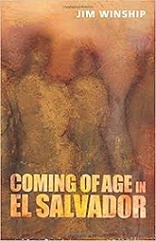 The civil war the engulfed the small Central American nation of El Salvador from 1980-1992 caused the deaths of over 75, 000 people. The violence, heartache and oppression felt by millions of El Salvadorans has reverberated over the years as a reminder of dark times for the country known as the “Pulgarcito” (
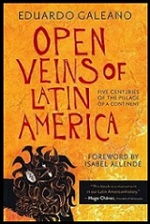 Latin America is home to some of the most beautiful scenery in the world. The Iguazu Falls, Andes Mountains and Patagonia attract millions of visitors annually. The beauty of these and other sites across Latin America stand in stark contrast to the poverty that can be found outside of major cities and sometimes within. In between major railway stations and ports exist slums that remind us of the severely uneven distribution of wealth throughout the continent. Speaking from personal experience, most Americans would be shocked at living conditions that still exist in Latin America to this day. But why does a continent with a history that goes back several hundred years and is home to beautiful people, beautiful languages, great foods and beautiful scenes of nature, continue to suffer from poverty, corruption and exploitation.
 The definition of courage is the ability to do something that frightens one. On October 13, 1972, Roberto Canessa was one of forty passengers aboard Uruguayan Air Force Flight 571 bound for Santiago, Chile. The plane clipped the top of a mountain peak and crashed in a region known as the Valley of Tears. Seventy-two days passed before all of the survivors were rescued. Canessa and Nando Parrado, author of
  On October 13, 1972, Nando Parrado was a twenty-two year old rugby player with the Old Christians from Montevideo, Uruguay. The team was en route to Santiago Chile for an annual match against a rival team. As their Fairchild 227 flew north through the Andes following a navigational error by the plane’s pilots, it clipped the top of a mountain peak as the crew struggled to force the aircraft to climb over the deadly terrain. The initial crash killed several passengers and by the time the survivors were rescued in December, 1972, only sixteen remained. Their story was told by author Piers Paul Read in the 1974 book
  Nestled between Brazil and Argentina is the small Latin American nation of the Oriental Republic of Uruguay (República Oriental del Uruguay). The nation is the second smallest on the continent next to Suriname and boasts one of the highest
 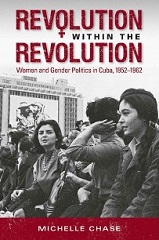 The Cuban Revolution has served as a blueprint as a successful campaign for independence from imperialism. Fidel Castro (1926-2016), Ernesto Che Guevara (1928-1967) and Raul Castro (1931-) became legendary figures in Cuba and around the world. Raul is remaining member of the trio and is currently the President of the Council of State of Cuba and the President of the Council of Ministers of Cuba following Fidel’s retirement in 2008. In March, 2016, United States President Barack Obama made a historic visit to the island in an effort to restore severely strained diplomatic relations between the two nations. Time will tell if Washington and Havana continue down that path.
 On Tuesday, June 27, 2017, Argentine President Mauricio Macri of Argentina and Michelle Bachelet of Chile met in Santiago, Chile to discuss a trade agreement between the two South American nations. A trade agreement would be a boost to the economies of both nations and help the Argentine economy recover from years of devaluation of the peso and loans on which the country was forced to default. In three weeks I will revisit the Argentine Republic, landing in Buenos Aires, appropriately called the “Paris of South America”. As of today, the exchange rate between the United States Dollar and Argentine Peso is
  Wagner Moura became one of Netflix’s most memorable faces when he assumed the role of infamous drug czar Pablo Escobar in the hit series Narcos. The series, while based off of true events, is also a fictional account of the late kingpin’s life as a cocaine trafficker and public enemy number one in Colombia. The received rave reviews and I enjoyed it immensely. I was aware of Escobar’s story before watching the show and knew that the producers would tweak some parts of the story to enhance its seduction. The created a hit that will remain one of the best products of the digital behemoth. But some of us may be asking ourselves, how much did Netflix get right? And what did they change as they filmed the show? Shaun Attwood goes behind the camera and revisits the real story of Pablo’s rise and downfall that lead to his death on December 2, 1993 in the city of Medellín.
 FREETHINKING BIBLIOPHILE
You must be logged in to post a comment.