
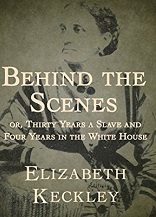
 The assassination of President Abraham Lincoln remains one of the most important historical events in American history. Honest Abe, as he was known, had been elected as the first Republican president to serve in the highest office in the land. The Grand Old Party (GOP) had been founded in 1854 and Lincoln was the icon for what the party stood for. In the wake of his death, John Wilkes Booth (1838-1865) was shot and killed by law enforcement officers and several of his co-conspirators went the gallows including the first woman to be executed by the United States Government, Mary Surratt (1823-1865). Lincoln’s widow, Mary Todd Lincoln (1818-1882) grieved deeply for her husband but what I was not aware of, was her close friendship with a former slave and dress owner by the name of Elizabeth Keckley (1818-1907). When I saw the title of the book, I had to do a double-take and quickly realized that I needed to read this book. And I can after having finished it, that it is an incredible story from a first-hand witness to the personal lives of Abraham Lincoln, his family and important figures in Washington who do not escape Mary’s skeptical eye.
Keckley was born a slave and she recalls her early life which is quite tragic. Readers who are sensitive to material about slavery in the United States and acts of violence might find the early part of the book slightly difficult to read through but I promise you that it does get better in some ways. Keckley’s story picks up pace after she earns her freedom due largely in part to the generosity of Mrs. Anne Garland who helps her raise the twelve hundred dollars required by her owner. After satisfying the price and repaying her debt, she is free to move on in life but I am sure that she could never have imagined that she would not only serve the Lincoln family but also the family of Confederacy President Jefferson Davis (1808-1889). I was not prepared for this part of the story and I believe it is one of the most curious moments as well. The section on Jefferson Davis is brief, mainly because she did not spend much time with them as it occurred before the war broke out and the Davis family moved south. And Mrs. Davis makes some comments that are quite interesting about the impending conflict. History proved her wrong but her comments are revealing. Keckley had gained fame as a dress maker whose skills were in high demand and it is because of this that she came into the life of the Lincolns.
Mary Lincoln takes on Keckley as sort of a personal assistant who assumes many roles, even confidant. Keckley is full of endless memories of many private aspects of the first family’s life. The death of Willie Lincoln (1850-1862) hits hard and we are allowed to bear witness to their enormous grief. It is a very intimate portrait of the Lincolns that the public did not see. And when Lincoln himself is assassinated, it is Keckley who comes to Mary’s aid in her time of grief. But, that is only half the story as the two develop a deeper friendship. Each moves around the country, often with Keckley meeting Lincoln in yet another city. But in the end, they were separated by distance and reliant upon written correspondence. Regardless, it is a touching story of friendship in a time where relations between blacks and whites was largely that of upper and persecuted lower class.
I did find Mary’s comments about members of Lincoln’s cabinet to be interesting and in some cases, she was vindicated. Keckley absorbs all and makes her own comments on occasion about those figures. The Vice-President Andrew Johnson (1808-1875) is shrouded in infamy through Keckley’s revelations about his non-actions as Lincoln lays dying. His actions are direct proof in regards to the negative view held by Keckley and others of the man who succeeded Lincoln. The author does not encounter him herself but does meet members of his family who stand in stark contrast to him. Johnson’s actions during the Reconstruction Era nearly resulted in his impeachment. The vote of a single senator saved him from eternal embarrassment. Some might say that he did that before impeachment but I leave that to readers to decide.
As Mary and family move on from Washington, Keckley goes out west with them as Robert and Todd continue to grow without their late father. We see some of the lighthearted moments between mother and sons but Abe’s ghost is never far away. And Mary has a secret about finances that Keckley reveals which may cause readers to stare in disbelief. That secret also sets the stage for the remainder of the book, in particular the duo’s trip to New York City. Mary is determined to regain financial stability due to the loss of her husband and status as first lady. Keckley becomes her crutch and does her best to help Mary in her financial endeavors. And to show Mary’s increasing concern for money, Keckley includes transcripts of the letters that she received from Mary. In them, we can see the change in her mental state and concern for her pending transactions as time continues to move forward. We do not see Keckley’s replies (photocopying as we know it did not exist so it is understandable) but it is clear from Mary’s letters that she does receive replies from Keckley. The book ends without a final word on Mary, who is dependent on her dear Lizzie, as Keckley is known to those who are fond of her. In later years, Mary was institutionalized and lived her final years moving around both domestically and internationally. She died at the age of sixty-three on July 16, 1882 after suffering a stroke the previous day. Keckley died in May, 1907 and rest at National Harmony Memorial Park in Landover, Maryland.
The book is short but it is a great story by a woman who lived in a horrible system of human explanation and through luck, fortune and destiny, rose above it and found a home in the White House with a president whose actions changed the course of American history. There are some sad moments in Keckley’s own life although she does not go into deep detail about them. She keeps the focus on those she encounters, undoubtedly to show the incredible journey she found herself on. If you have the time, I think you will find this to be a great selection and I do feel that it should be part of any library which contains literature on the life and death of Abraham Lincoln. This is a good account from an incredible woman.
ASIN : B01CD4O772
 Every time I board a flight at New York’s John F. Kennedy International Airport, I am amazed at the concept of flight. And while I do understand how an aircraft works from a technical standpoint, the process of taking off, cruising and landing still fascinates us and captivates our attention. Today, we reap enormous benefits from the trials and errors of those before us who sometimes gave their lives in the pursuit of flight. In June, 1939, a German pilot named Erich Warsitz (1906-1983) flew an aircraft named the Heinkel He – 176, equipped with a rocket booster for extra lift and speed. The flight was successful and the result of many years of dangerous tests. The pilot and the engineers around him had just changed history forever and ushered the world into the jet engine era. This book is a look back at that miraculous time and Warsitz’s life as presented by his son Lutz.
  Those of us who have traveled to Puerto Rico and have seen the island outside of San Juan, known why it is called the island of enchantment. There is no one word explanation for Puerto Rico and I firmly believe that it is a place you have to see to truly understand. Several years have passed since my last visit to the island but upon resolution of Covid-19, I do plan on returning to the place that holds a special place in my heart. Hurricane Maria arrived in Puerto Rico on September 20, 2017, and the devastation was nothing short catastrophic. The storm’s wake revealed the underlying infrastructure in dire need of upgrade that was unable to cope with the hurricane’s power. The electrical grid began to collapse, roads became blocked and residents had to rely on each other to survive each day. Currently, the island is still recovering from the storm’s effects and the Trump Administration’s response to the storm is seen by many as subpar. Some might call that a euphemism but I always refrain from coming as political in any posts. Further, a political discussion can be found within the pages of this incredible book that explains clearly and thoroughly what went wrong with Puerto Rico from the moment the United States launched its invasion in 1989. And I believe that the book will leave you with a very different view of the island’s problems and a range of emotions about how it reached its current state.
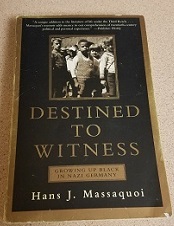 On January 19, 2013, Hans J. Massaquoi, the former editor of Ebony magazine and writer for Jet magazine, died at his home in Jacksonville, Florida at the age of
  FREETHINKING BIBLIOPHILE
You must be logged in to post a comment.