Fire in the Lake: The Vietnamese and the Americans in Vietnam -Frances Fitzgerald

Last summer at a family cookout, I noticed my uncle who had served in the Vietnam War, wearing a baseball cap which indicated that he was a veteran of the conflict. It was the first time I had seen him wear anything connected to Vietnam or the military. As I watched him, I asked myself why it took so long for Vietnam veterans to find acceptance and peace. He is from a generation which fought in a deeply unpopular war that saw America fall short of its stated goal. The official policy was to help South Vietnam withstand communism and survive as its own democratic republic but the reality on the ground was far more complicated. The truth about South Vietnam is a bitter pill to swallow but necessary in understanding the failures which took place. Author and Pulitzer Prize winner Frances Fitzgerald originally wrote this book in 1971 and it was published in 1972, three years before the conflict’s end. But contained in its pages is an insightful discussion about Vietnamese history, French colonialism, and America’s entry into Indochina. And having finished the book, I can say with certainty that it is one the best books I have ever read about the war in Vietnam. 

Fitzgerald did not serve in the military and the book is not written from a soldier’s point of view. Her focus is on South Vietnam, particularly the instability of its government and the complex social structure in Vietnam which western minds struggled to understand. The book excels is explaining how and why the Vietnamese lived as they did. These lessons seemed to have been lost to officials as the conflict heated up. Readers do not need prior knowledge of the war to find value in this book. In fact, no prior knowledge is needed. Fitzgerald covers the country’s history, the French occupation, and the buildup to American intervention. Her narrative is smooth and flows  beautifully, which makes the book easy to read and engaging from start to finish. 

I have read and reviewed several books on Vietnam, each with its own approach to the war. But the book I found to be the closest in comparison to this discussion by Fitzgerald is Fredrik Logevall’s ‘Embers of War: The Fall of an Empire and the Making of America’s Vietnam‘, which I strongly recommend for anyone interested in the war’s history. However, I believe Fitzgerald’s account in regard to South Vietnam is absolute gold. And the nexus of President Ngo Dinh Diem (1901-1963), brother Ngo Dinh Nhu (1910-1963) and sister-in-law Madame Nhu (Trần Lệ Xuân)(1924-2011) is explored thoroughly in one of the most thorough explanations I have read.  This trifecta of power would affect Vietnam in many ways and haunt the American effort in the years that followed their removal from power in 1963. But this was no secret in Washington as we see in the book. Readers may also want to take a look at the book by former Secretary of Defense Robert S. McNamara (1916-2009) ‘In Retrospect: The Tragedy and Lessons of Vietnam‘, which is a fair analysis of the failures by officials in handling the conflict. McNamara is seen as a villain by some, and the war’s chief architect by others. His role and errors are discussions for another time, but his book is still a valuable source of information. 

Prior to American troops landing in Vietnam, warnings had been issued by both foreign governments and the United States intelligence apparatus. A young and well-traveled senator from Massachusetts named John F. Kennedy (1917-1963) was convinced that a war in Indochina was a disaster, but he would be forced to confront the matter himself when he was elected to the presidency in 1960. But despite numerous warnings, the stage was set in the wake of the Gulf of Tonkin incident in August 1964. President Lyndon B. Johnson (1908-1973) asked for and received congressional authority to use military force in Vietnam.  In four years, the war became an “albatross” around his neck and played a significant role in his decision not to seek or accept the Democratic nomination for the 1968 presidential election. In Vietnam, American military commanders continued to face an enemy encouraged by deception and a mindset that seemed inexplicable to the west. And added to the mix is the National Liberation Front (“NLF”) whose goal was to remove the Diem regime from power and seek reunification with North Vietnam. As I read, I found my view of the conflict changing as I understood more about the NLF and the dislike of the Diem regime. Further, the author highlights the degradation of Vietnamese society due to its American occupiers. This part of the book may be difficult for some to accept, but what the author discusses is crucial in understanding why South Vietnam could never stand on its own. 

As the war rages on, American officials and military commanders are forced to accept uncomfortable truths. Publicly, the belief in American victory remained strong, but behind closed doors, Washington knew that the war was not going as planned and victory not as certain as one would believe. And the Tet Offensive in January 1968, was a sobering wake up call for anyone who assumed the war would be over soon. Fitzgerald discusses the offensive and its impact here as well, and she also pulls no punches regarding American atrocities in Vietnam. The war had turned Indochina into hell, and she drives home the point that instead of liberating South Vietnam, America flipped it upside down in ways which officials had not anticipated. The Vietnamese people had their lives upended for a cause which many of them had no strong feeling in support of.

Following Johnson’s decision not to see re-election in 1968, a new president arrives and inherits the war in Vietnam. The administration of Richard M. Nixon (1913-1994) would have its own difficulties with the raging infernor which he pledged to bring to an end. But he would soon find out that doing so was far more difficult than that implied. The war’s expansion into neighboring Cambodia set off alarm bells and revealed the uncomfortable truth that the nightmare in Vietnam was far from over. The heartbreaking saga plays out in the book but ends in 1971 when Fitzgerald finishes her analysis. Hauntingly, her words proved to be prophetic and the departure of American forces in 1975 was confirmation that without permanent U.S. involvement, reunification was bound to happen. 

After I finished the book, I sat silently for a few minutes thinking about the war and its many casualties. I thought of my uncle who carries scars from the war, both physically and mentally. In a rare moment of admission, he once told me that people asked him why he had answered his draft call. He never wanted to go to Vietnam but did not have the money or connections to avoid being called to serve. So, he took his draft card and arrived at his assigned location. And several months later, he found himself three thousand miles away in a country he had never seen to fight in a war he wanted no part of. And that is the story of many Vietnam veterans who are still with us today. I can only hope that they receive the acknowledgment and acceptance they have not always been given. If you are a student of the Vietnam War, you will appreciate this book. 

ASIN ‏ : ‎ B0028MM2MM
Publisher ‏ : ‎ Little, Brown and Company (May 5, 2009)
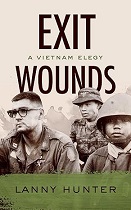
 

Exit Wounds: A Vietnam Elegy – Lanny Hunter

HunterOn October 19, 1965, North Vietnamese soldiers fortified their positions surrounding the Plei Me camp located twenty-five miles south of Pleiku City. Before nightfall, the soldiers launched the first major offensive of the Vietnam War, a conflict that lasted ten years and deeply divided two countries. One of the soldiers who fought and survived the battle is Lanny Hunter, a former medical officer in the United States Army Special Forces. This is the story of his military service, the offensive at Plei Me, and his return to Vietnam in 1997 to locate Y-Kre Mlo, a Montagnard interpreter who remained in Vietnam following America’s withdrawal.  
Hunter’s book does not follow the traditional autobiography format. Instead, we shift gears between current-day return to Vietnam and his memories of from the war. This approach gives the book an enhanced feeling of authenticity as we follow his journey back to Vietnam in two different time periods full of memories that will last a lifetime. Other veterans have returned to Vietnam in search of closing, internal peace, and other personal reasons. One book I recommend is ‘Goodbye Vietnam‘ by William Broyles in which the author examines his service in the war and where America went wrong. Hunter had no desire to return but a message helps to change his mind, and he soon boards a Boeing 747 bound for Ho Chi Minh City (formerly Saigon). By his own admission, he had a range of emotions returning to Indochina and as we see in the story, the combatreflexes were dormant but still present. However, he soon begins to adjust to a new Vietnam free of NVA soliders, landmines and other horrors of war. And when he reunites with Y-Kre, the story takes on a sentimental tone that remains until the end.  

The siege at Plei Me takes center stage, and Hunter revisits the battle through his role as a medic.  His descriptions of battlefield wounds and deaths are not to be taken lightly and emphasize the severity of warfare. As he treats the injured soldiers, his medical training kicks into high gear but there are  also occasions in the story where his combat training was needed. While doing his best to survive the siege, Hunter is seriously injured but mends his wounds and ensured that he remained in country to continue his role as a medic. His service in Vietnam was not solely centered around Plei Me, and there are other stories in the book of his actions as a doctor, including treatment of sexually transmitted diseases and wounds inflicted during drunken fights between “allies”. The anecdotes are interesting and provide more context for the ugliness of war. 

During his return visit, he eventually finds Y-Kre, and their reunion is heartwarming. And it was in this book that I learned more about the Montagnard people and their role in the Vietnam War. Y-Kre’s story of how Vietnam changed after the war is dark, and the way in which he and other Montagnard’s were abandoned by the United States Government is heartbreaking. He survived the war and its camps, but it took many years for him to recover both physically and mentally. Hunter also explains the war itself, including America’s escalating involvement into the conflict which originated when the French sought to reclaim its colonial possessions following World War II. But they underestimated the charismatic Ho Chi Minh (Ngyuen Sinh Cung)(1890-1969), North Vietnam’s first leader and the father figure in the war for independence. Hunter provides his perspective as a soldier trapped in a war doomed from the start through this statement which is a sobering truth:  

“Well-versed in Cold War facts and steeped in Cold War rhetoric, I was ignorant of Vietnam’s long, complex history. In this, I was little different from my government, its military leaders, and my commander in chief. The United States had overlooked the first rule of war: “Know your enemy.”

Ho Chi Minh was a complex figure, but he was not anti-American. In fact, he had lived outside of Vietnam for thirty years before returning to the nation of his birth in 1941. And one of his places of residency was my hometown of New York City. Following Japan’s defeat in World War II, Vietnam began to see itself in a different light and Ho recognized that America’s recognition of their government was critical to success. As Hunter explains here again: 

“Between August 1945 and February 1947, Hồ sent the American government eleven diplomatic communiqués pleading for an interest in the plight of the Vietnamese and, in particular, for protection from the French. Neither Truman, nor the State Department, acknowledged a single communication. Instead, America supported France in her effort to retain her colonial empire.” 

The die had been cast and in August 1964, incidents and alleged incidents in the Gulf of Tonkin provided the spark that catapulted America into Vietnam. As Hunter’s tour continued, he came to know the enemy composed of men such as himself. They were husbands, sons, cousins, and fathers determined to defend their country against imperialism by any means necessary. American military leaders struggled to understand this but infantry soldiers and officers who paid attention to the North Vietnamese came to learned their resolve and developed a form of respect for their opponents’ tenacity and dedication. And when he later returns to Vietnam, Hunter encounters former officers who have fought their own personal battles to put the war behind them and find peace in their lives. As I read the story, I could see the author’s challenges in facing men who fought against America on the battlefield thirty years prior. Regardless of which side troops were on, the horrors of war remained and Hunter opens up about his own issues with a condition once deeply misunderstood. 

When my uncle returned from Vietnam, he had to readjust to the world as my father has explained. While aboard the aircraft returning to the United States, senior officers instructed the troops to take off their uniforms before entering the terminal due to anti-war protestors and demonstrations. Taking off one’s uniform is simple but confronting Post-Traumatic Stress Disorder (“PTSD”) is not. Hunter is not immune to it and discusses his acceptance of the condition and the effects of war on those who survive. Sadly, other veterans died before being able to heal and took to their graves, memories that haunted them night after night. As part of the healing process, the author visits the Vietnam War Memorial in Washington, D.C. and finds the names of the men whom he knew during his time in country. Through his words, their memories and sacrifices live on. 

After making his rounds in Vietnam and making peace with the past, Hunter returns to the United States but there is still more to the story. The war will always be with him. To help with this, the veterans have  meetups the veterans have where they re-live their shared experiences and how the war changed each one of them. The snippets of conversation highlight the immense bond formed by men in combat. It is unbreakable and life long. Hunter’s recollections about the friendships between the men is a fitting end to a story about the Vietnam War that is sure to keep you intrigued from beginning to end. Highly recommended.

ASIN ‏ : ‎ B0C1QNBLZ5
Publisher ‏ : ‎ Blackstone Publishing (October 10, 2023)

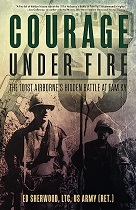
Courage Under Fire: The 101st Airborne’s Hidden Battle at Tam Ky – Ed Sherwood, LTC, U.S. Army (Ret.)

SherwoodIn August 1987, RKO Studio Pictures released ‘Hamburger Hill‘, a Vietnam War era film that recreated “Operation Apache Snow” (May 10, 1969 – June 7, 1969) and focused on the battle on Hill 937 in the A Shau valley known by infantrymen as the “Valley of Death”. The film is gritty, the deaths are gory and by the movie’s conclusion, the concept that war is hell on earth is firmly implanted in the viewer’s mind. However, viewers may not know that there was a second battle being waged at the same time on Hill 367 near Tam Ky. But this mission was called “Operation Lamar Plain” (May 15, 1969 – August 14, 1969) and remained hidden from the public for over fifty years. Lt. Ed Sherwood (Ret.) served in the 101st Airborne Division known as the “Screaming Eagles”, and experienced combat firsthand. And though he was evacuated before the battle’s conclusion due to a significant wound, he made it a goal to set the record straight regarding the battle no one back in America discussed.
As I began the story, I could not help but feel surprised that this battle is absent from books and films on the Vietnam War. In fact, I have watched Ken Burns’ docuseries ‘The Vietnam War‘ and do not recall anything focusing on Operation Lamar Plain or the troops who fought on Hill 367. I found it hard to believe that no one had heard of this battle. I soon learned that was not the case at all, and Sherwood explains towards the end of the book exactly why the public did not learn of the second operation taking place in the Valley of Death. The events on Hamburger Hill are discussed early in the book and Sherwood clears up any confusion that his book is about that battle. But more importantly, he also explains why the A Shau valley was so critical to both sides. It was an essential part of the Ho Chih Minh trail, an extensive network of pathways, routes and tunnels used by the NVA to move supplies. American military commanders know that the trail is critical to NVA operations and any effort to defeat North Vietnam must include destruction or seizure of the supply network. But the Vietnamese were not going away without a fight. And both sides know that a deadly battle lurks in the distance. But before we reach that point, there are other things taking place on the American side, explained by Sherwood as to why the rotation of personnel could be dangerous.

Eventually, Operation Lamar Plain arrives and two men stand out as the soldiers whose actions will help decide the fate of the battle. Captain Leland Roy and Lt. Paul Wharton. Their stories are surreal and a testament to the courage and commitment both men had to their unit and their mission. Sadly, there were significantly casualties suffered the 101st as the battle raged. Sherwood takes us through each day in chronological order with a listing of those killed or missing in action, and those awarded for their actions on the battlefield. I could not help but notice that the average ages of troops were between 19 and 22 years of age. I was disturbed at knowing some of those young men were not old enough to buy a drink in bar but were commander soldiers in life and death situations. And even darker, some of those same men, went to Vietnam and did come back alive. The subject of death and how it is managed is also discussed and there are no words to describe it. Rather, Sherwood sums it up perfectly as a former infantryman. As we learn in the book, the troops did not see themselves as heroes, they simply wanted to do their job and come home alive and in one piece.

Before I continue, I want to pay homage to a woman whose name I did not know before reading this book. She was Lt. Sharon Ann Lane (1943-1969) who was the only female servicewoman killed during combat in the Vietnam War. The circumstances surrounding her death are contained in the book and I also found myself in shock that I had never heard of her death in Vietnam related material.

As the time moves by, Sherwood also includes a list of things taking place back in America or “the world” as troops call it. It is nostalgic and older readers will have vivid memories of that era. But that nostalgia fades quickly as a new day begins and more blood is spilled. But I also noticed the discipline in which troops operated highlighting the necessity for teamwork and precision planning to be an effective combat unit. The men are tired, hungry, and scared but they continue to fight and eventually, the NVA breaks formation on Hill 367. The tide of the battle changes but the physical and mental scars will remain for the troops in the 101st on Hill 367. But if the battle was a success, why was it hidden? Well, Sherwood explains that:

“Once Operation Lamar Plain was successfully kept from the media, war protestors, and political adversaries, there was no benefit to the Military Assistance Command Vietnam, the Joint Chiefs of Staff, or the Nixon administration to disclose that a major battle with high casualties had been hidden from the American people.”

There are countless books, articles, and podcasts on why the American war effort in Vietnam failed in forcing Hanoi’s surrender. That is a discussion is for another time. Here, the focus is on the Hill 367 and the men who gave their lives in service of their country. Sherwood has captured their story for infinity in a book that should be included in all libraries containing material related to the Vietnam War. After finishing this book, I have an even higher level of respect and understanding for what soldiers experienced in Vietnam and why my uncle has rarely discussed that part of his life. Their memories are haunted by death, destruction, Post-Traumatic Stress Disorder (“PTSD”), exposure to Agent Orange and other dark aspects of armed conflict the public pays little attention to.  As Sherwood says, the next time you see a combat veteran, say “remember our fallen”.

“My greatest satisfaction in researching and writing Courage Under Fire was reconnecting over four decades later with veterans from my former 101st unit. Many have become close friends. Also important was finally letting the veterans of Tam Ky (and their families) learn of the battle they valiantly fought so long ago. ” – Lt. Ed Sherwood (Ret.) 

ASIN‏: B0916J8PHV

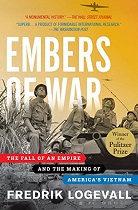
Embers of War: The Fall of an Empire and the Making of America’s Vietnam – Fredrik Logevall

LoevallOur resistance will be long and painful, but whatever the sacrifices, however long the struggle, we shall fight to the end, until Vietnam is fully independent and reunified. ” – Ho Chih Minh (1890-1969)
On March 29, 1973, the last American military unit left Vietnam as the war between the United States and North Vietnamese army moved towards its dramatic conclusion. For the first time, America had failed to reach its objective and suffered over fifty-eight thousand casualties. Vietnamese losses were counted at over two million and the nation also faced the challenging task of rebuilding its cities and villages. Millions of veterans on both sides faced a difficult journey as they rebuilt their lives upon return to civilian life. Ho Chih Minh, who died before the war’s conclusion, was vindicated in his belief that Vietnam would one day be reunited. In retrospect, we are faced with the question, why did the Vietnam War take place? Fredrik Logevall, author of JFK: Coming of Age in the American Century (1917-1956), tells the story of the French defeat and how that loss shaped the future conflict between Washington and Hanoi.

Readers should be aware that this book is lengthy, with slightly over nine hundred pages of text. But contained within these pages is the story I should have learned in school. Regarding the Vietnam War, it is accepted that the conflict began with the events in the Gulf of Tonkin between August 2-4, 1965.  However, America’s role in Indochina has a long and complicated history as the author shows here. To set the stage, the author revisits World War II and the Allied effort. This is critical because that conflict changed the world and gave way to future wars in Korea and later Vietnam. The Japanese defeat left a power vacuum which Ho Chih Minh and the Indochinese Communist Party (“ICP”) capitalized on. The ICP was later dissolved in November 1945 after the founding of the Democratic Republic of North Vietnam.  France was alarmed at Hanoi’s actions and embarked on a campaign to reassert its influence over Indochina. Logevall brings the past roaring to life in this account that highlights the early success and the failures that resulted in defeat. But before we reach the conclusive battle at Dien Bien Phu, we must first understand how and why France failed to recapture Vietnam in the First Indochina War (1946-1954).

The story as told by Logevall is filled with critical recreations of the moments that shaped French policy for better and worse. And as the story develops, it becomes clear that the Vietnamese would seek independence at all costs. There were those in France determined to see Ho Chih Minh fail and were willing to look past the ideology that filled the hearts and minds of the Vietnamese.  Curiously, Washington was also watching Indochina closely without taking any direct action. Agents of the Office of Strategic Services (“OSS”) were aware of the doom Vietnam spelled for any country who entered militarily. One of its operatives, A. Peter Dewey (1916-1945), whose story is told here, became an early casualty in a bitter struggle between Western Democracy and Eastern Communist beliefs. Dewey saw the writing on the wall and attempted to sound the alarm. Another OSS officer, Archimedes Patti (1913-1998), also sounded the alarm and takes a significant step in alerting Washington that may have changed history had it been responded to. As I read the story, I could see that experienced officers and politicians knew that Vietnam was a disaster, and the French were going to fail. One of these people was a young politician named John F. Kennedy (1917-1963) who later as president, inherited the Indochina problem from his predecessor Dwight D. Eisenhower (1890-1969). Kennedy appears sporadically throughout the book, and before he is elected to office in 1960.  Eisenhower receives more of the spotlight after taking reigns from Harry S. Truman (1884-1972) whose stance of Indochina remains firmly in place long after his departure early in the story.

As the French and Vietnamese engage in heavy combat, Washington chooses it side and throws it support behind the French. However, the involvement of the United States remains limited and a premonition of how the later battle between American personnel and North Vietnam played out. But the French do have success in the book which had the North Vietnamese on the defensive. The battlefield scenes are on display and the author takes us through them as history plays itself out before the reader’s eyes.  But what the French did not expect is the assistance to Ho Chih Minh by the man who is credited with the French defeat: Võ Nguyên Giáp (1911-2013).  The role of this strategist deeply trusted by Ho Chih Minh should not be overlooked.  His decisions and actions helped to seal France’s fate and the incredible story is told in all the dramatic detail by Logevall who has a knack for adding the right amount of suspense as the story flows. And like the first volume of his biography of Kennedy, the story here flows easily as well, and kept me engaged from start to finish.

It is imperative to keep in mind that the events taking place in the book occur over a period of nine years from 1946 to 1954.  A swift defeat did not happen for reasons explained by the author and the turning tide of French opinion towards Vietnam should have raised alarm bells everywhere including in Washington.  But the truth is that Vietnam was an extension of the Cold War and the obsession with Communist expansion.  The Soviet Union and Chinese Communist Party are also part of the story, and the Korean War is addressed. But despite fears, neither country entered the conflict to fight the French. But they did provide support for North Vietnam in other ways. In the South, the situation is far from ideal, and this is another aspect of the Vietnam War that is critical to the debacle that ensued. Throughout the story, it is apparent to scores of people that South Vietnam lacked a stable government. The decision to install Ngo Dinh Diem (1901-1963) and his brother as the leaders of South Vietnam was doomed from the start and the tense relationship between Diem and Washington never reached a level where he could completely rely on Washington. And nor did Washington have unwavering faith in the brothers who held on to power only through America’s support. Readers may be wondering how those in power missed so many signs that showed Vietnam would be a terrible mistake. There are reasons not discussed in the book, but the short answer is profit and horrible foreign policy. Even as French losses mounted, Washington continued to increase spending. But it was not enough to stop the final French defeat at Dien Bien Phu in 1954. Two years later in 1956, the last French troops withdrew ending France’s involvement with its former possession. But the story was far from over. Ho Chih Minh and his administration had succeeded in removing the French, but they knew that America was lurking in the distance. During his exit speech, Eisenhower warned of the military industrial complex. Vietnam was undoubtedly on his mind. Detractors will point out that he did not stop or reverse involvement of the United States. Between 1954 and 1964 tensions continued to mount and unification remained the goal of the North. Diem became increasingly unpopular in the South, setting the stage for the Second Indochina War (1955-1795).

The actions by Diem are shocking and horrifying and will cause readers to recoil in shock. Opposition continued to grow, and the warning signs were plenty that the Diem regime would collapse at some point in time. But he continued to receive support even as it became clear that the South could not stand on its own. Communist infiltration and disgruntled factions in the South had increased the threat around the Diem regime.  Nevertheless, Washington had committed to supporting Diem based on the “Domino Theory” which never did pan out. The paranoia about communist expansion applied blinders to the eyes of policy makers and it was decided that Vietnam could not fall. However, they failed to see that the fall had already taken place and the North Vietnamese Army would never surrender. By the time Washington understood this, thousands of American troops died on battlefields across Vietnam and unrest at home plagued two presidents to whom Vietnam became a source of embarrassment and consternation.  America eventually did get out of Vietnam but with damage done to its reputation and generations of people both domestic and abroad scarred for life with memories of warfare. The French experience had provided the necessary blueprint, but it is true that those who do not study their history are doomed to repeat it. This is the story of the French defeat in Vietnam and the beginning of America’s involvement in the most unpopular war it has ever fought. Highly recommended.

ASIN:‎ B007EED4P8

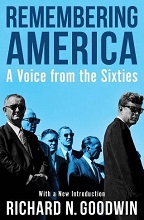
Remembering America: A Voice from the Sixties – Richard N. Goodwin

GoodwinOn more than one occasion my father has commented that the 1960s was the scariest decade of his life.  The threat of Nuclear War, increasing tensions in Southeast Asia and the growing Civil Rights Movement captivated American society and the world.  During one conversation he turned and said to me “at the time of the Cuban Missile Crisis, we didn’t know if we would live to see tomorrow or die in a nuclear exchange with the Soviet Union”.  The assassinations of several activists and politicians spread fear across the nation and to many, it seemed as if America was on the verge of total anarchy.  Richard N. Goodwin (1931-2018) worked in the administrations of Presidents John F. Kennedy (1917-1963) and Lyndon B. Johnson (1908-1973) and helped draft some of the most memorable speeches given by the iconic figures.  In 1988 he completed this memoir which was re-published in 2014, of the decade he spent in politics with two presidents and two presidential candidates.  And the result is a spellbinding account of a critical time in American history during which the country underwent profound heartache and change.
Goodwin’s account is in part an autobiography in which he revisits his upbringing as part of a Jewish family in the City of Boston and State of Maryland.   His exposure to racism came early as anti-Semitism reared its ugly head in the Old-Line State.  In stark contrast to his comfortable existence in Boston, Maryland would help shape Goodwin’s views that would remain with him throughout his life.  Age and opportunity is on his side and he is blessed with the fortune of working for former Associate Justice of the Supreme Court of the United States, Felix Frankfurter (1882-1965).  The experience further sharpened Goodwin’s legal and writing skills which later became highly valued and sought after.   As 1960 approached, President Dwight Eisenhower (1890-1969) focused on the remainder of his term and the upcoming election that would determine his successor.  All eyes were on the two candidates engaged in battle for the White House: John F. Kennedy (1917-1963) and Richard M. Nixon (1913-1994).   The Vice-President at the time, Nixon,  represented all that Goodwin opposed and he had come to like and admire Kennedy who won the election with one of the slimmest margins in history.  The young Irish-Catholic president soon embarked on a mission to change America and usher in “the New Frontier”.   Goodwin became a clutch player and Kennedy’s point man on Latin American affairs.  Some readers will recall that it was Goodwin who met and conversed with famed revolutionary Ernesto “Che” Guevara de la Serna (1928-1967).  Excerpts of their discussion are transcribed, and the dialogue is interesting for it shows the missed opportunity by Washington to understand the Cuban point of view.   As the story progresses, the two develop a mutual respect and upon learning of Guevara’s death years later, the author laments:

“And I like to think that I would have done what little I could to prevent Guevara’s execution. We were both trapped in the contending forces of a world we had not made; passionate adversaries in the struggle to control the future. Yet I liked the man. He had humor and courage, intellectual gifts and an unmistakable tenderness of spirit. I understood that he also contained ruthlessness, self-defeating stubbornness, and a hatred strong enough to cripple the possibilities of practical action. It is the paradox of the revolutionary that such divergent feelings must coexist in the same man.” 

Cuba proved to be the biggest test of Kennedy’s career in 1961 and again in 1962.  Goodwin takes us behind the scenes to witness the key events from another angle and observe the inner workings of the administration as it grappled with one crisis after another.  His proximity to Kennedy allowed him to make some keen observations about the president and behind the cool public image was was another side to John F. Kennedy.  I can only say that Bobby was not the only Kennedy with a temper.  The actions and reactions by Kennedy shed light on the frustrations of running an administration that struggled to stay in cohesion.  After each debacle Kennedy did shuffle around his cabinet and had become wise to game being played by figures loyal to the establishment.  And Goodwin does not hold back regarding his issues with speechwriter Ted Sorenson (1928-2010).   However, there is no gossip here but only what Goodwin witnessed and knew for certain.  And it is because of this streamlined focus that the story moves forward as fluidly as it does.  Over time, the Kennedy Administration began to fire on all cylinders and the seasoned president began to tighten his grip over Washington.  But with every story about Kennedy’s time in office, there is always the elephant in the room and his trip to Dallas soon approaches.  Goodwin was not with Kennedy that day and can only revisit how he learned of the assassination and the events that took place later that day in Washington.  There is no smoking gun about the crime or conspiracy theories about what happened that day.  Kennedy’s death affected Goodwin deeply and he grieved with millions of Americans.  John F. Kennedy was dead but far from forgotten.  Although his time in office was short he had set into motion a chain of events.  Goodwin is far more eloquent than I and this statement explain’s Kennedy’s importance:

“John Kennedy was not the sixties. But he fueled the smoldering embers, and, for a brief while, was the exemplar who led others to discover their own strength and resurgent energy; their own passion, love, and capacity for hate.”

America had begun the process to give John Kennedy a proper send-off while adjusting to a new leader in the White House. In just a few years, Lyndon B. Johnson would change America in ways no one thought possible. Goodwin had left Washington but soon receives a call from Johnson himself who uses his trademark influence to coerce Goodwin into joining the team.  He accepts and begins to draft statements that Johnson would use to increase his popularity and push legislation through the Senate. The passage of the Civil Rights Bill was a monumental feat but like a master puppeteer, Johnson knew which strings to pull to accomplish the unthinkable.  On July 2, 1964, the bill became reality as Johnson signed it into law and a year later he signed the Voting Rights Act.  Further, he also begun to initiate programs that were part of his vision for American that he famously labeled the “Great Society”.  But a little country in Southeast Asia would change all of that and seal his fate in 1968.  Goodwin was a firsthand witness to the rise and fall of Johnson and sums up the tragic figure he becomes as follows:

“For in the single year of 1965 — exactly one hundred years after Appomattox — Lyndon Johnson reached the height of his leadership and set in motion the process of decline.” 

In 1954, the French military suffered a humiliating defeat at Dien Bien Phu in Vietnam and soon withdrew their forces from Indochina.  The staggering amount of U.S. financial aid was not enough to turn the tide against the North Vietnamese Army and the movement spearheaded by Ho Chi Minh (1890-1969) known affectionately as “Uncle Ho”. Followin the Geneva Accords, the country was divided into a Communist North Vietnam and Democratic South Vietnam.  Washington continued to eye Hanoi with suspicion and tensions regrettably began to simmer.  Things came to a head in August 1964 as U.S. patrol ships traveling through the Gulf of Tonkin encountered North Vietnamese patrol boats. The events of August 2 and August 4 are still subject to examination, but Johnson used them as a pretext for Congressional approval to escalate the growing war in Vietnam.  Initially, public support is behind Johnson and the fear of the “Domino Theory” combined with misleading intelligence reports resulted in increasing numbers of U.S. troops arriving in Vietnam.  But as we see in the book, the truth about Vietnam could not be hidden forever and became increasingly clear and more disturbing as the war dragged on.  On an interesting note, there were many figures who strongly opposed the war, including Kennedy himself who was highly aware of the dangers of a war.  Goodwin revisits this earlier statement by Kennedy who was still senator at the time and several years away from the throne in Washington:

“No amount of American military assistance in Indochina,” said Senator John Kennedy in April of 1954, “can conquer an enemy which is everywhere and at the same time nowhere, ‘an enemy of the people’ which has the sympathy and covert support of the people.”

As 1965 progresses, Lyndon Johnson’s fall from grace begins to accelerate.  Goodwin recalls the series of events that transpire as Vietnam becomes a dark cloud over Washington and the Civil Rights Movement gains momentum.  Although the book is not a biography of Johnson, Goodwin captures the multiple sides of of him perfectly.  And what we see is man self-destructing one step at at time due to a war he cannot end and a country turning against him.  Paranoia soon takes hold and his final descent into madness begins.  Everyone becomes a suspect and unworthy of his confidence and trust. Goodwin would also become the target of his wrath and be accused of being one of those “Kennedy people”.  A sad reality is that throughout his presidency, Johnson struggled with Kennedy’s legacy and never ceased to believe that “they” were out to get him along with the “liberals”.  The revelations by Goodwin are simply mind-boggling and as I read the story, I believe that had Johnson not stepped down, it is possible that a commission might have been formed to study his behavior.  He was clearly losing touch with reality and perhaps the entrance of Robert F. “Bobby” Kennedy (1925-1968) into the 1968 election saved Johnson from himself.

After departing from Johnson’s administration and publicly voicing opposition to the war, Goodwin became public enemy number in Johnson’s eyes.  The continuing war and domestic turmoil became too much for Goodwin to accept and he begins to work for presidential candidate and Senator Eugene McCarthy (1916-2005) who sought to capture the Democratic nomination for president.  Upon his arrival at the McCarthy campaign headquarters, he soon finds that there is much work to be done. But Goodwin is a seasoned professional and soon helps to transform the campaign into a well-oiled machine. However, the looming threat of a Kennedy campaign is never far away and after the New Hampshire primary, Bobby formally announces his candidacy.  Goodwin is now placed in a difficult position and must make a decision between McCarthy and Kennedy, with whom he had become remarkably close friends. The saga and its aftermath are thoroughly explained by the author whose observations about politics are some of the sharpest I have ever seen.  And Goodwin was correct in his belief that McCarthy was a great candidate, but Bobby was presidential.  As Kenedy’s campaign kicks off, the author witnesses a transformation of the Senator from New York.  Bobby was reinventing himself and challenging any notion that he was not fit for president. In one gripping scene, Goodwin recalls this experience that shows the passion for America that served as the basis for Kennedy’s actions:

“Kennedy asked, “How many of you left school or good jobs to work in the McCarthy campaign?” Almost every hand went up. “How many of you are going to stick with it to the end, even if it goes all the way to November?” Again, nearly all the hands were raised. “I know some of you might not like me,” Kennedy continued, “think I just jumped in to take your victory away. Well, that’s not quite the way I see it. But it doesn’t matter what you think of me. I want you to know that you make me proud to be an American. You’ve done a wonderful thing. I’m only sorry we couldn’t have done it together.” With that Kennedy got up to leave, and, as we began to start down the street, he turned and waved. Every person on the steps waved back.” 

Readers who are interested in Kenney’s campaign will thoroughly enjoy David Halberstam’s (1937-2007) The Unfinished Odyssey of Robert F. Kennedy which shows the incredible change in the candidate as the race for Washington heated up.  Like Jack Kennedy, we know that Bobby’s tragic destiny awaits, and I steeled myself as it approached.  Kennedy is riding the wave of popularity and arrives in Los Angeles determined to win California.  He won the state but was shot and mortally wounded after his acceptance speech. Doctors performed emergency surgery but the wounds to Kennedy had proved to be too devastating and ruled out any chance of survival. Goodwin goes in to see his friend for the last time and his description of Kennedy’s final moments in the hospital bring the story to a melancholy conclusion.

When I finally put the book down, I felt as if I had just taken a ride for the ages.  This is an incredible story about pivotal moments in America’s story that continue to play themselves out.  Many years have passed since Robert and John Kennedy were murdered but their messages and the issues they fought for and against are still with us. However, the past is always prologue and I do believe America can and will make great strides.  Goodwin was also a believer in America and in looking back at that decade of the 1960s, he provides the following quote that confirms his optimism:

“We cannot, of course, go back to the sixties. Nor should we try. The world is different now. Yet, two decades have passed since that infinitely horrifying day in Los Angeles which closes this book. And a new generation is emerging. They can pick up the discarded instruments and resume the great experiment which is America. There is no question of capacity, only of will.”  – Richard N. Goodwin 

ASIN : B00L8FBEWO

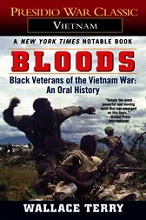
Bloods: Black Veterans of the Vietnam War: An Oral History – Wallace Terry

bloodsThe last time I saw my Uncle William in person, we discussed his time in Vietnam and later discharge from the military in the 1960s.  During a routine physical, it was discovered that he had suffered damage to hearing in one of his ears due to being too close to the 50-caliber machine gun while on patrol.  As a result, his balance and coordination began to suffer, and he was declared not fit for active duty.  He accepted the discharge and found work with the postal service before moving on to the private sector. Over the years he has only talked about Vietnam on a handful of occasions and the stories were typically very brief.  He never went into too much detail but there are couple of stories that made the hair stand up on the back of my neck. His experiences are like those of other black veterans of the Vietnam War whose struggles have not received the full attention that they undoubtedly deserve.  Wallace Terry (1938-2003) was a journalist and oral historian who conducted interviews with dozens of veterans and chose twenty of them which are the focus of this book.  It is a detailed look at the life of black soldiers in a war that remains a dark memory in American history. 
Today when we look back at Vietnam, we can clearly see how and why multiple administrations made miscalculations in their approaches to Indochina. Washington never seemed to have clear objective and the threat of communist expansion never materialized into the global threat that the west had long feared. In fact, the story of Vietnam is an example of paranoia and ego, both of which led to the deaths of more than 58,000 American soldiers and over one million Vietnamese deaths. Had Vietnam been a “conventional” war, the attack would have been focused directly on Hanoi with swift and brutal assault. But American military forces found themselves constricted in what was permitted as the People’s Army of Vietnam (“NVA”) and National Liberation Front of Southern Vietnam or FNL (“Viet Cong”) stepped up attacks on American forces. Washington wanted to end a war that was not supposed to be a war. And as one vet in the book puts it:

I come to realize really that the purpose of the war was something more than any of the men who were fighting realized at the time. It was like a power play. And the people in charge kept getting overcommitted, overextended, and just didn’t know how to pull out. No matter how patriotic we was fighting it, we was like cannon fodder. And I will always be thinkin’ that way until the government shows me how we benefited from it.”

Specialist 4 Haywood T. “The Kid” Kirkland (Ari Sesu Merretazon) Washington, D.C. Recoilless Rifleman 25th Infantry Division 4th Infantry Division U.S. Army Duc Pho May 1967–April 1968

The veterans are frank in their assessment of the war. And Terry does not intervene in the book but gave the veterans a platform to speak their minds. Some of the stories are nothing short of horrific and I warn readers sensitive to descriptions of violence to use discretion. Most of the veterans came home still physically intact but some were not so lucky. They suffered devastating or life long injuries that constantly reminded them of Vietnam. While reading the book I thought of the late Ronald Stinson of Brooklyn, New York, who was a family friend for many years and a Vietnam veteran. Ron, as we called him, had suffered a shrapnel wound to the face and always kept tissues on hand because his left eye constantly teared up many years after serving. He had a personality that we all loved and even many years later, his death still hurts. All of the veterans in the book paid a heavy price either physically or mentally and, in some cases, both. I found this quote to be a direct and accurate summation of the black experience in Vietnam:

“I don’t think you can call Vietnam a success story for the young blacks who served there. A few stayed in service and did very well. But those who experienced the racism in a war we lost wear a scar. Vietnam left a scar on them that won’t go away. The black soldier paid a special price.” 

Lieutenant Commander William S. Norman Norfolk, Virginia Airborne Controller U.S.S. Ranger November 1963–May 1964 Airborne Controller U.S.S. Coral Sea January 1965–July 1965 Combat Warfare Officer Commander, Carrier Division 3 September 1969–June 1970 U.S. Navy Yankee Station South China Sea

Readers will be searching the elephant in the room and the soldiers do discuss race and how it played a part of their experience. At a time when the Civil Rights Movement was in high gear and the reality of the war began to hit home, it was inevitable that the soldiers would have to contend with it as they tried to stay alive in a war that none of them wanted. And even when they left Vietnam, they face another war at home just to be accepted as human beings and not to be judged on account of their dark skin. Their experiences are a double tragedy of the Vietnam War.

As I read through the account of Haywood Kirkland, I jumped in my seat. Readers who have seen the Hughes Brothers’ film Dead Presidents will instantly recognize where the filmmakers got their inspiration. In fact, the movie is based on the book itself, but Kirkland’s account is clearly the basis for the fictional “Anthony Curtis” played by actor Lorenz Tate. The film is done well although it the levels of profanity and violence are high. However, it does capture the frustration of many black veterans returning home to America after the war. However, while in country, the stakes were high, and blacks knew they had to have each other’s backs as the ugliness of American society made its away more than thirteen thousand miles away as the Confederate Flag and outright hostility served to undercut the morale needed for a successful claim and the military’s claims of being ‘integrated”. As Terry explains:

“They spoke loudest against the discrimination they encountered on the battlefield in decorations, promotion and duty assignments. They chose not to overlook the racial insults, cross-burnings and Confederate flags of their white comrades. They called for unity among black brothers on the battlefield to protest these indignities and provide mutual support. And they called themselves “Bloods.”

Despite the racial tensions back at base, there are positive moments in the book through lifelong friendships formed between veterans of all backgrounds, some of whom had never seen a black of Hispanic person before being drafted into the military. And many veterans are clear to point out that whatever issues they had back at base fell to the side once out on patrol as they had to be a cohesive unit to survive each day. And over time, many came to respect each other through their performances on the battlefield and close living proximity.

There are dozens of books written about Vietnam and many films that showed the war from various perspectives. However, none come close to capturing the black experience as well as this book does. If you want to hear directly from black veterans of the Vietnam War and do not personally know anyone who served, this is the book for you. And even if you do know a black veteran who did serve in Vietnam, this book is a good source of information that will help you understand what that former soldier heard and saw during a conflict that haunts America to this day. 

ASIN : B00ATLA8JS


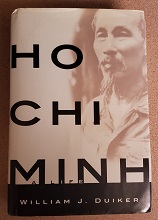
Ho Chih Minh: A Life – William Duiker

UncleHoOn April 30, 1975, the People’s Army of Vietnam and Viet Cong forces succeeded in the occupation of the city of Saigon in the wake of withdrawal by United States Armed Forces.  America’s departure marked the end of the Vietnam War and provided the Democratic Republic of North Vietnam with the opporunity to unify North and South Vietnam.  The final act of unification would have been welcomed by the first Prime Minister of North Vietnam Nyguen Ai Quoc who was known to the world as Ho Chih Minh (1890-1969).  Older Vietanemse sometimes refer to him as “Uncle Ho”, a benevolent figure who’s life as devoted to completely independence in Indochina from French and Chinese rule.   Ho Chih Minh has always come across as a slightly mysterious figure and some parts of his life are still unknown.  However, author William Duiker provides an informative and thought-provoking biography that explains Ho’s life and the true tragedy of the Vietnam War.
In 1976, Saigon was officially renamed Ho Chih Minh City in honor of Uncle Ho.  It was a fitting tribute to the man who truly believed in one Vietnam and made it his purpose to see it come to pass. But just who was the real Ho Chih Minh?  One adjective is surely not enough to describe this mysterious figures whom we learn about deeply in this biography.  The author has exhaustive researched the book and his recreation of the key events in Ho’s life during his evolution into a world leader provide the picture needed for readers to understand the thoughts behind his decisions and actions.

Familiarity with the Vietnamese language and/or Vietnamese history is not required but possession of either or one of them may result in the book becoming a more enjoyable read.  I found the story easy to follow and from the start, Ho’s intrigue is irresistable.  Some readers might be thrown off by the number of Vietnamese names in particular the name Nguyen which appears frequently in the first half of the book.  There are other names as well, including several used by Ho Chih Minh.  And the name by which he was internationally known has its own back story that the author makes sure to cover.

As I read through the book, I began to see that the key to understanding Ho Chih Minh undoubtedly begins in the 1920s and 1930s when France kept Indochina under strict rule.  The young revolutionary then known as Nyugen Ai Quoc, had determined from a young age that Vietnamese Independence was the only thing that matter.  After surrender in World War II, the Japanese military was forced to significant troops from previously occupied territory across Asia. The power vacuum created by Japanese withdrawal provided the opening needed for the August Revolution which changed history for good and set the stage for many battles to come.

Ho’s actions following the war and Washington’s responses or lack thereof are some of the most sobering moments in the book and instantly caused me to think of my uncle who served in the Vietnam War.  Anyone who has long sought to understand why the United States became involved in Vietnam will find this book enjoyable. At times I was speechless as I read and at one point back to understand how a war could have been prevented nearly 20 years before happening.  This part of the book is simply mind-blowing.   The battles within the U.S. State Department are just surreal and tragically, warnings given by those who foresaw a deadly war coming in the future, were largely ignored.  I do wonder what would have changed had North Vietnam and Washington been able to find common ground in the wake of World War II.  From the very start, Washington never seemed to fully grasp what it meant to be Vietnamese for Ho and other party members determined to resist the French and other nations committed to  colonial rule in Southeast Asia.

There are some parts of Ho’s life that show up on rare occasion in the story. In fact readers will notice the lack of several things typically found in a biography.  However,  Duiker does points out that Ho Chih Minh was a man of many secrets and some records have probably been lost for good. Perhaps that is by design or just unfortunate evens. The lack of romance in Ho’s life, particularlly after the August Revolution is certainly one of the more puzzling aspects of the story.  And even for the women that do enter his life, their time is brief for Ho has his mind set on Vietnamese independence at all costs.

The Vietnam War rightfully enters the story towards the end of the book. However, Duiker does not go off course and devote too much time to it.  I believe that was a good approach because by extensively discussing the war, it would have distracted from Ho’s personal story.  Further, Ho died in 1969, several years before the fighting ended. And in his later years, his duties had been adjusted by party members who were responsible for the American threat and the development of a new Vietnam.   Regardless, I believe that it is safe to say that there can be no discussion of modern day Vietnam with taking a long look at the life of Uncle Ho that stretched across several continents, included several spoken languages, arrests, questions of paternity and a battle against colonialism.  The Vietnamese movement for independence remains one of the most important struggles in world history and in the process, Ho Chih Minh went from radical student to a leader on the world stage.

ISBN-10: 0786863870
ISBN-13: 978-0786863877

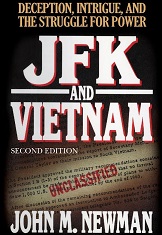
JFK & Vietnam: Deception, Intrigue, and the Struggle for Power – John M. Newman

Newman JFK Vietnam March 29, 2019, marked the forty-six anniversary of the departure of the last remaining United States troops in South Vietnam.  Two years after their departure,on April 30, 1975, Siagon fell to North Vietnamese forces as Hanoi tightened its grip around the country.  By the time the war ended, fifty-eight thousand American soldiers had lost their lives in Vietnam.  North Vietnamese Army and Viet Cong losses were estimated to be well over one million.  Civilian deaths were even higher in number but despite the large numbers of casualties, North Vietnam refused to surrender and was determined to achieve reunification.  The withdrawal of American troops was a sobering reality and cold hard truth:  the American effort in Southeast Asia had not succeeded.   To this day, there are many people who still wonder how and why the United States became entangled in Vietnam.   The defeat of French forces at Dien Bien Phu in 1954 should have served as a reminder that military might is not always a guarantee of success.  In January, 1960, President John F. Kennedy (1917-1963) took office and from the beginning of his administration until his death, the issue of Vietnam continued to fester like an open sore. Kennedy died before he could implement any further plans regarding Vietnam and took many secrets with him to his grave.  But declassified documents and political memoirs shed much light on what was really happening in his administration as it grappled to combat the growing Viet Cong menace.

Author John M. Newman is currently in the middle of a multi-volume set regarding Kennedy’s murder. I have reviewed three of them so far and eagerly await the publication of the next volume.  The books are incredible and the amount of information Newman provides is nothing short of staggering.  But as we see here, he a long time player in the game and in 1992, this masterpiece was released.  If you have seen the film ‘JFK’ by Oliver Stone, you will recall the scene where Jim Garrison (Kevin Costner) meets the character who calls himself “X” (Donald Sutherland).   What many viewers may not know is that Newman helped Stone create those scenes.  His research served as the basis for the dialogue between the two as X enlightens Garrison to many dark secrets surrounding Kennedy’s plans on Vietnam.  The scenes are moving but do not come close to telling the entire story.  This book however, does that and more and should be on the bookshelf of any reader who has an interest in the Vietnam War and in particular, its origins.

Newman takes us back to 1961 as the Kennedy Administration is recovering in the wake of the Bay of Pigs debacle.  The seeds of distrust had been sown and when the Joint Chiefs of Staff began to press him on Laos, Kennedy was wise to the game.  But the generals had a backup plan and if Kennedy would not go into Laos, then Vietnam was next on the list.  However, the generals had a tough road ahead and knew that the young president would not give in easily to their demands.  As a result a pattern of deception developed and before long Kennedy and his own administration were at odds over American foreign policy in Saigon.   The depth of that deception will surely surprise many and still has me shaking my head in disbelief.   I had been aware of many facts in the book but Newman brings even more to light.

The book is exhaustively researched and the information contained within it will cause shock and anger.  But what I liked the most about the book is while Newman makes the case for what Kennedy was thinking about Vietnam at the time of his death, he is also frank about where Kennedy made mistakes that helped contribute to an already precarious situation.  In all fairness to Kennedy, he never had the opportunity to defend himself regarding his decisions on Vietnam.  But the paper trial he left behind, shows definitive actions he took and intended to take as he grappled with South Vietnam and a cabinet that had split down the middle.

The key to understanding how the deception started is to understand how intelligence was being gathered in Southeast Asia.  Newman breaks down the various divisions in military command and the role of the Central Intelligence Agency (CIA).  Kennedy’s advisors are also on the hook and the actions of several of them add even more shock value to an already incredibly eye-opening account.  The realization that members of  his administration were deeply divided and at odds with each other, hovers like a dark cloud over the story as the crisis in South Vietnam unfolds.  All of the members of his administration are now deceased and we can only wonder as to why they committed some of the actions that they did.

No book about Vietnam would be complete without a discussion of Ngo Dinh Diem and his brother Ngo Dinh Nhu.  Both played a critical role in the development of the war and Newman provides a thorough explanation as to why the brothers were important to American success in Vietnam and where they went terribly wrong. The coup that resulted in their deaths, changed the course of history and gave the war a new face.  A few weeks after their assassinations, Kennedy himself was assassinated.  And although there is no proven link between the two events, actions of several figures in high positions in the time period between the two murders are quite suspicious and will surely cause readers to take notice.

Without giving away too much information, I would like to say that readers will benefit by paying close attention to the National Security Action Memos (NSAMs) signed by Kennedy regarding his policy on Vietnam.  They speak volumes and should paint a clearer picture of the forces he was up against.   National Security Actions Memos 55, 56, 57 and 111 are pivotal for they directly addressed many of the pressing issues Kennedy was facing at home and abroad.  The author discusses each so that the reader can easily understand the many nefarious elements that had been influencing foreign policy in some of the most scrupulous of ways.

Seasoned readers might be wondering where Lyndon Johnson fits into the story.  His role is covered here and the suspicious actions on his part are paid close attention to.  The war escalated greatly under his administration but we can only wonder how much Johnson knew and Kennedy did not.  Newman does not discuss any Kennedy assassination theories or give any attention to any suggestions of LBJ being complicit in the crime.  But what he does show is that the vice president certainly had an agenda of his own and it would be shown after the events in Dallas.  National Security Action Memo 263 is one of the book’s most critical moments and readers should pay extremely close attention to this part of the story that highlights the stark differences between the late and sitting presidents and their views on the raging conflict in South Vietnam.

A common question I have heard from Vietnam veterans and others who lived through the war is why were Americans being sent 13,000 miles away from home to fight a war against a country many of them had never heard of?   It is a critical question and I believe that Newman has many of the answers they seek.  By no means is the book a complete account of the war. In fact, I believe a better overall account of the entire conflict would the best-selling ” The Pentagon Papers: The Secret History of the Vietnam War“.   The authors there discussed Kennedy’s administration but concluded that they could not say for sure what Kennedy would have done regarding Vietnam due to his assassination in Dallas.  Newman takes it further and I believe that he clears up much of the mystery surrounding Kennedy’s record on Southeast Asia.

Many years have passed since the Vietnam War ended but for millions of veterans, the wounds and dark memories remain.  Some were sent to Vietnam not yet twenty years of age to a foreign country in which death was prevalent.  They watched their friends die in gruesome manners and were exposed to the horrors of war in a conflict that did not seem to have an endgame.  North Vietnam and the Viet Cong showed Washington that it would not be an “easy” war.  Hanoi was determined to succeed in unifying the country and no amount of United States pressure or troops would change that mission.  In the end, Hanoi did succeed and America was left to wonder what went wrong.   As we move forward as a nation, let us not forget the tragedy of Vietnam which serves as an example of the dangers of misguided and intentionally deceitful foreign policy that changes nations and history.  Newman absolutely nailed the subject in this incredible book that will surely satisfy anyone who decides to open it up.

ASIN: B01N7YNXQ6

Hue: A Turning Point of the American War in Vietnam – Mark Bowden

BowdenSeveral months ago, my uncle and I had a discussion about aging and how health becomes more important as the years pass by.  He recalled when he left the military following his service in Vietnam.   His hearing is permanently damaged as a result of being stationed near the 50 caliber machine gun while out on patrol.  Over the years, he has spoken about Vietnam on rare occasions but I know for a fact that he and millions of other veterans of the war, carry with them many dark memories and emotional scars from their time in a war that has been viewed negatively for several decades.  Author Mark Bowden revisits the war in this phenomenal account of the battle for Hue during the Tet Offensive in 1968.  My uncle was not stationed in Hue but in another part of the country and has told me many things about the war that made my skin crawl.  For the United States Armed Forces, the battle of Hue and the Tet Offensive changed the war in Vietnam and the for the first time, it became increasingly clear, that this was a war that America could possibly lose.
Bowden opens the book by setting the stage for the events that led up to Tet, the Vietnamese New Year celebration that marks the first day of the lunar new year.  American forces led by Gen. William Westmoreland (1914-2005) had assumed that Khe Sanh would be the place where the North Vietnamese Army (NVA) would launch a surprise attack during Tet.  Some downplayed the attack as rumors with no basis of truth.   However, when the NVA launched its operation on January 30, 1968, it was a wake up call for the Military Assistance Command, Vietnam (MACV) and Washington, where President Lyndon B. Johnson (1908-1973) became haunted by a war with no ending in sight.  The book picks up pace at this point and it never slows down.

Instantly I was pulled into the story. Memories of Olive Stone’s ‘Platoon’ and ‘Full Metal Jacket’ by Stanley Kubrick came back to me as different but very vivid portrayals of the conflict in Vietnam.  Both films are classics but neither touches in depth on the Tet Offensive.  This book is different and what Bowden reveals shows a side of the war that neither filmmaker had enough time or resources to cover.  The story at hand follows the Marines and Hue is ground zero. The battle was bloody, protracted and tragic for both sides.  The concept of a happy ending does not apply here.  In fact, not one person Bowden interviewed, viewed the war in a positive light.   What I did find was that there is bitterness, heartache and the question of why the United States became entangled in Vietnam to begin with.  It is a question America has struggled to answer.  Former Rand employee Daniel Ellsberg revealed much of what Washington was thinking when he provided confidential memos that have become known as the The Pentagon Papers.  The memos are striking and reveal monumental failures among the brightest minds in Washington.  We may never know all of the details regarding the decisions to become engaged in Southeast Asia.

I warn readers that the book is not for the faint at heart.   The injuries and deaths among the Marines are nothing short of horrific.  We meet many of them, learn about their lives and follow the paths they took to Vietnam.  Some of them do not survive and for those that do, Hue became a permanent memory that would haunt them for years to come.  What shocked me, among many things, were the ages of the Marines we become acquainted with.  Some are as young as 18 years of age and deposited into a place that they see as hell on earth.  The scenes are savage and young men are forced to make decisions and carry out orders that cause them to question what is truly right and wrong. The common adage is that war is hell and it certainly applies here.

The author focuses not only on the battle at Hue but also on the domestic issues raised in the United States.  While Gen. Westmoreland, known to many as “Westy” gave figures on the death toll and the successes of U.S. troops, many were skeptical including the late American journalist Walter Cronkite (1916-2009), whose trip to Vietnam is covered in the book.  Americans had started to learn that something was not quite right about the reports coming back from Saigon and Cronkite became one of the leading voices in holding Washington accountable to what was happening to the boys overseas. Cronkite’s  findings and Johnson’s realizations are one of the pivotal parts of the book and for the troops in Vietnam, a sobering reality.

The book is primarily centered around Hue and is not intended to be a full discussion of the war’s origin.  In fact, the leader of North Vietnam, Ho Chih Minh (1890-1969),  makes only a brief appearance in the story.   The author never loses focus and the story remains on the dedicated Marines, the constant reality of death and the mission to retake the City of Hue.  Throughout the book, we come to know many of them intimately and towards the end, Bowden relays what happened to some of them after leaving Vietnam and how they adjusted to life back in the United States.  Each does their best to put Vietnam behind them upon rotating back to America.   As I read the book, I could not help but to wonder where many other veterans of the conflict are.  Undoubtedly, some are now deceased but there are many others who served and fought in Hue who have done their best to forget that experience.  This book is a testament to the bravery and perseverance required by the Marines in Hue.  It is also a painful look at the misguided policies of Washington that plunged America into a conflict with the Democratic Republic of Vietnam.

After finishing the book, I thought of the the Ken Burn’s Netlfix documentary series The Vietnam War, which I watched several months ago.  The series is riveting and Burns captures the era and conflict perfectly through remastered archival footage and interviews with those who served.  It is an amazing work of art and highly recommended for anyone who wants to learn more about the Vietnam War.

ASIN: B071Y87H9H

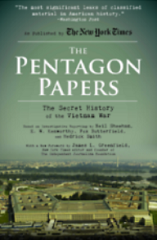
The Pentagon Papers: The Secret History of the Vietnam War- Neil Sheehan, Hedrick Smith, E. W. Kenworthy, Fox Butterfield and James L. Greenfield

ellsbergThe names of the 58,000 Americans who died in the Vietnam War that are found on the memorial in Washington, D.C., are a reminder of a conflict deemed by many to be the worst the United States has ever been involved in.  The withdrawal of U.S. forces in March, 1973, brought a sigh of relief to the American public which had long grown tired of a war with no end in sight.  The dark truth which we now know is that we did not by any means accomplish the mission.  And the mighty American war machine failed to secure a victory. I have met many veterans of the war and have an uncle who served.  What I recall most about all of them is that they do not speak of their experiences while in combat.  I know the memories are there and for some of them, they were unable to leave parts of the war behind.  Today we call it PTSD, but back then you simply found a way to move forward in life.   But why were they in Vietnam to being with?  Was the domino effect really a threat to the United States?

On May 11, 1973, Daniel Ellsberg found himself the talk of the town as charges pending against him for espionage were dismissed by U.S. District Judge William Byrne. He had been indicted for leaking what became known as The Pentagon Papers, the subject of this book and the topic of the movie The Post starring Tom Hanks and Meryl Streep.  The New York Times, after several battles in court, was finally allowed to move forward with its plan to publish The Pentagon Papers and contained in the pages of this book are the documents that the U.S. Government tried in earnest to hide from the American public under the guise of “national security”.   Ironically, the facts that are revealed in this book have absolutely nothing to do with national security but rather several presidential administrations that failed to find a workable solution to Indochina.

The late Secretary of Defense, Robert S. McNamara (1916-2009) has been called the architect of the war and was loathed by many because of it. However, the title is misleading and in some ways unfair. The war had many architects either by wishful thinking, uncontrolled ego or naiveté.  What is truly ironic is that as the war waged on, McNamara became a strong voice of dissent.  And in spite of what we have been led to believe, our existence in Indochina began many years before 1965.  The story of U.S. involvement in Vietnam is a long tale, filled with hard truths, false truths, deception and ultimately failure.  But this is how it happened and why.

The papers are divided into several sections which correspond to a different aspect of the conflict.  The administrations of Eisenhower, Kennedy and Johnson are examined to understand what each cabinet did and did not do as it grappled with the growing headache.   Step-by-step Southeast Asia opens up as black hole as more advisors are committed, instability rages in South Vietnam and war hawks finally get their wish as the United States jumped nearly feet first into a jungle conflict that proved to be nothing short of disastrous.  Rolling Thunder, troop deployments and South Vietnamese politics are just some of the issues that antagonized Washington for nearly a decade.

If you served in Vietnam, I forewarn you that the book might anger you in many ways. For others, this is a critical source of information in order to understand the war from a behind the scenes view.   We are often told that the military fights to protect the country and our freedoms that we take for granted.  But did a nation over 13,000 miles from U.S. soil really pose a threat to the most powerful nation on earth at the time? And what would we have accomplished if we had in fact won the conflict?   Perhaps Vietnam would have become a second Korea, partitioned between a communist controlled North-Vietnam and a U.S. controlled South-Vietnam.   Following the U.S. withdrawal, Saigon fell and the North achieved its goal of reunification.  Today the war is a distant memory for young Vietnamese but for the older generation, many painful memories remain.  The figures in the book are long gone but their actions will stay with us and the Vietnam war will always be a regrettable example of U.S. foreign policy gone wrong.

ISBN-10: 1631582925
ISBN-13: 978-1631582929