
 In the 1989 film ‘Born on the Fourth of July‘ by Oliver Stone, there is a scene in which the Marine Corps. recruiter (Tom Berenger) is speaking to high school student Ron Kovic (Tom Cruise) and his high school class. To boost interest, Berenger calls out the names of the battles that defined the United States Marine Corps. The list is extensive and impressive but to this day, the deadliest battle in the history of the Marines is Iwo Jima. Between February 19, 1945, and March 26, 1945, the Marines suffered thousands of casualties as they secured the island which translates into “sulfur island” in English. The battle is also famous for the image captured of Marines and Corpsman raising the American flag as they pushed forward against Japanese resistance. Despite the high casualty rate, thousands of Marines survived Iwo Jima and returned home. But they never forgot the sights, sounds and smells from the fierce battles being fought as the world was at war. Larry Smith talked to veterans of Iwo Jima and has compiled those interviews into this book that provided the retired Marines with a platform to tell readers what they remember from the battle that claimed lives and left others with dark and haunting memories.
Sadly, the Marines in the book who fought on Iwo Jima are deceased and the number of surviving World War II veterans decreases each year. Their voices are silent, but their stories are powerful and will leave readers with a sense of gratitude and shock. The battlefield and injury descriptions are graphic in nature, and discretion is advised. Further, the scenes that are relived are nothing short of hell on earth and highlight the deadly environment waiting for arriving Marines. I also found myself shocked at the age of the young Marines at Iwo Jima. More than one in the book was not old enough to buy alcohol but found himself shipped off to the Pacific where the Japanese were waiting. Military commanders knew that it would be costly to take Iwo Jima, but the number of casualties suffered is staggering and the author specifies that
“On the first day alone the Marines suffered 2,420 casualties, including more than 500 killed.”
The number of casualties increased exponentially on both sides of the conflict as the battle raged. Eventually the Marines began to gain ground and reached the top of Mt. Suribachi. It was there that the American flag was raised more than once. The emotional scenes were captured on camera and the second image of the Marines hoisting the stars and stripes remains one of the most popular images in American history. But there is more to the story of the flag than one might suspect. In the book, Marines who were there speak on the matter, clearing up any confusion or misinformation that has persisted over time. Readers who are interested in a more thorough discussion of the event will appreciate ‘Flags of Our Fathers‘, by James Bradley and Ron Powers. Bradley’s father John “Doc” Bradley (1923-1994) was a Navy Corpsman and one of the soldiers captured in the iconic second photo taken on February 23, 1945. As we learn in the book, seeing the American flag being raised was a tremendous boost to morale. The pride felt by Marines tasked with taking the island is best captured by former soldier Chuck Lindberg who reminisced:
“It was a great patriotic feeling, this chill that runs through you. . . . My proudest moment of my time in the Marines was raising the American flag on Iwo Jima. My feeling of being a Marine is I served with the finest, and I feel proud every day that I can tell somebody that.”
That sentiment is echoed by others who survived combat on Iwo Jima. On the Japanese side of the conflict, losses were equally devastating, and it became clear that Japan could not win against the Allies. Reasons for the Japanese defeat are not discussed here but the speakers do recall how they felt when they learned that the atomic bombs had been dropped resulting in Japan’s surrender. Unbelievably, it would take four more years to remove the last Japanese soldiers from the island. Every war has its mysteries and World War II is no different. The biggest unsolved mystery in this book is the fate of Japanese Imperial Army General Tadamichi Kuribayashi (1891-1945). I previously was not aware of his demise but am inclined to believe that the Japanese troops knew what happened to their fallen commander. A surprising discovery explained in the book provides information that explains the general’s thoughts that were almost lost to history. While researching the book, Smith made the acquaintance of Colonel John W. Ripley, USMC (Ret.) who did not serve in World War II but did serve in the Vietnam War and became a military historian of Iwo Jima. The issue of the general’s last known location was a source of interest during and after the war but as Ripley explains,
“ The thing which is the most irrefutable evidence of all is that Kuribayashi’s body , which was a hot item , was never found . Every single body involved in that last attack was not necessarily identified , but they knew it wasn’t Kuribayashi . Every single one . Because they were looking for him . And he wasn’t there . Period . So that is the premier fact that refutes his involvement in that battle .”
As I read the book, I thought of my great-grandfather who served in Europe during the war. As a black infantry soldier, I am sure he had his share of unfortunate experiences. But he served his country and never spoke negatively of America, nor did he discuss what he saw in combat. In the story at hand, black Marines do play a role as the speakers explained but at the time, segregation existed in the armed forces and on Iwo Jima that also applied. However, as we learn from the Marines in the book, blacks played pivotal roles in the American victory and the burial of deceased Marines whose remains were later retrieved from the island after Japan’s defeat. Smith even had a discussion with Thomas McPhatter, a black Marine who provides a needed perspective on the black experience in the Pacific. I personally learned for the first time from the author that regarding the African American experience,
“Between fifteen hundred and two thousand blacks served on Iwo. Each Marine division had a regimental service battalion or field depot staffed by black marines, not to be confused with the Army DUKW drivers.“
I thought to myself that had more black Marines been accepted and deployed, the battle on Iwo Jima might have ended sooner and very differently. De-segregation of the military continued in the years following World War II, but its existence placed America in a difficult position of attempting to deliver freedom around the world whiles struggling to enforce it at home. Despite resistance and discrimination, blacks continued to serve in the military and do so today. This is in no way detracts from the heroic efforts of the Marines of all backgrounds who fought on the island. Their experiences and success in turning the tide of the Pacific war remains firmly entrenched in the annals of military history.
Readers might ask themselves why Iwo Jima was important. That question is answered in the book as the speakers and the author explain its significance. to success in the Pacific. The number of casualties was undoubtedly high, but without occupation of Iwo Jima, the Allied effort to force Japan’s surrender might have taken longer and the full-scale invasion of Japan on November 1, 1945, could have become a reality. President Harry S. Truman‘s decision to drop the bomb ended the war in the Pacific and brought feelings of relief to the Marines and other military personnel who remained at their posts in the Pacific. V-J Day brought World War II to a close, but history cannot forget mankind’s deadliest conflict. These are the stories of the Marines who served on Iwo Jima in the battle that further defined the Marine Corps. and sealed Japan’s fate.
ASIN: B00ZHJEJWO
 At 4:03 p.m. on September 13, 1996, rap star Tupac Shakur (1971-1996) died from gunshot wounds he received on September 7 while riding in the passenger seat of a BMW driven by former Death Row Records CEO Marion “Suge” Knight on the Las Vegas strip. Shakur was twenty-five years old and left behind a complicated legacy that remains a top of discussion in rap music culture. I remember with vivid clarity the shock that was felt when his death was announced and have always believed that a part of the rap music genre died with him that day. Officially his murder is listed as unsolved and an open case by the Las Vegas Police Department. Off the record, it has been alleged and believed that Crips gang member Orlando “Baby Lane” Anderson (1974-1998) pulled the trigger of the gun that ended Shakur’s life. The case is filled with rumors, mysteries, and chilling facts. Journalist Cathy Scott stepped into this murky world to set the record straight on Shakur’s murder.
 On January 28, 1986, Americans watched in horror as the Space Shuttle Challenger suffered a catastrophic rupture in its rocket booster shortly after liftoff. Among the seven crew members who perished was Ronald McNair (1950-1986) and African American astronaut who had joined a diverse crew of individuals who were making history. As a student, I remember being in awe of McNair and the mission he was on. Naturally, my fellow students and I also had an affinity for Christa McAuliffe (1948-1986) a schoolteacher whose hometown was watching that day as well. To millions of young black children, McNair was a remarkable sight, but he was not the first to break NASA’s color barrier. In fact, NASA had begun to integrate the space program decades before, during the administration of President John F. Kennedy (1917-1963), whose initiative to travel to the moon led to NASA changing itself and playing a significant role in the Civil Rights Movement.
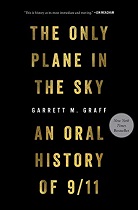 This past Sunday marked the twenty-first anniversary of the September 11th attacks which claimed the lives of 2,996 people. The mood in New York City was somber, with rain and dark clouds all day. However, that did not stop anyone from remembering the tragedies on September 11, 2001, a day that changed America. Friends are always surprised to learn that I have never visited the 9/11 Memorial and Museum. As a New Yorker who was in Manhattan on the day of the attacks, and watched the events unfold from an office window, I will always have my memories of that sad day. But my reluctance to visit the museum has never prevented me from reading and hearing stories from people who were at the World Trade Center and survived. Undoubtedly, there are survivors who have never told their stories, choosing not to re-live the events of that day. Thousands of others did go on the record and their words have been preserved so that the history of 9/11 can continue to be told to future generations. Author Garrett M. Graff has compiled hundreds of statements from survivors, Bush Administration officials, NYC officials, military personnel and first responders, and has turned them into this oral history of the attacks.
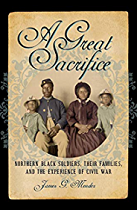 The more I learn about history, the more I realize how much of it is not taught in schools. I recall learning about the Civil War but in limited discussions. And I fondly remember the 1989 film
  Several weeks ago, during a phone call with an uncle on my father’s side, he opened up about his service in Vietnam, in particular, his return to the United States after his tour was over. He painfully recalled being confronted by mothers wanting to know why he returned, and their sons did not. He continued by describing the hostile environment soldiers returning from Vietnam faced due to the unpopularity of the war. Years would pass before Vietnam veterans finally received the attention and understanding they deserved regarding their experiences in Southeast Asia. The war is far in the past, but I know my uncle carries with him dark memories of what he saw and had to do in order to survive his tour. In 1988, the television show
 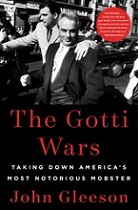 America has always loved gangster stories. Tales from the lives of larger-than-life characters both feared and respected have captivated film audiences and true crime readers. In my hometown of New York City, the Italian American mafia holds a firm place in the annals of the city’s crime history. Of all the mafia bosses, none was as flamboyant and media savvy as the late Gambino Family boss John J. Gotti (1940-2002). The media nicknamed him the “Teflon Don” due to the acquittals his lawyers obtained of a multitude of charges that could have put the mafia boss in prison for life. On March 13, 1987, Gotti and his co-defendants were acquitted of federal racketeering charges and the verdict left prosecutors in the Eastern District of New York licking their wounds. Gotti and his fellow mobsters were elated the Federal Government was far from finished. However, prosecutors knew that to convict Gotti, they needed irrefutable evidence of his crimes and witnesses willing to testify. As fate would have it, in time prosecutors would obtain all that they needed through a chain of events that began with wiretaps in the home of mobster Angelo Ruggiero, Sr. (1940-1989) known as “Quack Quack”. And leading the mission for the Government was lead prosecutor John Gleeson, also a former judge in the Eastern District. This is the story of how the United States Attorney’s Office in Brooklyn secured a conviction against America’s most notorious mobster.
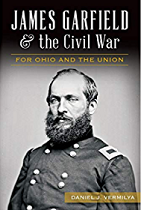 On September 19, 1881, United States President James A. Garfield (1831-1881) died in Elberon, New Jersey seventy-nine days after he was shot and mortally wounded by Charles J. Guiteau (1841-1882) on July 2, 1881. The assassin, motivated by a desire to see Chester A. Arthur (1829-1886) become president. Arthur did become the next president, but Guiteau was on borrowed time and was executed on July 30, 1882. Garfield was shot after two months in the White House and died in less than one year as president. His remarkably short tenure as president is often overlooked by history but there was far more to his story that has been taught in history classes. The story of his life is equally as intriguing as its ending and in this short but concise examination of the late president, Daniel Vermilya focuses on Garfield’s early life and his time as a Union officer in the American Civil War (1861-1865).
 New York City is famously known as the “Melting Pot” due to the diversity among the residents that call it home. As a lifelong New Yorker, I can attest that the city attracts people from every part of the world. However, what is often neglected is that diversity and assimilation are two very different concepts. That is not to say that the entire city is divided. In fact, my neighbors hail from places both domestic and abroad. My father has told me stories of his childhood in Brooklyn and his neighbors who had emigrated from Eastern Europe. He has fond memories of the Italian woman who cooked breakfast for him and my uncles and the Jewish neighbor who made fresh breads and other dishes they loved. But that all changed when my grandmother moved the family to a different part of Brooklyn and the Government began to de-segregate public schools. The pushback from the middle class was swift and in May 1968, tensions came to a head at P.S. 271 in Ocean Hill-Brownsville, Brooklyn, when teachers engaged in the first of several strikes that changed New York. This is the story of those strikes and the people whose actions changed New York City politics.
 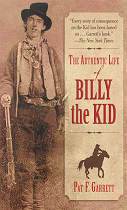 Billy the Kid remains one of the most mythical figures of the American Old West. There are parts of his life that remain a mystery, but “the Kid” did shoot and killed several men before his own death at the hands of Deputy U.S. Marshall Pat F. Garrett (1850-1908), on July 14, 1881. Following the Kid’s death, Garrett authored this book regarding his former acquaintance. For decades it stood as the best account of the Kid’s life but has been surpassed and challenged. Further, the book is Garrett’s account and not subject to cross-reference within. While it is true that Garrett did know the Kid, questions remain about the outlaw’s life.

You must be logged in to post a comment.