Geronimo – Robert M. Utley

geronimoOn September 4, 1886, Apache warrior Geronimo (1829-1909) surrendered for the last time to United States military personnel. The famous warrior had eluded capture for years as the American Indian Wars took place across North America. In the years following his death, Geronimo has become a pop-culture icon whose name holds a permanent place in the American lexicon. The irony is that this famous warrior was never a chief in his time and was not driven by fame. In fact, his personal story is darker and more tragic than any Hollywood production. Voltaire (1694-1778) once said that “to the living we owe respect but to the dead we owe only the truth”. Author Robert M. Utley is a former chief historian for the National Park Service and researched Geronimo’s life to dispel rumors and bring to life unknown facts. The result is this biography that is crucial to understanding the creation of the United States of America and the Native American experience.

The story revolves around the Chiricahua tribe of the Apache Indians. I previously reviewed S.C. Gwynne’s “Empire of the Summer Moon: Quanah Parker and the Rise and Fall of the Comanches, the Most Powerful Indian Tribe in American History”, a book I strongly recommend. It is book is not easy to read at times due to the graphic descriptions of Comanche raids and the battles with American troops and frankly, it is not for the faint at heart. Utley’s book is far tamer but does explore the battles but focuses heavily on Geronimo’s story and his ability to elude capture before finally surrendering in 1886.  But make no mistake, this story is full of surprising information, battle descriptions and policy decisions in Washington as administrations struggled to resolve the “Indian” issue.

Surprisingly, Geronimo does not come across as a hero nor a villain. The author explains that he was simply an Apache warrior who was admired, feared, loathed and not without his own faults. To prove this point, Utley conducted an extensive amount of research that is woven beautifully together as Geronimo’s life comes into focus. And the key to understanding his position as an Apache enforcer is the section in the book that focuses on the Mexican raids against Apache settlements. The tragedy that befell Geronimo sets the stage for the warrior who emerges as a significant threat to American expansion and eternal enemy of the Mexican nation.

Expectedly, Geronimo is not the only famous figure in the book. In fact, the author provides a thorough discussion on another Apache warrior who holds a claim to fame: Cochise (1805-1874). He is joined in the book by Mangas Coloradas (1793-1863) and Juh (1825-1883). Both chiefs and Geronimo’s cousin Juh had an enormous impact on Geronimo and their roles in the story cannot be understated. Cochise is significant in another way which may surprise readers. Throughout his early life, Geronimo remained obscure but as the American Indian War heated up, he could no longer hide in the shadows. However, the battles had devastating consequences for the Apache. As Utley explains:

“During Geronimo’s heyday, the entire Chiricahua tribe numbered about three thousand people, so in the relatively small local groups most people tended to know one another. By 1886, when Geronimo surrendered, the tribe had declined by about 80 percent, mainly the result of warfare.” 

Additionally, the introduction of alcohol had unforeseen circumstances in store for the Apache and other Native American tribes. The battle with substance abuse sadly continues to this day on reservations. The episodes explained by the author leave no doubt that addiction of any kind can result in severe personal and societal damage. In this case, the community structure itself was under attack and it is one part of Geronimo’s life that will capture readers’ attention. Despite warfare and substance abuse, the warriors in the book did believe in the family structure, Geronimo included. He followed this creed wholeheartedly and I honestly lost track of the number of his wives. Today such practices would be viewed with disdain in America but for Native American tribes during those times, it was commonplace.

After Geronimo surrenders, the book takes another turn due to the inhumane conditions in Indigenous camps. The removal of Native tribes is well-documented, and the “Trail of Tears” stands out as a commonly referenced example. There is forced removal in this story and the reality of American camps becomes horrifically clear in the book. Conditions became so decrepit that officials in the government began to sound the alarm. And this is the other tragedy in the story. Far removed from the land they knew, without the foods they ate, the community structure that kept them safe and the looming threat of execution, Indian tribes soon found themselves in danger of extinction. As for Geronimo, the last twenty years of his life paled in comparison to his youth on the open plains of North America. And though he never saw himself as an iconic figure, his life and name are permanently fixed in the annals of American history.

If you are interested in Apache history and the story of Geronimo, this book is must-read. I cannot predict how you will view him, but it is safe to say that his story and that of the Apache are lessons that should never be forgotten. This is American history and truths about what really happened as our nation evolved.

“For Geronimo, my book rejects both extremes—thug and hero—and reveals that, within the constraints of Apache culture, he was a human being with many strengths and many flaws.”

ASIN: B009T3C88Q

The Nazi Seizure of Power: The Experience of a Single German Town, 1922-1945 – William Sherian Allen

AllenSeventy-seven years ago, allied forces defeated Adolf Hitler’s (1889-1945) Third Reich and the Axis powers, bringing an end to World War II. In the years following Germany’s defeat, historians have authored books, filmmakers have published documentaries and social media provides endless content about the man who ignited a world conflict. In the wake of the war, outspoken critics of the Third Reich were vindicated in their belief that Hitler would cause Germany’s destruction. He nearly succeeded and following the nation’s surrender on May 7, 1945, the German people faced the cruel reality that their country was in ruins, they were widely despised and faced years of rebuilding, de-Nazification and coming to terms with what had been done in their name. As we have sought to understand the aura of Hitler and his ascension to the position of Chancellor, sharp focus was needed on how and why the Nazis were able to take over Germany. Author William Sherian Allen decided to focus on the town of Northeim to examine the Nazi seizure of power. Northeim lies in the Lower Saxony area of Germany and between the years 1922-1945, the Nazis executed their plan to take over Germany one town at a time. This is the story of how it was done.

Prior to reading this book I did not know the story of Northeim but there are countless stories from the war that have yet to be told or discovered. World War II will continue to produce more material even as it fades further into the past. This story of Northeim helps capture the rise and fall of the Third Reich. After World War I, the Treaty of Versailles had forced Germany to relinquish territory, recognize Poland as an independent nation and crippled the country with brutal financial penalties, the result of which was widespread poverty and anger. Northeimers were not immune to this, and its residents wanted a better life but as we see in the book, it was not at first a Nazi stronghold, but the Third Reich was determined to leave no stone unturned. Hitler knew that touching on German resentment towards the treaty’s penalties would play into Nazification efforts. The signatories of the first treaty could not have known that twenty years later Germany would once again destabilize the world. As I read the book, I noticed that Northeim was not the prime territory for indoctrination yet the resistance to Nazism was non-existent. And as for any resistance that did exist, the Nazis had tools at their disposal to eliminate all opposition.

The most interesting part of the story is that the Nazi takeover was not as violent as one would expect. In fact, subversion and deception were the primary tools employed. But the Nazis did break down critical social institutions that obstructed their path of total domination. The suppression of free speech, free press and religion are on full display. However, the Nazis could have not succeeded without local help. And this is where the story becomes even more interesting, and it features two central figures, Wilhelm Spannaus and Ernst Girmann (1896-1969). Spannaus was a bookstore owner who had aligned himself with the N.S.D.A.P. but never comes across as a hardcore Nazi. In fact, the undesirable aspects of the Third Reich would not have earned his approval. Officials knew Spannaus would never conduct their plan to the satisfaction needed and turned to Girmann who took his fanaticism to astonishing heights. Girmann was more than willing to carry out the Nazi ideology and bring Northeim under the grip of Berlin. The step-by-step seizure by the Third Reich took time but was successful and as Allen remarks:

“The single biggest factor in this process was the destruction of formal society in Northeim. What social cohesion there was in the town existed in the club life, and this was destroyed in the early months of Nazi rule.”

By 1933, Hitler had become Chancellor and anyone who second guessed the outspoken Austrian, paid full attention to the recent changes in Germany society. The old way of life for Germans and the democracy they believed existed, vanished instantly. Once the Nazi propaganda and dictatorial machine started, there was no turning back and Northeim soon found himself under the boot of Nazism. The process of indoctrination kicks into high gear and the Nazis begin to target the areas that need it the most. Sherian captures the impact of the changes with this observation:

“More than any other institution in Northeim, the schools became active instruments of Nazism.”

The Nazis attacked every segment of society and with Girmann in control, Northeim was doomed from the start. Early in the war, Germans were optimistic that the war would be short but in June 1942, that all changed with Hitler’s decision to invade the Soviet Union which helped seal Germany’s fate. By 1944, the Allied effort had touched Northeim directly resulting in death and destruction. Readers will find themselves in disbelief at Girmann’s actions as defeat is imminent. His actions call into question the ideas of honor and courage in Nazi Germany. Northeim was eventually liberated, and the town began to repair itself and purge the remnants of the Nazi menace. And one of the people they turned to is Spannaus. Northeim comes full circle at this point in the book.

I should point out that the story here is not about the Final Solution or why Germany lost the war. Allen’s focus is on the Third Reich’s control of Northeim and its existence as a Nazi stronghold. Undoubtedly similar methods were employed across Germany as Hitler turned up the heat domestically and abroad. And had he not been defeated, what we see in Northeim might have taken place in parts unknown. Students of World War II and history buffs will find this to be an interesting account of Northeim’s experience during the war and life in the Third Reich. It is also a blueprint for how to resist future dictators from executing the same. Highly recommended.

“What was needed in Northeim to stop the Nazis was a political coalition of the decent people, regardless of party, to recognize that—whatever it promised—Nazism was an indecent thing. That such a coalition never developed was the main reason the Nazis got into power.”

ASIN: B09NN71DC8

The Haldeman Diaries: Inside the Nixon White House – H.R. Haldeman

HaldermanOn August 8, 1974, President Richard M. Nixon (1913-1994) resigned from his position as the thirty-seventh Commander-In-Chief. In the months preceding his announcement, the Watergate scandal investigation had gained significant traction and Nixon faced the possibility of impeachment. The nation watched in shock and silence as Nixon gave his speech. It marked the first and only time in history that a United States President had resigned from office. In the decades that followed, scores of books, articles, and documentaries have been published regarding the Watergate affair. I strongly recommend Fred Emery’s “Watergate: The Corruption of American Politics and the Fall of Richard Nixon“. It is a fascinating account of the scandal and the fallout that ensued. Within Nixon’s inner circle was his Chief of Staff Harry Robbins “Bob” Haldeman (1926-1993), known simply as H.R. Haldeman. The former insider served eighteen months at the Lompoc, California Federal minimum-security facility after being convicted on one count of obstruction of justice and three counts of lying under oath. During his time in Washington, Haldeman kept a meticulous daily diary that he intended to publish following his release from prison. However, he passed suddenly on November 12, 1993, at his home in Santa Barbara, California. But all hope was not lost. His widow Joanne continued her husband’s goal and worked extensively to have them published. They are presented here in this book that deserves a rightful place in the annals of historical non-fiction.

Haldeman’s ability to keep a daily diary in addition to his tasks during the day is astonishing. Anyone who has worked in Washington will tell that every day is a roller coaster ride of appointments, statements, problems, and success. As Chief of Staff, Haldeman faced the brunt of these problems and was one of the few people that Nixon trusted the most. However, Joanna points out early in the book that the two were not close friends. In fact, throughout the book, it is clear that no one in the administration really knew the real Richard Nixon. But that did not deter his cabinet from doing their best to serve the White House in whichever way necessary. The daily diary entries are primarily short snippets of the day’s events. Readers will notice the change in the length of the notes after Haldeman switches to a dictation machine. The notes become extensive but if we follow closely, we are provided a rare look into Nixon’s White House.

This book is not an examination of Nixon himself or an attempt to discern why he took certain actions. In fact, Nixon changed his mind on things daily. Haldeman made notes of what he saw, heard, and did with his own observations added. The hotbed issues of the time are sprinkled throughout the story. Vietnam and Civil Rights are the biggest concerns with the latter being the issue that Nixon never fully understood. Interestingly, Nixon does not oppose civil rights but his ideas on how to achieve it come off as misguided. And his obsession with the Kennedy family reveals the lingering insecurities he could never move past. I also took note of the discord within his administration, mostly centered around National Security Advisor Henry Kissinger and Secretary of State William P. Rogers (1913-2001). The Vice-President Spiro T. Agnew (1918-1996) is not mentioned as much as I would have thought but Haldeman does refer to the scandal that led to his resignation.

As I read the book, there were times where I was not exactly sure what to make of Nixon. Undoubtedly, he was not a liberal and appealed to more conversative voters. But he was not far right either and makes multiple statements about both political parties that will surprise readers. And had he succeeded with his own vision for the future of American politics, the political landscape as we know it today would be quite different. Nixon was a shrewd politician, seasoned by his years in the Senate and in the White House. He understood the political spectrum and how to exploit openings. But his paranoia and failure to grasp changes in society helped contribute to his downfall.

Nothing in the diaries comes off as explosive until June 17-18, 1972, when the White House learns of the break-in at the Democratic National Committee headquarters in the Watergate Office Building in Washington, D.C. As one would expect, the book picks up in pace with the Nixon Administration taking action to contain the story and limit its exposure, even if that meant obstruction of justice. Haldeman writes himself that obstruction might be necessary. It is not clear from the diaries if he knew of the operation beforehand, but he did support and take part in covering up evidence of Nixon’s complicity. His nickname “Iron Chancellor” did not come about without reason. As I read his notes, I understood Haldeman’s position. His job was to protect the president at all costs. Nixon was aware of his devotion and initially resisted pressure to make Haldeman resign. However, the Watergate scandal was becoming a major threat and far from the small issue that it was originally thought to be by Nixon and former President Lyndon B. Johnson (1908-1973) whom Nixon consulted on various issues. This too may surprise readers.

I believe we may never know who the real Richard Nixon was. There is no simple explanation to describe him. His administration did pull the country to the right, but he also had ideas that would be embraced by the left today. He has been called a bigot, but he also supported integration and equality. He wanted to end the war in Vietnam, but approved bombing raids in Cambodia. He campaigned on law and order but strongly believed in female judges. He never fully trusted the State Department though it is critical to an administration. He is a conservative icon, yet he signed into law the act that created the Environment Protection Agency. The mystery may be what Nixon wanted to leave behind. Haldeman’s job was not to figure him out but to do the best job possible as chief of staff. In this area he succeeded, and Joanna includes this statement by the late president about his assistant whom people called an “S.O.B.”:

“I have known Bob Haldeman to be a man of rare intelligence, strength, integrity, and courage … He played an indispensable role in turbulent times as our Administration undertook a broad range of initiatives at home and abroad.” – Richard M. Nixon

If you are curious about the administration or Richard Nixon and the actions behind the scenes, this book which contains the personal diary of H.R. Haldeman is must-read. Highly recommended.

ASIN: B01NCYX17R

The John Carlos Story: The Sports Moment That Changed the World – John Carlos with Dave Zirin and Cornel West

carlosOn October 16, 1968, U.S. track and field runner John Carlos ascended the podium to accept his bronze medal following the 200m race. His teammate and gold medal winner Tommie Smith joined him on the podium and as the United States anthem played in the stadium, the pair raised their fists in solidarity with the growing movement for civil rights in America. Silver medal winner and Australian native Peter Norman (1942-2006) showed his support for the American duo by wearing an Olympic Project for Human Rights badge. The image of them standing with their fists raised remains one of the most powerful pictures of the Civil Rights Movement. However, behind the scenes, the fallout from their gesture was immense and even Norman, who was not American, suffered tremendously. This is the story of John Carlos in his words, which explains the events leading up to the pivotal moment in world history and his life which has been anything but ordinary. 
Huey P. Newtown (1942-1989) famously remarked that “the first lesson a revolutionary must learn is that he is a doomed man“. The statement is dark but accurate. For John Carlos, the moment he decided to raise his fist was also the moment that he invited the turmoil that comes with taking a public stand. But prior to that earth shattering moment, he had been an advocate for equality and the stage for Mexico had been set years prior in my hometown of New York City. I did not know Carlos was a New Yorker so one can expect that I was pleasantly surprised. As I read his account of his early life and the struggles his family faced in their housing complex, I found myself gaining more respect for him, as a person not afraid to tackle problems head on. To be fair, there are sections in the book where Carlos himself admits that he was wrong and should have put more thought into his actions. And his father, to whom he was remarkably close, provided a source of guidance that was needed at times. Carlos was also close to his mother, whom he deeply loved and still holds in high regard. I enjoyed reading about his family life and felt that I understood him and why he became a voice for change.

Carlos dabbles in athletics until he finds his calling in running, which incredibly, was not his first choice. That might shock readers, I know it surprised me. But once he starts running, he never stopped, and that path took him from New York City, to Texas, and all the way to Mexico City, where the story picks up in pace for obvious reasons. However, Carlos reveals critical information about the Olympic Project for Human Rights and its original plan for the games. Also, the story takes another turn when famed Olympian Jesse Owens (1913-1980) enters the story. I had no prior knowledge of these events before reading the book and was shocked to learn of the friction backstage. But Owens is not the villain, and his own story is one of triumph and tragedy. And even Carlos realizes that Owens could not escape the ideology that he helped shatter in Berlin as Adolf Hitler (1889-1945) watched in disbelief. 

After the Olympic medal ceremony, Carlos knew that he would have to return to the United States but had no idea of how bad the repercussions would be for exposing America on the world stage. Any illusions of returning to America as champion of equality were quickly shattered as he and Tommie Smith became public enemies. Peter Norman also had to face his fate upon returning to Australia. His story is equally heartbreaking but on a positive note, Norman was vindicated in recent years and today he is seen as a hero and in 2012, Australia’s governing body posthumously apologized to him for not being sent to the 1972 Munich Olympics, despite qualifying. The hardships these athletes endured were surreal and it should come as no surprise that Norman’s final years were filled with dark days. Smith and Carlos had their own trials and tribulations. As the book progresses, Carlos reveals his personal struggles with employment, marriage, injury, fatherhood, and the social pressures that came because of being a recognized activist. But there are bright moments and though he was down on occasion he was never out. Thankfully, Carlos is alive today and has overcome challenging times that could have caused another man to lose the plot. 

Whether we believe that athletes should make political statements, his story is important and an example of what happens when you take a stand for something you believe in. Carlos himself is aware of the criticism that athletes face when taking on politics but never wavered in his goal to make change. The argument over when and where to make political statements will never end but there are times where they need to be made regardless of who the speaker is. In 1968, John Carlos knew he and Tommie Smith were the ones to make their statement, but they could have never imagined that their actions before a sellout crowd in Mexico City would change the course of history. 

ASIN: B005MJDRL8

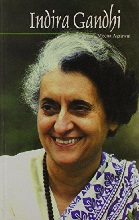
Indira Gandhi – Meena Agarwal

IndiraFew places are as fascinating as the nation of India. Its constitution officially recognizes twenty-two languages. English continues to serve as a critical method of communication in the business sector. Natives will proudly tell you that India is one of the most diverse countries in the world. Yet, despite the diversity, social issues such as poverty, corruption, and overpopulation are a reminder that India’s long struggle for success is far from over. Recently I was reading only and came across the name of Indira Gandhi (1917-1984), the former prime minister who was assassinated on October 31, 1984. Her father, Jawaharlal Nehru (1889-1964), served as the nation’s first prime minister after India gained its independence in 1947. Both father and daughter left behind legacies that remain with India to this day.
The death of Indira Gandhi sent shockwaves across the world. The nightly news broadcast covered the crime in detail and readers who are too young to remember the events can find videos on YouTube that provide a step back in time before breaking news went viral on the internet. As I thought of Indira Gandhi, I realized that my knowledge of her personal life needed an adjustment. I purchased this book by author Meena Agarwal who provides a good primer for an examination of the late leader’s life. There are more extensive books to be found about Gandhi, but this biography is just what is needed by readers searching for a concise account of the historic figure.

I did notice that the book is short at around one hundred seventy-six pages, which is short compared to most biographies of political leaders than can easily stretch to nearly one thousand pages. Nonetheless, the information contained in the book is more than sufficient to provide readers with a fair amount of knowledge about who Gandhi was and why she is important in India’s history. The recap of her early life was the right amount of information needed for the story we read. The author does not go into every minute detail but explains the crucial events in her life that changed India’s history and world history. The deaths of her mother Kamala Nehru (1889-1936) and prime minister Lal Bahadur Shastri (1904-1966) changed her life forever with the latter placing her in the position to become India’s first and only female prime minister.

Gandhi’s time in office was not perfect by any means. Though she was progressive in her thinking, there were mistakes along the way. But what I found is that she genuinely loved India and despite the mounting opposition to her administration, she continued to move forward when possible. But as the book progresses, it becomes clear that the opposition is not only growing but becoming more extreme. And their rage culminated with the events at the Golden Temple, the holiest site in Amritsar, Punjab, for followers of the Sikh faith.

Between June 1 and June 10, 1984, Indian security forces conducted Operation Blue Start to remove Damdami Taksal, Jarnail Singh Bhindranwale, and their followers from the buildings of the Golden Temple. The operation was successful but in the eyes of devout Sikhs, Gandhi had committed a mortal sin. She was not oblivious to the tensions caused by the mission and sought to soothe them. But the seed had been planted and her opponents began to plot her demise. The author revisits the events surrounding Operation Blue Star and the time leading up to October 31, 1984, Gandhi’s last day on earth. The murder and its aftermath as discussed but she does not go into extensive detail about the legal proceedings and results. One assassin was killed immediately after Gandhi’s murder, thus escaping the justice system.

Following the assassination, the story winds down but the author is far from done. She pays homage to Gandhi by including quotes and short statements which show her devotion to India. Some might say she was ahead of time and others may say she was taken before her time. I would argue that both are fair assessments. Indira Gandhi survived heartache on multiple occasions. The losses of her mother Kamala, husband Feroze Gandhi (1912-1960), and son Sanjay Gandhi (1946-1980), were always with her as reminders of the unexpected twists and turns that come in life. She will forever be remembered as a trailblazing woman in world politics. And as India continues to examine itself to improve, Gandhi’s legacy is a reminder of what was and what is possible moving forward.

“The meaning of independence is not only to have one’s own government, but its true meaning is that we should be able to take decisions ourselves. These decisions may be wrong, but they should be our decisions, they should be the decisions of India” – Indira Gandhi

ASIN ‏ : ‎ B06W55L1ZV

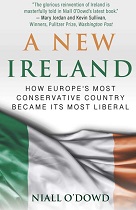
A New Ireland: How Europe’s Most Conservative Country Became Its Most Liberal – Niall O’ Dowd

odowdIn April 1916, Irish Republicans used the Easter holiday week to launch an insurrection against British rule in Ireland. Through the British regained control of Dublin and later conducted executions of selected participants, the uprising stands to this day as a pivotal moment in the movement for a united Ireland. When I visited Dublin in February 2016, I took a moment to observe murals dedicated to Irish history. I realized that the Ireland I was visiting had changed since the visit of U.S. President John F. Kennedy (1917-1963) in April 1963. Ireland was once known was the most conservative country in Europe but had now become the most liberal. As I walked the streets of Dublin, I heard accents from countries throughout the world and the diversity of languages reminded me of my hometown, New York City. But how did Ireland undergo such a drastic change? The answer can be found in this book that captures an important aspect of Irish history.

Books I have previously read about Ireland heavily focused on the conflict known as “The Troubles”. The struggle between Irish Republicans and Irish Protestants loyal to the British Parliament has left Northern Ireland with physical scars and dark memories. There is peace today but tensions between the two factions have never completely dissipated. And Britain’s exit from the European Union raised the question, what will happen to Northern Ireland? The future remains to be seen. It is not necessary to have an extensive knowledge of the Troubles to enjoy this book. The story at hand is truly remarkable but it is also filled with shocking and revolting moments that forced Ireland to look in the mirror.

I appreciated the discussion of Irish history that explains how religion evolved in Ireland. It quickly becomes apparent that Catholicism is viewed with suspicion and to be a Catholic could result in acts of violence and even death. I found myself speechless when I learned of the reaction to and persecution of Catholic Bishops. This part of the book is mortifying and not for the faint of heart. Irish Catholics also faced daily insults and risks but remained true to their faith. However, the potato famine in 1845-1846 resulted in the exodus of over one million Irish citizens. For the new emigrants, America became the primary destination and the men and women who moved to the United States would never forget their brethren back in Ireland. As the 1800s moved forward, the Irish Republican Brotherhood established itself as a new force to lead the movement for independence and freedom for Catholics. No one in Ireland could have known what was in store for the nation during 1900s when Ireland would see bloodshed, scandal, peace, and transformation. And it would not be until 1998 when both sides came together and signed the Good Friday Agreement.

I must disclose that for all the inspiring actions to support the Catholic faith, the dark side of the church rears its ugly head. Readers who are Catholic may find these parts of the book upsetting. I think everyone will find them disturbing. Before I had finished the book, the names Father Michael Cleary (1934-1993) and Bishop Eamonn Casey (1927-2017) were seared into my memory. Their stories form the nucleus of the turn away from faith and towards modernity. I cannot overstate how crucial their roles were in Ireland’s social fabric and readers will need a moment to digest what they learn. However, the darkest moment of the book is the story of Brendan Smyth (1927-1997) a Catholic priest from Belfast whose role is chilling. Frankly, steel yourself when you get to this part.

As a conservative republic, Ireland also faced the issue of gay rights. In an overwhelmingly religious environment, there was no safe have for the LGBT in Ireland and the murder of Declan Flynn (1952-1982) sent chills down my spine. The crime and its aftermath receive a section in the book and will leave readers speechless. But on a positive note, readers will also be surprised to learn of the LGBT community’s role in the Easter Uprising in 1916. I did not know of this previously and was surprised to learn of its involvement. In a moment of tense introspection, Ireland had to confront the subject of same-sex attraction as Catholic leaders fell from grace. As I read, I thought of the 2015 film “Spotlight” starring Michael Keaton and Mark Ruffalo, which I highly recommend.

The church’s fall from grace is only part of the story and Ireland still had to confront sexism and other draconian aspects of its culture that needed to be addressed if the country was going to move forward. The task was not easy, and the past continued to shape the future. Women were seen but still needed a voice. And in a country shaped by the legacies of men such as Eamon De Valera (1882-1975) and Michael Collins (1890-1922), the road to female politicians was filled with obstacles. However, Ireland was changing, and the election of Mary Robinson modified the country permanently. And the arrival of Leo Varadkar ensured that Ireland had passed the point of no return. Women’s rights were another hurdle to overcome but Ireland was up to the task and moved forward haunted by the ghost of Savita Andanappa Yalag (1981-2012) and other women in similar situations.

Today it is hard to imagine Ireland as Europe’s most conservative country. Upon returning to New York after my trip, I knew that one day I would return to Dublin and finish exploring the Irish Republic. I know that the country is far from perfect, and its dark past is never that far away. But Ireland stands as a shining example of a country that understands a fundamental concept: if you do not keep up, you get left behind. Those who want to understand the social fabric of Ireland and its history will find this book to be invaluable. Highly recommended.

“When you travel the world, you have to watch and you have to listen. We’re not going to come in to Ireland without an understanding that there’s a history that’s very sensitive.” – Chuck D

ASIN: B07TFB6WYS

Valerie Solanas: The Defiant Life of the Woman Who Wrote Scum (and Shot Andy Warhol) – Breanne Fahs

SolanisOn June 3, 1968, artist, and film director Andy Warhol (1928-1987) was shot and severely wounded as he talked on the telephone in his office located at 33 Union Square West in Manhattan. He was rushed to the hospital and declared clinically dead by doctors before being resuscitated. He underwent grueling surgeries that left a myriad of scars across his torso and required him to wear a surgical corset for the remainder of his life. Hours after the shooting, a young woman walked up to a police officer in Times Square, handed over her weapons and confessed to shooting Warhol. She was arrested and booked for the crime. The public soon learned the name of Valerie Solanas (1936-1988). Today she is best remembered as the woman who shot Andy Warhol. Her actions were horrific and nearly took Warhol’s life, however her story is not as widely known. Breanne Fahs decided to change that and find out the truth about Solanas’ turbulent life. This biography explores the life of Solanas, her relevance to the radical feminist movement and her descent into anarchy after shooting one of the biggest pop icons in history.
I must point out that the book is not heavily focused on the Warhol shooting or on the artist himself. Readers who are learning about Warhol for the first time will find a wealth of information in Bob Colacello’s “Holy Terror: Andy Warhol Close Up“. There, Colacello does discuss the shooting and its aftermath but also provides an invaluable glimpse into the private side of Warhol. The author here discusses the shooting as expected but does not let it consume the book. In fact, the shooting is only part of the story, and we quickly learn that Solanas’ life was more chaotic and mysterious than one might expect. It is all on display here. Readers who are fans of Warhol may find this book difficult to read and wonder why anyone cares about her life. I struggled with this question too but decided to read the book and learn who she was and what propelled her to commit such a heinous crime. I received more than I bargained for.

Valerie Solanas is tragedy herself and I could not find one word to describe her. Her mental state is both well-known and well-documented but surprisingly she was also a college graduate and known to be highly intelligent. It has been said that there is a fine line between genius and insanity.  Her belief in radical feminism is also on display and culminates with the publication of the SCUM manifesto. The Society for Cutting up Men (SCUM) became Solanas’ crown jewel and part of her legacy. But her statements about the male species and desire for an all-female society have all the markings of fanaticism. And while she was moving forward with her manifesto, she was also coming apart at the seams, beginning a downward spiral that led her to shoot Warhol. Following her arrest, the need arose for legal counsel, yet her crime was so horrific that even hardened feminists second guessed supporting her and Valerie soon found herself persona non grata within the movement she believed in. The struggle over the moral issues at play are discussed in the book and readers may find themselves angered by the support that Solanas did receive. As my dad has always said “the 60s were a crazy time”.

I found myself saddened and surprised at what Fahs discovered regarding Solanas’ early life. Clues to her actions as an adult are in abundance and no one should have been surprised that she committed an act of violence. Years after shooting Warhol, she gained her freedom but would never have a normal life. And what we witness in the story, is the dark side to mental illness. I warn readers that her final descent into mental instability is disheartening. And her final days in San Francisco, California serve as the final curtain on a performance that was horrific and earth shattering.

Despite her brilliance, Valerie ensured that her legacy would be the attempted murderer of Andy Warhol. She was a gifted writer and aspiring filmmaker, but she could not overcome her demons and the mental illness that prevented her from living a stable and productive life. In fifty-two years, she authored a book, worked with a pop-culture icon, and even became a mother of two.  Her adult years would be consumed by a nomadic lifestyle in and out of homelessness.  However, she managed to keep moving until time was no longer on her side. To this day, Andy Warhol is a topic of conversation, and his art remains on display in Manhattan galleries. But if we discuss Warhol, we also must discuss Valerie Solanas. Thirty-three years have passed since her death, yet her actions and writings will live forever in infamy but also as part of American history. This is the definitive account of Valerie Solanas’ life and a time in America when social change was taking the United States into unchartered waters.

“Valerie’s truth was lost to the world of mental health diagnoses, treatment, imprisonment, abuse, and ultimately, descent into the intensifying paralysis of paranoia and self-destruction.” 

ASIN:‎ B00IWGQAG2

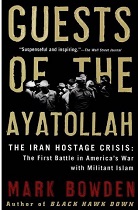
Guests of the Ayatollah: The Iran Hostage Crisis: The First Battle in America’s War with Militant Islam – Mark Bowden

AyatollaOn November 4, 1979, university students seized the U.S. Embassy in Tehran, Iran and detained more than fifty U.S. Government employees. Though some were later released, the majority remained behind for four hundred forty-four days in what is known as the Iran Hostage Crisis. In 1953, Mohammad Mosaddegh (1882-1967) and the National Front Party gained political power in opposition to Mohammad Reza Shah (1919-1980). A twice elected member of Parliament, Mossadegh emerged as a popular figure but within days of the Shah’s exile in August of that year, Mossadegh was removed in a coup sponsored by the British Government and the United States. Mossadegh’s removal and the Shah’s return, inflamed tensions and in November 1979, Iranians decided that America must go. This is the story of the hostage crisis from start to finish in an account that provides a thorough discussion of America’s foreign policy mistakes and Iran’s inner struggle between traditionalism and modernity.

It is not necessary to have extensive knowledge of Iran’s history or the Shah’s life. However, I strongly recommend Stephen Kinzer’s “All the Shah’s Men: An American Coup and the Roots of Middle East Terror“. The book is an excellent compendium of the coup that removed Mossadegh from power and allowed the despised Shah to return to his former throne. Bowden does provide background information on Iran throughout the book when needed for readers as the story progresses. But first, the author revisits the night of November 4 when all hell broke loose. Like a Hollywood thriller, the movements behind the scenes of embassy employees who realized that something was wrong outside the building take center stage and when the world came through that the embassy had been breached, contingency plans went into effect. The shredding of documents, securing weapons and other protocols highlight the urgency that ensued. We also learn the names of the main figures who are the focus of the story that is developing. Readers may be surprised to learn that the angry Iranians outside are young students and not Islamic radicals. Their goal was to remove American influence from Iran’s affairs. But what they failed to see is that they had become pawns in a chess match. As Bowden states:

“The revolution was shaping up as a struggle between leftist nationalists who wanted a secular, socialist-style democracy and young Islamists like these who wanted something the world had not yet seen, an Islamic Republic.”

The students did not expect to hold the embassy for long but as time progressed, the situation had grown from the seizure of a building to an international crisis between Tehran and Washington. Inside the embassy, employees are shielded from the outside world and current events in America. In Washington, D.C., President James “Jimmy” Carter is struggling with how to resolve the crisis. War was the last thing anyone wanted but Carter knew action must be taken and gave the order to attempt a rescue mission and protect his chances of reelection. He was facing the popular actor turned politician Ronald Reagan (1911-2004) whose appeal to conservatives and war hawks could not be ignored. The planning of the military operation and why it failed are thoroughly explored in the book, and I found myself both inspired and dismayed at what I learned. However, I did not find fault with anyone and realized that officials did what they could with the best intentions they had. Sometimes things do not go as planned. To save face, Washington admitted to the plan and even took steps regarding the Shah’s future to no avail, and the fallout provided the ammunition needed by the man who was determined to reshape Iran into a true Islamic kingdom, Sayyid Ruhollah Musavi Khomeini (Ayatollah Khomeini) (1902-1989). Though he is a minor figure in the book, his influence cannot be underestimated. And this is what the students had not anticipated. Bowden keenly observes that:

“The postrevolutionary struggle was between the victors: the nationalists and the Islamists. They had united to throw out the shah but were now locked in a struggle to shape the new Iran.”

Islamic clerics seized the opportunity provided by the siege to implement their vision or Iran’s future. Their vision was that of a true Islamic Republic incompatible with the customs of the West. To this day, Iran is locked in a struggle between the two. The most bewildering part of the story is that halfway through the crisis, it becomes clear that the students did not have a long-term plan. The movement they initiated had morphed into a new cause over which they had no control. Unsurprisingly, some students had abandoned the movement, but others remained. And even Iranian leaders had little enthusiasm for a situation that was embarrassing the country and inflaming tensions with Washington. Their ineffectiveness at resolving the crisis is a clue into the stronghold by radicals who had infiltrated the government and the siege at the embassy. As to why this happened, I draw focus to this statement by the author that sets the tone for the story:

“Revolution gives ordinary people the false belief that they can remake not just themselves, their country, and the whole wide world but human nature itself. That such grand designs always fail, that human nature is immutable, that everyone’s idea of perfection is different—these truths are all for a time forgotten.” 

Readers will observe that opinions and goals for Iran varies among the students. There are hardliners in the group and pacifists who do not want war with America but to see Iran free of any foreign influence. Their interactions with the hostages are invaluable for providing insight into the thought process behind the actions in Tehran. But the beauty of this book is the hostages themselves. Instead of them simply appearing as U.S. personnel, each hostage is given a platform in the book so that readers learn their life story, why they came to Iran and how they manage being held captive by revolutionaries who do not have a complete revolution. I warn readers that there are moments in the book that will produce anger and rage at the treatment Americans received while detained in Tehran. Though none are murdered, they were not immune to harsh interrogations and torture. There are dozens of employees in the story and keeping track of the names is challenging at first but as I read, their names became embedded in my memory making the story easier to follow. Several are now deceased, but Bowden memorializes them in this account that will live on. But as I read the book, I asked myself why the embassy remained open after the Shah fled for the final time. We may never know, and I have no doubt that the hostages asked themselves the same question.

Eventually the remaining hostages were released on January 20, 1981. Carter had been defeated at the polls and America prepared for a new president who had a different vision for the United States. Iran remained locked in the struggle between nationalist and fundamentalist which continues today. The final exodus from Tehran is the most emotional part of the book. And I could feel through Bowden’s words, the sense of relief and joy they must have felt as their aircraft left Iranian airspace. They were free physically but mentally their ordeal was far from over. In the book’s epilogue Bowden provides a follow-up on the former hostages. Their comments on their ordeal and Iran are invaluable and thought-provoking and regardless of where they are currently, none of them will ever forget their time as a hostage in Tehran. I appreciated their stories and what they learned from their time in Tehran. And to say that foreign service employees make enormous sacrifices would be an understatement.

I cannot overstate how much I appreciated this book. It is a tool to understand the mistakes of the past so that they are not repeated in the future. This is world history and a good look at a crisis that could have initiated another world war. The threat of terror still exists today but we can only hope that men and women working abroad in service of America are advised and protected from those threats. Forty-two years have passed since the siege but the lessons from it can still be applied today. I close out with this quote that perfectly explains the hostages’ experience:

“The Americans taken prisoner on November 4, 1979, did not know if they would ever come home. Every day they lived with the threat of trial and execution, of becoming victims of Iranian political violence or an American rescue attempt. They lived with the arrogance of Islamist certainty, which prompts otherwise decent men to acts of unflinching cruelty. My goal was to reconstruct their experience as they lived it. The men and women held hostage in Iran survived nearly fifteen months of unrelenting fear. They were the first victims of the inaptly named “war on terror.”” 

ASIN: B008UX8GH8

My People are Rising: Memoir of a Black Panther Party Captain – Aaron Dixon

DixonOn August 22, 1989, former Chairman of the Black Panther Party for self-defense Huey P. Newtown (1942-1989) was shot and killed in Oakland, California at the early age of forty-seven. The violent ending to his life is a reminder that the streets are unforgiving, and should one choose to embrace them, death is a constant threat. In prior years, Newton rose to fame with party co-founder Bobby Seale as the organization spread across America and became an unavoidable presence, catching the eye of Washington, D.C. The Panthers became so feared that former Federal Bureau of Investigation (“FBI”) Director J. Edgar Hoover (1895-1972) said “the Black Panther party, without question, represents the greatest threat to the internal security of the country.” Hoover refused to see that the Panthers had become an image solidarity and masculinity to thousands of Black youths who had seen and suffered racial discrimination. In the Pacific Northwest, a young man named Aaron Dixon listened to a speech by Bobby Seale and knew from that point on that he was destined to join the Black Panther Party. This book is his memoir of life on the West Coast and the ten years he spent as a Black Panther Party Captain.

It is not necessary to have extensive knowledge of the Black Panther Party before reading this book, but it will be helpful to know who the party’s leaders were. Bobby Seale enters the story quite early, and Dixon is clear that the speech he watched served as the moment when he knew he had found his calling. As a captain, he was required to make the acquaintance of party leaders such as Eldridge Cleaver (1935-1998), Fred Hampton (1948-1969) and Stokely Carmichael (1941-1998). However, they were assigned to other duties within the party and Dixon was dispatched to his hometown of Seattle. But before we get to the Seattle Chapter of the party, Dixon takes us down memory lane to his childhood. Readers will be surprised to learn that the author did not come from a broken home. And while things were not perfect, his background is not that of a child coming from dysfunction and gravitating to the streets. In high school he became a star athlete but the 1960s proved to be too scary, too unpredictable, and too painful for Dixon to focus solely on sports. But when he made the decision to see Seale speak, he did not know that his life would change forever.

When we think of the 1960s and America’s dark past of racial discrimination, images of the Deep South come to mind. But as Dixon shows, the South was not the only place where discrimination was an issue. And the stories that Dixon tells are crucial in understanding why the Panthers were so alluring and needed. From the start, he is fully committed to the party and emphatically says:

“For us, this was what putting on the Panther uniform was all about—standing up strong, refusing to be brushed aside and marginalized. We were dead serious when it came to the rights of the people. One thing was certain: if we had to die in the process, most of us were ready for that, too.” 

Huey P. Newton once said that the first thing a revolutionary must understand is that he is doomed from the start. Success becomes subjective in the face of imprisonment and death. Dixon experienced both extensively before leaving the party but his memories of the people who changed history are recorded here and serve as an invaluable account of how the party functioned from day to day. The public saw black leather jackets and matching berets but in private, things were not always as glamorous as the author shows. One thing that stood out is that the party members did not always know where they would be from one day to the next. This inevitably made marriage and children difficult and resulted in strained relationships between party members. And the threat of infiltration and arrest kept everyone on high alert. Despite the risks, there are success stories in the book that offset the events that nearly shattered the party’s morale.

To anyone watching, it was only a matter of time before the FBI placed the party in its crosshairs. J. Edgar Hoover’s paranoia about Black unity, spurred him to go after anyone and any group that had the power to alter American society. The bureau relied on deception and coercion cloaked under the guise of the infamous Counterintelligence Program (“COINTEL”). The covert actions utilized by the FBI set into motion a series of events that fractured the party resulting in mass exodus and expulsion of people who had joined at its start. And the influence of illegal narcotics in Black communities cannot be understated. Even party members were not immune to their destructive effects. Newton’s battle with drugs is widely known and discussed here as the party slides further into turmoil. Newtown’s paranoia became fueled by drug use and the party saw one of its darkest moments when Newton and Cleaver had a falling out live on air. Dixon can only watch as the party he joined with hopes of changing America, comes apart at the seams.

Before I mentioned that party members found it difficult to have “normal” lives. Dixon is no exception. He is frank about where he went wrong in life and speaks freely of the challenges that came with fatherhood, marriage, and lack of focus on accountability. I am sure that if Dixon could go back in time, he would change his past actions. Joining the party is not one of them. Following the devastating effects of COINTEL, the party became a shell of its former self. Dixon explains how the party changed its focus while trying to hold true to its roots. The section about Elaine Brown and her effect on Bay Area politics is interesting but even she could not avoid the increasingly paranoid Newton. Dixon had a working relationship with Brown and despite their differences, he gives her the praise she is due. However, as the book moves forward, Newton begins his downward spiral. Dixon did know Newton but not intimately as he explains in the book. And while he was in awe of Newton, he was not oblivious to his escalating drug habit and distrust of anyone he thought to be subversive.

While reading Dixon’s account of the party’s decline, it was clear that the writing was on the wall. When he makes his exit, he has given ten years of his life to the party. But as we learn, his life after the party was anything but normal. In fact, there are unexpected twists and turns in the story including a manhunt by the U.S. Marshall Service. I found myself speechless while reading the book’s conclusion. But there is redemption in the story and Dixon did learn from everything he experienced. Further, he is alive today and continues his political activism. Though his days in the Black Panther Party are long gone he is still a Panther at heart. This book was a surprise, and I am glad that I decided to add it to my library. The Black Panther Party, borne in a turbulent time in American history, stands as an example of the people rising up and saying, “no more”.

“I have no regrets about my ten years as a soldier in the Black Panther Party. In the end it is the memories that make life worth living, particularly the good memories. My memories of Huey P. Newton are of a young, rebellious, brave, captivating, eloquent genius who ignited a flame that will never die. My memories of the Black Panther Party are of men and women rising in unison to carry that flame, taking up a position of defiance, of sacrifice, and of undying love, infused with passion and determination to write a new, bold future for Black America. That eternal beacon will shine on, lighting the way for future generations and illuminating the past, helping us remember a time when the possibilities for humanity were endless.” – Aaron Dixon

ASIN: B009UXSHD0

The Death of a President: November 20 – November 25, 1963 – William Manchester

20220227_145712On November 25, 1963, my mother prepared to celebrate her birthday, but everyone knew there would be little joy that day. While my mother prepared herself for that day, officials in Washington were making the final adjustments to the funeral of President John F. Kennedy (1917-1963). In Texas, the family of Lee Harvey Oswald (1939-1963) also made their adjustments to his funeral after he was shot and killed while in Dallas Police custody by nightclub owner Jack Rubenstein (1911-1967), known more commonly as Jack Ruby. Over the years, my mother has spoken about that day and has always said that it was the saddest birthday she can recall. The sorrow and tear-streaked faces of those around him are images that have been permanently embedded into my father’s memories that are still intact six decades later. Kennedy’s murder will continue to serve as a topic of debate but what is rarely discussed are his reasons for visiting Dallas and the warnings, he received not to travel to a city known for right-wing activity. Author William Manchester (1922-2004) was asked to author a book covering the Dallas trip from start to finish by former first lady Jacqueline (“Jackie”) Kennedy Onassis (1929-1994). And this account is a thorough explanation the five days in which America experienced the death of a president.

Manchester’s book is not an examination of the crime itself but focuses on the Kennedy party as it left Washington and somberly returned home with a fallen leader. Regarding the assassination, Manchester subscribes to the lone gunman theory but keeps Oswald’s story to a minimum. The book keeps its focus on Kennedy and what was left of his administration after the events in Dealey Plaza. To say that there was mass confusion after Kennedy’s murder would be an understatement. Frankly, all hell broke loose, and no one seemed sure of the procedure during a situation that called for instant responses. Shock consumed everyone but as we see in the book, few should have been surprised. Manchester did a thorough job of capturing the political turmoil as Kennedy sought to diffuse an inter-party battle between Senator Ralph Yarborough (1903-1996) (D-TX) and Texas Governor John Connally (1917-1993). A successful intervention by Kennedy would have paved the way for the presentation of a united Democrat front heading into the 1964 election. But those plans died with Kennedy on November 22, and I am sure that following the assassination, Yarborough must have realized how close he came to being gunned down had the squabble not resulted in him being forced to ride with Vice President Lyndon B. Johnson (1908-1973). The past comes to life through the author’s masterful storytelling in which the main characters assume their positions in a tragedy we know is unfolding.

Because the book is a re-creation of the past, there does exist the possibility that certain dialogue may have been added and/or changed. Manchester did conduct extensive research for the book, and it is my belief that the book is correct. However, it should be noted that Jackie did not approve of the first manuscript and asked Manchester to amend it. The completed manuscript that resulted in this book is admirable, but I did notice things that struck me as odd. The murder of Dallas Police Officer J.D. Tippit (1924-1963) receives little attention in the story and is mentioned in passing. I also found statements from the author regarding Oswald’s alleged guilt to be slightly misleading. Assassination researchers will notice these things instantly. In Manchester’s defense, the book was not intended to be a critique of the crime or the Warren Commission. His assignment was to cover the Kennedy group from start to finish and in that regard he succeeded. But to be fair to the historical record, I belief assertions that Oswald was guilty are open to debate as there are still things about his life that remain a mystery.

After chaos breaks out in Dealey Plaza, the scene shifts to Parkland Hospital. Again, Manchester captures the atmosphere perfectly and supplies a thorough discussion of the panic that ensued following the shooting. Despite first reports, those closest to Kennedy knew the head wound was fatal. However, doctors did what they could before pronouncing him dead. Following the official declaration of death, the book produces a somber feeling as the group must take the body home and prepare for a funeral. The new Commander-In-Chief, Lyndon Johnson, comes across quite differently to what he has been portrayed as elsewhere. Grief consumed the presidential party and as we see in the book, each person managed it differently. This is another area where the book excels. The names of aides and officials will be familiar to readers but here they are parts of the story that do not produce an uplifting conclusion. I can only imagine the thoughts they had as the realization that Kennedy had just been murdered settled in. After making a rough departure from Parkland Hospital and Love Field, Air Force One is soon airborne and on its way back to the nation’s capital. But the story is far from over.

After arriving in Maryland, an autopsy is ordered, and Manchester re-tells the story of the arrival from Dallas. He does not discuss forensic aspects of the autopsy in detail but keeps the focus on the new widowed Jackie and the task of burying Kennedy. At this part of the story, Attorney General Robert F. Kennedy (1925-1968) becomes more of a presence as he aides his sister-in-law with the challenging task of saying goodbye to Jack. Readers interested in the funeral preparations and decisions that produced what was seen on television will appreciate this section. There is no joy to be found but what can be appreciated are the painstaking decisions and tasks executed by those who loved the late president. The impact of Kennedy’s death cannot be understated, and Manchester again captures the public sentiment and worldwide sadness in the wake of the assassination. The book’s inevitable conclusion slowly approaches as the funeral procession marches towards Arlington National Cemetery. The events seen on television screens are explained as a backdrop before Manchester closes the discussion.

Although I did find misstatements in the book, I still enjoyed reading it. Manchester brilliantly chronicled the Texas trip and the devastating fallout. Conspiracy theorists and researchers will know the story inside and out but for others who are not familiar with the Kennedy murder, this book is a reliable source of information about the reasons for the trip, the mood behind-the-scenes and the extraordinary effort needed to bring Kennedy home and restore order to Washington. There are things about the assassination we may never learn but Manchester’s work is a crucial part in keeping the historical record intact.

ISBN-10:‎ 0316370711
ISBN-13:‎ 978-0316370714