
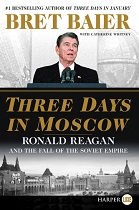
 Readers old enough to remember the Soviet Union will recall the shock and disbelief that came with the Union of Soviet Socialist Republics (U.S.S.R.) flag being lowered for the last time on December 25, 1991. The “Cold War” had come to an end, but a long road lay ahead between the United States and Russia in coming to terms with each other’s way of life. On May 29, 1988, United States President Ronald Reagan (1911-2004) and First Lady Nancy Reagan (1921-2016) arrived in Moscow for a three-day summit with Soviet General Secretary Mikhail Gorbachev and his wife Raisa (1932-1999). It has been held as a triumph in American foreign policy and as an example of strong leadership. In less than three years, the Soviet Union dissolved, and Reagan was vindicated in his predictions of its demise. During the summit, Reagan spoke to the people of the Soviet Union at Moscow University and to this day it stands as a breathtaking moment in world history. But as always, there is more than meets the eye. Fox News host Bret Baier revisits the summit in this book about three days that impacted world history.
Before I continue, I do have to acknowledge that the book may be viewed with skepticism depending on the reader’s political beliefs. Further, it is no secret that Reagan has long been the icon for conservatives. Ironically, he was once a liberal Democrat and as Baier explains, Regan’s parents had no tolerance for ignorance or bigotry. Exactly how Reagan became a conservative is not the point of the book and a full biography of him will better suit readers searching for that information. Baier does provide a short biography of Reagan tracing his roots in Tampico, Illinois, and the path he took to become Governor of California and the Republican candidate who unseated President James “Jimmy” Carter. The story picks up in pace once Reagan is sworn into office and moves into the White House. The chill in the air between the Carters and Reagans is evident in the book but a small part of the bigger picture. To anyone paying close attention, it was evident that all was not well within the Soviet Union. In fact, Baier correctly points out that:
“By the time of the Moscow summit, that fact was evident to everyone, including the Soviets themselves. Yes, they remained a world power. Yes, their arsenal of weapons was still great. But beneath the surface, the economy was in free fall, its citizenry was restless; the architect of perestroika was breaking down the remaining barriers. Reagan’s prediction was coming true, as he, if not others, had always known it would.”
Reagan did believe that the Soviet Union would fall but it should be noted that problems within the U.S.S.R. had been mounting for years, even before Reagan took office. Further, the fall of the Soviet empire is far more extensive and complicated than presented on the surface here. I vividly recall Reagan’s statement telling Gorbachev to “tear down this wall”. The Berlin Wall did fall, and it was a significant turning point in both German and world history. But even that goodwill gesture caused in part by weakening Soviet influence was not enough to stave off the inevitable. Gorbachev knew that trouble was brewing but also faced opposition within his own ranks. However, he had developed a strong relationship with Reagan and that is the crux of the book.
The visit by the Reagans had a profound effect on the Soviet Union and it was an extraordinary act by a U.S. President. Baier takes us deep behind the scenes as the two leaders seek to come to an understanding of key issues. As I read the book, I could see their relationship developing slowly but surely. It is a prime example of how people from diverse backgrounds can find common ground. That is not to say that all went well. In fact, in the book, we see more than one situation where the two leaders remain on opposite ends of a rope with each refusing to give ground. And the first ladies did not have a warm or jovial relationship themselves. Reagan and Gorbachev were leaders of the two most powerful governments on earth and needless to say the stakes were high. Before the book’s conclusion, Reagan leaves office and is succeeded by George H.W. Bush (1924-2018) who developed his own relationship and different relationship with Gorbachev. When Reagan leaves the White House for the last time, the sadness in Washington and in Moscow can be felt through the author’s words. Reagan emerges as a leader that is hard not to like. Of course, the Soviet story was far from over and Gorbachev had to defend himself from party members determined to see his downfall. Baier discusses how close the Soviet General Secretary came to being removed from office and the roles of Boris Yeltsin (1931-2007) and a young intelligence officer named Vladimir Putin who currently has the world watching his every move.
Undoubtedly, Reagan comes across beautifully in the book and I did notice that the darker moments of his president are discussed briefly. The Iran Contra scandal and Sandinista affair in Nicaragua are mentioned but Baier touches only the surface of those matters. The seriousness of each is not felt in the story at hand but I do implore readers to further research those topics to get a full understanding of Reagan’s presidency. To be fair, no administration is perfect, but the people of Central America will surely give you an interesting opinion of the Reagan era. His policies had a profound impact on Latin America that continues to be felt to this day. In the United States, the legacy of the jovial actor turned politician is permanently embedded in the Republican party’s core and he remains an icon of conservative values. If her were alive today, I am not sure if he would recognize what the GOP has become and I believe he would be both shocked and dismayed at world events. The world is a far different place today but the importance of this time in world history captured by Baier cannot be understated. In three days, Ronald Reagan accomplished what decades of U.S. foreign policy failed to do, he captured the attention and minds of the Soviet people. Readers with a thirst for historical information on U.S. and Russian relations will appreciate this book.
ASIN: B072LL4ZN2
 In December 1963, one month after the assassination of U.S. President John F. Kennedy (1917-1963), former President Harry S. Truman (1884-1972) authored an op-ed piece in the December 22, 1963, edition of the Washington Post about the Central Intelligence Agency (CIA) and its role in America. While reflecting on what the CIA had become, he stated “there is something about the way the CIA has been functioning that is casting a shadow over our historic position and I feel that we need to correct it.” The agency had been established through the National Security Act of 1947 which was intended to both centralize and simplify national defense and the intelligence apparatus. Five years before the National Security Act was signed into law, President Franklin D. Roosevelt (1882-1945) had also addressed the need for foreign intelligence and through Executive Order 9128 on July 13, 1942, he formally established the Office of Strategic Services (OSS). And to lead the new agency, he turned to former director of the Coordination of Information (COI), the legendary William Joseph “Wild Bill” Donovan (1883-1959). Though he was never director of the CIA, Donovan is credited as being the father of intelligence. Author Richard Dunlop examines Donovan’s life in this intriguing biography and historical account of how the intelligence community came to exist.
 In 2019 the Urban Institute conducted an analysis of the welfare system in the United States. It found that at least fifty-nine million Americans were on some form of public assistance mostly obtained through six major welfare programs in the country. The people in need of assistance will vary but the image that was once presented to the public stands in stark contrast to reality. In his first run for office of the president, California Governor Ronald Reagan (1911-2004) (R-CA) used the welfare system as part of his program to appeal to conservative voters. Unbeknownst to voters, Reagan had set his focus on a woman in Chicago who would later be called the “Welfare Queen”. The truth is not as glamorous and far more bizarre but that did not deter Reagan from using the case of Linda Taylor (1926-2002) who represented all that was wrong with the system in his eyes. His first campaign for president failed but he mounted a second campaign that culminated with the defeat of sitting President James E. “Jimmy” Carter in 1980. By then Taylor was an afterthought but her life was far from over. In fact, as Josh Levin shows in this biography, her life was full of mystery, tragedy, and dark moments.
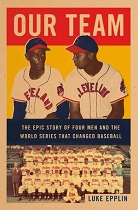 In 2012 Warner Bros. Pictures released the film ’42’ which tells the story of how Jack Roosevelt “Jackie” Robinson (1919-1972) broke the color barrier in Major League Baseball (“MLB”). The late film star Chadwick Boseman (1976-2020) starred as Robinson in the biopic and delivered a phenomenal performance. Robinson did break the color barrier, but he was not the only player to do so at that time. In Cleveland, Ohio, Indians owner William Louis “Bill” Veeck (1914-1986) was determined on further integrating baseball and set his eyes on the Negro Leagues as a pool for untapped talent. Soon enough, he had purchased the rights to Lawrence Eugene “Larry” Doby (1923-2003). The Indians subsequently signed Negro League pitcher Leroy Robert “Satchel” Paige (1906-1982) who joined the ranks and became another teammate of the team’s ace, Robert William Andrew “Bob” Feller (1918-2010).
 The first time I read Charles W. Bailey, II (1929-2012) and Fletcher Knebel’s (1911-1993) ‘
 On January 15, 1953, President Harry S. Truman (1884-1972) gave his farewell address after serving as the Thirty-Third President of the United States. He had taken office on April 12, 1945, after the death of President Franklin D. Roosevelt (1882-1945). At the time of Roosevelt’s death, allied forces were pushing further into German territory to bring the Third Reich to its knees. In the Pacific, the war against Japan continued to rage but in less than six months, it too surrendered after the devastation left by two atomic bombs. In the first four months that Truman was in office, the entire world changed in ways no one could have imagined. Had Roosevelt lived, the war might have ended differently, and domestically, America might have moved forward at a different pace. He did not live to see his post-war plans come to light and for Truman, the title of president was thrust into his lap. He had never wanted the presidency but due to circumstance, he had become what author A.J. Baime calls the accidental president.
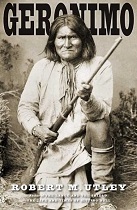 On September 4, 1886, Apache warrior Geronimo (1829-1909) surrendered for the last time to United States military personnel. The famous warrior had eluded capture for years as the American Indian Wars took place across North America. In the years following his death, Geronimo has become a pop-culture icon whose name holds a permanent place in the American lexicon. The irony is that this famous warrior was never a chief in his time and was not driven by fame. In fact, his personal story is darker and more tragic than any Hollywood production. Voltaire (1694-1778) once said that “to the living we owe respect but to the dead we owe only the truth”. Author Robert M. Utley is a former chief historian for the National Park Service and researched Geronimo’s life to dispel rumors and bring to life unknown facts. The result is this biography that is crucial to understanding the creation of the United States of America and the Native American experience.
 Seventy-seven years ago, allied forces defeated Adolf Hitler’s (1889-1945) Third Reich and the Axis powers, bringing an end to World War II. In the years following Germany’s defeat, historians have authored books, filmmakers have published documentaries and social media provides endless content about the man who ignited a world conflict. In the wake of the war, outspoken critics of the Third Reich were vindicated in their belief that Hitler would cause Germany’s destruction. He nearly succeeded and following the nation’s surrender on May 7, 1945, the German people faced the cruel reality that their country was in ruins, they were widely despised and faced years of rebuilding, de-Nazification and coming to terms with what had been done in their name. As we have sought to understand the aura of Hitler and his ascension to the position of Chancellor, sharp focus was needed on how and why the Nazis were able to take over Germany. Author William Sherian Allen decided to focus on the town of Northeim to examine the Nazi seizure of power. Northeim lies in the Lower Saxony area of Germany and between the years 1922-1945, the Nazis executed their plan to take over Germany one town at a time. This is the story of how it was done.
 On August 8, 1974, President Richard M. Nixon (1913-1994) resigned from his position as the thirty-seventh Commander-In-Chief. In the months preceding his announcement, the Watergate scandal investigation had gained significant traction and Nixon faced the possibility of impeachment. The nation watched in shock and silence as Nixon gave his speech. It marked the first and only time in history that a United States President had resigned from office. In the decades that followed, scores of books, articles, and documentaries have been published regarding the Watergate affair. I strongly recommend Fred Emery’s “
 On October 16, 1968, U.S. track and field runner John Carlos ascended the podium to accept his bronze medal following the 200m race. His teammate and gold medal winner Tommie Smith joined him on the podium and as the United States anthem played in the stadium, the pair raised their fists in solidarity with the growing movement for civil rights in America. Silver medal winner and Australian native Peter Norman (1942-2006) showed his support for the American duo by wearing an Olympic Project for Human Rights badge. The image of them standing with their fists raised remains one of the most powerful pictures of the Civil Rights Movement. However, behind the scenes, the fallout from their gesture was immense and even Norman, who was not American, suffered tremendously. This is the story of John Carlos in his words, which explains the events leading up to the pivotal moment in world history and his life which has been anything but ordinary.

You must be logged in to post a comment.