
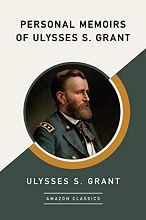
 The death of George Floyd (1973-2020) initiated a chain of events that have resulted in a criminal trial and more discussions about race in America. It is a subject that will never go away and many still struggle to confront it with the honesty that is sometimes necessary. I have noticed that when it comes to race in America and the nation’s history, it is almost impossible to grasp the entire picture without factoring in the effect of the American Civil War (1861-1865). The conflict tore the nation apart over several issues, the most important of which was the topic of slavery. Many states in the North had already abolished slavery, but in the South, it remained a way of life. And because it was so critical to the South’s existence, the states that formed the Confederacy were willing to fight to the death to preserve what they felt was their right. Today we know with the benefit of hindsight that it was a lost cause from the start but the battle that ensued was a long and bloody conflict that left thousands dead and others critically wounded. Veterans who survived the conflict were forced to live with horrible memories of war that remained with them until their final days. Among the war’s combatants was the Eighteenth President of the United States and former General Ulysses S. Grant (1822-1885). In these extensive personal memoirs, he discusses the Civil War, the Mexican American War and his life which took him to places he could have never imagined, including his roles as a father and husband.
I should point out that the book is quite long at more than six hundred pages. However, at no point while reading the book, did I find myself bored with his writing. From the start the book is engaging and Grant writes in a highly focused style that prevented him from veering off topic and employing rambling text. The book is broken down into dozens of smaller chapters pertaining to a particular subject or time frame and it does help keep the reader’s attention from waning. Readers will notice that Grant is very frank in his discussions of the events he witnessed during his time. He does not mince words even at the expense of possibly offending some. Although he fought on the American side of the Mexican War, he was not averse to giving his honest opinion and this quote should give readers and idea of the frankness in which the author gets his points across:
“The war was one of conquest, in the interest of an institution, and the probabilities are that private instructions were for the acquisition of territory out of which new States might be carved.”
The beauty in this book is that Grant does not hide behind patriotism and freely conveys his true feelings on various matters. Some might be surprised that a former general and president is writing in this way but as can be seen in the book, Grant believed in transparency and the soul of the nation, even if it meant calling it out on its faults. And make no mistake, he supported the Union unconditionally even if that meant his own life being taken from him. Further, I feel that his words are crucial for Americans today in understanding the darker parts of our past including the founding of the United States. Grant’s account should help remove the mask of a “peaceful transition” between America and the continent’s native inhabitants. Further, Grant makes an admission towards the end of the book regarding the future of Black Americans and the Caribbean city of Santo Domingo that will raise some eyebrows.
As the story progresses, we eventually come to the part in the story which every ready will be waiting for: The Civil War. Grant lays out the foundations for the war allowing the reader to understand just how important the issue of slavery was, and the threat Abraham Lincoln (1809-1865) posed to the South. I personally learned a couple of things and my eyes were glued to the screen when I read these statements by Grant:
“The Republican party was regarded in the South and the border States not only as opposed to the extension of slavery, but as favoring the compulsory abolition of the institution without compensation to the owners.”
“The 4th of March, 1861, came, and Abraham Lincoln was sworn to maintain the Union against all its enemies. The secession of one State after another followed, until eleven had gone out.”
For all intents and purposes, the stage was set for the war in which America was fighting to save itself from an enemy within. And Lincoln would become a savior and a casualty before the war’s conclusion. The discussions about the war and the individual battles are extensive and it might benefit some readers to take notes while reading what Grant has to say. Maps are provided but I think that a paperback or hardcover version might be better for those wishing to see actual positions on the terrain. The Kindle display is acceptable but does not match the clarity of a printed version. To be expected, Grant focuses on the technical aspects of the campaigns which military buffs will love. He does not go into political discussions for the most part except for when he reveals who he voted for in the presidential race and what he thought of Lincoln’s successor, Andrew Johnson (1808-1875). This is battlefield 101 and all its goodness. Grant was strategist and his brilliancy is on full display as the Union takes hold of the war and step by step, dismantles the Confederate Army. Legendary figures on both sides enter the story as Grant knew nearly all quite well and he gives his assessment of them as military figures and leaders. History buffs will find themselves unable to put the book down at times.
If there is one subject about which I wished Grant had discussed more, it is the assassination of Lincoln. Grant mentions little about it largely mentioning his reasons for not going to Ford’s Theater that night. As to why Grant avoided a lengthy discussion of the murder, I am not sure but it in no way detracts from the incredible story he is telling. What is clear though, is that he not only liked Lincoln but respected him highly as the nation’s leader. Lincoln in return, respected Grant’s abilities on the battlefield during a conflict the Union had to win by all costs. Following Lincoln’s murder, Andrew Johnson assumes the presidency and Grant makes observations about that as well. Nothing slanderous will be found in his account but I strongly recommend that readers follow-up this book with material on Johnson’s impeachment trial in which he narrowly avoided conviction. The recent events of the past year will seem like history repeating itself. However, America survived the Civil War and will continue to survive more challenges that lay ahead as we continue to correct course. And if we need words of wisdom about our past and the dark side of war and human rights, we have this book by a former president that still stand the test of time. Highly recommended.
Readers interested in the viewpoint from the Confederacy might enjoy this diary by Leroy Wiley Gresham (1847-1865) called The War Outside My Window: The Civil War Diary of LeRoy Wiley Gresham 1860-1865, which is a very good look at the conflict from the eyes of a southerner firmly behind the Confederate cause. Gresham died not long after the war ended but his observations about the war’s progression are interesting for a young man who had not yet reached his eighteenth birthday.
“Everyone has his superstitions. One of mine has always been when I started to go anywhere, or to do anything, never to turn back or to stop until the thing intended was accomplished.” – Ulysses S. Grant
ASIN : B08CDW51LB
 More than seventy years have passed since the end of World War II, yet it still fascinates historians and students. The number of books written about Adolf Hitler (1889-1945) and the Third SS Reich are perhaps the most written about any conflict and leader in history. The former Austrian vagabond rose to power in Germany and plunged the entire world into the deadliest conflict in the history of mankind. The emergence and use of the atomic bomb by American forces ushered in the nuclear age and set the stage for the Cold-War which lasted until the dissolution of the Soviet Union in December 1991. In my list of recommendations, I saw this title regarding the expulsion of Germans following the war. At first, I was not sure which expulsion was being referred to but quickly realized that it was pertaining to the Germans that were living in Nazi occupied territories outside of Germany. During the war, many of them enjoyed security and a stable life but in the wake of Germany’s defeat, nationalist governments came to power in former occupied territories, and they turned their wrath towards the German people that had been living within their borders. A staggering number of Germans were forced from their homes and sent back to Germany with no clear or concise plan for reintegrating them into a Germany struggling to recover and rebuild. And this is one part of the war that is often not discussed but a topic that should be known.
  Of America’s forty-six presidents that have served in office, few are as popular as Ronald Reagan (1911-2004). The 40th President of the United States is remembered for his time in Hollywood, his term as Governor of California and a presidential administration that had its share of controversy. The Iran-Contra scandal remains inextricably linked to Reagan and is a stark reminder of U.S. foreign policy gone wrong. The fallout in Central America from Washington’s influence and interference can still be felt to this day. Reagan is long gone from office and deceased since 2004. However, his name can still be found in conversations about politics in America, when discussing conservatism and the decline of Soviet influence across the globe. Although known to be a fierce conservative, Reagan was able to use his actor’s skills to conceal this from the public. But historians know all too well that there was dark side to the life of Reagan before and during his time in office. Journalist Dan Moldea takes another look at Reagan, paying close attention to his time in Hollywood as president of the Screen Actors Guild (SAG), its dealings with the Music Corporation of America (MCA) and the Italian American mafia.
 The Chileans have a saying that the Andes do not give back what they take. The survivors of Uruguyan Air Force Flight 571 are reminded of this each year as the anniversary of their ordeal is observed. On October 12, 1972 athletes from the Old Christians Rugby Club and selected family members departed from Montevideo, Uruguay en route to Santiago, Chile for a scheduled match. Inclement weather forced a stopover later that day in the Argentine city of Mendoza. On Friday, October 13, their plane departed Mendoza for the final leg of the trip but none of the passengers could have known that their flight would never reach its final destination. At 3:34 p.m., the plane impacted the mountains below causing the aircraft to break apart, killing several passengers nearly instantly. As the fuselage came to a rest, survivors found themselves in the valley of a mountain during the winter season and in unfamiliar territory. And for the next seventy-two days, the fuselage became their home as they struggled to keep going in the face of severe adversity. Eduardo Strauch was on the plane that day and survived the crash. But for more than thirty years, he has kept his silence about what he remembers and how it impacted his life. This short but poignant memoir is his account of what is known as the “Miracle in the Andes”.
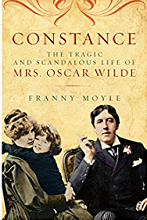 It is no secret that I absolutely love books and this blog is proof of that. The discovery of new reading material literally gives me a dopamine rush that only fellow bookworms can understand. When I saw this book about Constance Wilde (1858-1898), the wife of the late playwright Oscar Wilde (1854-1900), I knew that I had to purchase it. I often quote Wilde in conversation and when writing. He had a keen sense of human nature and his quotes still hold true today. At the height of his career, his plays were a hit, and the money was rolling in. But a scandal surrounding his sexual orientation changed all of that and left him a bitter and broken man. His story is complicated but what is often left out of it, is the role of his wife Constance whose own story is equally as moving. Author Franny Moyle takes a look at her life in this biography that just might make you look at the Wildes in a very different light.
 Undeniably, slavery is one of America’s darkest moments. It was an extremely dehumanizing system of exploitation and violence that destroyed families, claimed lives and helped propel the nation towards the Civil War. Even today, the issue is hotly contested as we continue to reconcile with its residual effects. We have come a very long way from the era of legalized slavery in the United States but still have a long way to go before achieving true equality for all. Black Americans have long suffered grave injustices but there is no need to go into them here. Instead, the focus will be on this autobiography that was written by a former slave named Harriet Jacobs (1813 or 1815 – 1897). In the book, the main character has the pseudonym of Linda Brent, who is the slave of the book’s antagonists, Dr. Flint and his family. And what she reveals about her life reaffirms the many dark truths about a slave’s life.
  Quite some time has passed since my last post, mainly due to work matters and my being fully invested in finishing the book that is the subject of this review. Originally, I had planned on reading this three-part autobiography by William L. Shirer (1904-1993) one book at a time but Amazon also offers them combined and I decided to take the plunge. Shirer is by far, one of my favorite authors and there was no way I could pass this one up. Some of you may be familiar with him and recall that he is best known for his time as a CBS correspondent stationed in Nazi Germany during Adolf Hitler’s (1889-1945) rise to power. Upon returning to the United States, he moved to radio full time and lived the rest of his years as an author of historical non-fiction that has stood the test of time.
  February 9, 1979 marked 40 years since Paramount pictures released the cult-classic film
 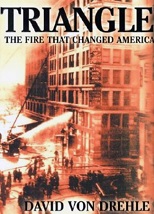 During my first semester at the John Jay College of Criminal Justice many years ago, I attended a class in the field of fire science as part of my graduate degree track. In the class, we, were required to study one of the deadliest fires in New York City history: the Triangle Shirtwaist Factory fire on March 25, 1911. Our professor warned us that the story was deeply disturbing and that the detailed descriptions of the victims would be beyond grisly. However, he also explained that as part of the basis for a career in fire protection, we needed to understand the life safety code and the stories of how and why fire protection has continued to advance. Today, nearly twenty-three years later, I still recall the fire and its impact on workplace safety. But I decided to read this book by David Von Drehle to revisit the fire and perhaps learn something I did not know previously. And what I found within its pages, is a story much longer story than the one I had learned of over two decades ago. And similar to when I first read about the fire in college, I also felt chills go down my spine this time around.
  FREETHINKING BIBLIOPHILE
You must be logged in to post a comment.