
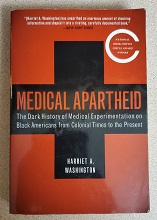
 It is not often that I need a moment to myself after finishing a book but alas, it has happened once again. Prior to reading this breathtaking and riveting book by author Harriet A. Washington, I last found myself at a loss for words after finishing David E. Stannard’s American Holocaust: Columbus and the Conquest of the New World. As I explained in that posting, the book was so unsettling that I needed a drink and a moment of silence afterwards. That process was repeated upon completion of this book which is bound to jolt anyone who decides to voyeur within. The title alone is enough to catch a person’s attention but I believe it only tells part of the story that is to be found within the pages of this book. Quite frankly, the full story is far darker and disturbing. However, it is history as it was in all of its ugliest and rawest form. When viewed in that context, the requirement of facing it head on becomes readily apparent if we are truly intent on fixing the disparities in health care between people of different ethnic backgrounds. In fact, in the epilogue, the author makes it clear that although the book does not paint a flattering picture of history, it is still necessary for blacks to seek medical care and participate in the health care industry as their lives depend on it.
Washington opens the story with a discussion of Dr. James Marion Sims (1813-1883) whose attempts to treat the condition of vesicovaginal fistula set the theme for the story to follow. I warn readers that the first half of book will sound like something out of a horror film. The issue of slavery does come up and is directly relevant to the story at hand. Furthermore, what the author reveals, should put an end to any discussion of one slave having a better life than the other. The full barbarity of the system of slavery is on full display, supported by physicians who were supposed to preserve life. Readers who are sensitive to this subject matter may want to use discretion when deciding whether or not to read this book. Once you begin the story, it is ride that moves full speed ahead and the author pulls no punches. Sims emerges quickly as a controversial figure whose legacy is summed up by Washington clearly when she states:
“James Marion Sims is an important figure in the history of experimentation with African Americans because he so well embodies the dual face of American medicine to which racial health disparities owe so much.”
The doctor is only one of a long list of physicians remembered as pioneers. But as can be seen in the book, they also had a darker side which led to them committing even darker acts at the expense of blacks and others considered to be inferior or undesirable. Racial ideology cloaked under the banner of eugenics, resulted in some of the most atrocious events I have ever read about. Washington does not mince words and some of what she reveals might be hard to take even for the most stoic readers. Some of the darkest components of racism come back to life, showing American history without the glory. This truth is ugly and upsetting, and is bound to anger and appall. Today, such actions would be unthinkable and rightly subject to criminal prosecution but in the 1800s, this did not happen and the we can see in the book must how widespread the belief in black inferiority truly was, which allowed doctors to put into practice thoughts that are completely insane.
Any discussion of American medical experiments would be incomplete without commenting on the Tuskegee Experiment. The story is included here and Washington does an excellent job of summarizing what did happen and clearing up misconceptions that have festered for too many years. It is an honest and thorough discussion of a medical experiment that went terribly wrong and carefully hid the truth for those taking part as test subjects. It remains one of the darkest chapters in American history but it far from the only one. In fact, there were others and Washington takes us down memory lane so that we can see just how disturbing these events truly were. As I read through the book, I found myself aghast not only at the bizarre thoughts of physicians such as being able to negroes white, but at the unnecessary procedures that were carried out under the guise of black patients not feeling pain the way whites do. These parts of the book are a reminder of how primitive medicine was less than two hundred years ago. They are also a reminder of how far we still have to go in eliminating the disparities that exist in our health care system that have been fueled by bias for far too long.
Some readers may be triggered by this book for it pulls back the curtain on what we have been told was a storied medical history that placed America at the forefront of scientific advancement. In prior years, Margaret Sanger (1879-1966) was seen as a champton of reproductive responsibility as the founder of Planned Parenthood. Yet Sanger also had a dark side and her true goals were left out of official narratives. Washington takes another look at Sanger and readers will either be surprised or vindicated in their beliefs about her. What is adamantly clear is that the times in which she lived , certainly contributed to her views which today seems nothing short of draconian. She was part of a growing eugenics movement, perfected in Nazi Germany and nearly replicated many times over after World War II. Concentration camps were replaced by medical laboratories and covert plans enacted by intelligence agencies including American’s own Central Intelligence Agency (CIA). Operation Big City is a name I was unfamiliar with but its purpose which has never been confirmed by the CIA, should make the hair stand up on the back of anyone’s neck. If it really did happen, then it speaks volumes about America’s darkest secrets. And for readers who cannot imagine the U.S. Government being involved in anything nefarious domestically, I do recommend that research Operation Northwoods, which was presented to President John F. Kennedy (1917-1963) by the Joint Chiefs of Staff as a pretext for an invasion of Cuba.
To say that there is a wealth of information in this book would be a severe understatement. Readers should be prepared to have their minds blown. Just when you think that the story might be winding down it picks up even more of a pace as the revelations keep coming. And as they do, it should be perfectly clear why Black Americans are distrustful of the medical field and tend to received less medical care than their white counterparts. And that is really Washington’s goal. She is showing us how and why blacks came to view the medical field as harbingers of death and destruction. Civil rights and basic human decency were nowhere to be found as doctors were left to their own devices with free reign to wreak havoc on the bodies and minds of black people.
I want to reiterate that this book is not an easy read and there is no happy ending. Much of it is haunting and reveals a very dark side of human nature that some of us may be shocked to learn of. These are the events in history that were never included in history books. It is America’s history and a legacy of medicine gone horribly wrong. The endless number of victims is staggering and some are still alive today. This book is a testament to their struggles and the long road out of the darkness upon which we are still traveling. And may Washington’s work stand as compendium of a key component of the African-American experience in America.
“I challenge us to change, because as Charles Darwin once observed, “It is not the strongest species that will survive, nor the most intelligent, but the one most responsive to change.” – Harriet A. Washington
ISBN-10 : 076791547X
ISBN-13 : 978-0767915472
 Peace is a state of being that mankind constantly seeks to achieve even as tensions flare between nations making the threat of armed and nuclear conflict a very real possibility. The detonation of the bombs over the Japanese cities of Hiroshima and Nagasaki in August, 1945, changed modern warfare permanently. Man had entered the nuclear weapon era and the fear of complete annihilation reached even the most hardened leaders of the free world. In the wake of World War II, the United States and Soviet Union took center stage in the battle for global supremacy. The Cold War ushered in a new level of caution as Washington and Moscow became increasing distrustful of each other.
 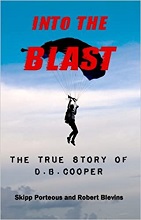 On November 24, 1971, Northwest Airlines Flight 305 departed from Portland International Airport with a destination of Seattle, Washington. Among the passengers was a middle man who gave the ticket agent the name “Dan Cooper”. Minutes after takeoff he handed a note to a stewardess Flo Schaffner a note that he had a bomb in his briefcase. To prove his point, he had the suspicious flight attendant sit down next to him and opened the case for her viewing. Upon realizing that Cooper could in fact destroy the aircraft, authorities were alerted that a hijacking was taking place. After refueling in Seattle, the plane took off again but with $200,000 aboard as per Cooper’s instructions. Once airborne, Cooper had flight attendant Tina Mucklow show him how to operate the aft stairwell on the Boeing 727. Shortly after 8:00 p.m., the warning light went off in the cabin indicating that the aft stairwell had been deployed. When the plane landed in Reno, Nevada, Cooper was nowhere to be found. And to this day, his whereabouts are unknown. Or are they? And had D.B. Cooper been hiding in plain sight while the Federal Bureau of Investigation (FBI) struggled to solve the case? Authors Skipp Porteous and Robert Blevins decided to examine the D.B. Cooper mystery and what they found is sure to catch the eye of even the most ardent supporters of the theory that the hijacker died after jumping from the aircraft.
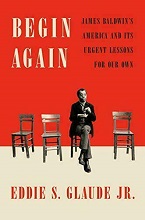 Within the past several years I have found myself becoming more and more familiar with the life and legacy of James Baldwin (1924-1987). And I have come to realize that while he is widely appreciated as an author, he is at the same time, underrated as a voice of reason with regards to the country he called home. Curiously, Baldwin spent many years of his life in Europe, finding solace and residency in France and Turkey. However, his life outside of the United States allowed him to view America from the eyes of a foreigner. That position gave him a unique opportunity to view America through the lens of a microscope where all of its social ills were readily visible. In his time he was seen as a trouble maker and rabble rouser due to his outspokenness and sadly because of his sexual orientation. But to focus on his frank dialogue and homosexuality would be misjudgment of his true genius. Baldwin possessed an uncanny ability to dissect American society and highlight where the nation was going wrong. Today America is at a crossroads with a looming presidential election in a nation fiercely divided and deeply polarized. Eddie S. Glaude, Jr. takes another look at James Baldwin, who comes back to life as a voice of reason during which are certainly difficult times.
 In the early morning hours of June 6, 1993, a shipping vessel named the Golden Venture ran aground at Rockaway Beach in Queens, New York. National Park Service officers began to inspect the incident and noticed human figures jumping over the sides of the boat and scurrying out of the light. It soon became clear that the ship was carrying human cargo, more specifically, Chinese men and women being smuggled into the United States. The next day, my parents, brother and I watched the news broadcasts in shock. But what none of us realized was that the smuggling of human beings into the country had been taking place right under our noses. However, my father who was undoubtedly the most street savvy out of the group remarked that people have been smuggled into the United States for years. But looking back, I do not believe that even he knew the scope of the operation. Patrick Radden Keefe, the author of the phenomenal
 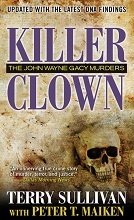 On December 11, 1978, Robert Jerome Piest (1963-1978) was finishing up his shift at Nisson Pharmacy when an older man approached him with the offer of a job in his contracting company. Piest told his mother Elizabeth that he would only be a few minutes. That was last time anyone saw Robert Piest alive. Police would soon learn that the older gentlemen observed conversing with Piest was a local named John Wayne Gacy (1942-1994), a well-respected but peculiar figure who owned a company named PDM Contractors. Gacy initially denied any knowledge of Piest or his whereabouts that night but detectives felt that he was certainly hiding something. Although he was only a person of interest at that time, none of the detectives could have known then that in only two years, the worst serial killer in American history would be convicted of multiple counts of murder. Terry Sullivan was Supervisor of the Cook County State’s Attorney’s Third District office and here he teamed up with Peter Maiken (1934-2006) to bring us the inside story of the effort to bring John Wayne Gacy to justice.
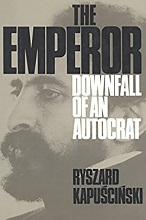 On August 27, 1975, news reports began to emerge that Tafari Makonnen, known to the world as Haile Selassie I (1892-1975), had died at the Jubliee Palace in Addis Ababa, Ethiopia. The man who ruled Ethiopia for forty-four years and who had served as the icon of the Rastafarian movement was eighty-three years old. Selaisse had lived his final years in exile after being deposed in a coup that took place in September, 1974. The world-renown leader was a larger than life figure although he only stood 5’2″. He was recognized on the world stage and helped Ethiopia modernize itself as the wave of independence swept over the African continent in the 1960s. However, his reign was not free of controversy and Selassie was viewed by some as a greedy tyrant who used his position of power to enrich himself and those closest to him. Ryszard Kapuściński (1932-2007) was a Polish journalist who traveled to Ethiopia and interviewed former members of Selassie’s administration. This book is a collection of what they remember from their time in office with regards to the emperor’s daily routine, his achievements and also his downfall.
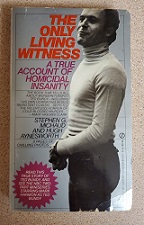 On January 24, 1989, the executioner on Florida State Prison’s stepped forward to exercise his duty in carrying out orders of the state. But this was no ordinary execution. In fact, it was one that no one would ever forget. At 7:16 a.m., Dr. Frank Kilgo declared the prisoner deceased and his announcement provided the conclusion to the final chapter in the life of American serial killer Theodore Robert “Ted” Bundy (1946-1989). During his incarceration, Stephen G. Michaud and Hugh Aynesworth conducted a series of interviews with Bundy in an attempt to understand thoughts and motives, and to clear up mysteries surrounding his crimes. The result is this intimate look at Bundy through the eyes of the authors who came face to face with a killer who is firmly entrenched in the annals of American criminal history.
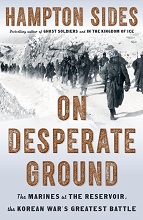 On June 8, 2020, the Democratic People’s Republic of Korea (North Korean Government) cut all lines of communications with the Republic of Korea (South Korean Government). Eight days later, an explosion destroyed the joint liaison building which had been used to host meetings between the two governments. The bombing was instantly seen as an act of aggression by North Korea and prompted a sharp response from its South Korean counterpart. Fears of an armed conflict gripped neighborhood countries as tensions continued to rise. Many eyes in both China and the United States were watching for the events very well could have led to the re-ignition of the Korean War (1950-1953), a conflict that never officially ended. I am constantly amazed at the expressions of surprise people display upon learning this fact. It seems surreal but the fact is that the Korean is still an “open” conflict that is only contained by the 39th Parallel and the watchful eyes of several foreign countries over North and South Korea. The war itself is often reserved for military buffs and overshadowed by both World War II and the Vietnam War. However, the reality is that the conflict in Korea nearly evolved in World War III. Author Hampton Sides is here to tell us about the role of the United States Marines and their experience in the Battle of the Chosin Reservoir.

You must be logged in to post a comment.