
 The City of Chicago has earned a reputation as being a tough metropolitan landscape in which winters are harsh, politics fierce and the streets are dangerous. In recent years, the rise in shootings on the south side of the city have made news headlines across America. The violence has been featured in documentaries and articles that are both eye-opening and horrific. No one yet knows if or when the violence will end but authorities in Chicago continue to grapple with gun violence that shows no signs of slowing down. The battles are reminiscent of another era in American history where blood flowed on Chicago’s streets as gangsters gunned each other down during the 1920s and 1930s. Of all the gangsters that called Chicago home, only one has retained a permanent place in American pop culture as the icon for organized crime. His name was Alphonse “Al” Capone (1899-1947) and this is the story of his life by author Robert J. Schoenberg.
Although he died in 1947, Capone still remains an egnimatic figure that many have come to view as the prime example of the dark legacy of Italian-American organized crime. Several films have attempted to tell his story, including Brian DePalma’s 1987 box office hit The Untouchables starring Robert DeNiro as Capone. The film is good entertainment but not completely accurate historically. Nonetheless, it is classic DePalma and I have it today in my collection of films. I firmly believe that there is still more to Al Capone that we may never learn but there does exist enough material in the form of public records, newspaper articles and even Capone’s own statements that help compose a picture of his life. Schoenberg took on the monumental task of researching all of those materials and more which are presented here in a gripping account that will keep readers glued to the book from begining to end.
Similar to other larger than life figures, there is much about Capone’s life that has probably been either miscontrued or possibly even fabricated. In pop culture, he is seen as a ruthless killer who had enemies wiped out regularly. In reality Capone was indeed a brutal gangster when necessary, but his eagerness to kill and for gratuitous violence is perhaps quite overblown. But make no mistake, Chicago was violent and Capone was firmly entrenched right in the middle of the gang wars. However, before he reached Chicago, he was another product of my own New York City where he entered the world on January 17, 1899, the fourth son of Gabriele and Theresa Capone. The young couple could have never imagined that their fourth son would become the most notorious gangster in American history.
The early part of the book is more on the routine side, explaning Capone’s early family life. But it soon changes when he meets Frankie Yale (1893-1928) who introduces Capone to his calling. And after an encounter in a bar with an Irish gang member, Capone is dispatched to Chicago where Johnny Torrio (1882-1957) is eagerly waiting. At this point in the book, the story takes on a whole new dynamic as the roaring 20s come to life. Readers are advised to buckle up because business certainly does pick up. It is a roller coaster ride that is told in a way that makes you feel as if you are right there next to Capone. Fans of DePalma’s film might find it difficult at first to separate fact from fiction. However, movie buffs will recognize the changes made by Hollywood during production to the actual story. But I do feel that to truly enjoy this book, it is necessary to cast aside any pre-conceived notions about the story one may have. Frankly, for some it may feel as if they are re-learning Capone’s story for the first time. But that can be a good thing as it forces us to pay closer attention to details that may have been ignored by mainstream media in recreations of the era’s critical events.
Any story about Al Capone would not be complete without a discussion of his feuds with the North Side Gang lead by Charles Dion O’Banion (1892-1924) , Joseph Aiello (1890-1930) and several others. The events leading up to each are detailed here, allowing the reader to see how and why Capone took certain actions. Alliances with Yale, the infamous Genna brothers and Jack “Machine Gun Jack” McGurn (1902-1936) helped Capone reign supreme over Chicago. Fueled by prohibition, rackets, prostitution and other vices, the streets of Chicago ran red with blood. Capone soon became public enemy number one, even attracting the attention of President Herbert Hoover (1874-1964). Today, it may be hard for some to imagine one man being so powerful but Capone had risen to the stop of the crime world and his ascent is captured justly by Schoenberg. The recreation of key events is told with the right amount of suspense and not once did I feel that the author was either weak in his telling of the story or too reliant on shock effect. The deaths are violent but the violence is never glorified and neither is Capone.
If there is any area where the book comes up short is with regards to Capone’s life at home which is discussed sparingly. Schoenberg does provide glimpses of the Capone family home where the mobster lived with wife Mae Capone (1897-1986) and their son Albert Francis “Sonny” Capone (1918-2004). But the bulk of the book isfocused on his public persona as the head mafia boss in Chicago. I do warn readers that Capone comes off in his own words as the villain you hate and love at the same time. He was a charismatic figure who fully embraced the public light. Some of his public statements and good will gestures are included showing the well constructed public facade he used to cover his underworld dealings. As I read the book, I felt as if Capone was the preview for future mobster John Gotti (1940-2002), whose public displays bravado were straight out of the Capone playbook.
I mentioned before that Brian DePalma did take certain liberties when making his film, but some parts of the film were accurate. Capone was indeed indicted for income tax evasion but the real method in which the case developed is less impressive but still highly important in understanding Capone’s downfall. The composite characters created in the film will be not be found here but the inspirations for them are. And readers who have seen the film will quickly pick up on this. Ironically, prohibition would not as a big of a role in his downfall as one would think. The incredible story is told here with rich details although nowhere close to being as spectactular as the silver screen. And yes, Elliot Ness (1903-1957) is part of the story as well, just as one would expect.
As Capone serves his time, another enemy emerged, this time from within and he would not be able to fix it. Schoenberg makes it clear that the disease which afflicted Capone later in his life most likely came from a certain source although the jury may still be out. Putting that aside, he does explain how Capone’s condition deteroriated. and whether or not it should have reached the point that it did is left up to readers who may be highly familiar with it through medical training of their own. The progression of the disease and Capone’s descent stand in stark contrast to the earlier parts of the book where he reigned as king of the Windy City. Schoenberg does not drag out the downfall but tells the story at just the right pace, including only the most important details as the end nears. And when Capone made his final depature, it felt as if I had just stepped on a ride that moved at full throttle from start to finish. And as a bonus at the end of the book, the author provides a follow-up on all of the important figures who did survive the Capone years. Their fates are a mixed bag that will leave some readers in shock and others content.
I do not believe the world will ever see another Al Capone. The era in which he lived is long gone. Crime will always exist and racketeering will be an attractive and lucrative career in crime for gangsters. But the personality and seductiveness of a figure like Capone is from a bygone era never to return. And as much as we can persecute him for the havoc he wreaked on the streets of Chicago, we can also study him as a master manipulator, dedicated father and a Robin Hood figure beloved by those who knew him well. If you want to learn more about the real Al Capone, this is a great place to start. Highly recommended.
ISBN-10: 9780688128388
ISBN-13: 978-0688128388


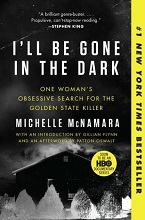 When I started reading this book, I was not sure if I should continue as I felt that the subject matter was darker than even I am used to. But something inside of me said to keep going and listen to what the author is saying. Less than ten minutes into the book, I realized that I would not be putting it down anytime soon. In fact, the book pulled me in so much that I finished it one day. I simply could not get enough of the story. Initially, the book came as a recommendation on Amazon. Like many others, I was aware of other killers in Californian history. The Zodiac? Check. Richard Ramirez? Check. Golden State Killer? I had no clue about this menace who terrorized southern California in the late 1970s and early 1980s. But as I read through the beginning of the book, I soon realized that author Michelle McNamara (1970-2016) was about to take me deep inside the story of the “Original Night Stalker”.
 Learning one’s family history can be an enlightening and liberating experience. However, it can also reveal many truths that some wish to remain hidden. So what happens when you discover that your grandfather, the younger brother of a key architect in the “Final Solution” was not as innocent as you have been led to believe? Well, that is what happened to Katrin Himmler, whose grandfather Ernst Himmler (1905-1945), was the younger brother of Schutzstaffel Reichsführer Heinrich Himmler (1900-1945). Himmler’s father had asked her to search the Federal Archives in Berlin for information on his father Ernst and what she discovered was a trove of information not just on her grandfather, but on her uncles Heinrich and Gebhard Himmler (1898-1982). What started out as simple research request, evolved into the family history contained within the pages of this eye-opening account of the Himmler story.
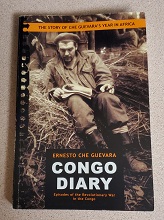 I have been taking advantage of the free time that I now have at my disposal and was reorganizing the book shelves when I came across this book which I had purchased quite some time ago. It is the translated diary of Dr. Ernesto “Che” Guevara (1928-1967), from the failed revoultion in the Democratic Republic of the Congo im 1965. The book was published in 2011 and through the joint efforts of the Che Guevara Studies Center and his widow Aleida March. In the years following the repatriation of Che’s remains to Cuba in 1997, there was a resurgance of interest in his work and this diary is just one of several regarding the revolutions in Cuba, the Congo and Bolivia where he met his untimely death.
 I have always wondered what happened to the family of former Lucchese family assoaciate Henry Hill (1943-2012) following their entry into the Witness Protection Program. Hill had been expelled from the program due to multiple arrests, including one in 1987 for narcotics trafficking. In the years that followed, he became somewhat of a celebrity, appearing on shows and giving interviews about his life in the mafia. His ex-wife Karen, has remained out of the public light, living her days peacefully under the cloak of anonymity. Their children Gregg and Gina have families of their own but do their best to also remain out the public light. Their father’s life was portrayed on screen by Martin Scorcese, whose film
 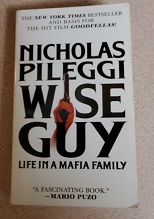 Recently, I was browsing Netflix and saw that Martin Scorcese’s classic film
 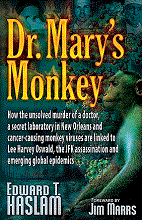 On July 21, 1964, New Orleans police officers responded to a call about a mysterious fire in an apartment complex. When officers arrived and entered the apartment, they found the body of Dr. Mary Sherman (1913-1964), a noted orthopedic surgeon and cancer researcher. The details surrouning her grisly demise are hair raising, chilling and also mystifying. The murderer was never caught. Edward T. Haslem is a New Orleans native whose father was a close acquaintance of Sherman. In fact, his father was asked to identify her remains and the incident left him visibily shaken as Haslam captures the below passage:
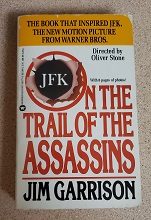 I decided to use the spare time at hand to reorganize my book case and other shelves upon which sit the other literature that I have come to love and appreciate. While perusing the books, I found this book by former New Orleans District Attorney James “Jim” Garrison (1921-1992) who is remembered for bringing the only public trial in the murder of President John F. Kennedy (1917-1963). In 1992, Warner Brothers released Oliver Stone’s
  We hear the word peace often, typically while watching news broadcasts regarding ongoing conficts around the world. The search for peace remains the ultimate goal of mediators intent on resolving long standing feuds that have claimed lives and destroyed cities. Cease-fires and treaties are signed by which all parties agree to end hostilities. However, conflict resolution and geunine peace are two very different concepts. Many of us seek peace in our lives, away from those who have wronged us or others who remain a source of irritation. The American pacifist A.J. Muste (1885-1967) believe that there is no way to peace, but instead that peace is the way. That is the central theme of this book by Deepak Chopra, M.D., who along with brothe Sanjiv, wrote the beautiful memoir
  FREETHINKING BIBLIOPHILE
You must be logged in to post a comment.