
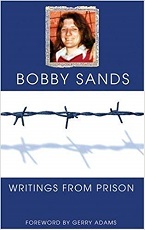
 The hunger strike at the HM Prison Maze in 1981, captured the attention of the British Government and earned the IRA sympathy around the world. On May 5, news broke that IRA member Bobby Sands (1954-1981) had died after 66 days of refusing to eat. Sands and his fellow strikers were determined to be recognized as political prisoners and earn several other concessions from Margaret Thatcher’s (1925-2013) government. London had refused to give in and Thatcher had earned the nickname of “The Iron Lady”. Today, the “Troubles” as they are known, continue in Northern Ireland. The IRA remains committed to its goal of a unified Ireland and the removal of the British Crown from Ulster County. Sands had risen among the ranks in the IRA and during his incarceration, his reputation as a leader and intellectual grew every day. This book is a collection of his writings which were smuggled out in parts (The IRA prisoners at HM Prison Maze were engaged in a long running standoff with guards and were being kept in bare minimum cells with mainly a mattress and bucket to be used as waste disposal).
Gerry Adams, the former leader of Sinn Féin, provides a foreword in which he fondly remembers his friend and former fellow inmate Sands. As the book moves on to Bobby’s words, we already know a bit of information about him. However, for a more complete biography, I strongly recommend Dennis O’Hearn’s ‘Nothing But an Unfinished Song: The Life and Times of Bobby Sands‘. It is by far a thorough and highly engaging biography of Sands. The writings here begin after Sands has been incarcerated for quite some time. He is already well into the hunger strike, has stopped bathing and living in a cell that could only be described as hell on earth. The day begins like most others with he and the guards having their daily battles. Sands is frank and does not mince words when he describes what is happening. It is graphic and it is gritty but he clearly intended for readers to truly understand the treatment he and other IRA members were receiving at the prison. Other former prisoners and priests also sounded the alarms about the inhumane treatment at the prison, but officials within the Northern Ireland and British governments steadfastly denied the accusations. What is clear from Sands’ writings is that there was no love lost between to the opposing groups with the IRA members routinely using the term “screws” to describe the guards.
It is hard to imagine just how extreme living conditions were at the prison. Sands describes the lack of heat and sanitary conditions. Some readers will be disgusted and repulsed by what he says. Putting the hunger strike aside, living conditions at the jail were more than enough to induce psychosis in even the most rational individual. In fact, at several points in the book, Sands questions his own sanity and realizes that his mind will never be the same again. Yet, he never wavers from his cause and stays committed to the IRA beliefs. And whether you agree with the IRA or support the Crown, Sands’ stand is more than many of us would be willing to endure.
About mid-way through the book, we are able to read a series of poems that he wrote about his time inside and the IRA cause. He was highly talented but as one would expect, the poems are all political and focused on the Troubles. Regardless, they are good and showcase the many skills he developed that he was never able to use outside of prison. And while I do believe he would have remained an IRA member, perhaps his time in prison and maturity would have resulted in a different approach to resolve the Troubles.
Later in the book, we shift back to Sands’ journal that was kept mostly on toilet paper due to the lack of any type of writing materials. As we move on to the spring of 1981, Sands reports frequently and makes sure to note his weight which by that time had dropped to a shocking 127 lbs. After several entries they stop, presumably as Sands entered the final stages of his fight. Had he lived, I am sure he would have put together a book that would have contained far more than what we have here. However, what he did leave us is a trove of insightful notes that show the progression of his mind and why he believed in the Republican cause.
The book is a bit short but it is focused on the strike and is not an autobiography. Readers who have been following the Troubles and are familiar with Sands’ life will appreciate this collection of his writings from the final months of his life.
ASIN: B07QPV3MGH
 I saw this book while browsing online and the cover immediately caught my attention. After reading the cover, I was further intrigued and wanted to know which great war the author was referring to. Needless to say, my curiosity got the better of me and I decided to take the plunge. Author Stephen Bourne has researched the lives of Black soldiers who fought in the British military during the World War I and their communities in Britain during and after the war. Sadly, as the author points out, for too long there was never a major focus on the experiences by Black Britons, who were nearly erased completely from history. But due to efforts by Bourne and others, some of their stories have survived and in this book, they are given their just due for their service in defense of Great Britain.
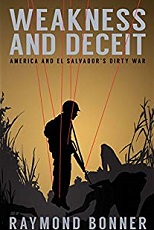 For the first time in a long time, I found myself emotional and angry as I finished this book about the relationship between the United States and the military dictatorship in El Salvador during the small Central American nation’s civil war in the 1980s. I had expected the book to be a tough read and contain many facts that would be both uncomfortable and upsetting. But I admit that I was not prepared for what I learned. This is not the first book I have read or reviewed regarding El Salvador. There are many other books that are very good but take different approaches to the subject matter. It might be fair to say that the other books were a primer for what I was to learn here in this mind-blowing and deeply troubling book by Raymond Bonner, a former Marine who served in Vietnam and current staff writer for the New York Times.
 Recently, I had been revisiting material regarding pivotal moments in the U.S. Civil Rights Movement. My focus became trained on the Black Panther Party, led by the late Huey P. Newton (1942-1989) and Bobby Seale. The Party has been viewed in both positive and negative lights depending on the view of the person assessing its rise and effect on American society. Newton, who later earned a Ph.D., was a charismatic and gifted orator who in turn used those skills in the form of the written word. His autobiography, ‘
 When I read the synopsis for this book, I was a bit surprised. Stories by defectors from North Korea are not uncommon, but the name of the author caused my interest to rise. The surname is clearly Japanese but the connection to North Korea was the part that pulled me in. Masaji Ishikawa was born in Japan to a Japanese mother and Korean father. In 1959, the Japanese Red Cross Society and the Korean Red Cross Society secretly negotiated a “Return Agreement”, allowing any native born North Koreans living in Japan to return to their homeland. The General Association of Korean Residents in Japan, then initiated a repatriation campaign which reached the Ishikawa family. His father was convinced by the league to return to North Korea in 1960, the family moved to North Korea under the illusion of a bright and prosperous future.
 If you have visited the Caribbean island of Puerto Rico, then you know very well why it is called the “Island of Enchantment”. It has a mystical feel to it and attracts thousands of tourist everyday. The presence of the United States is found across the island, reminding the visitor of the territory’s status as a commonwealth. Regardless, Old San Juan is like a step back in time several hundred years earlier as European explorers under the command of Christopher Columbus (1451-1506) make their way to the new world. The history of Puerto Rico is often misunderstood or unknown. The American occupation and the events that followed still ring fresh in the minds of Puerto Ricans both on the island and across the continental United States. But for a large number of people, the history of Puerto Rico prior to American intervention is often a mystery. This book by Rudolph Adams Van Middeldyk addresses that very topic, providing a true history of how Puerto Rico came into existence and why it ended up in the possession of the United States.
 A few days ago I was browsing recommendations on Amazon and came across this book whose title caught my attention. I have not read anything on Nazi Germany in quite some time so I decided to take a closer look. I was unaware of Hans Baur (1897-1995) and his relationship with Adolf Hitler (1889-1945). As the Fuhrer’s pilot, I knew Baur would have very intimate knowledge of Hitler’s life behind the scenes and the book does not disappoint. However, it should be noted that it is really Baur’s story with Hitler filling many of the pages for obvious reasons. The story is interesting but I could not help feel that Baur left many things out. Readers may also feel the same way for reasons that will be discussed below.
 Forty-one years ago, over nine hundred men, women and children died at the People’s Temple compound in Jonestown, Guyana. Their charismatic and paranoid leader, Jim Jones (1931-1978), died of a gunshot wound to the head, avoiding the lethal liquid concoction given to a majority of his followers. Disturbingly, many of the deaths were not in fact suicide, but outright murder. Children and infants were forced to ingest the deadly brew that took their lives in a matter of minutes. The events of November 18, 1978, concluded the final tragic chapter in Jones’ tyrannical reign.
 I was browsing through recommendations on Amazon when this book caught my attention. As one would expect, the words Civil War stuck on the cover. However, the name LeRoy Wiley Gresham (1847-1865) did not sound familiar at all. My interest peaked and I decided to see why the book had earned a five star rating. And to say that it is a hidden gem would be an understatement. It is indeed special and the author did a remarkable job of putting it all together.
 In 1955, Warner Brothers released ‘Rebel Without a Cause’ starring the late film icon James Dean (1931-1955). And though the film cemented Dean’s legacy in Hollywood, the actor tragically died the month before the film’s release in a violent car crash while en route to Salinas, California. In death, Dean became the poster boy for the new sense of rebellion sweeping across America. In the film, he was joined by actress Natalie Wood (1938-1981) who played the role of Judy and Sal Mineo (1939-1976) in the role of Plato. The film was a hit and is considered a classic. The enormous success enhanced the careers of the three stars and Mineo quickly became one of Hollywood’s hottest new stars. The Italian kid from the Bronx had arrived with charming good looks and acting skills to match. For the next twenty-one years, he would leave his mark on Hollywood and television before his tragic departure on February 12, 1976. In just thirty-seven years, he had lived what could be considered for some, a lifetime. I knew of Mineo before reading this book but there was much about his life that I was completely unaware of. This book came up as a recommendation and I decided to see for myself, why Mineo is still revered.

You must be logged in to post a comment.