
On September 11, 1973, Chilean President Salvador Allende was overthrown through a CIA backed coup, that resulted in the seizure of power by General Augusto Pinochet. The removal of Allende satisfied the Nixon Administration which had seen the democratic election of Allende as a threat to the Western Hemisphere. To Washington, it was inconceivable to think that the events in Cuba were spreading across Latin America. The consensus was clear, Allende had to be removed. McCarthyism and the red scare led to anyone having left-leaning political views to be branded as a communist determined to see the fall of Capitalism. Among Allende’s supporters was Chile’s national poet, Pablo Neruda (1904-193). Twelve days after Allende’s removal and death, Neruda died after a long battle with pancreatic cancer. He was sixty-nine years old. Forty-five years later, his poetry is still beloved in Chile and other parts of the world. And he is recognized as being one of the world’s greatest poets. I had heard of Neruda before and have been fortunate enough to visit Chile. It is a unique country and there is something special about it which is not easy to put into words. Chile truly is a place you have to see in person, to experience Chilean culture and travel through Patagonia. I admit that I did not know much about Neruda’s life, so when I saw this biography in my recommendation list, I did not hesitate to buy it and start reading nearly instantly. And what I have learned is more than I could have ever imagined.
Mark Eisner has researched Neruda’s life and has compiled a biography that is nothing short of outstanding. Surely, Neruda took some things with him to the grave as all great figures do. But his large volume of work, speeches and other writings have survived, and they would all help Eisner in what was a monumental task. Neruda’s story begins in 1904, an era remotely differently from the era in which we currently live. Eisner has recreated early 1900s Chile and first tells us the story of Neruda’s parents. His father, José del Carmen Reyes Morales, is a central character in the story and the beginning of the book focuses on his life before Neruda enters the picture. On July 12, 1904, the story changed for good, when his wife Rosa gave birth to a happy baby boy, Ricardo Eliecer Neftalí Reyes Basoalto, the future Pablo Neruda. The young child enters a world that is marred by affairs, illegitimate children, strict social class and backbreaking work on the railroad which in some cases proved to be deadly. Neruda would inherit some of his father’s nefarious traits and the would cause him consternation and scandal in his own life. And through his poetry, he allowed the world to read his emotions. But what many did not know then and may not know now, is that there was also a very dark side to the famed poet.
Eisner does not shy away from Neruda’s failings and when necessary, uses Neruda’s own words to drive home the point. As I read the book, there were some points at which I shook my head in both shock and disgust. In fact, there are several parts of the book that may prove to be upsetting to female readers. Incredibly, Neruda was able to compartmentalize his life and the ease in which he discarded those around him was quite frankly, disturbing. To the public, he was the rising poet and Eisner follows his developing career which threatened to place him in poverty. But through a series of events, blessed with luck, Neruda persevered and went on to create poetry that has changed the lives of millions of people. But what Eisner also shows, is the two sides of Neruda which were unable to be reconciled and a poet struggling with his own happiness while at the same time, oblivious to the errors of his ways.
Neruda was an outspoken leftist and his affinity for the Soviet Union and the communist system of government, earned him many enemies as well. The author explores this part of Neruda’s life and the fear of communism that spread across several continents. His devotion to communism following his admission into the Chilean Communist Party, would prove to be a thorn in his side until his final day. But for Neruda, staying in one place for long was never an option and this story is filled with travel around the world as Neruda works and creates in several countries. Through Eisner’s words, we follow Pablo and his many love interests across the globe as he travels to and from Chile both as foreign agent and fugitive. At times, it seemed as if his life was straight out of a Hollywood film. There is no let up and Pablo has forced Eisner to move full speed ahead. Once I started the book, it became increasingly difficult to set it aside for a later time in the day. I was glued to the pages, curious to see where Neruda ends up next and who makes an appearance in his life and who makes their exit. To say his life was unorthodox would be an understatement.
At over six-hundred pages, the book is not exactly a short read but the pace of the story will result in readers forgetting about the length completely. The story is engaging and Neruda was quite the character. But he possessed a natural gift and Eisner’s inclusion of his poems, gives the book an added air of authenticity to it. In those sections, he turns the floor over to Pablo who never failed to deliver.
Having completed the book, I have mixed feelings about Neruda. But that is a credit to the author’s talent. Eisner does not show the Neruda people want to see, he shows us the Neruda that we need to see in order to come to our own conclusions. A brilliant and talented poet was also at times a cold-blooded monster. He battled loneliness but had fans worldwide. Some would call him a walking contradiction and others might simply accept the label of eccentric. Regardless off the adjective, Neruda did not fit perfectly into any mold and Eisner has captured his complex character which at times did not function based on reason or logic. It is a great story of a unique person, who never faced his own demons but was able to capture the hearts and emotions of millions of people facing their demons. In death, he became a legend of nearly God-like status and remains a cultural icon in Chile. He is to Chile what Jorge Luis Borges is to Argentina. Those looking for a good biography of Pablo Neruda, will be more than satisfied with this gem by Mark Eisner.
ASIN: B072SCL5Z

 The cover of this book is bound to cause many to do a double take. The crossing out of the word black is far from subtle, but anyone who is familiar with the late Richard Claxton “Dick” Gregory (1932-2017), will know that subtlety was not in his character. He was known as a star comedian for many years but he was also a civil rights activist, nutrition guru, social critic, writer and occasional actor. His death marked the passing of a icon whose sharp wit and frankness earned him the respect of his peers and people across the nation. Published after his death, this book takes a look at the official history of African Americans that Americans have been told for more than a century. Gregory makes it clear early in the book that American History and Black History are one in the same. It is a valid point and for African Americans, the United States is the only home that many have ever known. The history that has been taught in classrooms across America continues to be re-examined in the pursuit of the truth by historians and independent researchers. The gift of the internet has allowed truth-seekers to reach audiences of monumental sizes as we step back in time to learn what really did happen with regards to pivotal events that shaped the modern day United States.
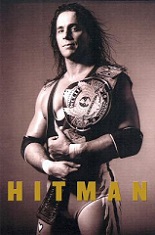 Baseball has long held the title of America’s pastime. The NBA and NFL have respectable followings of their own. However there is also the world of sports entertainment that has been made famous by the phenomenon of professional wrestling. My father has always called it “rassling” and when I walked around the house doing my best impersonations of the stars of what was then called the World Wrestling Federation (“WWF”), he always shook his head in laughter. In spite of the wisdom he possessed about the spectacle I was obsessed with, not once did he ever try to dissuade me from watching the heroes that I came to believe in. And when he and my uncle took my brother and I to Madison Square Garden to see Hulk Hogan live in person, it was if we had been transported to wrestling heaven. As I aged, my view of wrestling changed and so did the characters I found to be standouts. Among them, was Bret Hart, known as the Hitman and leader of the Hart Foundation, the heel group that had an enormous following of fans. When he retired not long after suffering a devastating concussion in the ring, I and many fans looked back on the many matches he took part in with sadness knowing he would never set foot in the ring again. I always wondered what really went on behind the scenes and when I saw that he had written this autobiography, I knew that I had to read it. And I am happy to report that the book did not let me down and it is one of the best books about the wrestling industry that I have ever read.
 On the morning of February 26, 1993, Ramzi Yousef and a team of terrorist drove a bomb laden van into the basement of the World Trade Center complex in New York City. As I watched the news from across the river in Brooklyn that morning, I felt a sense of shock and vulnerability. America had been attacked. When Ramzi Yousef was captured and extradited to New York to stand trial, many New Yorkers breathed a sigh of relief. The Hon. Kevin Duffy sentenced Yousef to life with no parole plus an additional 240 years which he is currently serving at the ADX Florence Supermax facility in Fremont County, Colorado. Eight years later on September 11, 2001, America was attacked again when terrorists hijacked four commercial airliners, crashing two into the World Trade Center, one into the Pentagon and the final aircraft outside of Shanksville, Pennsylvania. The response from Washington was swift and a show of force nearly unparalleled in modern times. The mission to capture those responsible and root out terrorists, led to Afghanistan, a land-locked country in South-Central Asia. Images of U.S. troops and the enemy Taliban flashed across news screens as reports of successes in the mission to root out terror were triumphantly proclaimed. To many Americans, Afghanistan was another far away place across the world where people lived in ways that seemed to be from ancient times, going against “American ideals”. Today, Afghanistan is nearly completely forgotten by the American public. There has been no news about what America’s current role is and plans to withdraw American forces have been cast aside as yet another victim of the focus on what has become reality television politics. The story of Afghanistan and its importance to world history is often misunderstood and in some cases not even recognized. But there is far more that meets the eye and author Steve Coll explores this topic in this New York Times bestseller that tells the full story what did happen in Afghanistan between the Soviet Invasion and the deadly attacks on September 11, 2001.
 The Second World War remains one of the most studied and brutal conflicts in the history of man. The rise and fall of Adolf Hitler and the Third Reich have become a case studies for history buffs and students learning about a war that nearly resulted in the complete destruction of Germany and the continent of Europe. It is true that Hitler had many supporters but he also had large numbers of detractors, some of whom were serving in his own army. The attack of personal liberties and treasured institutions, caused shock and consternation across Germany. The persecution of the Catholic church by the National Socialists is among Hitler’s darkest deeds. Throughout the war, Hitler would ramp up his attacks on the church and his bloodthirsty purge of religion knew no bounds. The horror with which the clergy watched the rise of the Third Reich spurred many to action and they were determined to rid Germany and the world of the man they saw as the very incarnation of evil. Among them was Dietrich Bonhoeffer (1906-1945), the man who became a pastor, martyr, prophet and spy.
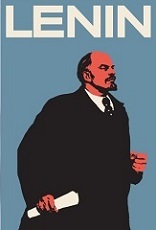 The dissolution of the United Soviet Social Republics (USSR) remains one of the most important and world changing moments in history. The lowering of the hammer and sickle on December 26, 1991, was the end of seventy-four years of Soviet dominance over Eastern Europe. But the remnants of the Soviet Union can still be found today and the ghost of its founder, Vladimir Ilyich Ulyanov (1870-1924), continues to haunt Russia. In Red Square, Moscow, Lenin’s corpse remains on permanent display and is maintained by a full-time staff of technicians. To believers in the old-guard and Marxism, Lenin is the eternal leader of the Bolshevik revolution. To his detractors, he was madman who unleashed a wave of terror and was outdone only by his successor Joseph Stalin (1878-1953). Undoubtedly, Stalin ruled the Soviet Union with an iron grip built upon fear, intimidation and murder. But those tactics were not new methods of operation, having been in use long before he took power. During the reign of the Soviet Union, information regarding Lenin’s private life was kept secret and only the most privileged of researchers were able to see any official records. The passage of time and change in attitudes had resulted in the disclosure of Soviet records that many thought would never be revealed. The thaw which began with Nikita Khrushchev (1894-1971) has allowed the world to learn the truth behind the Iron Curtain. Author Victor Sebestyen has taken another look at Lenin’s life in this well-researched and revealing biography of the iconic and infamous Soviet leader.
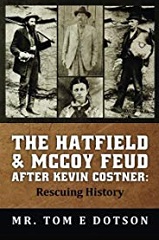 In American folklore, there are two families whose names are recognized as being part of what is arguably the longest running feud to have ever taken place in the United States. The Hatfields and the McCoys have become ingrained in the American experience and the alleged feud between the two families has been re-told through films, documentaries, websites and books. In 2012, the History Channel released a multi-part miniseries about the feud starring Kevin Costner as William Anderson “Devil Anse” Hatfield (1839-1921) and the late Bill Paxton (1955-2017) as Randolph “Ran’l” McCoy (1825-1914). The series is highly rated but just how accurate was it? And were the Tug Valley in West Virginia and Pike County in Kentucky, really that deadly in the late 1800s? Thomas E. Dotson is a descendant of both families and here he rescues history and sets the record straight about what really did happen between the years of 1882 and 1888. And what he reveals will undoubtedly change the way you view the “feud” between the two famous families.
 In 1993, Loud Records released an album that re-defined the rap music genre. A group of nine lyricists from the borough of Staten Island in New York City joined together and created Enter the Wu-Tang (36 Chambers). The album was a smash hit and before long, millions of hip-hop fans knew the names of each member by hard. As a New York City native, I remember when the single Protect Ya Neck was released and the buzz surrounding this new group that was in your face, raw and uncut. To some, the group was just another rap entourage from the streets, that was profane and too rough around the edges for mainstream society. But to fans, they represented a new concept and sound that no one had ever seen before from rap artists. The latter won out and through many albums, tours and even television appearances, the group cemented their legacy as one of rap’s greatest acts. But for all of the glitz and glamour, there also existed a behind-the-scenes story that was playing out in ways that no fan could have ever guessed.

You must be logged in to post a comment.