
 The Democratic People’s Republic of Korea remains one of the most secluded nations on earth. To some, it is the best example of the society George Orwell described in his masterpiece, 1984. Documentaries, photographs and videos taken in North Korea have given the rest of the world glimpses into a nation ruled by an iron fist, where individuality and personal expression are as forbidden as foreign literature and films. Every living moment of North Korean life is in service to the State under the tutelage and patronage of the “Dear Leader”. The ideology of the North Korean Republic known as “Juche” was made famous by the late Kim il Sung (1912-1994) and has been carried forward by his son Kim Jong il (1941-2011) and currently his grandson, Kim Jong Un. Portraits of the leaders can be found on the walls of nearly ever building in the country, reinforcing the demand for subservience by the government of its citizens. The threat of American Invasion and moral corruption of young Koreans by foreigner influence are used by the State as justification for its seclusion from most of the world. But for some citizens, the smoke and mirrors become clear as nothing more than propaganda used to keep society in line. and curiosity of the outside world creeps steadily in. Their awakening results in a mix of emotions, one of which is defection to South Korea typically by way of China.
Barbara Demick is the former Beijing bureau chief of the Los Angeles Times and spent five years in Seoul interviewing defectors from North Korea. This book tells the story of several individuals who made the difficult decision to leave the only place they have called home. I think it is fair to say that anyone outside of North Korea is aware of the totalitarian regime imposed upon the people of that nation. Journalists have lifted the carefully guarded veil constructed by Pyongyang. But what is contained in the pages of this book might surprise even the most knowledgeable readers. In fact, descriptions of their daily lives will stun some but in order to understand their desire to learn about the outside world, escape a suppressive regime and find peace and happiness, we must learn their stories and the challenging lives they were born into. Their names are Kim Hyuck, Mi-Ran, Jun-Sang, Oak Hee, her mother Song Hee Suk and Dr. Kim Ji-eun. Their stories are different but they are all united in the defection to South Korea, leaving behind family members and friends. But what they witnessed will remain with them for the rest of their days. Those events which we learn about in this book are more than any of us would want to endure. I guarantee that for American readers, after you have finished this book, you will have a greater appreciation for the privilege of living in the country that is perhaps the most powerful nation on earth.
For those readers new to literature about North Korea and/or its defectors, the author provides a good history about the Japanese occupation of North Korea and its liberation following World War II. Kim il-Sung would rise as the leader of the new Soviet backed North Korea while Syngman Rhee (1875-1965) established him as the leader of the U.S. backed South Korea. The establishment of the 38th Parallel also known as the DMZ, as the dividing line between the two countries, remains firmly in place as the line that separates two very different countries and different worlds. Sung’s goal to create a new version of Communism, resulted in a regime that ranks among the most brutal anywhere in the world and seemingly stuck several decades behind the rest of the modern world. And as the nation endured periods of famine and near economic collapse, increasing numbers of North Koreans, including those in this book, made their way south by any means necessary.
When we first meet our characters, their lives are typical of North Korea, far removed from any knowledge of or influence by the western world. Allegiance to the “Dear Leader” is mandatory and all seem to stay in line willingly. But over time the facade wears away and the death of Kim il-Sung on July 8, 1994, would provide the catalyst for many to open their eyes to the truth about life in North Korea. Radio programs and even television from South Korea began to infiltrate the nation as growing numbers of citizens began to question all that they had been taught from a young age. For figures in the story at hand, the moment of revelation of a life outside of North Korea proved to be too seductive to ignore and once the decision was made, the next step was to act which they did under the most intuitive of ways. And in stark contrast to the idea of communist citizens all falling in line without thought, each of the characters prove to be as sharp and clever as anyone determined to seek asylum in the hope of a better life. Their successful defections to the South are not without complications and their adjustment to life in Seoul, also shows the complicated efforts that exist to undo many years of indoctrination and seclusion.
Throughout the book, a constant theme is the possible collapse of North Korea and even the author remarks that it has been predicted for many years. In spite of conditions that should cause the downfall of any government, North Korea continues to maintain its position as the rogue nation that issues threats to neighboring countries while preparing for a believed conflict with the United States. The government operates on a system of dysfunction and in some cases hypocrisy. While those at the top enjoy American cars, films and imported goods, millions of North Korea endure malnutrition and destitution. Time will tell if the regime will collapse but what we do know, not just from news reports but also from the stories in this book, is that outside of Pyongyang, life for millions of North Koreans is marked by famine, poverty and fear of the State. Defectors have survived the roughest of ordeals and no longer live in the fear that grips North Korea. However, their hearts are still with those left behind and they do believe in the dream that one day Korea may once again be unified. Until then, the number of defectors may continue to rise and people seek to move away from scavenging for food and praising the Dear Leader to having a full meal, talking freely and being able to watch any show they prefer on television. Their stories may give others inspiration that there is a life outside of North Korea and for some, it is worth dying for. But it is hoped that they are able to escape and enjoy the many privileges that so many of us take for granted.
This book has caused me to really think about the concept of freedom and how precious is truly is. I have seen and accomplished things that most North Koreans either have no knowledge of or ability to do. I am grateful for the life that I have and the author is correct when she says that life in North Korea is nothing to envy.
ISBN-10: 9780385523912
ISBN-13: 978-0385523912
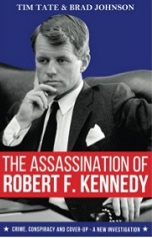 June 5, 1968 – Senator Robert F. Kennedy (1925-1968) (D-New York) concludes his speech at the Ambassador Hotel in Los Angeles, California after scoring a critical primary victory in his quest for the Democratic nomination for President of the United States. As he walked through the pantry while exiting the hotel, he was shot and mortally wounded. Twenty-six hours later in the early morning hours of June 6, 1968, his life and the dream he inspired came to a tragic conclusion. He is survived by his widow Ethel and eleven children, the youngest of whom was born after his death. Her name is Kerry Kennedy and along with brother Robert, Jr., she keeps her father’s memory alive and well. Her book
 It is difficult to put into words, the polarizing effect of the trial of O.J. Simpson had on America. The ugly history of racism took center stage as lead attorney Johnnie Cochran (1937-2005) formed a defense based on it and the prosecution under the guidance of lead attorney Marcia Clark, sought to exclude it. The crime was beyond brutal and contained a level of savagery that caused a twitch even in the most hardened of stomachs. Photos of the crime scene are available on the internet in all of their shocking and gory details. I vividly recall the car chase that played out on the television screen as the Los Angeles Police Department followed Simpson’s white Ford Bronco. The truck later became fodder for parody but at the time, caused bewilderment as everyone wondered where on earth Simpson could be going. When he was acquitted of murder, loud cheers could be heard throughout the school. To many of us, it seemed unfathomable that Simpson, the gridiron great could have committed such a heinous crime. Further, the L.A. Riots remained fresh on our minds and the video footage of the beating of Rodney King, a reminder of the fragile co-existence between the police and Black communities across the country. To some, the justice system had worked and we knew O.J. was innocent. Or did we? Were we assuming his innocence based on his skin color and our need for a hero? Or was it, as some believed, a chance to “get even” with the system? The trial was many things but above all it was surreal.
 In the annals of Latin American history, perhaps no other figure is as studied as Simón Bolívar (1783-1830), the liberator of South America. Former Venezuelan President Hugh Chavez (1954-2013) famously spoke with images of Bolívar behind him as he sought to transform the country into a contender on the world stage. The life of Bolívar lasted less than fifty years but within two decades he became the leading figure in the Latin American movement for independence from the Spanish Empire. The nations of Colombia, Peru, Ecuador, Venezuela, Panama and Bolivia (his namesake) are the products of his vision, a united South America free from the influence of its northern neighbor. And prophetically, many of his beliefs about the future of South America have come to pass, cementing his legacy as one of the continent’s greatest heroes. Marie Arana, a native of Bolívar’s beloved Peru, has composed a stunning biography of the late figure that shows a complex character, driven by ideology but crippled by his own generosity and disregard for personal well-being.
 Any former First Lady of the United States will tell you that there is nothing “easy” about that lifestyle. As the wife of the most powerful man on the planet, there is a high demand on appearance, initiatives and unwavering support for the policies that originate from the White House. Michelle Obama is an alumnus of this world, serving as the nation’s First Lady from January, 2009 to January, 2017. Her style, look and presence is unmistakable and she will be remembered in time as one of the most dynamic to have lived in the White House. Almost two years have passed since Donald J. Trump took office and the where the United States is headed seems at times uncertain. There exist a political climate built on division and hate, which will require many years ahead for healing and understanding. As the first Black-American woman to be a First Lady, she has unique perspective on Washington, D.C., and the country she calls home. Her views and life story are presented here in this phenomenal autobiography of the life of Michelle Robinson who went on to become Mrs. Barack Obama.
 December 10 will mark twelve years since Augusto José Ramón Pinochet Ugarte (1915-2006) died from the effects of a heart attack in his native Chile. For many Chileans, he is the epitome of evil and a ruthless tyrant whose regime persecuted thousands of citizens, many of whom were “disappeared”. He also has his supporters, known simply as “pinochetistas”. His rise to power after the CIA- backed coup that overthrew the government of Salvador Allende (1908-1973), resulted in a new level of human rights violations across Latin America. Allende’s removal and death has become known as the other September 11th and a day that no Chilean can ever forget.
 Social media is literally a modern marvel that has engulfed in its clutches, billions of people around the world. Facebook, Twitter and Instagram remain the top three platforms for those wishing to step inside the world of “social networking”. Additionally, other platforms such as LinkedIn cater to specific audiences who do not belong to the mainstream sites. Even this blog is considered a form of social media. Regardless of what we use, social media has changed the way the world works and that trend will only continue. But what if we all decided to delete our accounts? What would happen and how would our lives change? Jaron Lanier is a silicon valley insider who once helped engineer the very social media platforms billions of people use daily. In this direct to the point book, he makes it clear that he believes we should all delete our social media accounts right now.
 In the United States, the month of February is dedicated to African-American history. February 21 stands out during the month as the day that el-Hajj Malik el-Shabazz better known as Malcolm X (1925-1965) was assassinated at the Audubon Ballroom in Harlem, New York City. On the radio, the eulogy given by the late Ossie Davis (1917-2005) is played taking us back to Malcolm’s final days on earth. In 1992, Warner Brothers released Malcolm X, the biopic directed by Spike Lee and starring Oscar winner Denzel Washington in the lead role. Washington lit up the screen, delivering a performance for the ages. Davis’ eulogy accompanies the closing scenes and the credits are rightly finished to the sounds of Aretha Franklin’s rendition of ‘Someday We’ll All Be Free’ and Arrested Development’s ‘Revolution’. The film has stood the test of time and is a fitting tribute to Malcolm X’s legacy. Lee did an incredible job but there was no way he could have included all of Malcolm’s speeches and writings into the final product. Malcolm was brilliant, not just as an orator but as a critical thinker who presented his arguments in an engaging and articulate manner. And some of those words can be found in this book by Dynast Amir.

You must be logged in to post a comment.