
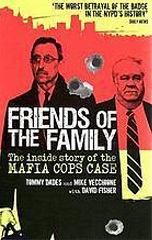
 On October 18, 1986, Betty Hydell answered the doorbell and her home and was confronted by a police officer looking for her son James. She politely told him that Jimmy not home and she did not know his exact whereabouts. At the time, she had no idea that she would never see her son James again. Several hours later, he was picked up by two men in what appeared to be an unmarked police car. However, he never arrived at the local precinct and no record was made of any arrest. It was if he simply vanished into thin air and to this day, his body has never been found. It became one of the many cold cases on file in Brooklyn South. His brother Frank, had is own encounters with the two and on one occasion Betty even confronted the officer looking for him as she drove her car past his unmarked vehicle. Frank was later murdered April, 1998 after visiting a gentleman’s club in Staten Island, New York.
On November 6, 1990, Edward Lino, a capo in the Gambino Crime Family, was shot execution style as he sat behind the wheel of his car after being pulled over on the Belt Parkway in South Brooklyn. Lino’s death became a cold case until it was learned that he was pulled over by two men in what appeared to be an unmarked police car. A photo of Lino slumped over in his car shows the execution style murder in graphic detail and for some, brings backs memories of the days when mobsters were killing each other across New York City with reckless abandon. Hydell’s disappearance and Lino’s murder remained cold cases for many years and no one then could have imagined that they would both come back to haunt those involved and help reveal one of the biggest scandals in the history of the New York City Police Department.
But who were the two men in what appeared to be an unmarked police car? Their identities nearly remained a secret for good if not for a book and a television appearance on Sally Jessy Raphael. Former NYPD Detective Louis Eppolito had written about his life on the force and his family background, appropriately titled ‘Mafia Cop’. He had starred in Hollywood films, including a bit part as “Fat Andy” in Martin Scorsese’s Goodfellas (Warner Bros., 1990). On that fateful day of his television appearance, Betty Hydell was one of millions of viewers watching the former detective promote his book. I can only imagine the shock on her face as she watched the television screen listening to the former detective who once came looking for both of her sons. For NYPD Detective Tommy Dades, this was a major fire among the smoke that surrounded Eppolito and his former partner, Steven Caracappa, who died on April 8, 2017, while incarcerated in Butner, North Carolina. Dades’ investigation, supported by the Brooklyn District Attorney’s office, opened up Pandora’s Box, revealing a cast of characters who conspired to commit crimes that many thought to be unthinkable.
Michael Vecchione is a senior figure in the Brooklyn District Attorney’s office, and at age 63, continues to serve the City of New York. He and Dades go back a long way and when it became apparent that two cops had gone rogue, both knew that this case would be one they would never forget. This is their recollection of the development of the case and how and why it was then taken over by the U.S. Attorney for the Eastern District of New York. The story at first resembles an intricately woven puzzle with each piece coming into the picture as the story moves forward. And as each revelation comes to light, I was as shocked and confused as Dades and Vecchione were then. But the seduction of the case keeps them lured in and both are determined to do whatever they can to bring down the two corrupt cops who had since retired and moved to Las Vegas. But this was no ordinary cold case and it quickly became apparent that there was far more than meets the eye.
It should be noted that this is not the story of the lives of Eppolito and Caracappa. While the authors do provide some background information on them, they never go into extensive detail but provide the information when necessary to the narrative at hand. This is the inside story of the case to bring them to prosecution, a case which almost completely fell apart after a District Court Judge reversed his own ruling. At times the story seems surreal as we meet mobsters Anthony “Gaspipe” Casso and Burt Kaplan, who died in July, 2009. And like a Hollywood production, the story takes off as the mobsters reveal staggering numbers of robberies and murders. But the cream of the crop were their tales about the cooperation and services of two NYPD Detectives. To most people, the story seemed absurd and I remember reading about the trial in the newspapers. Hardly anyone though that two cops could have been pulling off hits for a crime family and shaking down criminals. But the truth is that we had seen it before with the corruption scandal of the 90s, Michael Dowd and through the testimony of Frank Serpico. But what was horrifying is that Eppolito and Caracappa had been accused of taking the corruption to a higher and far more deadly level. In short, this was a whole other ball game and both the Brooklyn DA and U.S. Attorney’s office knew this to be a cold hard fact.
Many of us would like to believe that the effort to bring the deadly duo to justice was the result of a concerted effort by law enforcement. But as the authors point out, this was far from the case and almost from day one, a web of suspicion developed as the FBI and U.S. Attorney began to see the payday in prosecuting the two cops. At that point it was game on and the cat and mouse spectacle between the State and the Government bordered on the unbelievable. They pull no punches in this book and lay out the case from start to finish. And while the government did get a RICO Act conviction that was later affirmed by an appeals court, the case nearly crumbled under its own weight. But the justice system worked as it was designed giving prosecutors the victory they desired. Today, Eppolito and Casso are still alive but will both spend their last days in prison. We can only guess as to how many more crimes occurred that were never revealed. Those are secrets that all of them will undoubtedly take to the grave. But this book by Vecchione, Dades and Fishers, gives us an inside look into what might possibly be a black hole of crimes between mobsters and law enforcement that have escaped prosecution. In fact, the crimes that are revealed are so mind-boggling that I found myself not wanting to put the book down at times because I could not wait to see where the investigation would lead next.
In the end, the prosecutors and cops scored a victory, but on personal levels, many sacrifices were made and these are also revealed in the book, showing the human and personal side of the major players. Their lives are not glamorous and in fact, during the case, they would each go through their own personal dramas that might have pushed others over the edge. Incredibly, the remain dedicated to the case while trying to save marriages, professional relationships and even their sanity while the work on bringing two of their own to justice. Today as they look back on the case, I am sure they will smile with satisfaction at having achieved justice for Betty Hydell and the families of the other victims of the killer combination of gangster and cops. Eppolito has maintained his innocence from day one, even in the face of overwhelming evidence. As he sits behind bars, I can only assume that he has pondered his past and how it shaped the future he his now living. He will take many secrets with him to the grave but he and Caracappa will forever be known as the mafia cops. This is a story of crime, dishonor and the prevail of justice in the City of New York.
ISBN-10: 073228533X
ISBN-13: 978-0732285333
 Freedom is a term that is often used but not always understood. The costs associated with it are often high and some of us have paid and will pay the ultimate price to obtain it. Here in the United States, we like to think that we are free but the truth of the matter remains in question. Perhaps we are still in a state of denial of about freedom’s true meaning and its role in the American way of life. Angela Davis is one of the brightest voices to emerge from the Civil Rights Movement and has established herself a political activist, an author and professor whose many speeches and writings are some of the best society has ever seen. While the book is not an autobiography, this is clearly Davis’ show and a collection of selected speeches in which she discusses topics that she rightly refers to as difficult dialogues. But her ability to not only discuss these topics but provoke thought in the reader, is what makes this book so special. And I can state with full conviction that I wished I had discovered this gem much earlier in life.
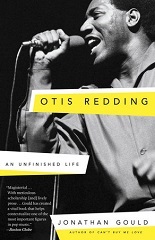 On December 10, 1967, a charter plane carrying singer Otis Redding (1941-1967) crashed in Lake Monona in Madison, Wisconsin as it made its final landing approach. Redding was twenty-six years old and left behind a widow Zelma, and three young children. At the time of his death, he was a top-selling recording artist on the brink a stellar career and the song he recorded shortly before his death “Sitting On The Dock Of The Bay”, went on to become a hit that still sounds good to this very day. His widow Zelma, is the president of the Otis Redding Foundation and his children Karla, Otis, III, and Dexter are on the board of directors. Through their hard work, Redding’s legacy lives on as millions of fans of the Soul music replay his songs singing along with an artist who helped define a genre and an era.
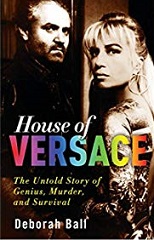 There are some who say that the City of Miami was never he same after Giovanni Maria “Gianni” Versace (1946-1997) was shot and killed on July 15, 1997 by Andrew Cunanan (1969-1997). The world-famous fashion designer had given the city new life with his bold designs, outlandish parties and mansion called the Casa Casuarina. At the time of his death, the Versace name was a juggernaut in the fashion world, dominating news headlines and magazine covers. Tragically, in less than ten seconds, Cunanan changed all of that in ways that no one could have imagined. After Versace’s death, trials and tribulations nearly brought the company to the brink of extinction but today it is still going strong. And its creator is regarded as one fashion’s greatest minds. The story of his death is well-known having been relived through the FX award-winning series
 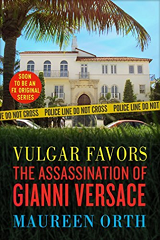 I remember with vivid clarity the day that Giovanni Maria “Gianni” Versace (1946-1997) was shot and killed in front of his home in Miami, Florida. My friends and I were in shock and in the wake of the shooting, we kept hearing the name Andrew Cunanan (1969-1997). None of it made sense but from the news we did learn, Cunanan was a one man crime spree and through fate, he crossed paths with the world-famous fashion designer. Twenty-one years have passed since Versace’s death but the fashion line that bears his name continues to remain strong. Several days after Versace was shot and killed, Cunanan took his own life aboard a houseboat that was eventually seized by the City of Miami. In the days after his death, more information about his erratic and deadly lifestyle came to light and also revealed how law enforcement missed vital clues contributing to what Maureen Orth calls the largest failed manhunt in U.S. history. By all accounts, Cunanan should have been caught long before he walked up to Versace on July 15, 1997. However, miscommunication and in some cases prejudice against homosexuals, resulted in investigations crippled from neglect, allowing Cunanan to remain at large before committing his final murderous act. The world now new the name Andrew Cunanan and it would never be forgotten. But just who was Andrew Cunanan and how did he make the FBI’s Most Wanted List? The list is reserved for the most dangerous of criminals and typically a suspect such as Cunanan would not normally be found on the list. His use of extremedly deadly force rightfully earned him a place among the most deadly killers on the run in America at the time. Maureen Orth, a journalist for Vanity Fair, covered Versace’s murder and was familiar with Cunanan before the final events in Miami. In this chilling account of Cunanan’s path of rage, she recounts his life helping us understand how and why he descended into madness.
 One of the definitions of the word irony is an
  This November will mark twenty-seven years since the death of Farrokh Bulsara (1946–1991), known by his stage name of Freddie Mercury. On November 2, 2018, moviegoers will be able to see the anticipated biopic
  There are many questions about the origin of man, the human race has yet to find conclusive answers for. We know that ancient civilizations existed and flourished before some mysteriously ceased to exist. Relics, structures and writings have survived giving us clues about their lives. Of all of the ancient civilizations, the most inspiring and sought after remains Ancient Egypt. The pyramids and Sphinx are marvels that have puzzled engineers for thousands of years. Without the benefit of blueprints, we can only offer guesses as to how and why the structures were created. But from the temples, mummies and monuments that have survived, it is evidently clear that ingenuity was one of its greatest traits. Africa has been cited as the cradle of civilization, serving as the home to the oldest tribes known to man. The Christian Bible and Hollywood have done their part in bringing the stories to life, and in the process put Ancient Egypt on center stage. The Pharaoh Ramses II in The Ten Commandments, beautifully played by the great Yul Brynner, has become a commonly accepted image of the real life Ramses II. But how accurate was Brynner to his real life counterpart? And what did the Ancient Egyptians look like? It is tempting to think of them based on those we see in Egypt today. But we should know that history often includes many surprising facts, some which we may have never guessed without revisiting the past. Cheikh Anta Diop (1923-1986), of Diourbel, Senegal, was a noted historian and anthropologist, who studied the origin of the human race and in his eye-opening account, he seeks to find the truth about the role of Black Africans in the origin of civilization.
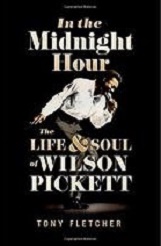 There is something about soul music that is incredibly hard to put into words. Its ability to reach the listener and touch them in ways they never knew give credence to the title of its genre. The men and women who perfected their craft singing soul music became legends in the process. Many of them are no longer with us having died either violently or tragically. Planes crashes, murder, drugs and diseases formed the nexus of poison from which they chose. Nevertheless, their voices still reign supreme and remind us of an era which we will never see again. James Brown is known as the “Godfather of Soul” but in reality there were other challengers to the throne, most notably the late Wilson Pickett (1941-2006). He is best known for his classic hit “In the Midnight Hour” which helped propelled him to legendary status. But behind the music was a man whose life was anything but ordinary. Instead it was filled with genius, vices, love and heartbreak. Pickett’s death on January 19, 2006 at the age of just sixty-four years of age, was the final chapter in the singer’s life which had steadily declined in his final years. However, to this day he still remembered as one of the best to ever do it and his legacy is cemented in the many memorable songs he mastered during his time on this earth.
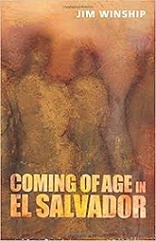 The civil war the engulfed the small Central American nation of El Salvador from 1980-1992 caused the deaths of over 75, 000 people. The violence, heartache and oppression felt by millions of El Salvadorans has reverberated over the years as a reminder of dark times for the country known as the “Pulgarcito” (

You must be logged in to post a comment.