
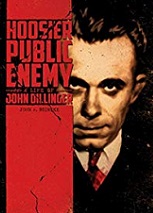
 At the height of 1930s era crime and depression, criminals that under normal circumstances would be looked upon with scorn, became larger than life iconic figures whose daring bank robberies and shootouts with policy became stuff of legend. The brazen thefts in the middle of broad daylight accomplished with the use of the Thompson Sub-machine Gun (Tommy Gun) and the Browning Automatic Rifle (BAR) catapulted America into a new and deadlier form of crime. In response, the Federal Bureau of Investigation under the direction of J. Edgar Hoover (1895-1972) stepped into the foray and within a one-year stretch, arrested or executed America’s most wanted. At the top of this list was the late John Herbert Dillinger (1903-1934).
John Beineke has captured the outlaw’s life in this straight to the point biography of his life of crime and sudden death. It is neither praise or vindication of Dillinger but a look at the life of the legendary figure. The story begins in Indiana, Dillinger’s home state. After the death of his mother, the young boy slowly makes his way into a life in crime resulting in stint at Indiana State Prison after a conviction for robbery and assault. Paroled nine years later, it would be the last time that Dillinger served time in prison. In fact, he vowed never to return to a prison cell, a vow he kept until his final moments. But what is it about Dillinger that captivates people even today? In 2009, director Michael Mann brought Dillinger’s life to the big screen again, enlisting Johnny Depp in the starring role. The film was released under the title Public Enemies, and also portrayed the FBI’s pursuit of Lester Gillis, a.k.a George “Babyface” Nelson (1908-1934) and Charles Arthur “Pretty Boy” Floyd (1904-1934). Christian Bale stars as FBI Agent Melvin Purvis (1903-1960), tasked with capturing the outlaws at all costs. The film was solid and with an all-star cast, Mann recreates the feel of depression era America.
Here, Dillinger is the star and he has his own supporting cast of criminals, each of whom would meet their own violent ends. To say that Dillinger’s life was extraordinary would be an understatement. As we learn in the book, not only did he excel in knocking over banks, but no jail could seemingly contain him and incredibly, he often hid from authorities in plain sight. It is literally a story that no filmmaker could write. The pace of the book picks up early and it never slows down. And with each heist, Dillinger becomes more infamous to authorities and more a folk hero to thousands of Americans who believed the banks were the real enemies, profiting off the misery of the average citizen. In comparison to some biographies, mundane information is excluded leaving the reader with the facts peppered with occasional sub-stories between the major characters. Politics inevitably enters the story as America grapples with a rising crime wave and Washington reconsiders the tenure of the FBI’s longest-serving director whose job might have ended if not for the apprehension of Dillinger and others.
Less than one hundred years ago, John Dillinger used Midwestern banks as his own personal ATM. His escapades filled newspapers, filled with tales of crimes by fellow outlaws such as Bonnie Parker and Clyde Barrow, Pretty Boy Flood and part-time accomplice, Baby Face Nelson, who enters and leaves this story on multiple occasions before parting ways with Dillinger for good not long before both would be gunned down. Today such a crime spree is unthinkable but in Dillinger’s era, a time before two-way radios, cellphones and social media, bank robberies and shootouts with cops were common occurrences. Beinecke has taken us back in time to relive the decade that Dillinger made a name for himself. Curiously, although the end of his story is widely known, the story still pulls the reader in with its engaging descriptions of the Dillinger gang’s exploits and graphic descriptions of the deaths that occurred as a result. The outlaws will always be romanticized in American culture. In fact, they are as American as apple pie. Dillinger has been dead for more than eighty years but if you research depression era gangsters, his name will appear on every single list. He lives on in infamy and is idolized by some as a rebel who fought against the corrupt banking establishment as a modern-day Robin Hood. To the FBI, he was a public enemy whose capture was more important than anything else. In the end, they would get their man but not before Dillinger left his mark and became part of history.
ASIN: B00NQGP47O
ISBN-10: 0871953536
ISBN-13: 978-0871953537
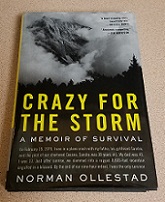 On February 19, 1979, eleven year-old Norman Ollestad was a passenger in privately chartered Cessna aircraft. He was joined by his father Norman and his father’s girlfriend Sandra. The flight was supposed to be a routine trip but weather conditions and pilot error resulted in a series of events that climaxed with the crash of the plane in the San Gabriel mountains in Northern Los Angeles County, California. Miraculously, he was able to descend the mountain and eventually encountered a family living in the area who alerted authorities that a survivor of the crash had been found. Suddenly without his father, young Norman is forced to keep going in life without the words, wisdom and encouragement of the man he called Dad. In 2006, he began to write this book, his life story and his memories of his father while growing up in Malibu, California.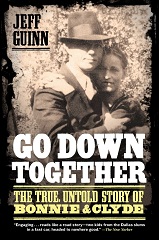
 Recently, I watched the Netflix series

 There is something about the Italian-American crime syndicate that continues to fascinate American culture. The larger than life characters that appeared on television and in newspapers have been immortalized in movies and documentaries. Their close-knit organization which we have come to know as the Mafia, became as American as apple pie. Violence, money, sex and power become staples of the gangster’s life. Many of them die before their time as the street life inevitably catches up with them. John Alite knows this all too well. The former hit man for the late Gambino Family boss John Gotti (1940-2002), served several years in prison after being extradited from Brazil in 2006. He later agreed to testify against a former associate which reduced his sentence. In 2017 he was released from supervised parole.
 It is sometimes called the forgotten war, the conflict which remains in the background as World War I, World War II and Vietnam take center stage as the wars that defined the United States Military and U.S. foreign policy. Unbeknownst to many Americans, the Korean war never officially ended. An armistice was signed on July 27, 1953 bringing a halt to the firing from all sides. But the armistice did not permanently resolve the conflict and to this day the 38th parallel, instituted after World War II, remains as the dividing line between the Communist North and the Democratic South. Recently, U.S. President Donald J. Trump attended a peace summit with the leader of North Korea, Kim Jong Un. Washington claimed the summit a success but only time will tell if the Korean War will officially come to an end and peace is finally obtained. For veterans of the conflict, feelings run deep and mixed thoughts on the summit are bound to exist. Two years ago, a veteran of the war close to my family died after several years of declining health. Curiously, he never spoke of the war, preferring to keep his thoughts and feelings to himself for more than 50 years. And as he went to his grave, he took with him, knowledge of the war and memories that most people would never want to have. But the questions still remain, what caused the conflict and why did war wage for three years? Furthermore, why did the fighting eventually cease?
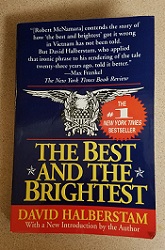 I have often wondered why my uncle and many other veterans that I have met, were sent to Vietnam. He and others never speak of the war, choosing instead to internalize their memories and feelings. But from the few things about being Vietnam that my uncle has told me, I cannot image what it was like to be fighting a war in a jungle 13,000 miles away from home. Today he is seventy-two years old and his memories of Vietnam are as sharp today as they were when he left the country to return home. And there is a part of him that still remains in Vietnam, never to leave its soil. He is one of five-hundred thousand Americans that served in a war that claimed fifty-eight thousand lives.
 FREETHINKING BIBLIOPHILE
You must be logged in to post a comment.