
 September 30, 1955-Two motor vehicles collided at the intersection of Routes 41 and 46 near Cholame, California. The first vehicle, a Ford sedan suffered light damage. Vehicle number two, a Porsche 550 Spyder, was found twisted like a piece of aluminum foil. Inside the car is film star James Byron Dean (1931-1955). His passenger, Rudolf Karl Wütherich (1927-1981) was thrown from the vehicle but survived. Dean was pronounced dead on arrival at Paso Robles War Memorial Hospital. He was twenty-four years old. Nearly sixty-three years have passed since his death but incredibly, he is still the poster boy for youths determined to be the “rebel without a cause”. He is credited with three films during his career and multiple television appearances. By Hollywood standards, his resume is short but at only twenty-four, he had the prospect of a long and successful career first in front of him and then taken away the instant his car collided with by Donald Turnupseed’s Ford. His fans were devastated and Hollywood was forced to grieve for a young star taken before his time. In death, he joins the long list of celebrities who died before their thirtieth birthday. But what is it about James Dean that captivates millions of people, young and old six decades after his death?
David Dalton looked into his life and came away with this biography of the man he calls the “Mutant King”. It is fair to say that before and after him, there was and has never been another James Dean. He was one of those rare stars who stood out not simply on acting ability but on persona that was about the cut, unique and irresistibly attractive. But like all great stars, Dean’s life was as interesting on-screen as it was off-screen and what we have seen in his films and television appearances was not that far from the truth. Born in 1931 in Marion, Indiana to Winton and Mildred Dean, he entered the world as the country was still feeling the effects of the Great Depression. His mother Mildred would only be in her child’s life for nine years, dying of cancer in 1940 at the age of twenty-nine. From this point on, Dean’s life would never be the same and throughout his short but incredible life, he would remember his mother’s untimely death and how it caused his longing for that relationship in all aspects of his life.
Dean’s story is told best not by just factual research but by those who know and worked with him. Dalton has wisely taken this course and the statements of scores of film stars and Hollywood personalities who knew Dean are contained within the pages of this fitting biography. Their stories give the reader of the complete picture of James Dean’s life. Far from the “rebel without a cause”, the real James Dean was a multi-dimensional character for whom one label would not nearly be enough. What I found interesting in the interviews is that the speakers were very candid in their recollections even when the narrative was not favorable towards Dean. Perhaps the most scorching of all of them are the words of the late Marlon Brando (1924-2004). As harsh as some words are, there are words favorable to Dean and what we can gather is that none of them had ever met anyone like him nor did they ever forget him. Jimmy as he was known to those who knew him, always seemed to keep them guessing, rarely revealing his true self as he fought with his inner-struggle and grief over his mother’s early demise and a relationship with his father, temperamental at best. However, if readers are looking for a dysfunctional childhood, it will not be found here. In fact, Dean was supported by many who loved him and no traces of insanity can be found in the story at hand. He was just another child out of Marion and Fairmount, Indiana. But being ordinary did not last for long and in just a few short years, Dean was on his way to becoming a box office legend before his passion for cars and racing led him down the path that ended with his life being cut short on a lonely California highway.
The world will never forget Dean and his image of the rebellious youth is cemented in place for generations to come. We can only guess as to what he would have thought of all of this. From all accounts, he was somewhat shy and secluded in private, a far cry from the larger than life star he appeared to be in front of the camera. For some, he always be the rebel without a cause and for others, another senseless victim of unforgiving roads and fate. His defiant personality and unwillingness to conform to society’s standards helped set him apart from his peers. Hollywood has yet to see the next James Dean and I dot believe that we will. He was a once in a lifetime star who remains in our consciousness as the image of what Hollywood stars used to be. But there is always another side that we rarely see that reveals the humanity or dark side behind the celebrity. Here we get a mix of both in the story of James Byron Dean.
ASIN: B0050DRVZ4
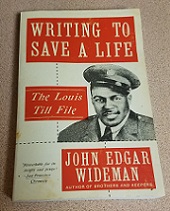 The images that were published in Jet magazine of Emmett Till’s (1941-1955) mutilated corpse still cause readers and viewers on the internet to recoil in shock. With their graphic detail and macabre detail, the pictures of Till’s face become burned into the memory of anyone who has seen them. The story of Till’s murder at fourteen years of age because of allegedly “whistling or cat-calling a white woman” is a dark reminder of the ugly history of racism that prevailed in American culture. Today such a crime is unimaginable, but in 1955 it was not only very real but also encouraged by rabid racists with a vendetta against people of color. In January, 2017, Carolyn Bryant Donham, the woman at the center of the Till story, allegedly admitted that her claims were
 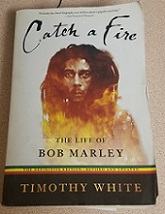 When we think of Reggae music, Rastafarianism and the island of Jamaica, the vision that usually comes to mind is of the mythical figure that was known as Robert Nesta “Bob” Marley (1945-1981). He has been gone for more than thirty-seven years but his music still inspires millions of people around the world and his image graces t-shirts, posters, book covers and other items deemed to be collectibles by their sellers. To some, there is no Reggae without Marley and he is considered to be one of Jamaica’s greatest icons, the superstar from Nine Miles who made his way up through the ghettos of Trench Town until making it big in the music business, where he found international fame. His untimely death on May 11, 1981, sent shock waves through the music industry and the sense of loss continues to confuse as many will ask the question, why did he leave this world at such a young age? To answer that question, it is first necessary to understand Marley’s life. Timothy White (1952-2002), a former journalist with the Associated Press, interviewed Marley scores of times and conducted extensive research to compose this phenomenal biography of the late musician. But just who was Bob Marley? And what was it about him that captivated millions?
 The word time has many definitions, one of which is “the indefinite continued progress of existence and events in the past, present, and future regarded as a whole.” We use time every day in a multitude of ways and without it, society would cease to function. But is time really what we think it is? And how does it apply to our past, present and future? Mankind has been searching for an answer to question “why are we here?” Creationists will say that all things we have come to know are the result of divine power. Evolutionists take the side of science as facts are learned revealing yet another piece of the jigsaw puzzle that is the origin of the universe. Whichever side you find yourself on, I think we can all agree that there are many questions about our universe that have yet to be answered in the form of God or science. Perhaps both are responsible or maybe science will one day provide all of the answers we seek. The late Stephen Hawking (1942-2018) addressed the issue of time in this New York Times and international bestseller that helps us to understand the development of time and how it relates to our very existence.
 He was arguably the greatest villain in the history of professional wrestling. His trademark shirt with the word “Hot Rod” and the red kilt he wore, made him stand out in an industry overrun with colorful character. To his family he was known as Roderick Toombs and Dad, but to the world, he was known as Rowdy Roddy Piper. You would be hard pressed to find any wrestling fan who does not know his name or story. He truly was one of the greats of the industry who’s ribbing of other wrestlers and shenanigans during his famous show Pipers Pit, cemented his legacy as a legend. When he died on July 31, 2015, the world was in a state of shock. I simply could not believe the news reports. At sixty-one, he was far too young to depart this earth and after a hard life in the wrestling business, it seemed as if his glory days were ahead of him. His shocking death still causes fans to shake their heads in disbelief that a man so loved was taken so soon. In all of the interviews I have watched or read with stars who knew him, not one had bad word to say about him. He is remembered as a kind soul backstage and a man possessed with genuine and undeniable talent that helped make Vince McMahon, Jr., the legend that he is in the wrestling business. But just who was the real Roddy Piper? And how did the world of Roderick Toombs, father and husband coincide with the public image he worked forty years to build? His daughter Ariel and son Colt took what remained of the second book Piper was writing about himself and decided to complete a biography of their father. The result? One of the best biographies I have read about a wrestling superstar.
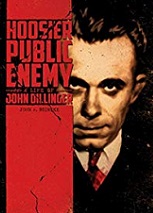 At the height of 1930s era crime and depression, criminals that under normal circumstances would be looked upon with scorn, became larger than life iconic figures whose daring bank robberies and shootouts with policy became stuff of legend. The brazen thefts in the middle of broad daylight accomplished with the use of the Thompson Sub-machine Gun (Tommy Gun) and the Browning Automatic Rifle (BAR) catapulted America into a new and deadlier form of crime. In response, the Federal Bureau of Investigation under the direction of J. Edgar Hoover (1895-1972) stepped into the foray and within a one-year stretch, arrested or executed America’s most wanted. At the top of this list was the late John Herbert Dillinger (1903-1934).
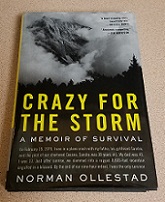 On February 19, 1979, eleven year-old Norman Ollestad was a passenger in privately chartered Cessna aircraft. He was joined by his father Norman and his father’s girlfriend Sandra. The flight was supposed to be a routine trip but weather conditions and pilot error resulted in a series of events that climaxed with the crash of the plane in the San Gabriel mountains in Northern Los Angeles County, California. Miraculously, he was able to descend the mountain and eventually encountered a family living in the area who alerted authorities that a survivor of the crash had been found. Suddenly without his father, young Norman is forced to keep going in life without the words, wisdom and encouragement of the man he called Dad. In 2006, he began to write this book, his life story and his memories of his father while growing up in Malibu, California.
 Recently, I watched the Netflix series


You must be logged in to post a comment.