
 There are a number of adjectives that come to mind to describe the late Eldridge Cleaver. (1935-1998) If I had to choose one in particular, my choice would be unpredictable. His voice is legendary among the most prominent of the Civil Rights Movement. He co-founded the Black Panty Party but was later expelled by Huey P. Newton due to ideological differences. In 1954, he was convicted of possession of Marijuana and sentenced to slightly over two years at Folsom Prison in Represa, California. He began to write letters in his cell and those writings form the basis of this book considered be a classic text on revolution, racism, sexuality and the future of America. The book was published in 1968 after Cleaver had served a second prison term for an attempted rape with assault conviction. Married by then to Kathleen Cleaver, the marriage eventually fell apart due to his erratic behavior and philandering ways. In later years following his split from the Panthers, he distanced himself from his Muslim faith, ran for President, created the “penis pants” and eventually joined the Mormon church. He died on May 1, 1998 in Pomona, California. The cause of death was withheld from the public. Today he is still a controversial figure and his writings and the confessions within have resulted in a split of opinion; readers either like him or hate him. However, the fact remains that he was a valued and highly intellectual voice within the movement that attempted to manifest the issues that faced Black and White America.
But what is it about the book that gets favorable reviews? Cleaver was an extreme figured and is to be expected, he is extreme at some points during the book. At two hundred ten pages, the book is shorter than others by figures such as Newton but within the pages of this book are passages that will cause even the most hardened mind to think deeply. From the beginning Cleaver pulls the reader in with his seductive writing style and deadly accurate analysis of society. Reading about racial discrimination and America’s dark past is always tense but the part of the book is Cleaver’s admission to becoming a rapist in an attempt to get revenge against white men. For all of his creative genius, expert analysis on revolution and highly perceptive mind, his biggest shortcoming by far is his admission to being a sexual predator. The trauma endured by minorities throughout America’s history is tragic and regrettable but it does not excuse the violence and sexual exploitation of women. Furthermore, the truly baffling part is that Cleaver admits that he was wrong but is then convicted in 1958 of attempted rape. Additionally, he is believed to have fathered several children out-of-wedlock. That caused me to ask myself if he truly did have remorse for his past actions. Putting that part of the book aside, the other parts are highly introspective but require an open mind to truly see the genius in his writing.
He touches on several topics and dissects them thoroughly. The youth of today may have extreme difficulty in understanding Cleaver’s points. America has changed in many ways since the 1960s. Vietnam is a relic in the past for the millennial generation with names such as Johnson, Nixon and Mao only discussed history textbooks. But at the time of the publication of this book, they were all very real and Cleaver, like millions of other African-Americas watched the struggles around the world develop as they continued to face their battles at home.
The book has many highlights and Cleaver is a shining star and an example of what could have been if creative and intellectual minds had continued in the right direction. Religion is a central theme early in the book in particular during his time at Folsom. He is a Muslim but attends classes in the prison. He describes his daily life behind bars and the challenges faced by inmates to retain their sanity and optimism that they will one day see freedom. Moving on he touches on the death of Malcolm X, who at first earns the wrath of the Nation of Islam by disavowing the Honorable Elijah Muhammad. But after returning from Mecca, changing his ideology and creating the Organization for Afro-American Unity, Malcolm gained old and new followers, Cleaver included. His death at the Audubon Ballroom on February 21, 1965 was a heavy blow to the Civil Rights Movement and the hearts of the men and women who considered him their black shining prince. Vietnam is not spared nor is the administration of Lyndon Baines Johnson. The personal conflict within the hearts and minds of black soldiers returning from combat to a country that refuses to grant them their rights is truly one of the saddest moments in American history and in the book.
It would have been nearly impossible for Cleaver to analyze social conditions without examining the issue from an opposing view. He writes about white heroes and their extinction due to the changing mindset of the young white youths of America whom he says have rejected the ways of their elders and embraced the culture of their fellow Black Americans. Never straying too far from his Muslim faith at the time, Cleaver gives an interesting portrayal of Muhammad Ali and his importance to the struggle for equality. In fact, Cleaver refers to him at point as the “Fidel Castro of Boxing.” The unfortunate scapegoat in this case is Floyd Patterson who is not able to defend himself. He also gives attention to James Baldwin and his opinions of the late author could be considered controversial. Those who believe Baldwin to be beyond reproach will have a hard time accepting Cleaver’s criticism. And while I do not agree with everything he said about Baldwin, I respect his opinion for Baldwin also attacked Richard Wright and according to many, in a highly unfair manner. Sadly, both Baldwin and Cleaver are deceased but I would love to see them sit down today and have a discussion about the current state of America.
Cleaver in his ideology and writings was aligned with Marxists and his name is mentioned along those such as Guevara, Lenin, Mao and Castro. He does avoid the topic of imperialism and its devastating effects around the world. Particularly close attention is paid to the hypocritical policies of a government that publicly declares support for freedom of foreign nations but struggled to give equality to its own citizens. This chapter in the book is among the strongest and highlights an argument made repeatedly by those committed to an end to colonialism. America has many dark secrets but no shortage of those wishing to expose them. In exposing them, we can see where policy goes wrong and what it is truly needed to correct it.
Towards the end of the book, Cleaver touches on two topics which are sure to cause a range of emotions. It is imperative to remember that these are his beliefs and can be rejected or accepted. In his analysis of male and female relations he has composed four characteristic traits; the Ultrafeminine, the Amazon, the Omnipotent Administrator and the Supermasculine Menial. There is some truth to what he says but there always exceptions to the rule. Nonetheless it is an interesting take on the relationships between men and women. This relationship is carried over into his exploration of the connection between white women and black men. Setting the stage, Cleaver explains that he is with two acquaintances he calls Eunuchs. They are joined by the Infidel who they believe to be a fraud and not aligned with the movement. The dialogue quickly turns to the topic of interracial couples and apparent dysfunctional relationship that the infidel says exists due to the system of slavery. Incredibly, it was not until 1963 that laws against interracial marriage were ruled unconstitutional paving the way for the rescinding of miscegenation laws by states in the union that had not done so. While I do not deny that there are many stereotypes affixed to couples of mixed background, the youth of today are unable to relate to the times in which Cleaver lived. Furthermore, as someone who has dated women that are from many parts of this world, Cleaver through the voice of the Infidel would be off base today. But this was the 1960s and a completely different time in America. And I would be foolish to deny that there are in fact some of us who are exactly what that section of the book discusses. If there is one thing I have learned about love, it is that it strikes us when we least expect it and we never know to whom it will be directed. But when it does happen, all that we can do is go with it and see where it takes us.
It is undeniable that Cleaver was a polarizing and truly mystifying figure. Is this book outdated? Maybe. But it is still a guide that many youths lived by during those turbulent times. And if America seeks to move forward and improve itself, then we will need to revisit the past on occasion so that we do not make the same mistakes again. Eldridge will be with us as one of those voices to reminds of the failure that awaits those who do not study the past.
ASIN: B01ELOLI6U
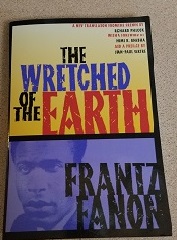 On July 1, 1962 a referendum was held that paved the way for Algerian independence from the government of France. The complete cessation of armed conflict marked the end of war that lasted seventeen years. The Algeria movement for freedom stands out as a success story similar to the legendary revolutionary campaigns in the Caribbean and Latin America. It is also a case study for those seeking to go down the path of revolution as a method to enforce social reform. No revolution is complete without a defining text and in this case, the struggle was analyzed and transcribed the famed revolutionary, writer, philosopher and psychiatrist, Frantz Fanon. (1925-1961) The book was finished shortly before his death and published not long after. Originally written in French, it has been translated by Richard Philcox for English readers.
 Wagner Moura became one of Netflix’s most memorable faces when he assumed the role of infamous drug czar Pablo Escobar in the hit series Narcos. The series, while based off of true events, is also a fictional account of the late kingpin’s life as a cocaine trafficker and public enemy number one in Colombia. The received rave reviews and I enjoyed it immensely. I was aware of Escobar’s story before watching the show and knew that the producers would tweak some parts of the story to enhance its seduction. The created a hit that will remain one of the best products of the digital behemoth. But some of us may be asking ourselves, how much did Netflix get right? And what did they change as they filmed the show? Shaun Attwood goes behind the camera and revisits the real story of Pablo’s rise and downfall that lead to his death on December 2, 1993 in the city of Medellín.
 Today it is hard to imagine that less than fifty years ago, New York City was once considered one of the most dangerous cities in America. Rising crime, poverty, budgetary mismanagement and police corruption combined to turn the Big Apple into a city that took more than it gave. The New York City Police Department was tasked with maintaining order in the concrete jungle in the face of budget cuts and incredibly layoffs in the late 1970s. The officers who survived those dark years carry with them endless memories about their time on the streets of New York City. Tom Walker, who retired in 2004, spent several years of his career at the 41st Precinct in the South Bronx, nicknamed by the officers as “Fort Apache”. The name sounds heroic but as we learn in the book, it was for darker and more tragic reasons that the station was referred to as a fort. Outside the walls of the precinct existed a world that bordered on the surreal and gave a glimpse into what hell must really be like.
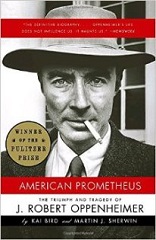 In August, 1945, the course of modern warfare was changed forever when the United States dropped two atomic bombs on Japan, striking the cities of Hiroshima and Nagasaki. Following the successful deployment of the bomb, the Soviet Union and other nations enhanced their own programs to develop a nuclear weapon. The nuclear arms race produced a fear in mankind that still exists today as war continues and dictators drunk on power set their eyes on world domination and a test of egos. It has often been said that the next major world war will be the last war mankind will ever fight. Humanity now has the absolute power to destroy itself literally at the push of a button. Thankfully, since the second world war, there has been no further use of atomic weapons in an armed conflict. But the danger still exists and there have been many who have warned against the escalation of nuclear armament. One of these voices was that of J. Robert Oppenheimer (1904-1967), referred to as the father of atomic bomb and in this excellent biography, an American Prometheus. Kali Bird and Martin J. Sherwin have captured Oppenheimer’s life splendidly making sure that his life is recorded for history.
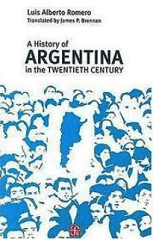 On April 6, 2017, The Global Confederation of Labor (CGT) conducted a one-day general strike in protest of the policies of the administration of President Mauricio Macri. (1959-) Inflation, high taxes, low wages and job cuts have constrained the people of Argentina into an economic vice grip as the president attempts to steer the country away from a looming economic crisis. The strike is just one in many that have taken place during the last one hundred years in one of South America’s most popular countries. In July, 2017, I had the privilege to visit Buenos Aires, the city that has been called the Paris of South America. In July of this year I will return to the nation that is home to world-famous steaks, milanesa, wine, asado and dozens of culinary delights that make the heart flutter and the mouth water. I do not know what the political climate will be like when I visit but I can be sure that the people of Buenos Aires will show me the same hospitality that they did in the past and in the process help to create memories that will remain with me for the rest of my life. My favorite Argentine presented this book to me as a gift, a gift that keeps on giving. This book is a history of the Argentine Republic during the twentieth century. And what is contained in the pages of this book is essential in understanding modern-day Argentina. James P. Brennan has translated the work of Luis Alberto Romero (1944-), who became a Professor of History at the University of Buenos Aires in
  During a trip back to New York from Miami this week, I was browsing the books at the terminal’s newsstand and came across this book by Anderson Cooper and his mother Gloria Vanderbilt. Like most Americans, I know Cooper from CNN and the years of journalism that he has provided to us. I was not aware of his mother’s story or that she is still going strong at ninety-three years of age. I decided to purchase the book and I am delighted to say this New York Times Bestseller was worth the investment. The title is quite self-explanatory but there is so much more in this book which is a collection of correspondence between Cooper and his mother. It takes place over a period of time and through electronic means. The story of their lives is fascinating and contains an interesting history of its own.
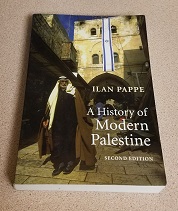 The crisis that exists between Israel and the area that was once the nation of Palestine has evolved into one of the most tragic the world has seen. Anger on both sides and the failure of mediation on more than one occasion has resulted in the continuation of the long feud. Each side has its supporters and detractors refusing to abandon their beliefs and stance of the matter. My interest in the conflict propelled me to acquire this high recommended book on the issue written by Israel historian and social activist, Ilan Pappe (1954-). Pappe was born in Haifa and continues to educate millions about the true origins of the raging battle. This phenomenal account of the history of Palestine and its current day status is a must read by anyone seeking to understand the origins of the matter. To be fair, Pappe is not anti-Israel, but he does however, confront many facts about the history of Palestine that are often very uncomfortable. But any good researcher should do just that and it is in this area that Pappe shines through.
 Epidemics have been a part of mankind for thousands of years. At some point in time, humanity has been threatened with the possibility of extinction in the form a new disease that had not yet been understood by doctors and government officials. In the United States, there was a disease that caused widespread panic and afflicted millions of Americans before it was contained. Its most-famous victim was former President Franklin D. Roosevelt who became known as the “Wheelchair President”. The disease was officially designated poliomyelitis or polio for short. To this day, it remains one of America’s deadliest epidemics next to AIDS and cancer which continues to claim lives each year. The origins of polio are mysterious and the successful creation of a vaccine was the result of the hard work and dedication of the greatest virologists who rose to the occasion to save the nation from a deadly disease. Today the disease is largely forgotten and taken for granted. A diagnosis of polio is exceedingly rare and in the event it is detected, vaccines are readily available to contain the virus and give the patient a long and happy life. However, less than sixty years ago the race to find a vaccine was hotly contested as Americans and the world lived in suspense at the possible eradication of a silent killer. Two doctors on opposites ends of the spectrum are forever linked with the disease and the successful campaign to eliminate it; Albert Sabin and Jonas Salk. This is the story of polio and the two physicians that have become legends in American history. The book is presented to us by David Oshinsky, author and Pulitzer Prize winner who also published

You must be logged in to post a comment.