
 Today, sixty-four years after his death in, Joseph Stalin (1878-1953) remains one of the most polarizing and studied figures of the 20th century. As the leader of the Soviet Union during the Second World War, he enforced the legendary Red Army as it fought off a German onslaught and helped the Allies put an end to Germany’s Third Reich. Following the war, tensions between the United States and the USSR escalated giving birth to the Cold War. In 1991, the USSR collapsed and today Russia is under the control of Vladimir Putin, undoubtedly one of the world’s most controversial figures. Stalin’s reign may seem to be in Russia’s distant past but it was less than one hundred years ago that Stalin ruled with an iron fist, striking fear into the hearts of not only his enemies but those closest to him. Rumors have surfaced over the years regarding everything including his love life, health, mental state and bungled policies. But who was the real Joseph Stalin? Born Ioseb Jughashvili in Gori, Georgia on December 18, 1878 to Besarion “Beso” Jughashvili (1850-1909) and Ketevan “Keke” Geladze (1858-1937), few could have imagined that the young child would grow up to rule an entire nation. His life in later years became mysterious to those inside and outside of Russia. Misconceptions and falsehoods have spread, causing even more confusion about the truth. Stephen Kotkin has takes on the late leader’s life in a multi-part definitive biography that is simply outstanding.
Kotkin’s compendium is extensive, totaling over seven hundred pages of text. And from what I have seen, the second volume, due to be released in November, 2017 will be slightly larger. But contained within the pages of this book, is the incredible story of the life of Joseph Stalin from his birth until the year 1928. The book was exhaustively researched and at times, is heavy on historical figures, places and dates. At first it may seem challenging to keep track but as the book goes on the, the figures reappear to remind us of their importance. The beauty in the book is that Kotkin deeply examines all situations that require explanation. And in his writing, he is neither for or against Stalin. He simply shows us his life and who he was, based on his own statements, transcripts of Party Congresses and documents that have survived from the era. For history lovers, this is nearly heaven on earth. History textbooks tell some of the story of the Russian Revolution, but here we have an inside look into the movement that catapulted Stalin, Vladimir Lenin (1877-1924) and Leon “Lev” Trotsky (1879-1940) to eternal fame and later condemnation. The subsequent Russian Polish War and escalation of tensions between Russian and it’s allies Germany and Britain following Lenin’s death, highlight the fractured foreign policy enacted employed by the Bolshevik party.
As Kotkin showcases, Stalin’s rise to power was based on fear, intimidation and deception. Even those closest to him, never truly knew what he was thinking or how to approach him at times. His first wife Yekaterina “Kato” Svanidze (1885-1907) died only a year into their marriage but his second wife Nadya Alliluyeva (1901-1932) witnessed first hand his unpredictable nature and abrasive moods. And for those that were enemies, they often face exile in Siberia, where Stalin himself was once confined to during the First World War. Trotsky, Grigory Zionviev (1883-1936) and Lev Kamenev (1883-1936) would find this out firsthand. His NEP or “New Economic Policy” was supposed to be the plan that saved Russian but instead propelled it towards disorganized collectivization intended to balance the economy as Stalin moved further to the left. But as we see in the book, the Bolsheviks had steep learning curves in many areas. The results of their shortcomings are tragic having resulted in the deaths of over seven million people. Famine spread like a virus forcing many to eat things unmentionable and unimaginable. And throughout the crisis that arise, Stalin comes off as a cold machine unaffected by anything and driven by ideology. As we re-live the past through Kotkin’s words, we see the deep level of seriousness and vindictiveness that composed the former Soviet dictator.
Stalin took with him to the grave, answers to many questions that have puzzled researchers for years. And although we have documents that have been graciously preserved, some parts of his life are lost for good. Perhaps some day in the future, more information about him may be discovered but with Kotkin’s work, we have the first part of what could be the best biography of Stalin to date. It is one of history greatest stories and filled with historical figures such as Pyotr Stolypin (1862-1911), Maria Spiridonova (1884-1941), Fanya Kaplan (1890-1918), Gavilro Princip (1894-1918) and Nicholas II (1868-1918) among others. Students of Russian history have been presented with a gift in this book and I am sure it will find its way to the bookshelves of many.
Ideas are more powerful than guns. We would not let our enemies have guns, why should we let them have ideas” – Joseph Vissarionovich Stalin
ISBN-10: 0143127861
ISBN-13: 978-0143127864
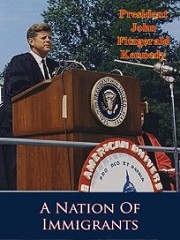 America is often referred to as the land of opportunity for anyone wishing to start a new life far away from home. Since the days of Amerigo Vespucci, the territory we now call the United States has been a primary destination for world travelers. In recent years, legislation regarding immigration has been an important topic which provokes fierce debate. Every country has its issues with immigration and none has a perfect regarding the same. However America has been the place where millions of immigrants have made a new home. The late John F. Kennedy, formerly the Thirty-Fifth President of the United States, left us with many writings, interviews and speeches before his untimely death in Dallas, Texas. His sharp wit, uncanny foresight and fierce independence catapulted him to the top of the list of Americans whose names live on forever. As the descendants of Irish settlers from Ireland escaping the potato famine, his family came to America in search of a new life. Their journey was long and their assimilation into a new society rough, with prejudice and xenophobia forming substantial obstacles to peace and happiness. Their plight was never forgotten and is told again in this short but engaging book that clarifies his position that America truly is a nation of immigrants.
 Today, the People’s Republic of China continues to feel the effects of the policies of it most popular leader, the late Mao Zedong (1893-1976). Known as Chairman Mao, his successful campaign against the Nationalist led by Chiang Kai-Shek (1887-1975) set the stage for the founding of the People’s Republic of China on October 1, 1949. Mao ruled the nation until his death on September 9, 1976 at the age of eighty-two. During his tenure he came a controversial figure and is credited with causing millions of deaths through the failed policies of collectivization and the infamous “Great Leap Forward.” The aura of promise and hope that surrounded the commencement of his administration subsided as millions of Chinese endured long periods of poverty and famine while Mao enjoyed unlimited perks through his role as Chairman. Propaganda is a power tool used by the darkest of dictators to enforce their will on the masses of people they wish to control. An official story of triumph supported by an unwavering commitment to the revolution by ordinary men and women, helped cast an illusion of a progressive new China, modeled on its Soviet counterpart. In reality, the story is far different and in some cases, horrific as can been seen in this study of the early years of the Chinese Revolution by Dutch historian Frank Dikötter. (1961-)
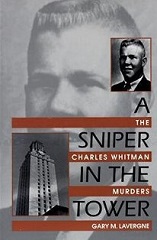 On August 1, 1966, the citizens of Austin, Texas woke up to yet another brutally hot summer day. The heat was typical for the summer season but that day would be remembered for more than just the temperature. At 11:35 a.m., Charles Whitman (1941-1966), a former United States Marine and student at the University of Texas, ascended to the observation deck of the UT Tower and unleashed a deadly shooting assault on suspecting civilians below. In ninety-six minutes, Whitman murdered fourteen people and wounded at least thirty-one before he was shot and killed by responding law enforcement officers Houston McCloy and Ramiro Martinez who were joined by civilian Allen Crum. The shooting left the city shocked and ushered in a new concept in American history; the mass shooting spree.
 More than twenty years have passed since the deaths of rap stars Tupac Shakur and The Notorious B.I.G. (Christopher Wallace). The two rappers were both under thirty years of age and left behind grieving friends and family members who struggled to come to terms with such a sudden and tragic loss. Officially, both murders are still open investigations. Fans of the fallen artists have expressed shock that the murders have remained unsolved for so many years. Theories have been presented surrounding their deaths but no final conclusion had been reached. Following Shakur’s death, his mother Afeni successfully sued Death Row records for control of her son’s master recordings, unpaid earnings and royalties. The parties reached a
 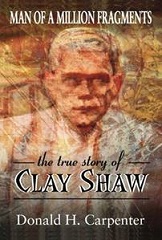 In December, 1991, Warner Brothers pictures released Oliver Stone’s JFK, the film adaptation of the investigation by New Orleans District Attorney Jim Garrison (1921-1922) into the death of President John F. Kennedy. The film is filled with an all-star cast and remains one of Stone’s greatest accomplishments. Reviews of the movie are generally favorable but there are many critics who have voiced their dissatisfaction with the film believing that Stone omitted crucial information and glorified Garrison on screen. The famed director did an incredible job of bringing the past of life and his effort paid off immensely as more records related to President Kennedy’s assassination were released to the public. The actors that took part in the landmark film all did an incredible job in making the story one that will continue to spark curiosity. From history, we know that Lee Harvey Oswald (1939-1963) was the alleged assassin but was murdered himself before he could stand trial. Several years later, Garrison began his own investigation, focusing on what he believed to be a plot in his own City of New Orleans to murder Kennedy. His investigation resulted in the arrest and prosecution of local businessman Clay L. Shaw (1913-1973). The trial became infamous for its absurdity and Shaw was exonerated in March, 1969. Garrison later tried Shaw on the charge of perjury and Shaw subsequently filed a civil suit against Garrison and others for the violations of his civil rights. These matters and others were unresolved at the time of Shaw’s death from lung cancer on August 15, 1974.
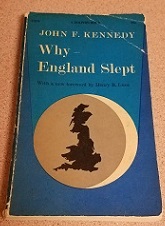 On September 1, 1939, Adolf Hitler’s Third Reich invaded Poland and started the Second World War. In violation of the terms of the Treaty of Versailles, Germany had rearmed itself and under the determination of Hitler, set its eyes upon conquering all of Europe. The looming threat of German domination had been lingering for quite some time before the outbreak of the war. But sadly, many of the nations that would later be opposed to Germany did not think that Hitler would be brazen enough or have the resources to initiate a world conflict. In hindsight, we know that way of thinking was short-sighted and later highly regrettable. The actions of the British government in response to Hitler’s annexation of Czechoslovakia, resulted in the condemnation of Prime Minister Neville Chamberlain and established Germany as a legitimate threat to world peace. The episode has been recalled in history books and documentaries and continues to provoke discussion about how Hitler could have been stopped before his army invaded neighboring Poland.
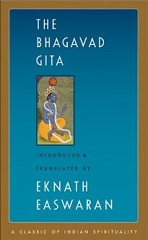 Throughout our lives we sometimes find ourselves in search of the meaning of life and where we go after our time on earth reaches its conclusion. Religion has played a central role in the question, giving millions a sense of calm and relief that upon death, there is an afterlife awaiting us where we continue to live for an eternity. There are those among us who do not believe in any God or Deity, but feel that it is up to humans to create heaven on earth. Judaism, Hinduism, Christianity and Islam are the world’s dominant religion with each having millions of followers. There are thousands of other deities worshiped throughout the world and dozens of separate faiths. Hinduism reigns as one of the world’s oldest religions predating Christianity by thousands of years. Its ancient scriptures are prized and studied for guidance through life by Hindus and others seeking spiritual enlightenment. Among these cherished scriptures is The Bhavagad Gita, the classic of Indian spirituality that earned the love of readers world-wide. It is rare for me to pick up any book on religion but I decided to give this a read following the completion of a biography of J. Robert Oppenheimer. (1904-1967) Having finished the text I can see why it is loved by many.
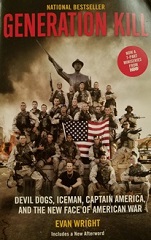 Fourteen years have passed since the United States military invaded the nation of Iraq and deposed its former ruler Saddam Hussein. President George W. Bush had declared Iraq America’s number one enemy and vowed to remove Hussein from power. Hussein fled but was captured in December, 1993 and eventually executed for his crimes against his own people. For many Iraqis and Americans, his death was long overdue and they bid farewell to one of history’s worst dictators. Critics of the war remain and remind us that our military is still in Iraq and no clear permanent solution to establish true democracy is in place. The war is as controversial as those that precede it. But for the men and women that served in the war, their stories are often unnoticed. However in this phenomenal story, Evan Wright brings their story to light for the world to see what warfare was like for thousands of troops. In March, 2003, he accompanied the First Reconnaissance Battalion as the invasion begins. The group becomes known as First Recon and is tasked with clearing town after town until the Iraqi army capitulates. Baghdad eventually falls, Hussein escapes and the marines have done their job for the time being. America celebrates and Bush stands stoically as the armed forces once again succeed. The infantry soldiers return to civilian life or choose to remain enlisted. Their stories fade in time and their names are often never heard of by the mainstream public. But just who are these brave souls and why do they voluntarily put their lives on the line? Wright explores this and more in the book that became a New York Times Bestseller and inspired the HBO hit series of the same name.
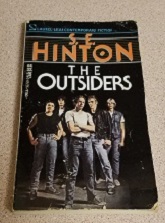 This past weekend I had the fortune of becoming re-acquainted with two of my teachers from the eighth grade. One of them has now turned eighty and looks as sharp as she did when I was a thirteen year-old kid. During the conversation, I mentioned that I still had my copy of The Outsiders, the book we read as a class that has remained with me to this day and occupies a space on my bookshelf. I find it incredible that after nearly twenty-five years, I still love the book and remember passages from the book in their entirety. It is a classic story given to us as a gift that keeps on giving by famed author S.E. Hinton (1948-). The book is popular among many of my peers and my former teacher has recently given a copy to her grandsons so that they may find joy in the book. I had the pleasure to meet both of them and believe that they will turn out to be fine young men. Many years from now, they took will look back on The Outsiders as one of the greatest books they have ever read.

You must be logged in to post a comment.