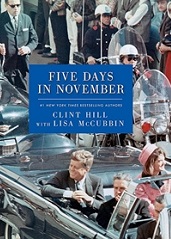
Five Days in November-Clint Hill with Lisa McCubbin

five daysAbraham Zapruder captured a defining and tragic moment in history when his camera recorded the assassination of President John F. Kennedy.  The film was originally locked away by Time Life but was finally released to the public years later as a result of the investigation of Jim Garrison into Kennedy’s murder. The film leaves the view speechless and speaks more than a thousand words.  Next to the gruesome murder of the President, there’s  an iconic sequence that occurs that also remains cemented in the memory of the witnesses in Dealey Plaza that day and the millions others who have repeated watched the film.  As the motorcade speeds toward the triple underpass, a Secret Service agent is seen jumping on to the back of the car as it speeds up to transport the mortally wounded Kennedy to Parkland Hospital.  The agent is Clint Hill, a veteran of the Secret Service who served several presidents during his multi-decade career.  Now 84, he’s become an author over the years, having written a few books, one of which is this account of the fateful trip to Dallas, Texas and the tragedy that ensued.

The book begins on November 21 as the party prepares for the departure to Texas.  Hill shines light on the commotion and last-minute maneuvers that are required to make the trip go as smoothly as possible. We also see the softer side of the President as he embraces his children for the very last time.   And as Air Force One departs for San Antonio, the first stop, no one aboard knows that this is the last trip that they will make with Kennedy.  After receiving a warming welcome at San Antonio, the party is jubilant about the potential to mend political fences in Texas to bolster Kennedy’s chances for reelection in 1964.  The morning of the 22nd starts out on a positive note as the President makes his last speech at the Ft. Worth Chamber of Commerce.  The flight to Dallas is only fifteen minutes and the first couple emerges after landing to a crowd of eager supporters.  The motorcade makes its way through the streets of Dallas and at 12:29 p.m. everything goes dark as the nightmare begins changing history and Hill’s life forever.

As the tragedy unfolds in Dallas, Hill serves as our point man takings us through each development as it happened.  We also get a feel for the emotions and thoughts going through the minds of everyone as they struggle to remained composed in the face of an unspeakable tragedy.  The vivid reality of the chaos in Parkland and later on Air Force One becomes even clearer as Hill takes us through the day and all the way until Kennedy’s body returns to the east coast for the autopsy at Bethesda Naval Hospital and his final placement in the coffin in which he was buried.   Funeral arrangements, the arrival of family and guests combined with the changing of the guard in Washington prove to be heavy tasks on all present and each does their best under the strain.  Up until Kennedy’s final moment before he lowered into the ground, Hill remains a loyal agent and intimate family friend.

Because this book is written by a former agent on Kennedy’s detail, some would expect it to have possible clues as to who might have killed the President.  This is not the case and Hill sticks to the government’s story of Lee Harvey Oswald as the lone gunman.  Whether Hill continues to believe that is beyond the scope of the book and a completely different discussion.  What this book is, is a poignant memoir by a man who remains haunted by those five days in November, 1963.



My Grandfather Would Have Shot Me: A Black Woman Discovers Her Family’s Nazi Past-Jennifer Teege

16923849739_a73717f925_bOn September 13, 1946, Amon Goeth, the former commandant of the Kraków-Płaszów concentration camp, is executed for his actions during World War II  after a trial and conviction by the Supreme National Tribunal of Poland.  Goeth was brought to life on the silver screen in Steven Spielberg’s classic film ‘Schindler’s List’ in which he is played by actor Ralph Fiennes.  The film is moving and one of the most haunting to have even been produced about the Holocaust.  Survivors of the Holocaust vividly recalled memories of the remorseless killing committed by Goeth and those under his command. Several decades later, his life is revisited, not by a random author, but by his granddaughter Jennifer Teege, a child of a German mother and Nigerian father who discovers her family’s past and struggles with her own identity in this biography that is bound to leave the reader speechless.

Jennifer’s story and those of other descendants of Third Reich leaders, most notably Gudrun Himmler and Niklas Frank, shed light on an often overlooked part of the second World War.  Following the Allied victory and occupation of Germany, the families of Nazi officials were often in turmoil.  Hunted by the Allies, many Nazis fled to other countries, some committed suicide, others were executed and under the CIA’s Operation Paperclip program, some were even relocated to the United States.  Their descendants were left to confront the individual’s past actions and the policies of the Third Reich under Adolf Hitler.  And it is this past which haunts not only Jennifer, but her mother Monika, Goeth’s daughter who was only 10 months old when he was executed.

The book begins in Hamburg, and we are with Jennifer in the library as she discovers a book about Amon Goeth. Recognizing the last name, she begins to ask herself questions and puts together the puzzle that is her past.  And as she learns about her grandfather, the man who struck terror in the hearts of thousands of Jews, she is faced with the grim reality that yes, her grandfather would have shot her during his reign of terror.  In her youth, the remaining link to her grandfather was her grandmother Irene, who until her own death from suicide in 1983, remained loyal to Goeth.  Having lived with Goeth at the camp, she conceived Monika while Goeth was still legally married to another German woman.  The inner battle she fights regarding her feelings toward her late grandmother whom she loved dearly, is heartbreaking and reminiscent of the struggle of many others whose parents and grandparents committed horrific crimes under the banner of the Third Reich.

Teege’s story is an amazing one,  filled with many trials and tribulations.  We follow her as she struggles with depression, how to tell her Israeli friends about her past, establish relationships with both of her biological parents, love, a family of her own and ultimately, her acceptance of her family name.  To the generation of today, World War II is something that’s mentioned in textbooks. But a large number of people around the world who are still alive,  memories remain fresh from a time in history when the security of the world as we know it, was in danger of being completely destroyed.  For people such as Monika Goeth and Jennifer Teege, the war always remains in the present in the form of Amon Goeth, whose deeds and name will continue to live in infamy.  And as we learn Jennifer’s story, we are forced to ask ourselves what would we do if we were in her place? It’s an answer I’m sure many of us would struggle to find.

ASIN: B00XGLGEMS


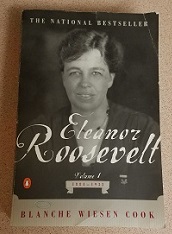
Eleanor Roosevelt Volume 2: The Defining Years 1933-1938-Blanche Wiesen Cook

e-roosevelt-vol-2In volume I of her three-volume biography of the late Anna Eleanor Roosevelt (1884-1962), Blanche Wiesen Cook explored the early life of the pioneering First Lady of the United States.  We learned about her family history, both intriguing and tragic, upbringing by close relatives, her marriage to Franklin and his election of the presidency of the country.  The book closes as the family assumes their role as the new occupants of the White House.  In this second volume, their story continues with the new President finding himself embattled on several fronts as the depression rages, Adolf Hitler threatens world peace and domestic social tensions threaten to tear the nation apart.  The First Lady also finds herself fully immersed in ongoing current events that cause concern for citizens across the country.  And it is during this time period, 1933-1938 that she defines herself as she finds her calling as a champion of women’s rights and advocate of equality and well-being for Americans of all ethnic backgrounds.
Towards the end of the first volume, Lorena “Hick” Hickok (1893-1968) enters Roosevelt’s life and becomes a constant companion and according to the letters analyzed by the author, intimate of the First Lady.  Hick would be one of several people to make up her close circle, and all of them are examined in detailed in this excellent continuation.  Tragedy seems to stand out in this volume as several people close to the First Lady die bringing an end to long-term and mutually supportive relationships.  Among these the late aviator, Amelia Earhart (1897-1937). Undeterred, she continues her quest for civil rights and a firm stance by the United States against German aggression.  These stands would cause strain in her relationships with her relationship with Hick being tested on the issue of racial discrimination, a cause which consumed a large portion of the First Lady’s political life.

As war threatens to erupt in Europe and the old standing tradition of segregation and Jim Crow is challenged domestically, the First Lady continues her transformation into one of the finest women in American history.  Her beliefs and crusades were not without opposition and the behind-the-scenes battles and power plays are exposed revealing the reluctance to act and sometimes treasonous actions of members of the State Department and of FDR’s own cabinet.  The first couple’s personal lives would also be tested with three children in doomed marriages and emergency surgeries for various ailments.  But throughout all of it, the pioneering First Lady never wavers in her campaigns cementing her legacy as one of a kind.

The aggression of Nazi Germany fueled by the maniacal Adolf Hitler (1889-1945), put the world on notice that a new empire was strengthening in Europe.  The Nuremberg Laws combined with Kristallnacht, blatant discrimination and humiliation of Europe’s Jewish citizens, laid the foundation for the First Lady’s campaign for American intervention and support for refugees fleeing the Nazi menace.  FDR and other leaders were not strong advocates of intervention and their sluggishness to fully act served as chord of discontent in the Roosevelt household.  The cause for Jewish civil rights in Germany and other European nations, supplemented the strengthening civil rights movement here in the United States with regards to racial prejudice against African-Americans and other minorities through unconstitutional legislation and the violent practice of lynching, against which, the pioneering First Lady spearheaded a campaign.  Her actions at the conference in Birmingham, then controlled the infamous Bull Conner and his police department, is one of the shining moments in the book for at the time she took a stand not just for herself but for all Americans.   And today as we deal with social issues that serve to undermine the tremendous progress this nation has made, we can look back at her action and remind ourselves that regression and submission are not options.

A great biography has the ability to remain unbiased, delivering the facts whether they are positive or negative. Cook does a great job of showing the moments where Roosevelt’s actions were questionable.  A native of the South, we see through the author’s words, the continuous effort on Roosevelt’s part to remove herself from her southern upbringing prone to deep-seated racial bigotry.  And at several points in the book, ER herself makes strides to remind herself of the insensitivity that can accompany words.

The third volume of this excellent biography is slated for release on November 1, 2016 and can be ordered in advance on Amazon.com.   Based off of what I have read so far, the  best is yet to come as we see the outbreak of World War II, FDR’s untimely death and the later years of Anna Eleanor Roosevelt.

ISBN-10: 0140178945
ISBN-13: 978-0140178944


Eleanor Roosevelt: Volume I, 1884-1933-Blanche Wiesen Cook

e-roosevelt-vol-1The President of the United States has what many consider to be the toughest job in the nation.  Tasked with the impossible feat of making everyone happy at all times while often performing highly unpopular actions, the President often goes through a transformation while in office that results in deep reflection later in life. Standing next to each President in modern times, is the first lady who in her own right, has evolved into a major presence with a voice of her own.  This November will mark the end of the Obama administration and as they prepare to leave the White House, I firmly believe the first lady can look back without regret as having served the nation as one of the finest America has seen.   She follows a long line of pioneering first women to have occupied the White House, adding  a touch of grace and class to what used to be a strictly supplementary role. But many  years before Michelle Obama, there was another first lady, who stands out as one of American’s greatest historical figures and whose legacy continues today, Anna Eleanor Roosevelt (1884-1962).
In the first of this three-volume biography, Blanche Wiesen Cook explores Roosevelt’s early life, highlighting the complex family tree and the success and tragedy that surrounded the famed family.  As a niece to the legendary Theodore “Teddy” Roosevelt(1858-1919), she was introduced to politics at a young age and following her marriage to Franklin Delano Roosevelt, she would remain a political and cultural icon for the rest of her life.  Drawing on correspondence that survived throughout the years and the recollections given by those who knew her, Cook’s biography is an intimate account of a woman who never stopped in her effort to change America.

As the reader makes their way through the book, the information learned will be eye-opening and intriguing. The events that unfold in the book seem by today’s standards mind-boggling, but in Roosevelt’s time, America was far different place and as Eleanor’s life comes alive in this brilliant biography, we are transported back in time to when America was struggling with very grave social issues.   But throughout all of this, we see the transformation of a young woman into a grown woman with power and a voice of her own as the most dynamic and controversial first lady of her time.  An aviator, friend of Amelia Earhart, mother of six children, teacher, writer and pioneer of women’s and civil rights, she battled wars on many fronts refusing to give up her causes and surrender her beliefs.

The book ends as she finally makes it to the White House and becomes fully immersed in the Washington, D.C. political culture. Her friendship with Lorena Hickok begins to develop and it would continue for many years to come.  FDR is also facing his own challenges but his toughest test from out of Berlin and Tokyo have yet to come.  It is in the second part, a review of which is forthcoming, that Franklin and Eleanor continue their odyssey as the new and engaging first couple of the United States of America.

ISBN-10: 0140094601
ISBN-13: 978-0140094602

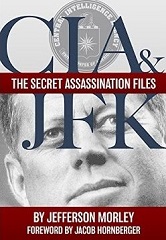
CIA & The Secret Assassination Files-Jefferson Mobley

cia jfkOctober, 2017, will mark a turning point in American history.  Pursuant to the JFK Records Act of 1992, all remaining classified files relating to the assassination of President John Kennedy  are slated to be released to the American public.  If no opposition is received from the FBI, CIA or any government agency with a vested interest in the files, more than 3,000 pages of once classified documents will be disclosed more than 50 years after Kennedy’s tragic death on the streets of Dallas, Texas.
While the news of this possible release of thousands of documents is uplifting, it also raises concerns about the U.S. intelligence community and its prior actions under Kennedy’s administration. Researchers of JFK’s murder have long suspected the involvement of the CIA of having a role in the murder.  And although no one at the CIA was ever officially charged or prosecuted for Kennedy’s death, there were many actions of the agency that were not only strange but deeply disturbing.  The House Select Committee on Assassinations served to shed light on the mysterious agency whose cover had been slowly lifted as a result of the Watergate investigation and the failed counterintelligence activities James J. Angleton, arguably the most mysterious figure in CIA history.  The American public learned of the infamous actions of the agency in places such as Nazi Germany, Iraq, Guatemala and Cuba.  The alliance with Italian-American gangsters and the smuggling of arms and ammunition to Cuban rebels opened the eyes of many Americans unaware of the true activities of the secretive agency.  If the documents are released next October, just what exactly could that mean for the CIA and the American public?  Jefferson Morley seeks to answer those questions in this short analysis of the many unanswered questions regarding the CIA and the death of John F. Kennedy.

A study of the assassination produces an endless amount of names, places, times and locations.  Like a never-ending puzzle, it’s a mystery that has grown deeper over time.  But as the layers of complexity have been peeled off, names and faces have been matched putting together crucial pieces of the crime.  Among those faces which are known to long-term investigators, assassination researchers and mentioned in this book are David Morales, David Atlee Phillips, Richard Helms, and the legendary and infamous William Harvey.  While none of the aforementioned were ever charged with any crime relating to Kennedy’s death, their names have come up more than once over the years as suspects who may have taken part in the plan to murder Kennedy or in the actions to cover up the crime.  The documents slated for release contain pages of information relating to most of these complex figures. Morley touches briefly on the lives of these former intelligence legends giving a primer of what could possibly come forth with the release of the once classified records.

The murder of John F. Kennedy continues to haunt the United States and is by far the most infamous murder of a government official in United States history.  To the young generation of America, Kennedy is a remnant of a very distant past, but for older Americans, his death was a turning point in the direction and history of the United States.  Some have speculated that the truth about JFK’s murder would never been known, at least not in this lifetime.  The release of the records in October, 2017 gives hope that the truth may eventually come out and possibly in this lifetime.  And as Morley has pointed out, the CIA may have serious cause for concern.


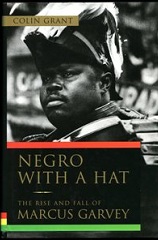
Negro With a Hat: The Rise and Fall of Marcus Garvey-Colin Grant

garveyIn the Bedford-Stuyvesant section of Brooklyn lies Marcus Garvey Blvd, a street named after the late iconic figure in the African-American struggle for civil rights in the United States and abroad. The native son of Jamaica and former resident of London, England,  made his name famous on the streets of Harlem, New York through the formation and activities of the Universal Negro Improvement Association (UNIA).   The organization’s purpose to build up the moral, economical and social status of Black Americans, combined with his “back to Africa” movement, remain defining movements in the African-American experience.  At the time of his death on June 10, 1940,  Garvey was a shadow of his former self after several severe strokes had taken their toll on his aging body.  His death dealt a sever blow to the strengthening movement for equality.  And 76 years after his death, his writings, speeches and life, are still remembered, quoted and analyzed for they  remind us of the importance of standing up for what we believe in.  Garvey remains one of most magnetic figures of the 20th century.

The rise and fall of the Black Start Line is often the focus of many articles about Garvey.  And while the history of the line is unfortunate, the real Marcus Garvey typically remains hidden in the shadows.   But who was Marcus Garvey and why is his story so important to the history of the United States and the movement for civil rights? Colin Grant presents to us the definitive biography of the late icon and his controversial and tragic life.  Born in St. Ann’s Bay, Jamaica, on August 17,1887, to the late Malchus Garvey, he would leave his native Jamaica many times throughout his life,  making his mark across the world.   Grant takes us back in time to witness the rise of the most gifted orators to speak directly to the soul of African-Americans. Garvey’s fiery rhetoric and inviting personality, earned him a legion of believers, intent on following him all the way back to Africa by way of Liberia.

But behind the speeches and mass congregations, the personal life of Marcus Garvey was nothing short of complex, filled with stress, fear, disappointment & violence.  As leader of the UNIA, he would face continuous battles with other leaders such as W.E.B. DuBois.  His success and influence also earned him the watchful eye of the Bureau of Investigation, the predecessor of the Federal Bureau of Investigation, headed by a young J. Edgar Hoover.  Once shot and wounded and suspected in the violent deaths of others, Garvey was no stranger to violence and death.  Grant has carefully researched the episodes and revisits them here showing the behind the scenes movements that helped Garvey rise to fame and which also caused his demise. At many points throughout the book, the reader is forced to confront the fact that Garvey, for all of his good deeds and intentions, was also a seriously flawed person at heart.  But his shortcomings in no way detract from his vision for the complete freedom of Black Americans from the brutal system of racial injustice.

To the youth of today, Jim Crow, the Civil Rights Movement and even apartheid are old terms relating to an era to which they could never relate. But for many older Americans and people abroad, the dark periods that exemplified some of the worst actions humanity has ever witnessed, remain fresh in the mind as if they happened yesterday.  While it will be rare to find someone alive today from Garvey’s generation, there are those among us who can relate to us the importance of his life.  Many years after his death, he was named a national hero in his native Jamaica and across the world his name is still remembered.  He is no longer with us, but left us many writings and speeches to remind us of the importance of self-preservation, respect and the well-being of all of our brothers and sisters from all backgrounds.  For those interested in Garvey’s life to see who the man behind the speeches was, this book is an excellent place to start.


CHIN: The Life and Crimes of Mafia Boss Vincent Gigante-Larry McShane

chin2On December 19, 2005, Vincent “The Chin” Gigante, died at the age of 77 at the Medical Center for Federal Prisoners in Springfield, Missouri.  The late mafia boss gained notoriety on the streets of Little Italy as he walked about in a bathrobe speaking incoherently to himself and those around him.  He became known in the media at the “Oddfather”.  His death marks the end of an era as the late Gigante is considered to be among the last of the old-fashioned Mafioso who controlled the streets of New York City.  The former boxer, trigger man and boss remains a legend in organized crime history.

But just who was the true Vincent Gigante? And what really went on behind the bathrobe and mystifying ramblings?  Larry McShane, a writer for the NY Daily News, presents to us an inside look into the life of one of the most intriguing mob bosses to have ever lived.  Based on interviews with those who knew him, including his younger brother Father Louis Gigante, court records, investigation records and testimonials of mafia members,  McShane has composed a definitive account of Gigante’s life from his beginnings on the lower East Side all the way to his final confession that his “demented” state was an act to throw off authorities.  And what has resulted, is an incredible life story of a complex character committed to the life of La Costra Nostra.

Before reading this book, I had little knowledge of Gigante’s vast family, including several siblings and the two women in his life with whom he created two separate families while at the same time, ruling a Mafia family with an iron fist.  The careful don evaded conviction through several decades due to impeccable street smarts and a cloak of privacy that confused and threw off investigators for years before the final curtain call.  Once a confederate of such names as Lucky Luciano, Frank Costello and Vito Genovese, the late Gigante was a walking history book having witnessed some of the most important events to have taken place within the American Mafia.  And even among some of the most hardened members, his name evoked fear and images of murder and other acts of vengeance.

Today, the Genovese crime family is far different from under the leadership of the Chin.  The big names are either deceased or in prison and the family no longer has the power it once did.  The RICO act combined with the testimony of cooperating witnesses served as the final nail in the family’s coffin.  But while the family has lost a large portion of its aura, the Gigante name lives on as does the Chin’s legacy.  Some of us will feel that he was nothing more than a street thug who came up with a ridiculous gimmick while others will look back on their time with him and remember a loving relative and good friend.    His past deeds and life aside, he remains a crucial figure in New York City and American history.  For those who are interested in the Italian-American Mafia and the life of one of its most colorful bosses, this book is a must read.


Good Cop, Bad Cop: Joe Tromboli’s Heroic Pursuit of NYPD Officer Michael Dowd-Mike McAlary

good-copThe arrest and subsequent conviction of former NYPD Police Officer Michael Dowd highlighted the perils of decades long corruption that plagued many precincts in the New York  City Police Department.  Dowd and several other officers had engaged in a multitude of crimes ranging from narcotics trafficking and possession, armed robbery and accessories to murder . Several had even violated department protocol by appearing for work under the influence of alcohol or narcotics or sometimes both.  When the scandal in the 75th precinct made headlines, a whole city was stunned and for many, it confirmed many of their beliefs about the NYPD being a corrupt agency full of crooked cops.  The fallout from the scandal would force Mayor David Dinkins and Police commissioner Lee Brown to act quickly.  The Mollen Commission was created to investigate the pattern of police corruption that had been plaguing the City of New York. Its final report was published in July, 1994 and remains freely available for those interested in one of the darkest periods in New York City history.

One nagging question that never went away was how was Dowd and the other cops allowed to operate for so long without being noticed?  The official story was that their activities were well hidden from prying eyes.  However, the late Mike McAlary (1957-1998) who worked for the NY Daily News for 12 years, brings us the story of retired officer Joseph Tromboli who pursued Dowd for several years before he was apprehended by Suffolk County detectives in a separate drug trafficking case.   And what we learn in Tromboli’s story sheds light on the repeated failures of the Internal Affairs Division of the NYPD to remove Dowd from the NYPD and formally charge him with the many crimes he had been freely committing. A seasoned investigator and no-nonsense officer, Tromboli dedicated his life to catching down and in the process sacrificed his own happiness and many important parts of his life.   His efforts however, were not in vain and upon the publishing of the scandal in the City’s newspapers and the Mollen Commission that followed, Tromboli would be vindicated as the cop who had tried but was prevented from bringing down the most corrupt cop in New York City history.  This is his story and the good, the bad and the ugly side of the blue wall.

Murder Machine-Gene Mustain and Jerry Capeci

murder machineDeMeo and his crew of psychopathic killers engaged in killing on a scale that rivaled the actions of the former crew of contract killers out of Brownsville, Murder, Inc., during the early half of the 1900s.  And although he’s been deceased since 1983, his name and reign of terror remain legendary in mafia history.  Gene Mustain and Jerry Capeci bring us their account of DeMeo’s reign of terror in this excellent investigative report that gives the full story of the rise and fall of one of the most violent street crews in New York City history.   Carefully researched and aided by firsthand accounts of former associates and witnesses, the duo revisits the past and the early lives of Antonio “Nino” Gaggi, Roy DeMeo and Dominick Montiglio, the only surviving member from DeMeo’s crew.
While society tends to glorify stories about the mob through films and documentaries, this book is anything but that.  What we learn in these pages is that the characters we follow, operate in a completely different world.  The majority have limited education, are prone to acts of violence and often fall victim to the many vices that lie in wait on the gritty streets of the inner city.  Deceit, suspicions, greed and homicidal urges take center stage revealing a complex web that devours nearly all of its participants.  The crimes are grisly and the crew’s “disposal” of bodies borders on the macabre.  The book is not for the faint of heart but it is the definitive account of the murderous reign of one of Brooklyn’s most feared killers next to the grim reaper himself, Greg Scarpa.

Similar to Goodfellas, the stories are entertaining and thrilling, the fallout is tragic and in the end we are able to see the dark side of a life in crime and the many victims, both living and deceased that are created in the pattern of dysfunction filled with the worst traits a person can have.  The authors did a phenomenal job of covering the trials and convictions of the major players.  The private and mysterious Walter Mack also makes an appearance and his role and importance in the convictions is on full display.  And the heroic efforts of the many detectives that spent countless hours in their investigations are rightfully profiled.  Nearly all of the gangsters in the book are gone with almost every single one having met a violent end.  However, their names are still mentioned today and their stories continue to be told.  Their stories are a critical part of the history of New York and will remain with us until the end of time.  For those who enjoy true crime and are fascinated by the inner workings of the American mafia, this book is among the best.

ISBN-10: 0451403878
ISBN-13: 978-0451403872


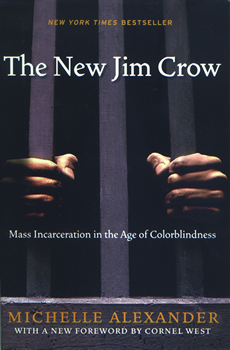
The New Jim Crow-Michelle Alexander

974In the 240 years that the United States has been in existence, the feats and accomplishments of this nation have been nothing short of history changing and in some case earth shattering.  As one of the world’s superpowers, the United States continues to be a prime destination for immigrants all over the world looking for a new opportunity in the land of the free and home of the brave.  And while the public face of the country touts freedom, liberty and justice for all, there’s a much darker side to the country  rarely seen by many of the people wishing to immigrate to America an those who currently live in the nation.  Incarceration rates have been on the rise in the United States since the start of the 1980s. And shockingly, the United States continues to incarcerate people at a higher rate than any other country on earth.  The rates show no sign of slowing down or even declining and as a result, more prisons are being constructed and more Americans of all backgrounds are entering prison cells than ever before.

I vividly remember as a kid in the 1980s, the government’s commencement of the war on drugs.  Television commercials, posters, documentaries and news broadcasts regularly reminded us of the dangers of narcotic use.  Nancy Regan famously reminded us to just say no.  In 2016, the  war on drug continues, but its success and consequences remain the topic of fierce debate.   While the primary focus of the war may have been the elimination of illegal drugs, there was a heavy price to be paid by those on the wrong end of the campaign. The laws passed as a result of the anti-drug campaign have resulted in some the harshest prison sentences in the world for drug use.  Young African-American and Latino make up the majority of all drug convictions pursuant to those same laws and the system of mass incarceration has appropriately been called by Michelle Alexander in this phenomenal book, the ‘New Jim Crow’.  While the Jim Crow laws that cast a dark cloud on the United States were struck down many decades ago,  the systematic incarceration and ostracism that convicted men and women find themselves in, is some ways equally as dangerous as the former system of legal segregation.  Those who do enter the system, often find that they carry a stigma for life as a felon and sometimes never fully re-integrate into society thus becoming the unwanted and living with the shame and neglect as many minorities did during the violent and regretful Jim Crow era.

Alexander has done a masterful job of bringing to light what could be considered an epidemic in American culture.  The fallout from the war on drugs and high incarceration rates among Black and Latino youths, has resulted in the continuation of the destructive cycles in the ghettos across America that were responsible for their lifestyle from the beginning.  Thoroughly researched and thought-provoking, her investigative report challenges us to re-examine our own opinions about convicted felons and drug use. She also forces us to considered the economic benefits from the incarceration of millions of Americans and the financial black hole that has resulted from the war on drugs.  Her reporting is shocking and infuriating for it reveals many dark secrets about the American penal system and the American attitude to crime and punishment. And as someone who was raised in an environment that produced many young men and women who have fallen victim to the new Jim Crow, this book is a brutal reminder of the life long consequences of a life in the street and the cost of the mistake for many Americans that are otherwise productive members of society.

This book should be required reading in homes and classrooms across America in the effort to prevent young men and women from entering a life long system of discrimination and oppression. Michelle Alexander has done a great service to the citizens of this nation who are unaware or unwilling to face our fear of topics of race, prison, poverty and politics.  Only then, can we begin to dismantle the new system of Jim Crow and successfully rehabilitate those in the penal system and help end the decades long poverty that has plagued neighborhoods all across America.

ISBN-10: 1595586431
ISBN-13: 978-1595586438