My Father’s Keeper: Children of Nazi Leaders-An Intimate History of Damage and Denial-Stephen & Norbert Lebert

20180602_234500May 1, 1945- The Allied forces are nearly at the entrance of Hitler’s underground bunker in Berlin.  Hitler and Eva Braun have been dead since the day before.  Others have fled Berlin in fear of their lives. The remaining members are forced with choosing between capture by the Allies or death.  Third Reich propaganda minster Joseph Goebbels and his wife Magda both commit suicide after having their six children poisoned.  Their children escape the fate of falling into Allied hands and do not witness the final collapse of the Third Reich and the division of post-war Berlin.  The fear of retribution by the Red Army and the revelations of the atrocities committed against Europe’s Jewish population have caused many Germans to prefer death rather than face justice at the hands of an Allied soldiers.  Goebbels’ children although deprived of their lives, escaped a fate that would effect the children of other Nazi party officials.  They would be faced to confront the truth of their parents’ actions during the rise of the N.S.D.A.P. and Hitler’s assumption of power in Germany.  This book contains the stories of some of those children.

Hitler never had any children of his own stating clearly that he had too much responsibility towards the people of Germany to think about his own family line.  Perhaps it is one of the saving graces of the war for I shudder to think about the amount of cruelty a child of Hitler would have faced had they survived the war.  The belief of the “master race” resulted in German men and women being encouraged to have as many children as possible. And in fact, many of the top members of Hitler’s cabinet were fathers.  Their children did survive the war and are still alive today . Stephen Lebert resumed the work of his father Norman in exploring the effects of the revelations upon the lives of the Nazi descendants.  And what father and son have found is remarkable and also tragic. They conducted interviews with the children of Martin Bormann, Hans Frank, Rudolf Hess, Herman Goering and Heinrich Himmler.  The interviews are revealing and the damage inflicted upon them is evident in many way.  Denial is a common theme in the interviews  and some of them refuse to believe what has been proven to be correct. The others have accepted it and have lived shattered lives unable to come to terms with what their father had done.   And incredibly, one in particular remains committed to her father’s standing as a Nazi and truly believes him to be innocent.

The most interesting part of the book is that there is no way to know beforehand which way the subject will go.  Their responses, thoughts and feelings vary highlighting the haphazard effect the war had upon them.  I had often wondered what happened to the children of the Reich. This book answers that question and more.  A truly tragic reality is that they were not allowed to have a normal childhood by any means.  The tyrannical rule of Adolf Hitler and the Reich’s illogical policies plunged Germany into a war and allowed its members to live out their own sadistic ideals as they pillaged, raped and murdered innocent people.  And the true irony is that these very same people who sent the children of Jews to their deaths, had families of their own. But I do not believe they ever thought of their children for if they did, they would have never placed them in such a position.

Today they continue to live their lives but the memories of the war and their parents are still fresh in their minds.  To their very last day, they will scary the mental and emotional scars inflicted upon them by the fallout from the second world war.  And as they think back on the family life they lost, they will have to ask the question if they are truly their fathers’ keepers.

ISBN-10: 0316089753
ISBN-13: 978-0316089753

When I was Puerto Rican- Esmeralda Santiago

santiagoMarch 2, 1917- President Woodrow Wilson signs the Jones-Shahfroth Act granting U.S. citizenship to the residents of Puerto Rico.  And while it prevents residents of Puerto Rico from voting in U.S. presidential elections, it opens the door for the migration of thousands of Puerto Ricans to states throughout the nation.  New York City was and still is the number one destination for Puerto Rican immigrants.  Many settled throughout the five boroughs with strongholds erected in small neighborhoods such as Spanish Harlem, parts of the Bronx, Bushwick, Williamsburg and East New York, Brooklyn.  The relationship between the United States and its neighbor in the Caribbean is unique and conflicted. The island is officially designated a commonwealth that uses American currency and whose laws are sometimes subject to U.S. approval.  Its designation as a commonwealth has placed in a precarious position; it is neither a state or a country on its own and its fate is inextricably tied to America.  The iron of Puerto Rico is that its citizens have contributed to the well-being of the United States in ways which many are unaware of.  During the Vietnam war, more than 48,000 Puerto Rican men served in the military. I personally know one of these men who proudly served this country in Southeast Asia.  Today he is a grandfather living out his days comfortably at a retirement home as he deals with the rigors of aging.  His story is one of millions that tell the story of the Puerto Rican experience in the land of the free and home of the brave.   Among the many stories is this one by Esmeralda Santiago, who recalls her childhood and journey to New York as her mother searches for a better life for her growing family.

Born in the San Juan district of Santurce, her early life is typical of most families at a time when U.S. involvement in the island’s affairs caused both apprehension and resentment at the meddling of Uncle Sam in Puerto Rican culture.  Today it may be hard to imagine, but less than one hundred years ago, the majority of governors of the island were American and helped corporations and the government rule the island with an iron grip. For several years, English was the mandatory language to be spoken in schools making Spanish unwelcome and the act of speaking it, an offense.  During this climate of colonialism and culture suppression lived a young girl whose life was about to change in a most dramatic way.

Economic depravity, stressful relationships and social conditions force her mother to make the fateful decision to move the family to New York City, a place Santiago had never visited and only heard of.  Her arrival in the city that never sleeps proves to be a rude awakening and culture shock in comparison to the home she was forced to leave.  The dark and gritty side of city life becomes a reality and as she explains in the book, the people were unlike anything she could have prepared for.   Class and racial discrimination combined with pedophiles,deviants and her lack of ability to speak English, transforms her world and forces her to mature ahead of schedule. The highlight of the book  however lies in her discovery of her talent for the performing arts.  Through determination and faith, she rises above her language restriction and excels in high school. And later in life, she earned degrees from both Sarah Lawrence College and Harvard University.   Many years have passed since she was a young girl in a small section of Puerto Rico, but her words make us feel as if we went back in time following her every step of the way.

ISBN-10: 0306814528
ISBN-13: 978-0306814525

Afeni Shakur: Evolution of a Revolutionary – Jasmine Guy

afeniFollowing the death of Tupac Shakur on September 13, 1996, his mother Afeni was tasked with becoming administrator of his estate and dealing with a staggering amount of litigation resulting from lawsuits filed against the late rap star and lawsuits on his behalf against Death Row records.  Using the proceeds she was awarded through litigation, she established Amaru entertainment in her son’s memory.   Her efforts are characteristic of the former revolutionary Black Panther.  Tupac often talked about his mother to whom he was much closer than his biological father, Billie Garland. Her battles with crack cocaine addiction are well-known and Tupac himself discussed it on several occasions.  In later years after his death, she had been drug-free for a number of years but sadly joined the ranks of African American mothers who have lost their children to the violence of the streets.

Jasmine Guy was a friend of Tupac’s and after his death became friends with his mother.  This book is a collection of their discussions that occurred during their blossoming friendship.  Afeni talks about her own life and as to be expected, her son’s short life and violent death.  Guy visited Shakur’s home in suburban Georgia giving the book the feeling of two old friends sitting on a porch in the summer reminiscing about the days of yesteryear.  Afeni’s story is a deep one, rife with tragedy, drugs, revolution, motherhood and redemption.  She does not avoid the difficult topics and has come to terms with her past actions and inactions.  As this point in her life, she comes across wise beyond her years, freely able to admit when and where she went wrong in life.  She opens up to Guy and the result is a hidden literary gem that fans of the late star will come to appreciate.

Since Tupac’s early death, Afeni has been the voice of his legacy, keeping it alive for future generations.  Sadly, on May 2, 2016, she passed away at the age of 69 from a suspected heart attack.  Her voice has been silenced forever, but for those seeking to understand Afeni and the life she lived, this is her story in her own words.

ISBN-10: 0743470540
ISBN-13: 978-0743470544

The Black Hand: The Story of Rene “Boxer” Enriquez and His Life in the Mexican Mafia-Chris Blatchford

indexLatin America continues to struggle with poverty, gangs and rising murder rates.  Central America and northern South America are rife with turmoil due in part to the continuing pattern of political instability.  The surge in homicides have made the region one of the most violent places on earth.  Honduras is now the deadliest country in Latin America and has the highest murder rate in the world.  The devastating effects of famine and economic depravity have combined with the proliferation of MS-13 (Mara-Salvatrucha) to make life utterly unbearable for the majority of Hondurans.  The rise of MS-13 and other Latin American gangs has not gone unnoticed.  The gang culture has spread north and taken hold in the United States with California becoming a stronghold of gang activity.  And shockingly, nearly half of all gang members in the United States are Hispanic American.

Beginning in 1973, the Federal Bureau of Investigation began to watch a new gang that proved to be as violent and ruthless as any this country has ever seen, the Mexican Mafia.  They have been glorified on the silver screen, most notably in the film ‘American Me’ starring Edward James Olmos.  But the reality is that the real Mexican Mafia is far stronger and far more dangerous than portrayed in the film.  Rene “Boxer” Enriquez teams up with author Chris Blackford in recounting his life as former member of the gang, telling all in this memoir that is guaranteed to leave you speechless.  In 2003, Enriquez was still a ranking member of the gang, but the loss of several loved ones, a brother with health issues and the realization that the gang he swore allegiance to didn’t swear allegiance to him, he decided to step away and become a cooperating witness for the U.S. government.  His testimony has proven to be critical in the apprehension and subsequent incarceration of members of the Mexican Mafia.   He has also become a motivational speaker in the hope of preventing young men and women from making his mistakes.   As of today he is still incarcerated and the possibility of parole is uncertain.

It is with remarkable courage and self-examination that Enriquez is able to tell us his life story.  He does not glamorize the gang life and admits to his failures.  The book is gritty, sad but the reality that awaits young men and women enticed by the fast lifestyle enjoyed by gang members.  Sadly, there will be young adults who readily accept a life on the streets believing that they are invincible or too intelligent to make the same mistakes as Enriquez.  But there others who may read this book and make a decision that will ultimately save their lives.  So take a seat and follow Enriquez as he takes us deep inside the Mexican Mafia and all that is has to offer.

ISBN-10: 0061257303
ISBN-13: 978-0061257308

In The Time Of The Butterflies – Julia Alvarez

alvarezRafael Leonidas Trujillo (1891-1961) ruled the Dominican Republic with an iron fist for over thirty years before he was assassinated on May 30, 1961.  The late dictator was sixty-nine years old.  His death brings a sigh relief to the people of the Dominican Republic and the United States, Trujillo’s sponsor through direct intervention in Dominican affairs in the early 1900s and later through the Good Neighbor Policy which allowed the government to turn a blind eye to the atrocities being committed by Trujillo’s regime.   The name of the capitol was changed back to Santo Domingo, the name assigned to the oldest city in the Caribbean by Christopher Columbus. Although Trujillo’s tyrannical reign came to an abrupt end, the nation found itself in political turmoil.  Poverty, class division and corruption have continued to plague the republic to this day.  Throughout his reign, Trujillo was faced by many opponents, some of whom he had executed in cold blood to silence any and all opposition to his maniacal conduct.  Officially, he is known to have persecuted thousands of Haitian immigrants and Dominican citizens repulsed by the policies of his administration.

Among his many fierce critics were a group of sisters that became martyrs in their cause for change and protests against Trujillo’s repressive ways.  Julia Alvarez has adapted their lives into this phenomenal account that tells the story of the famed Mirabal Sisters.  Their names are Patria, Minvera, Maria Terese and Dede. Their goal was to transform Dominican society into one in which equal rights existed for women and all people in the Dominican Republic.  As they raise families and mount their opposition to a maleficent tyrant, their lives take twists and turns along the way showing the reader the true costs of freedom.  In a time where the movement for equality for women still had much ground to cover, the lives of Mirabal sisters are nothing short of inspiring. Despite being incarcerated several times and threatened by Trujillo’s regime, they refused to relinquish their crusade for a free Dominican Republic.  Their resilience had tragic consequences and the deaths of Minvera, Patria and Maria Teresa on November 25, 1960 near the now famous resort town of Puerto Plata is known was one of the darkest moments in the history of the country. Dede, the youngest sister, made a decision through fate not to be with her sisters on that November night and lived to carry on their legacy until her own death at the age of eighty-eight on February 1, 2014. Her daughter Minou Mirabal is currently a congresswoman with the Alliance For Democracy Party and remains an active force in Dominican politics while carrying on the Mirabal name.

The book does not simply read like a biography but more like a novel allowing the reader to intimately know the central characters. Each sister is a force on her own and together they form a family bond that was tested on a routine basis.  As we make our way through the book, we begin to feel that these incredible women are our sister as well and their safety becomes our primary concern.  The intimidation by Dominican authorities and jailing of their husbands and eventually the sisters cast a dark cloud over their daily lives and gives the book an edge of suspense which the reader will be unable to shake.  But through their courage and unwavering ideology, they press on and they take us with them all the way until they meet their fate in Puerto Plata. And once they are gone, their story will stay with the reader as an example of the courage and strength that women exhibit in the face of adversity.

Following their deaths, there was outcry and rage at the horrific actions taken against them.  The Trujillo regime was known for its excessive violence and the death of the three sisters served only to plunge his regime deeper into infamy.  The United Nations recognized the sisters and the International Day for the Elimination of Violence against Women was created in their honor.  It is celebrated every year on November 25 in memorial of their untimely deaths.  In 2001, this book was adapted for the silver screen under the title of the same name. The film stars Selma Hayek, Edward James Olmos and singer Marc Anthony.  Their family home was turned into a museum is still open to and visited by tourists from all parts of the world curious about the lives of the fallen heroines.  Nearly 60 years have passed since their deaths but the light that is their memory shines bright and each year on November 25, we can look back at the lives of these iconic women.

ISBN-10: 1565129768
ISBN-13: 978-1565129764

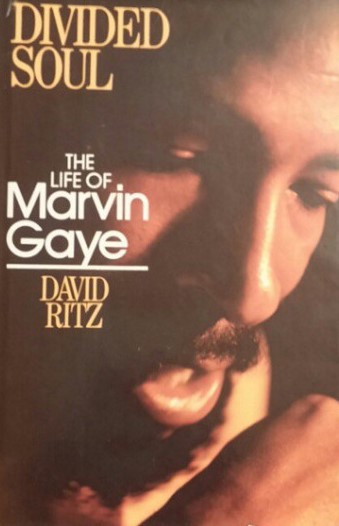
Divided Soul: The Life of Marvin Gaye – David Ritz

20181210_195510On April 1, 1984, Marvin Gaye was shot and killed by his father following an altercation at the family home in the West Adams district of Los Angeles, California.  His death plunges millions of fans into mourning as they struggle to find a logical explanation for an illogical tragedy.   Gaye left behind two former wives and several children.  His second Janice later published her own book about her life with Gaye ‘After the Dance ‘.   Thirty-two years have passed since his death but he remains an music icon and was formally inducted in the Rock & Roll Hall of Fame in 1987.

On stage he captivated audiences and sold out arenas, but behind the scenes there existed a dark, cynical and disturbed side to Gaye.  A musical genius cursed with a self-destructive nature, he lived his life in a Dr. Jeckyll and Mr. Hyde existence that confused even those closest to him.  On many occasions, he struggled to maintain the fine line between genius and insanity. David Ritz became friends with Gaye during the 1970s and has compiled his memories of his time with Marvin adding them to what is a phenomenal biography of one of music’s greatest singers.

Taking us back to Marvin’s childhood, we bear witness to the dysfunctional environment in which a young Marvin is forced to mature in.  His last name and cross-dressing father served as the basis for a life of inner turmoil from which Gaye often sought relief in the use of recreational drugs.  Their toxic relationship never improved and ended on a deadly note.  In spite of his trouble upbringing, he found his voice in music and his breakout with Motown highlighted a critical time in his life. His marriage to Anna Gordy and battle with Berry Gordy over the release of ‘What’s Going On’ reveal the continuing struggle he faced in becoming his own artist.

A divorce,  the death of Tami Terrell, marriage to Janice, only 16 at the time of their first date and his escalating use of drugs formed the basis of a pyramid of instability.  And like Janice’s memoir, Ritz also focuses on Gaye’s mental state which changes repeatedly.   And for all of his success, he never finds peace even up until he takes his final breath.  Some have said that for Marvin death was his way out.  He is no longer with us and cannot inform us what he was truly thinking at the time.

For those who are diehard Marvin Gaye fans, parts of this book will be tough to read.  His music touched millions and sounds as incredible today as it di when it was recorded more than 30 years ago.  But any great biography has to be as neutral as possible and include all parts of the subject’s life.  Marvin was at times his own worst enemy but a musical genius who left behind a number of great sons that are still played today.  This is his story, the good, the bad and ultimately the tragic.

ISBN-10: 0070529299
ISBN-13: 978-0070529298

And The Walls Came Tumbling Down – Ralph David Abernathy

wallsApril 17, 1990-Rev. Ralph David Abernathy, Jr. dies at the age of 64 in Atlanta, Georgia after suffering cardiac arrest following a lung scan by doctors after suffering strokes a few weeks prior. The late Abernathy is best remembered as co-founder of the Southern  Christian Leadership Conference and close friend of the late Dr. Martin Luther King, Jr.  Abernathy was King’s side after he was shot and fatally wounded on April 4, 1968.   The two icons, along with Bayard Rustin, A. Philip Randolph, Stanley Levison and many other prominent proponents of civil rights, drove a movement that culminated with the passage of the landmark Civil Rights Act signed in law by then President Lyndon B. Johnson on July 2, 1964.  The marches of Selma and Washington stand out as Dr. King’s shining moments, but behind the scenes there was much more than transpired and many unsung heroes.  The road to the passage of the Act was wrought with incarceration, physical assault and even murder.  The 1960s remains one of the most violent in American history as political figures were assassinated and the world came to the brink of nuclear war.

This invaluable autobiography by Abernathy also serves as a historical record of the effort required to finally end Jim Crow segregation that demoralized American society. Abernathy recounts his beginnings in Linden, Alabama as one of 11 children.  From an early age, his drive and passion for his goals and visions is readily apparent as he takes us back to relive his experiences as young African-American male in the heavily segregated American South.  His early life is full of incredible achievements and in 1954, when he meets King, his life changes yet again, but this time on a grand scale.  Because the book deals with a critical part in American history, which unfortunately is also highly regrettable, several well-noted infamous characters make an appearance such as James “Jim” Clark, the former sheriff of Dallas County Alabama and Theophilus Eugene “Bull” Connor,  the former Commission for Public Safety in Birmingham, Alabama.

There’s a section of the book that apparently caused much consternation when it was published.   As is known today, infidelity was an issue that came up more than once during King’s campaign or social justice.  Abernathy doesn’t avoid the issue but he doesn’t condemn King either.  And as close friend, I wouldn’t expect him to.  The point of the book is that this Abernathy’s life story supplemented with a factual record of how the breakthrough Act was put into law.  To devote time and attention to any and all rumors of infidelity would detract from the overall purpose of the book. And on the other hand, if he didn’t address it, it would also detract from the book as not being historically accurate.  I feel Abernathy took the most balanced approach to a very taboo subject even today.

Many years have passed since the events in this book transpired, but the lessons we learn from it continue to be relevant today.  As American finds itself in the midst of a looming social revolution, Abernathy and King’s words will stay with us and remind us that the movement never ends.  And when the horrific, cruel and inhuman system of Jim Crow was broken, it signaled a step in a new direction for all Americans. This is American history, the good, the bad and the regrettable.

ISBN-10: 1569762791
ISBN-13: 978-1569762790

Raven: The Untold Story of Rev. Jim Jones and His People- Tim Reiterman

ravenOn November 18, 1978, over 900 members of the People’s Temple were found dead in Jonestown, Guyana. To this day it is the largest mass suicide-murder in history.  Among the dead is leader Jim Jones, who died of a single gunshot wound to the head.    Jones had been the pastor of the People’s Temple since its beginning in California and remained in control, overseeing the move to Guyana and the subsequent downward spiral.  Tim Reiterman was a journalist with the Associated Press and his career has spanned more than three decades. He is also a survivor of Jonestown and presents to us the full story of Jim Jones and the People’s Temple.   On that fateful day, Reiterman had been covering Congressman Leo Ryan’s visit to Jonestown to meet with Jones. He was shot and wounded as Jones’ henchmen opened fired on the congressman’s place as it waited to take off.   He was seriously wounded but escaped into the jungle eventually finding refuge among the local residents.  He eventually returned to United States but carries the memories of Jonestown with him everyday.

The true mystery of Jonestown remains Jones’ motives for its tragic end.  His ability to proselytize and then exploit his followers earned him a following that grew exponentially.  His subsequent actions including the move to Guyana and the tragedy that followed have caused his name to be mentioned among the likes of Charles Manson, Marshall Applewhite and David Koresh.   Through his actions, Jones became the poster boy for cults across the nation and he is considered by some to be the most evil cult leader that has ever lived.   Survivors of Jonestown have come forward to tell their stories about the People’s Temple and their encounters with Jones.  Many years have passed but the scars and pain from Jonestown remain with them.  Anger, confusion and survivor’s guilt are just some of the range of emotions that engulf survivors that still struggle to make sense of a senseless act. But as we see in Reiterman’s investigative report, many of Jones’ action did not make sense and no one knew for certain what he was truly thinking.  The man who once led a progressive church that had the ability to effect social reform, descended into a realm of paranoia and fear, encourage by drug use. His downward spiral into darkness had deadly results.

Larry Layton was the only person ever convicted in the massacre and was paroled in 2002. His sister Deborah, a survivor of Jonestown and escapee, wrote her own memoir, ‘Seductive Person‘, about her time in the People’s Temple.   What she reveals in her book shows an even darker side to Jones, a man consumed by a thirst for power and unrestrained sexual urges. Layton remains active and even has her own Twitter page showcasing her work.  She has come a long way since Jonestown, but her time with Jones remains with her in memories of the mother she left behind in Guyana and a brother enticed to commit murder.  She is just one of many whose lives will never be the same.  Jones is longer here to explain his actions or thoughts.  By all accounts it is clear that by the time of his death he was completely unhinged and delusional or as Reiterman shows us, completely out of his mind.  What started out as a noble project to change society ended in unspeakable horror and today Jonestown is case study in the power of cult leaders.

There are many stories about Jonestown told from different viewpoints.  But in the end, this is the completely story of the rise and fall of Jim Jones and the People’s Temple.

ISBN-10: 1585426784
ISBN-13: 978-1585426782


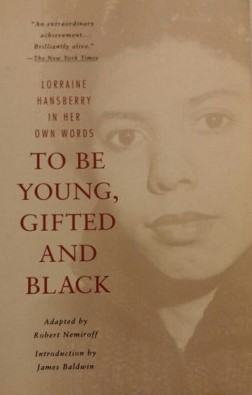
To Be Young Gifted and Black – Lorraine Hansberry

20181205_232145“Never be afraid to sit awhile and think.” Those words, made famous in Lorraine Hansberry’s  ‘A Raisin In The Sun’ have often reminded me of the importance of reflection when life shows signs of difficulty.   Her groundbreaking play became the first show on Broadway to be written by an African-American woman and with multiple runs on Broadway and a feature film starring the legendary Sidney Poitier, it is one of the most recognized books from that era.  This is Lorraine in her own words, revealing her thoughts about life, the future and the world in which she lived. Born and raised during the era of Jim Crow, she relays her thoughts about the United States and the struggle around the world by people of color for equality and civil rights.  James Baldwin provides a short introduction for his friend and fellow author.  The book was published following Lorraine’s death. Her ex-husband, Robert Nemiroff, collected her unfinished manuscripts and written notes, combining them into this book that explores her mind and character.

Hansberry once said that the very thing that makes you exceptional also makes you lonely.  Similar to Baldwin, Hemingway and many of the great authors, there seems to be an inner struggle for peace and emotional well-being.  She loves America but hates its actions. Her husband is white in a time when interracial marriage is illegal in parts of the country.  And it is hoped that the next work can improve on the success of ‘A Raisin in the Sun’.   Her life is a composite of many things but tragically her time was running out.  She died before she could finish many of her projects but the short passages from the writings she left behind show a developing mind on a path to even highly levels.  She has been gone for 51 years but her name continues to surface in conversation, media, film and on Broadway, the place were she became famous.  And while this book is not Raisin, it is a welcomed addition to the Hansberry collection.

ISBN-10: 0451531787
ISBN-13: 978-0451531780


The Young Hitler I Knew-August Kubizek with an Introduction by Ian Kershaw

kubicekAdolf Hitler’s death and the surrender of Germany towards the end of the Second World War was beginning of the final chapter of the saga of mankind’s deadliest conflict.  More than seventy years later, the war is still being studied and the Third Reich serves as an example of the dangers of unrestrained power based on extreme ideology.  To the majority of the world Hitler is the incarnate of evil and the darkest dictator in world history.  To others, he was a misunderstood leader of a nation in ruins and savior to millions of Germans who had no other source of hope and inspiration.  His life story is well documented. But what was the young Hitler like?  The turning point his life from young aspiring artists to raging anti-Semite is still unknown and surrounded by speculation. The death of his father Alois and mother Klara both occurred before he turned 18.  It is to be expected that their deaths must have played some role in his future mental and emotional development. Hitler never revealed much of any friendships he had but as we can see in this interesting book by his friend from Austria, August Kubizek (1888-1956), he did in fact have at least one friend during his youth in Vienna.

Interestingly, although Hitler seized control of Germany, he was Austrian by birth.  Born on Eastern Sunday in 1889, in the small village of Spital, he spent most of his early life in Austria before making the move to Germany and joining the Wehrmacht.  But years before he became the future Chancellor of Germany and Führer of the Third Reich, he was simply Adolf, a young man with a teenage crush and dreams of being the best artist Germany had ever seen.  This is the story of two friends who cross paths at a critical time in their lives and the friendship that ensued.

Affectionately nicknamed “Gustl” by Hitler, Kubizek is the best witness we have to what Hitler was really like as a young man in Linz. Their days are filled with visits to the Opera, discussions about life and Hitler’s endless drawings as he pursued his artistic goals. However, throughout the book there is no trace of the future menace Hitler would become. Adolf is the average teenager trying to find his calling life along with his best and seemingly only friend.  I found it hard to reconcile at times that this simple teenager later became the Chancellor who mercilessly persecuted an entire race of people and in brought eternal shame to Germany.   But this is in fact the crux and most important part of the book.  Kubizek shows nothing that gives any indication of the future Adolf. For those seeking an answer to the megalomania that became a staple of the Reich, you will not find it here because it does not exist.   What does exist is the tragic story a young man faced with the deaths of both parents and an uncertain outlook in life.

Following his mother’s death, Hitler remained in Linz before moving on to Vienna and crossing into Germany.  He parted ways with Kubizek after Klara died and the two did not reunite until nearly thirty years later.  By his own words, Kubizek never joined the Nazi party and remained in Austria where he married and became a father. And while he did have opinions about the events transpiring at the time, he remained neutral to Hitler.   The book is neither for or against Hitler, but the remembrance of one friend by another.  It was an incredible friendship forged by common interests and mutual understanding.  And of all the what if questions that surround Hitler, we can only wonder what if he had followed Kubizek back home instead of moving to Germany?  Perhaps there would have never been a second world war.  For those looking to learn more about the life of Adolf Hitler, this is a welcome addition to the library.

ISBN-10: 1853676942
ISBN-13: 978-1853676949