
 More than seventy years have passed since the end of World War II, yet it still fascinates historians and students. The number of books written about Adolf Hitler (1889-1945) and the Third SS Reich are perhaps the most written about any conflict and leader in history. The former Austrian vagabond rose to power in Germany and plunged the entire world into the deadliest conflict in the history of mankind. The emergence and use of the atomic bomb by American forces ushered in the nuclear age and set the stage for the Cold-War which lasted until the dissolution of the Soviet Union in December 1991. In my list of recommendations, I saw this title regarding the expulsion of Germans following the war. At first, I was not sure which expulsion was being referred to but quickly realized that it was pertaining to the Germans that were living in Nazi occupied territories outside of Germany. During the war, many of them enjoyed security and a stable life but in the wake of Germany’s defeat, nationalist governments came to power in former occupied territories, and they turned their wrath towards the German people that had been living within their borders. A staggering number of Germans were forced from their homes and sent back to Germany with no clear or concise plan for reintegrating them into a Germany struggling to recover and rebuild. And this is one part of the war that is often not discussed but a topic that should be known.
The title of the book removes all doubt that the story is a “happy” one. In fact, I believe that it is not for the faint at heart. Although the book is not rife with gratuitous violence, the actions taken towards German nationals living abroad are both shocking and repulsive. However, it could be argued that they are no more repulsive than what was done to the Jewish people during the Holocaust. In the book, this is implied in actions and statements taken by foreign leaders eager to rid their countries of anything connected to Nazi Germany. Regrettably, the operation to relocate German nationals was plagued by disorganization and confusion, leading to mass confusion the deaths of those being removed. The author points out that:
“Calculating the scale of the mortality remains a source of great controversy today, but estimates of 500,000 deaths at the lower end of the spectrum, and as many as 1.5 million at the higher, are consistent with the evidence as it exists at present.”
We may never know the true number of those who perished during the expulsion program but the numbers we do know of are nothing short of mind-boggling. Further, it removes any illusion of a “glorious” end to the war where things were made right again. In fact, the book shows that even with Germany and Japan defeated, chaos and confusion continued to be a problem for quite some time as the Allied forces struggled with former camp prisoners, German military prisoners and the German people who were left destitute as their nation crumbled around them. Hitler had committed suicide and his act left the people without a leader and at the full mercy of Germany’s many enemies. Berlin became the battleground between the east and west and remained so until the fall of the Berlin wall in 1989. Today, Germany is one of the most successful nations in the world and far removed from its post-World War II state. But the question remains, how and why did the expulsion happen and develop in the way that it did? Further, were there no protections against such a thing? Some readers will immediately think of the Hague Conventions, but the author anticipates this and explains that:
“The Hague Conventions were by no means perfect. They bound only those countries that were signatories. They contained few protections for civilians—a crucial omission that in the future would hamstring the work of humanitarian agencies like the Red Cross. They were silent in circumstances in which a government maltreated its own citizens, rather than the inhabitants of foreign lands its armies were occupying. They applied only to conflicts in which a state of formal war existed, rather than in “undeclared wars” or in peacetime. They provided no means of individual redress, nor any mechanism for enforcement.”
Frankly, the Germans being expelled were on their own at times and could expect little to no help from those their country had been recently fighting against. Readers may find themselves torn as the fate of German nationals is discussed. And it may lead some to ask the age-old question of whether two wrongs make a right. We do know that many Germans did not support Hitler, but millions of others did and opposing forces during the war were not eager to distinguish between the two. During the expulsion, the feelings held by victors was even more direct according to the author:
“After the Nazis’ defeat, the new regimes of central and eastern Europe were in no humor to try to distinguish between culpable and innocent Germans. This uncompromising attitude extended to German children, for whom in practice few exceptions were made.”
Of all the things the book shows, one of the most striking is that war truly is hell, and the concept of victory can change depending on the situation that arises. Some readers who decided to read this book may feel that the Germans brought it upon themselves. Others may be filled with sympathy for expulsion that took place. Regardless of which side of the argument we fall on, I think we can all agree that the relocation of Germans after the war, is on the conflicts rarely discussed matters that does not put anyone in a positive light. Fault lies at the feet of many and even during the operation, governments in high positions of power, rarely discussed matters and continued to shuffle the people around like pawns on a chess board.
Admittedly, I cannot say that I was completely shocked at what I learned in the book. Germany’s defeat was a concern for many Germans as it became clear that a quick victory would not take place. The entry of the United States into the war and the decision to invade the Soviet Union, showed that Germany had bitten off more than it could chew. And it also showed that Hitler had gone completely mad. As I read through the book and learned just how dreadful the expulsion were, I came to see that this was the hand that Hitler had dealt this people. They would soon learn that national socialism was not all that they thought it would be.
World War II permanently altered world’s political landscape and the horrors of the war remain with us to this day. The Holocaust will always be a case study with regards to the dangers of racial ideology supported by government policy. And the dropping of the atomic bombs still sends chills down the spine of many, in particular, those still alive who lived through it. For the millions of German nationals living outside of the fatherland’s borders, the war upended their lives, and they were forced to leave their long-term homes and return to a nation in ruins. They too can be added to the long list of victims of a senseless war that could have very well been mankind’s destruction. This is the story of the plight and what really happened to them after the war ended. Highly recommended.
ASIN : B008740OQQ
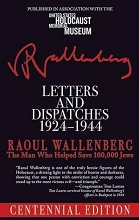 I am always on the lookout for stories that I have not yet heard and names of people I am not yet familiar with. When I saw the cover of this book, I tried to jog my memory with regards to the name of the author. I finally realized that I did not know of Raoul Wallenberg (1912 -1947?) but I knew instantly that I had to read this book. Admittedly, I am always interested in the personal correspondence of figures from the distant past to see how information was shared in the years before E-mails, SMS and social media. The cover of the book directly describes what is contained within which is a collection of the letters between Raoul, his grandfather Gustaf Wallenberg (1863-1937) and Raoul’s mother Maj von Dardel (1891-1979) whose replies to her son are not included.
 Every time I board a flight at New York’s John F. Kennedy International Airport, I am amazed at the concept of flight. And while I do understand how an aircraft works from a technical standpoint, the process of taking off, cruising and landing still fascinates us and captivates our attention. Today, we reap enormous benefits from the trials and errors of those before us who sometimes gave their lives in the pursuit of flight. In June, 1939, a German pilot named Erich Warsitz (1906-1983) flew an aircraft named the Heinkel He – 176, equipped with a rocket booster for extra lift and speed. The flight was successful and the result of many years of dangerous tests. The pilot and the engineers around him had just changed history forever and ushered the world into the jet engine era. This book is a look back at that miraculous time and Warsitz’s life as presented by his son Lutz.
 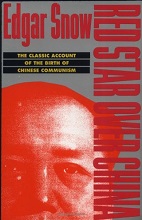 On October 1, 1949, the People’s Republic of China was officially established as the ruling party in the nation. Mao Zedong (Mao Tse Tung) 1893-1976) assumed the position of Chairman, a title he held until his death in 1976. The Chinese Communist Party continues to rule the country and imposes its will on Hong Kong. Taiwan remains independent but is often the source of friction between Beijing and western powers. The story of the Chinese communists is a highly intricate tale that is often left out of discussions regarding the aftermath of World War II (1939-1945). Edgar Snow (1905-1972) spent twelve years in China and was able to observe the emergence of the Communist Red Army determined to liberate China both from Japanese imperialism and the control of the White Army, led by the Kuomintang Government (KMT) headed by the Generalissimo Chiang Kai-Shek (1887-1975). This book is a collection of those memories that take readers back in time to the era when Mao Zedong was beginning to establish himself as a leader and China found itself in the middle of political, economic and social turmoil.
 Seventy-five years have passed since Germany suffered defeat in World War II. Adolf Hitler (1889-1945) escaped justice by shooting himself with a pistol after watching Evan Braun (1912-1945) succumb to the ingestion of a poison laced capsule. Allied forces had hoped to put Hitler on trial for the whole word to see but the Austrian menace had no desire to fall into their hands. While the hunt was on for other high-ranking Nazi officials, a secret operation was underway to bring hundreds of Hitler’s former conspirators to the United States as Washington began to prepare for the Cold War against the Soviet Union. The mission was given the name Operation Paperclip and during its existence, some of the most notorious figures of the Third Reich were given a free pass to America and welcomed with open arms. Author Annie Jacobsen thoroughly examined the secret plan in her best-selling book
 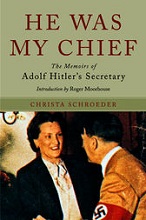 Recently, I reviewed the memoir of Traudl Junge (1920-2002) who served as one of Adolf Hitler’s (1889-1945) secretaries during World War II. Her book,
  On April 30, 1945, the Soviet Union Red Army, had reached within several blocks of the Reich Chancellory. Realizing that their fates were sealed, Reich Chancellery Adolf Hitler (1889-1945) and Eva Braun (1912-1945) took their own lives instead of risking capture by Allied forces. Over the next two days, those who had chosen to remain with them in the underground bunker made their way to surface and attempted to flee Berlin. Among them was one of Hitler’s personal secretaries, Gertraud “Traudl” Junge (1920-2002). As a close assistant to the Führer, she found herself in a unique position to observe the daily routine of one of the most powerful men in world history. This is her memoir of the time she spent with the man who lit the spark for the second world war.
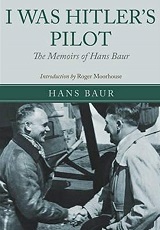 A few days ago I was browsing recommendations on Amazon and came across this book whose title caught my attention. I have not read anything on Nazi Germany in quite some time so I decided to take a closer look. I was unaware of Hans Baur (1897-1995) and his relationship with Adolf Hitler (1889-1945). As the Fuhrer’s pilot, I knew Baur would have very intimate knowledge of Hitler’s life behind the scenes and the book does not disappoint. However, it should be noted that it is really Baur’s story with Hitler filling many of the pages for obvious reasons. The story is interesting but I could not help feel that Baur left many things out. Readers may also feel the same way for reasons that will be discussed below.
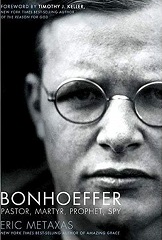 The Second World War remains one of the most studied and brutal conflicts in the history of man. The rise and fall of Adolf Hitler and the Third Reich have become a case studies for history buffs and students learning about a war that nearly resulted in the complete destruction of Germany and the continent of Europe. It is true that Hitler had many supporters but he also had large numbers of detractors, some of whom were serving in his own army. The attack of personal liberties and treasured institutions, caused shock and consternation across Germany. The persecution of the Catholic church by the National Socialists is among Hitler’s darkest deeds. Throughout the war, Hitler would ramp up his attacks on the church and his bloodthirsty purge of religion knew no bounds. The horror with which the clergy watched the rise of the Third Reich spurred many to action and they were determined to rid Germany and the world of the man they saw as the very incarnation of evil. Among them was Dietrich Bonhoeffer (1906-1945), the man who became a pastor, martyr, prophet and spy.

You must be logged in to post a comment.