
 An old friend once said to me that in Argentina “it is rare for a non-Peronist president to finish a full term”. The remarked surprised me at first but then I thought of the late Juan Domingo Perón (1895-1974) who served as Argentina’s president three times. His final term was short-lived due to his death on July 1, 1974, in Buenos Aires. Today the country is under the leadership of Javier Milei who famously raised a chainsaw on the campaign trail as he promised to slash government spending. Time will tell if Milei’s approach is the right course, but no leader can move Argentina forward without acknowledging the influence of Perón. This biography was on the list of recommendations I regularly receive and immediately caught my attention. And what I found is a well-researched, well-written and engaging account of Perón’s life and the turbulent political history of Argentina.
During one of my visits to Argentina, I had the opportunity to witness a discussion regarding Perón’s legacy. The participants were people I met through a mutual friend and had come over for dinner. The conversation quickly grew tense with both sides digging into their respective positions. As the only American in the group, I realized that it was imperative for me to listen and refrain from speaking. I was in their country and needed to hear their history as they knew it. And I saw firsthand how Perón had shaped the lives and minds of Argentines decades after his passing. Of course, the discussion was far from the final analysis on the legacy of Juan Perón. But it did provide me with crucial insight, and I relied on those memories as I began to read this definitive biography.
Although I strongly recommend some research into Perón’s presidency beforehand, it is not required to enjoy this book. The author provides a discussion of Argentine history which readers will find fascinating. Included in the discussion is the election of Hipólito Yrigoyen (1852-1933), who famously became known as “the father of the poor” and the first democratically elected president. As the story moves forward, we are introduced to the Perón family and patriarch Mario Tomás Perón. The story is typical of South America at that time but when Juan decides on a military career over medicine or law, his life and that of Argentines was destined for change. There is nothing about military career which stands out in the book, but he did find time for love and walks down the aisle with Aurelia Tizón (1908-1938) in 1929. Their union is happy but short-lived, and her death serves as an eerie premonition for what would later come in 1952.
Perón moves through the ranks steadily but before he reaches the pinnacle, the world is forced to confront the growing Nazi threat from the Third Reich in Berlin. The outbreak of World War II set the world ablaze, but it also placed Argentina in a difficult position. The information contained here is crucial for it explains the long and difficult path Argentina and America have traveled together. Neutrality, escaping Nazi leaders and the looming Cold War stirred tensions between the two nations. Page provides a wealth of information to provide the reader with a thorough picture of what happened and why. Further, the impact of former U.S. Ambassador to Argentina Spruille Braden (1894-1978) cannot be overlooked. His battles with Perón are a significant aspect of the relationship between Washington, D.C. and Buenos Aires.
In 1945, both Germany and Japan surrendered ending World War II. On the domestic front, Perón’s had ascended to the leadership position of the nation and his changes once again when Maria Eva Duarte de Perón (1919-1952) enters the story and becomes the most popular First Lady in Argentina’s history. On her own, Eva Perón is a fascinating figure, and there are books, a play, and a movie about her life. However, the focus here is on Juan and his rise to power. We do learn about their private life, and the dedication Eva had for him. Although it is not clear when she developed the condition that claimed her life, there are clues in the story. But what is definite is that both Juan and Eva both knew that something was terribly wrong with her health. The author explains the developing tragedy with the right amount of tact, making sure to keep Juan as the focus of the book but giving enough attention to Eva’s struggles with her own mortality. Readers who want to know more about her life will find ‘Evita: The Real Life of Eva Perón ‘ by Nicholas Fraser and Marysa Navarro to be a fair starting point. We can see that the end is coming and the final scene in her life plays out as one would expect, devastating Juan and the nation. But there is more to her death and the movement of her casket post-mortem between multiple countries is a surreal and nightmarish story on its own as readers will learn.
Though in mourning, Juan’s problems were only beginning, and domestic tensions continue to brew. The buildup of the opposition forces to Perón’s reign is captivating, and the stage is soon set for his exile which lasted an overwhelming seventeen years. His defiance and exodus play out like a major motion picture with suspense, tragedy and emotions running rampant. But what Argentines could not have known was that Perón would come back and take control of the country. His time in exile is equally fascinating, and we follow him through South America, the Caribbean, and Spain where he established long-term residency. In each country, Perón is a guest but also witness to history as coups and political violent take place time after time necessitating a quick exit by the former Argentine president. Students of Latin American history will find this section of the book to be intriguing and Venezuela stands out due to current day events.
Perón’s time in Spain is uneventful, however he soon finds third wife Isabel Martínez de Perón, who is still alive today. Their marriage provided Juan with a boost in image which had been severely damaged through the scandal involving teenager Nelly Rivas (1939-2012). Perón denied any improper behavior regarding their relationship but as shown in the book, there was more to the story. You can be the judge. Isabel’s entry in the picture sealed any hope of Rivas finding her way to Juan and the “Conductor” as Perón was informally known, set his sights on his native land and the throne he once claimed. And thus, the stage is soon set for his triumphant return to Argentina. But before I go further, it is necessary to mention a figure in the story whose name is still obscure. When I read of José López Rega (1916-1989) I could not recall any information I had previously come across to explain his role. However, Page solves that issue and Rega’s involvement in the life of Juan and Isabel is both mystifying and absurd. He was a character out of central casting, but his influence could not be denied. His rise and fall are covered here and provide an interesting and unbelievable sub-story to the main narrative.
The return of Perón to Argentina plays out as readers will expect, with flair and drama. But what is more important are the incidents which took place preceding his return and allowed for his next presidency. Anyone who knows Argentine politics will understand the short-lived tenures of numerous presidents and military rule to stabilize the country. Page does not go into the “disappeared” which is a dark and unsettling time in Argentina’s history. But as someone who has visited the country, those who were taken in the 1970s never to be seen again have not been forgotten, and the era continues to haunt the nation. The downfall of presidents, military actions and vitriol used by political candidates provides a roller coaster ride that the author takes us through. The story is surreal at times but also a reminder of the fragility of democracy. Argentines who lived through these times have stories they can tell you, and the emotion with which they speak will say more than their words.
After making his return to Argentina and the presidency, Perón’s life moves toward its conclusion as his health issues become more frequent and serious in nature. Curiously, the Central Intelligence Agency had been keeping reports on the matter and their findings are included in the story. It will be clear to readers that the end is coming and that Perón is slipping away. And on July 1, 1974, the finale plays out bringing the conductor’s life to an end. However, stepping in to fill the void is wife Isabel who becomes the next president. Her time in office is short-lived and a coup forces her into exile as well marking the end of the Perón presidency. And like a house of cards, those close to him fall out of favor and make their exit from the stage. Perón was gone but Argentina was nowhere close to a strong democracy and would go through political and social unrest more than once which threatened to turn the country on its head. Today Argentina is once again at a crossroads but hopefully this is the right turn to move forward and put the errors of the past to rest. If you want to know about Juan Perón, the charismatic yet unorthodox former leader of Argentina, this is must-read.
ASIN : B0BWRJ1Z69
Publisher : Open Road Media (April 4, 2023)
 The Chileans have a saying that the Andes do not give back what they take. The survivors of Uruguyan Air Force Flight 571 are reminded of this each year as the anniversary of their ordeal is observed. On October 12, 1972 athletes from the Old Christians Rugby Club and selected family members departed from Montevideo, Uruguay en route to Santiago, Chile for a scheduled match. Inclement weather forced a stopover later that day in the Argentine city of Mendoza. On Friday, October 13, their plane departed Mendoza for the final leg of the trip but none of the passengers could have known that their flight would never reach its final destination. At 3:34 p.m., the plane impacted the mountains below causing the aircraft to break apart, killing several passengers nearly instantly. As the fuselage came to a rest, survivors found themselves in the valley of a mountain during the winter season and in unfamiliar territory. And for the next seventy-two days, the fuselage became their home as they struggled to keep going in the face of severe adversity. Eduardo Strauch was on the plane that day and survived the crash. But for more than thirty years, he has kept his silence about what he remembers and how it impacted his life. This short but poignant memoir is his account of what is known as the “Miracle in the Andes”.
 On March 24, 1976, Army Commander General Jorge Videla launched a successful coup against the government of Isabel Peron. The coup marked an end the reign of the Peronist party, universally known from the era of former President Juan Perón (1895-1974) and wife Eva (1919-1952). For many Argentines, the departure of Isabel Peron was a sign that perhaps the country would truly be on the road to democracy. In fact, Berta observes the occurrences and remarks:
 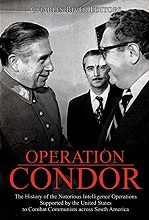 History has many dark secrets that some have wished remained hidden from the official record so that the history that has been portrayed remains sanitized and above reproach. But it is also said that what you do in the dark always comes to light. In the wake of the coup that saw the overthrow of Chilean President Salvador Allende (1908-1973) on September 11, 1973, the country was placed in a vice grip by his successor, Augusto Pinochet (1915-2006), who commenced a program of retribution against enemies, activist and those “suspected” of being part of the opposition to the new government. His regime was marred by human rights violations for which he was arrested by British Police in England on October 17, 1998. Pinochet was extradited back to his native Chile but never stood trial for his actions. He died on December 10, 2006 of congestive heart failure and pulmonary edema. His death marked the end of legal action to bring him to justice but it did not stop the prosecution of others who were complicit in the horrific actions that took place in the aftermath of the coup. Researchers continued to investigate Pinochet’s actions and those of fellow dictators in Argentina, Brazil, Paraguay and Uruguay. During one such expedition in Paraguay, a trove of documents were uncovered that shed light on a joint program created by several neighboring countries to track down those deemed enemies of the state with the purpose of execution. The program is known as Operation Condor and here Charles River Editors provides a concise summary of how and why the program came into existence.
 In the annals of Latin American history, perhaps no other figure is as studied as Simón Bolívar (1783-1830), the liberator of South America. Former Venezuelan President Hugh Chavez (1954-2013) famously spoke with images of Bolívar behind him as he sought to transform the country into a contender on the world stage. The life of Bolívar lasted less than fifty years but within two decades he became the leading figure in the Latin American movement for independence from the Spanish Empire. The nations of Colombia, Peru, Ecuador, Venezuela, Panama and Bolivia (his namesake) are the products of his vision, a united South America free from the influence of its northern neighbor. And prophetically, many of his beliefs about the future of South America have come to pass, cementing his legacy as one of the continent’s greatest heroes. Marie Arana, a native of Bolívar’s beloved Peru, has composed a stunning biography of the late figure that shows a complex character, driven by ideology but crippled by his own generosity and disregard for personal well-being.
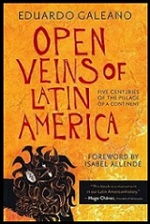 Latin America is home to some of the most beautiful scenery in the world. The Iguazu Falls, Andes Mountains and Patagonia attract millions of visitors annually. The beauty of these and other sites across Latin America stand in stark contrast to the poverty that can be found outside of major cities and sometimes within. In between major railway stations and ports exist slums that remind us of the severely uneven distribution of wealth throughout the continent. Speaking from personal experience, most Americans would be shocked at living conditions that still exist in Latin America to this day. But why does a continent with a history that goes back several hundred years and is home to beautiful people, beautiful languages, great foods and beautiful scenes of nature, continue to suffer from poverty, corruption and exploitation.
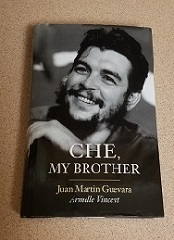 October 10, 1967 – Argentine newspaper Clarin announces that Ernesto “Che” Guevara (1928-1967) has died in Bolivia on October 9 after being capture with a group of guerrilla fighters attempting to spread revolutionary ideology throughout Latin America. In Buenos Aires, his family receives the news of his death and is completely devastated. Juan Martin, his younger brother, races to his father’s apartment where his mother and siblings have gathered as they attempt to piece together the last moments of Ernesto’s life. Che was secretly buried in an unmarked grave and his remains remained hidden for thirty years before author Jon Lee Anderson convinced a retired Bolivian general to reveal the grave’s location. His remains were returned to Havana on July 13, 1997 where he was buried with full military honors on October 17, 1997. In death, Che’s legacy grew exponentially and even today in 2017, he is the icon of revolution around the world. But after his death, what happened to his family and where did their lives take them? Juan Martin, at seventy-two years old, has decided to tell his story and reveal to us many facts about the Guevara family that have sometimes been overlooked by history.
 On Tuesday, June 27, 2017, Argentine President Mauricio Macri of Argentina and Michelle Bachelet of Chile met in Santiago, Chile to discuss a trade agreement between the two South American nations. A trade agreement would be a boost to the economies of both nations and help the Argentine economy recover from years of devaluation of the peso and loans on which the country was forced to default. In three weeks I will revisit the Argentine Republic, landing in Buenos Aires, appropriately called the “Paris of South America”. As of today, the exchange rate between the United States Dollar and Argentine Peso is
  On April 6, 2017, The Global Confederation of Labor (CGT) conducted a one-day general strike in protest of the policies of the administration of President Mauricio Macri. (1959-) Inflation, high taxes, low wages and job cuts have constrained the people of Argentina into an economic vice grip as the president attempts to steer the country away from a looming economic crisis. The strike is just one in many that have taken place during the last one hundred years in one of South America’s most popular countries. In July, 2017, I had the privilege to visit Buenos Aires, the city that has been called the Paris of South America. In July of this year I will return to the nation that is home to world-famous steaks, milanesa, wine, asado and dozens of culinary delights that make the heart flutter and the mouth water. I do not know what the political climate will be like when I visit but I can be sure that the people of Buenos Aires will show me the same hospitality that they did in the past and in the process help to create memories that will remain with me for the rest of my life. My favorite Argentine presented this book to me as a gift, a gift that keeps on giving. This book is a history of the Argentine Republic during the twentieth century. And what is contained in the pages of this book is essential in understanding modern-day Argentina. James P. Brennan has translated the work of Luis Alberto Romero (1944-), who became a Professor of History at the University of Buenos Aires in
 FREETHINKING BIBLIOPHILE
You must be logged in to post a comment.