
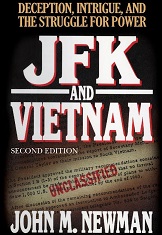
 March 29, 2019, marked the forty-six anniversary of the departure of the last remaining United States troops in South Vietnam. Two years after their departure,on April 30, 1975, Siagon fell to North Vietnamese forces as Hanoi tightened its grip around the country. By the time the war ended, fifty-eight thousand American soldiers had lost their lives in Vietnam. North Vietnamese Army and Viet Cong losses were estimated to be well over one million. Civilian deaths were even higher in number but despite the large numbers of casualties, North Vietnam refused to surrender and was determined to achieve reunification. The withdrawal of American troops was a sobering reality and cold hard truth: the American effort in Southeast Asia had not succeeded. To this day, there are many people who still wonder how and why the United States became entangled in Vietnam. The defeat of French forces at Dien Bien Phu in 1954 should have served as a reminder that military might is not always a guarantee of success. In January, 1960, President John F. Kennedy (1917-1963) took office and from the beginning of his administration until his death, the issue of Vietnam continued to fester like an open sore. Kennedy died before he could implement any further plans regarding Vietnam and took many secrets with him to his grave. But declassified documents and political memoirs shed much light on what was really happening in his administration as it grappled to combat the growing Viet Cong menace.
Author John M. Newman is currently in the middle of a multi-volume set regarding Kennedy’s murder. I have reviewed three of them so far and eagerly await the publication of the next volume. The books are incredible and the amount of information Newman provides is nothing short of staggering. But as we see here, he a long time player in the game and in 1992, this masterpiece was released. If you have seen the film ‘JFK’ by Oliver Stone, you will recall the scene where Jim Garrison (Kevin Costner) meets the character who calls himself “X” (Donald Sutherland). What many viewers may not know is that Newman helped Stone create those scenes. His research served as the basis for the dialogue between the two as X enlightens Garrison to many dark secrets surrounding Kennedy’s plans on Vietnam. The scenes are moving but do not come close to telling the entire story. This book however, does that and more and should be on the bookshelf of any reader who has an interest in the Vietnam War and in particular, its origins.
Newman takes us back to 1961 as the Kennedy Administration is recovering in the wake of the Bay of Pigs debacle. The seeds of distrust had been sown and when the Joint Chiefs of Staff began to press him on Laos, Kennedy was wise to the game. But the generals had a backup plan and if Kennedy would not go into Laos, then Vietnam was next on the list. However, the generals had a tough road ahead and knew that the young president would not give in easily to their demands. As a result a pattern of deception developed and before long Kennedy and his own administration were at odds over American foreign policy in Saigon. The depth of that deception will surely surprise many and still has me shaking my head in disbelief. I had been aware of many facts in the book but Newman brings even more to light.
The book is exhaustively researched and the information contained within it will cause shock and anger. But what I liked the most about the book is while Newman makes the case for what Kennedy was thinking about Vietnam at the time of his death, he is also frank about where Kennedy made mistakes that helped contribute to an already precarious situation. In all fairness to Kennedy, he never had the opportunity to defend himself regarding his decisions on Vietnam. But the paper trial he left behind, shows definitive actions he took and intended to take as he grappled with South Vietnam and a cabinet that had split down the middle.
The key to understanding how the deception started is to understand how intelligence was being gathered in Southeast Asia. Newman breaks down the various divisions in military command and the role of the Central Intelligence Agency (CIA). Kennedy’s advisors are also on the hook and the actions of several of them add even more shock value to an already incredibly eye-opening account. The realization that members of his administration were deeply divided and at odds with each other, hovers like a dark cloud over the story as the crisis in South Vietnam unfolds. All of the members of his administration are now deceased and we can only wonder as to why they committed some of the actions that they did.
No book about Vietnam would be complete without a discussion of Ngo Dinh Diem and his brother Ngo Dinh Nhu. Both played a critical role in the development of the war and Newman provides a thorough explanation as to why the brothers were important to American success in Vietnam and where they went terribly wrong. The coup that resulted in their deaths, changed the course of history and gave the war a new face. A few weeks after their assassinations, Kennedy himself was assassinated. And although there is no proven link between the two events, actions of several figures in high positions in the time period between the two murders are quite suspicious and will surely cause readers to take notice.
Without giving away too much information, I would like to say that readers will benefit by paying close attention to the National Security Action Memos (NSAMs) signed by Kennedy regarding his policy on Vietnam. They speak volumes and should paint a clearer picture of the forces he was up against. National Security Actions Memos 55, 56, 57 and 111 are pivotal for they directly addressed many of the pressing issues Kennedy was facing at home and abroad. The author discusses each so that the reader can easily understand the many nefarious elements that had been influencing foreign policy in some of the most scrupulous of ways.
Seasoned readers might be wondering where Lyndon Johnson fits into the story. His role is covered here and the suspicious actions on his part are paid close attention to. The war escalated greatly under his administration but we can only wonder how much Johnson knew and Kennedy did not. Newman does not discuss any Kennedy assassination theories or give any attention to any suggestions of LBJ being complicit in the crime. But what he does show is that the vice president certainly had an agenda of his own and it would be shown after the events in Dallas. National Security Action Memo 263 is one of the book’s most critical moments and readers should pay extremely close attention to this part of the story that highlights the stark differences between the late and sitting presidents and their views on the raging conflict in South Vietnam.
A common question I have heard from Vietnam veterans and others who lived through the war is why were Americans being sent 13,000 miles away from home to fight a war against a country many of them had never heard of? It is a critical question and I believe that Newman has many of the answers they seek. By no means is the book a complete account of the war. In fact, I believe a better overall account of the entire conflict would the best-selling ” The Pentagon Papers: The Secret History of the Vietnam War“. The authors there discussed Kennedy’s administration but concluded that they could not say for sure what Kennedy would have done regarding Vietnam due to his assassination in Dallas. Newman takes it further and I believe that he clears up much of the mystery surrounding Kennedy’s record on Southeast Asia.
Many years have passed since the Vietnam War ended but for millions of veterans, the wounds and dark memories remain. Some were sent to Vietnam not yet twenty years of age to a foreign country in which death was prevalent. They watched their friends die in gruesome manners and were exposed to the horrors of war in a conflict that did not seem to have an endgame. North Vietnam and the Viet Cong showed Washington that it would not be an “easy” war. Hanoi was determined to succeed in unifying the country and no amount of United States pressure or troops would change that mission. In the end, Hanoi did succeed and America was left to wonder what went wrong. As we move forward as a nation, let us not forget the tragedy of Vietnam which serves as an example of the dangers of misguided and intentionally deceitful foreign policy that changes nations and history. Newman absolutely nailed the subject in this incredible book that will surely satisfy anyone who decides to open it up.
ASIN: B01N7YNXQ6
 The lone gunman theory remains the official position taken the United States Government with regards to the assassination of President John F. Kennedy (1917-1963). The alleged assassin, Lee Harvey Oswald (1939-1963) was convicted in the court of public opinion before standing trial in a Dallas courtroom. His assailant, Jack Ruby (1911-1967) permanently silenced Oswald forever and prevented Americans from knowing more about the former Marine that had once lived in the Soviet Union. The big question surrounding Kennedy’s death is who did it? The crime is similar to a black hole, puzzling even the most hardened researchers. The late Jim Marrs (1943-2017) once said that we know who killed Kennedy, we just have to look at the evidence. Author John M. Newman has joined the group of assassination researchers and has produced this first volume in what will be a multi-volume set about the deadly events in Dallas, Texas on November 22, 1963.
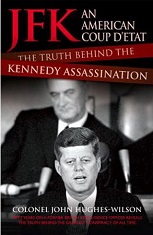 Last week I was debating what book to read next and realized that I had not covered anything on the assassination of President John F. Kennedy (1917-1963) in quite some time. To many Americans, his death is in America’s past, and a crime never to be solved. With that being said, his murder is a reminder of how easy it once was to remove a sitting president from the highest office in the land. Kennedy’s death endures as one of America’s darkest moments and the unanswered questions surrounding the events in Dealey Plaza still send chills down the spines of even the most seasoned researchers. Colonel John Hughes-Wilson has taken another look at the crime and lays out his case for what he believes was a coup d’état on November 22, 1963. In the fifty-years since JFK’s death, researchers have been able to compile a staggering amount of revealing evidence throughout independent research and the release of government files under the Freedom of Information Act and the President John F. Kennedy Assassination Records Collection Act of 1992. Incredibly, Hughes-Wilson has managed to compress thousands of pages of information into a book that is less than 400 pages. But contained within the pages of this book is an excellent summary of what happened before, during and after Kennedy’s murder.
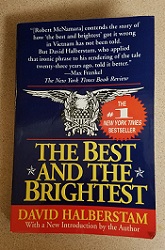 I have often wondered why my uncle and many other veterans that I have met, were sent to Vietnam. He and others never speak of the war, choosing instead to internalize their memories and feelings. But from the few things about being Vietnam that my uncle has told me, I cannot image what it was like to be fighting a war in a jungle 13,000 miles away from home. Today he is seventy-two years old and his memories of Vietnam are as sharp today as they were when he left the country to return home. And there is a part of him that still remains in Vietnam, never to leave its soil. He is one of five-hundred thousand Americans that served in a war that claimed fifty-eight thousand lives.
 The murder of John F. Kennedy (1917-1963) continues to maintain its place among the greatest crimes in American history. The official story as published by the Warren Commission is that former Marine Lee Harvey Oswald (1939-1963) fired three shots in six seconds from the sixty floor of the Texas School Book Depository, fatally wounding Kennedy and severely wounding Texas Governor John Connally (1917-1993). To many, including the author of this book, David Lifton, the government version seemed to be the best and final explanation. But over time Lifton came to doubt the official story and after obtaining a set of the twenty-six volumes that composed the Commission’s investigation, his doubt turned into disbelief and lead him down the path that culminated with this national bestseller.
 For twelve years Evelyn Lincoln served as John F. Kennedy’s devoted secretary. Following Kennedy’s murder she penned a memoir of her time as his assistant under the title “My Twelve Years with John F. Kennedy”. As his secretary she was a first hand witness to his daily routine and the decision making process behind some of the biggest moments in American history. The relationship between Kennedy and Vice-President Lyndon Johnson has been documented in scores of books. But Lincoln’s account is a welcomed look into the unusual relationship between two polar opposite individuals.
 On January 7, 1971 law enforcement personnel responded to the scene of a single car accident on U.S. Route 271 near Pittsburg, Texas. The deceased is identified as Malcolm “Mac” Wallace. His death marks the end of a life replete murder, sex, alcohol and suspicion. Wallace was a known associate of several powerful figures in the State of Texas, most notably, Billie Sol Estes and Lyndon Baines Johnson. His association with Johnson earned him the title of a conspirator in the murder of President John F. Kennedy. An unidentified finger print at the Texas School Depository discovered in the wake of Kennedy’s murder, puzzled investigators and researchers for years. In 1998, Nathan Darby, a career fingerprint analyst, identified the print as belonging to Wallace giving rise to the belief of many conspiracy theorists that Wallace had been on the sixth floor either right before or during the assassination. Wallace’s death was cloaked in conspiracy theories about how and why he died. But just who was Mac Wallace? Was it really his print at the book depository? And was he LBJ’s hitman for hire as has been alleged? Joan Mellen, a noted scholar and author of several books related to JFK’s murder explores the relationship between Wallace and Johnson in this phenomenal account of the lives of both of these Texas natives.
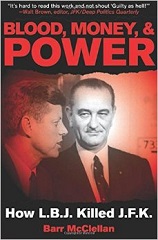 Prior to his death from cancer, Jack Ruby, the convicted murdered of Lee Harvey Oswald who executed his prey live on national television, once remarked that to get answers in the murder of John F. Kennedy, it would wise to ask the man currently in office. That man as we all know was Lyndon B. Johnson. In most history classes, Lyndon Johnson or LBJ for short, is seen as a pioneering president, responsible for the passage of the monumental Civil Rights Act of 1964. However, what is often looked over is his role in the escalation of the U.S. military in southeast Asia resulting in the Vietnam War. As the body count of American soldiers climbed, his approval rate dropped to absurdly low levels, possibly the worst in recent history. And the announcement of Robert Kennedy for candidacy for president served as a final nail in the coffin forcing Johnson to withdraw his name in the 1968 presidential race. Many years after his death, the true story of the life of Lyndon Johnson has come to light in dozens of books. And what we learn through each of these books is that there was a very dark side to the 36th President of the United States.
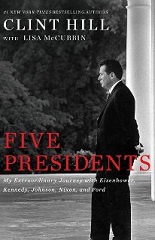 The 20th Century was filled with some of the most earth-shattering events the world has ever seen. The home video shot by Abraham Zapruder that recorded the assassination of John F. Kennedy stands as one of the most important pieces of motion picture ever captured. During that film, as former Firs Lady Jacqueline Bouvier Kennedy reaches to the trunk of the car to retrieve a portion of JFK’s skull, a secret service agent can be seen leaping on the trunk of the car as the motorcade sped down the Stemmons Freeway en route to Parkland Hospital. The agent, Clint Hill stands out in the film as only one of two agents to make any major movement to help the fatally wounded Kennedy and Gov. John Connally. Hill would go on to serve three more presidents and today is a best-selling author with several books published about his time working in the United States Secret Service.
 FREETHINKING BIBLIOPHILE
You must be logged in to post a comment.