
 In Countdown to Darkness: The Assassination of President Kennedy Volume II , author John M. Newman warned us that a storm was brewing. President John F. Kennedy (1917-1963) and his brother Robert F. Kennedy (19125-1963) had come to realize that not all who smile come as friends. But what they could not have foreseen, was the depth of resentment towards them from the military, Cuban exiles and the intelligence community. In the second volume, we learned about the demise of Patrice Lumumba (1925-1961), the relationship between the Kennedys and mobster Sam Giancana (1908-1975), Oswald’s alleged “defection” and the failure of the Bay of Pigs invasion in April, 1961. Newman resumes the story and takes us deeper behind the scenes in the Kennedy Administration which found itself in damage control to prevent rupturing at the seams.
The present volume revisits the Cuban situation and also focuses on the doomed Operation Mongoose. The covert operation has gained traction in research circles as an example of the doomed efforts to remove Fidel Castro, but as we see here, there was far more to the story. For several decades, the rumor of Robert Kennedy giving a green light to assassinate Fidel Castro has persisted. The myth was pioneered by former CIA operative Samuel Halpern (d. 2005), who was not fond of either Kennedy brother. Newman investigates that myth and finally separates fact from fiction. And the story that emerges is one of deception, exemplified by the actions of many such as Bill Harvey (1915-1976), Richard Bissell (1909-1994) and Gen. Edward Lansdale (1908-1987). Halpern’s tale is so convoluted that it even caught the attention of journalist Seymour Hersh who examined the Kennedy family in his book ‘The Dark Side of Camelot‘, which does no favors to the Kennedy name. I do not know if Hersh has read this book but when or if he does, I am sure the facts revealed by Newman may cause him to revise his work.
If you have read Gaeton Fonzi’s The Last Investigation, then you are already familiar with one of the most peculiar characters in the JFK assassination story, Antonio Veciana. As leader of the anti-Castro group Alpha-66, he was responsible for daring acts against the Castro regime. The acts were so worrisome that Kennedy eventually ordered the military to have them cease and desist. But just who was Veciana and did he really meet a contact named Maurice Bishop? It is believed that Bishop was a cover name for David Atlee Phillips (1922-1986), a legendary CIA officer and founder of the Association of Former Intelligence Officers. The story of Veciana and Bishop can be quite confusing and for years Veciana played mind games with investigators. Fonzi died before Veciana would make several changes to his story but Newman catches them all here and reveals the truth about Veciana’s recruitment into CIA activities and his alleged meeting with Bishop. To say it is puzzling would be an understatement.
Oswald’s “defection” to the Soviet Union is one of the most bizarre parts of his story. While he never actually defected, his actions did catch the attention of the Russian KGB and the CIA. Americans attempting to defect to Russia at the height of the Cold War was beyond comprehension and Oswald would have known this as a former Marine. But the question remains, if Oswald really wanted to defect, then why didn’t he? James Angleton (1917-1987) was the CIA Counterintelligence Chief from 1954-1975. Undoubtedly, Oswald would have been of high interest to Angleton, whose hunt for Soviet moles within the CIA destroyed lives and damaged careers. Until his final days in the CIA, he was convinced that there was a Soviet mole in the agency. During his tenure, Soviet defectors did approach American officers. One of them was Yuri Nosenko, whose story is another critical part of the Kennedy labyrinth. However, Nosenko was a strange character and a career spy. But was he a real defector? Newman re-examines Nosenko’s story to show us what was really taking place in the spy war between the CIA and KGB.
An often misunderstood part of Kennedy’s election to office is the role of the Civil Rights Movement. American politicians have known for decades that the Black American vote is crucial to winning a major election. Kennedy faced an enormous hurdle in gaining the black vote primarily because he was Catholic and a Democrat. The story of how he obtained the Black vote and why is critical to understand what he represented to millions of Americans. His “New Frontier” program was advanced in many ways but sadly it never came into reality due to his death. Newman wants us to understand how Kennedy was propelled to office and why the story is relevant to his death in 1963. In 1960, Kennedy beat Richard Nixon (1913-1994) by an extremely slim margin. Prior to the election, a series of events took place that changed the course of history. They would involve both Robert and John Kennedy and Dr. Martin Luther King, Jr. (1929-1968).
The efforts to secure Kennedy’s claim to the White House by Sam Giancana is well-known to researchers and those with a keen ear for mafia tales. But the relationship between the Kennedy family and Giancana was quite unusual in itself and had the public known of the connection, I can only imagine what the fallout would have been. Giancana was a walking tomb of dark secrets and he is mentioned briefly in this volume again, along with Johnny Roselli (1905-1976) whose efforts to topple Castro are part of CIA-Mafia lore.
As Kennedy takes office, he soon finds that the battles in Washington are just beginning. After the disastrous Bay of Pigs fiasco, he knew better than to trust the word of the CIA and Pentagon. But what they did not know was that Kennedy had been changed by the Bay of Pigs and was determined to make sure the CIA and Pentagon never got away with such a ruse again. This part of the book is where things get deeper and take a much darker turn. Laos and Vietnam loom over Kennedy like a dark cloud and he soon finds himself on the defensive as military brass are demanding intervention in Southeast Asia. Cuba is never far off the radar and once again it becomes a hot topic. It became so hot that the Pentagon concocted plans that repulsed Kennedy and widened the gap between the President and the Joint Chiefs of Staff. If you have heard the name Operation Northwoods, then you have an idea of where the story is going. The stage is slowly being set with tensions rising. The Pentagon and CIA are hungry for a war but can they proceed with a President who is becoming increasingly distrustful of his own advisors? As the book concludes, it becomes clear that the Kennedys are on a collision course with the military and intelligence community and the climax will be far more serious that Americans could have imagined.
Volume IV is still in the works but when it is released, I am sure that Newman will continue with this eye-opening assessment of one of America’s darkest moments. Highly recommended.
ASIN: B07NJRY8WJ
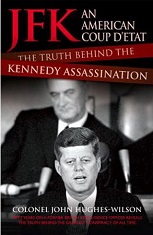 Last week I was debating what book to read next and realized that I had not covered anything on the assassination of President John F. Kennedy (1917-1963) in quite some time. To many Americans, his death is in America’s past, and a crime never to be solved. With that being said, his murder is a reminder of how easy it once was to remove a sitting president from the highest office in the land. Kennedy’s death endures as one of America’s darkest moments and the unanswered questions surrounding the events in Dealey Plaza still send chills down the spines of even the most seasoned researchers. Colonel John Hughes-Wilson has taken another look at the crime and lays out his case for what he believes was a coup d’état on November 22, 1963. In the fifty-years since JFK’s death, researchers have been able to compile a staggering amount of revealing evidence throughout independent research and the release of government files under the Freedom of Information Act and the President John F. Kennedy Assassination Records Collection Act of 1992. Incredibly, Hughes-Wilson has managed to compress thousands of pages of information into a book that is less than 400 pages. But contained within the pages of this book is an excellent summary of what happened before, during and after Kennedy’s murder.
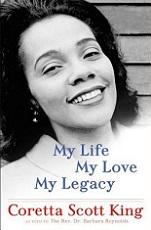 I find that as I age, I am more focused on historical events that changed the course of America, in particular from Black Americans. It has been said that in order to know where you are going, you have to know where you come from. For millions of Black Americans, the question of identity has been a difficult one to answer. Some prefer the term African-American while others prefer Black-American. And there are some who prefer Afro-American or just simply Black. Regardless of the label, there is a shared history of pain, struggle and the never ending goal for full integration American society. Over the past fifty years, tremendous progress has been made in the United States but there is still much work to be done. But one of the greatest things about America is our ability to correct and learn from mistakes that have lingered for too long. The young generation of today lives in a world far removed from only twenty years ago. Their world is one in which technology is ingrained and life moves at an even faster pace. My father often thinks back to the period of integration and the times where it seemed as if America was going to tear itself apart. Even to him, as a kid it seemed as if the accomplishments by Black Americans over the years were just a pipe dream.
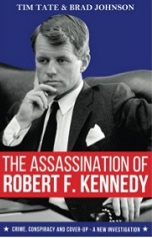 June 5, 1968 – Senator Robert F. Kennedy (1925-1968) (D-New York) concludes his speech at the Ambassador Hotel in Los Angeles, California after scoring a critical primary victory in his quest for the Democratic nomination for President of the United States. As he walked through the pantry while exiting the hotel, he was shot and mortally wounded. Twenty-six hours later in the early morning hours of June 6, 1968, his life and the dream he inspired came to a tragic conclusion. He is survived by his widow Ethel and eleven children, the youngest of whom was born after his death. Her name is Kerry Kennedy and along with brother Robert, Jr., she keeps her father’s memory alive and well. Her book
  Recently, I watched the Netflix series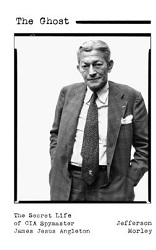
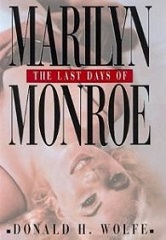 On August 5, 1962, newspapers around the world relayed the news of the death of Hollywood star Marilyn Monroe (1926-1962) the night before at her home in the Brentwood section of Los Angeles, California at the age of thirty-six. The cause of death was listed as suicide from an overdose of the drugs Pentobarbital and chloral hydrate. However, decades after her death, several question still remain regarding that tragic night of August 4, 1962. What really happened that night and why was she paid a visit by then Attorney General Robert F. Kennedy (1925-1968) and his brother-in-law Peter Lawford (1923-1984)?
 The election of Barack Obama to the office of President of the United States marked a turning point in American history. His successful campaign and subsequent eight years in office vindicated the late Robert F. Kennedy who in 1961 said he believed that in forty years a negro could be president. At the time the thought seemed absurd as American struggle with social division fueled by ethnic discrimination. But if we look back on his words, we can see that his foresight was not only accurate but uncanny. From time to time I think back on the many quotes from him regarding his views on society. His assassination during the 1968 presidential race left a void in the United States that has never been filled. He remains one of the most popular, unpopular and tragic figures in the history of this nation.
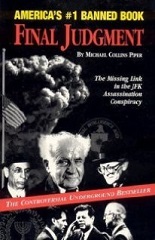 The murder of John F. Kennedy remains one of America’s darkest moments. His assassination in Dealey Plaza and the murder of his alleged assassin two days later shocked the world and marked a turning point in American history. The Warren Commission’s report is still the government’s official position on the murder. It concluded that there was no conspiracy to murder John F. Kennedy and that Lee Harvey Oswald acted alone. In 1966, Mark Lane’s Rush to Judgment was released and became the first major book to challenge the Commission’s conclusions. Lane became a pioneer in the process with his book being followed by more than 200 hundred others regarding the events of that day. Each has its strengths and weaknesses but all provide a window into what some have called the crime of the century. There are literally dozens of theories as to how and why Kennedy was killed. It is up to the reader to cross-reference the facts and reach a conclusion. However, in the majority of the books regarding the murder, all tend to focus on the complicity of the U.S. Government and organized crime. The Italian-American mafia has long been suspected in the assassination. But like everything else regarding the murder, things are not always as they may seem.
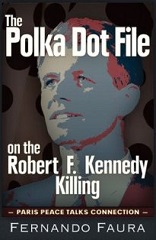 Each time I drive across the Robert F. Kennedy memorial bridge as I pass from Queens to the Bronx and sometimes Manhattan, I think about his importance to the State of New York and the United States. The former attorney general, senator and presidential candidate was one of the most polarizing figures of his time. His murder on June 5, 1968, shocked the world leaving millions of people speechless about what they had just learned. A young Jordanian immigrant named Sirhan Sirhan was later tried and convicted for the murder and the case is considered solved in Los Angeles County. Similar to the murder of John F. Kennedy 5 years earlier in Dallas, Texas, upon closer examination, many disturbing facts emerge that cast a chilling doubt over the official story.
 FREETHINKING BIBLIOPHILE
You must be logged in to post a comment.